
An Acadian Tragedy
Elyse Hilaire and her family were among the thousands of Acadians who were deported from Canada. Their story had a uniquely tragic end.
Written by Eric Shipley and Charlotte Easterling
The Minas Basin headed north: January 1764
“What’s wrong, Mamie?” Yves asked when he saw his grandmother, Elyse Hilaire, with a strange look.
She stood at the ship’s stern and didn’t reply immediately. Then she looked down at him fondly and put a hand on his head.
“Just thinking some long thoughts, mon cher.”

Grand-Pré today, photo: novascotia.ca
Grand-Pre was fading into the distance. Soon, it wouldn’t be visible. Robert, her oldest son, appeared beside her. (He and Marie, his wife, had come aft to see how she was doing.) He put an arm around her thin shoulders, at which she patted his hand.
“We’re going to be all right, Maman,” he murmured, laying his head against her white hair. “Thinking about Papa?”
“Oui.”
Robert saw how tightly her lips were pressed together and how her face was even more deeply lined than just a few months ago.
Such heartbreak, he thought. Such anger… but she’s earned it.
“I’ll never visit his grave again,” Elyse went on. “All thanks to the damned British!”
Being expelled had reopened some very old wounds. Henri, her husband, had died almost thirty years ago. He had joined a group of other Acadian farmers and a handful of warriors from the local Mi’kmaq tribe whom she’d distrusted at first. Now. though…
Good people, she thought. Staunch allies and friends.
Henri’s group had been guarding a parcel of farmland when the British raiders attacked. Henri had been killed along with one of the Mi’kmaq. For Elyse, the memory was vivid. The Mi’kmaq leader, Jean Baptiste (the French name he’d taken), had given her the news:
Many British struck with no warning. Henri fought bravely. I saw him kill one of their soldiers, but then he was cut down. You can be proud; I was honored to do battle alongside him.
She’d appreciated the words, but they’d done nothing to lessen her terrible loss and grief. Over time, but not quickly, her grief had retreated only to be replaced by deep resentment and rage.
She pounded her fist against the gunwale. She was proud that she and her family had refused to bend knee and swear allegiance to the English king, but they’d paid dearly for their defiance. After Great Britain had taken over Acadia, the damned British troops had continued their attacks and had tried to starve out the Acadians by burning their crops. (They’d nearly succeeded.) And then the deportations.
Kicking us out of our own homes and giving them to British colonists!
They had fought and resisted to no avail, which renewed thoughts of her daughter Justine. Her husband Louis had been captured and taken to England. They’d never learned of his ultimate fate, but there was little doubt he’d died. So, in the first wave of deportations, Justine and her children had left Acadia, bound for Louisiana. But they never got there. A sickness had swept through their ship, taking away Justine and many others. Then, when the ship was turned away from New Orleans, it had gone to England instead. Elyse didn’t know what had become of Justine’s children. It was still a deep ache.
The eastern Atlantic Ocean headed south: February 1764
She found a measure of happiness watching her middle son, Sebastien, as he fussed over his wife, Claudine. They had been married four years, and at long last she was expecting their first child. Despite the warmth now that they had reached the Caribbean, he kept wanting her to wear a shawl or sit under a blanket. Elyse finally stepped in.
“Sebastien, you leave her be! She’s thirty years younger than you. If anyone needs that blanket, you do.”
“Maman!” Sebastien exclaimed. Claudine hid a smile.
Elyse waved him off. “Come on, come tell me about the colony at Saint Domingue. Captain says we’ll be there day after tomorrow. I’m ready to see our new paradise.”
Sebastien scowled but relented and sat beside her. He was proud of himself for securing a place for all of them on the vessel going to Môle-Saint-Nicolas.
“It’s like Grand Pre, on the coast,” he said. “The river makes for rich farmland. We’ll have to build everything, but in no time we’ll be prosperous again.”
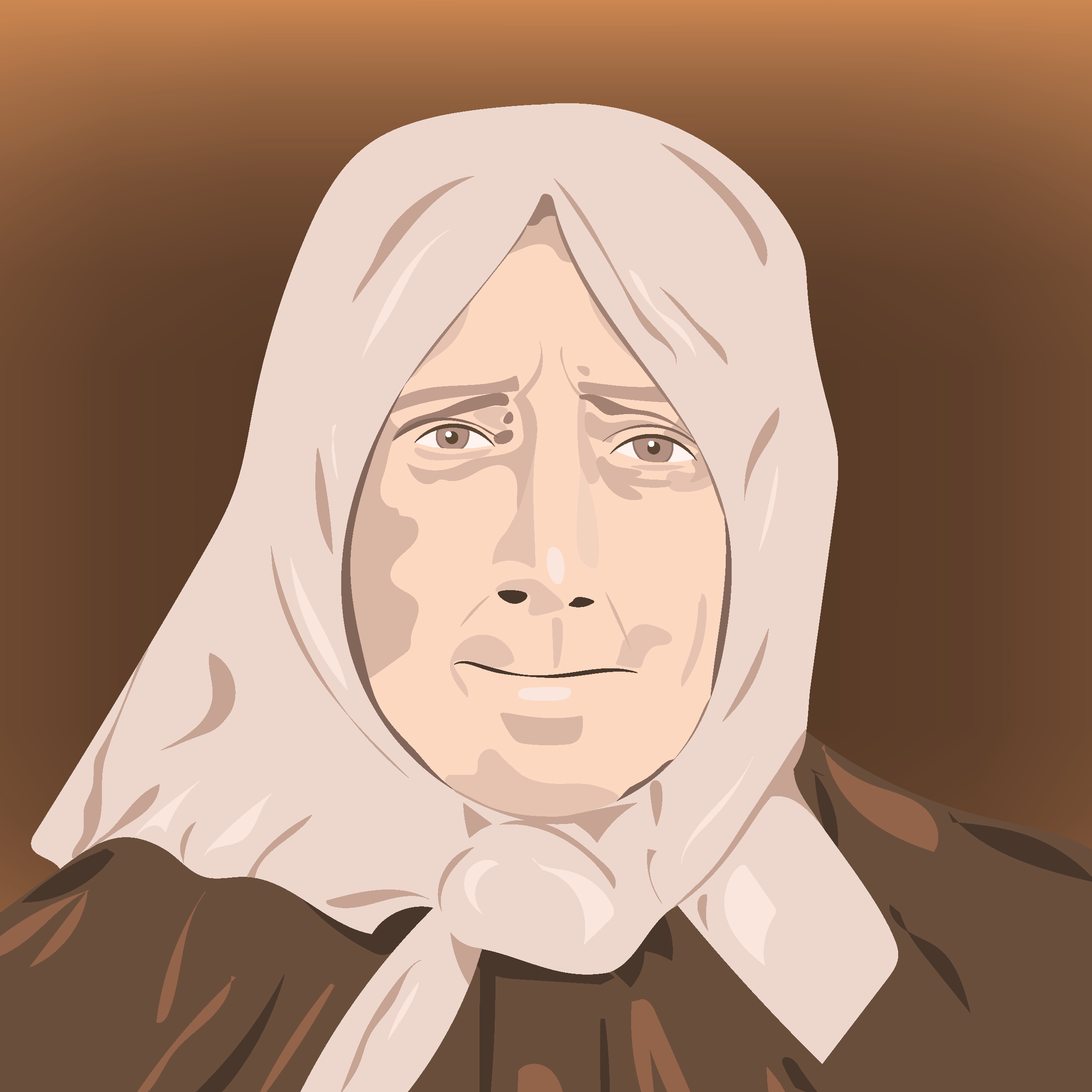
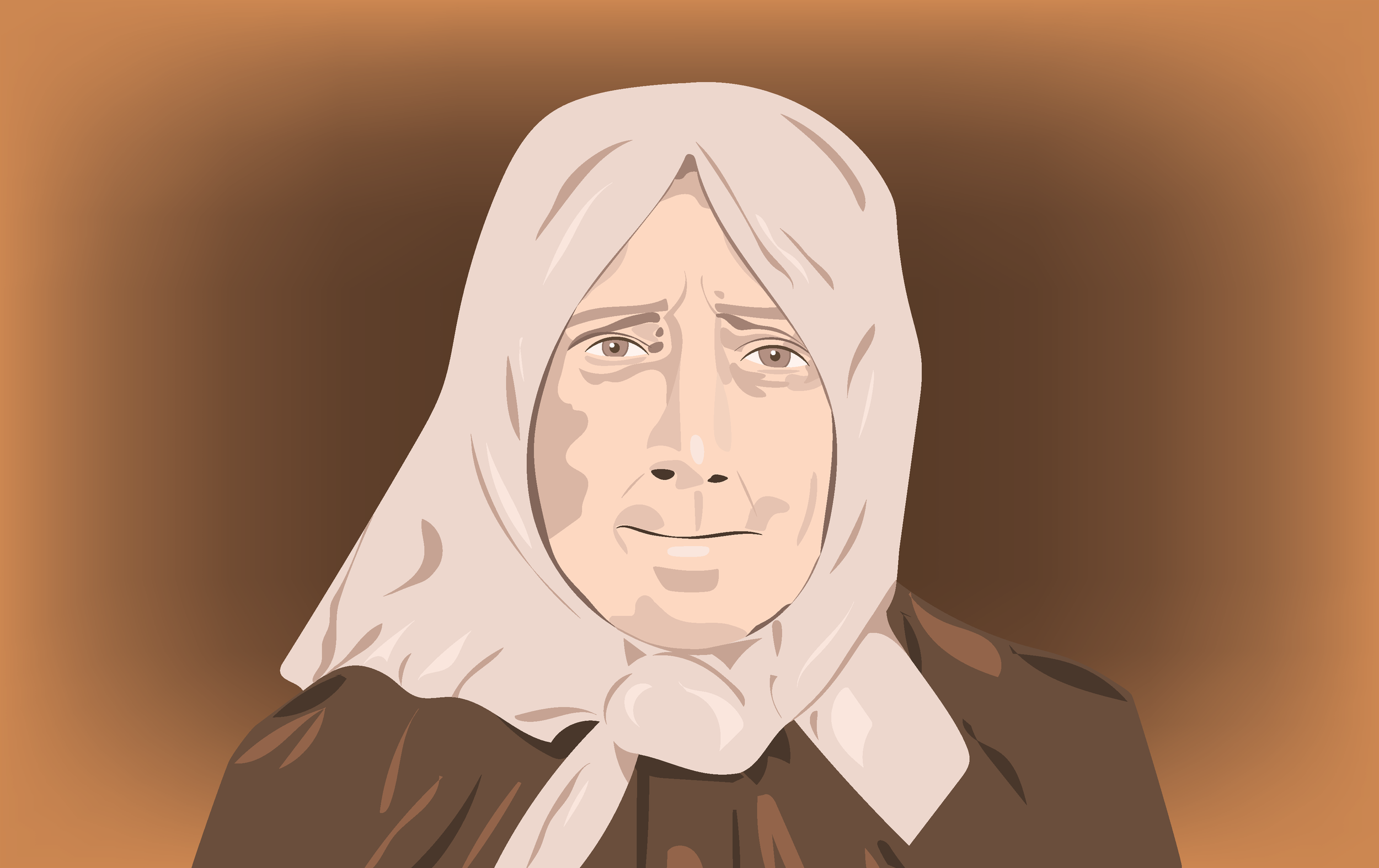
Illustration of Elyse Hilaire by Charlotte Easterling
He cast a glance at his wife who was talking with some of the other young wives, so Elyse shooed him in Claudine’s direction. Left by herself, she brooded about the very likely prospect that she’d never get over being forced out of Grand-Pre, but the promise of a fresh start in Saint Domingue became more alluring with each day. And she felt incredibly blessed—she and her three sons, their wives, and her grandsons were all alive and together.
Maybe there is hope, she thought, trying to boost her own spirits.
She stood and stretched gingerly. She would be seventy-eight next month, old to be starting over, but there was no point in feeling sorry for herself. The worst was behind them. Or so she thought.
Saint Domingue: Early February 1764
“Mamie! Tell us about Grand Pre!” shouted Elyse’s grandsons.
It was a familiar refrain. One that made her wistful. When she was young, she’d discovered a talent for telling stories, and in her youthful, more hopeful life, she’d started writing them down, but they’d been lost when the British burned her house. She wondered whether she could have published her stories if she hadn’t had to struggle to feed and support her family through the British oppression.
More possibilities stolen, she thought resentfully.
Her grandsons looked at her doubtfully, which made her put on a strained smile. She was determined not to visit her regrets on this younger generation.
“Once there was a beautiful land called Acadia…” she began.
Saint Domingue: Late February 1764
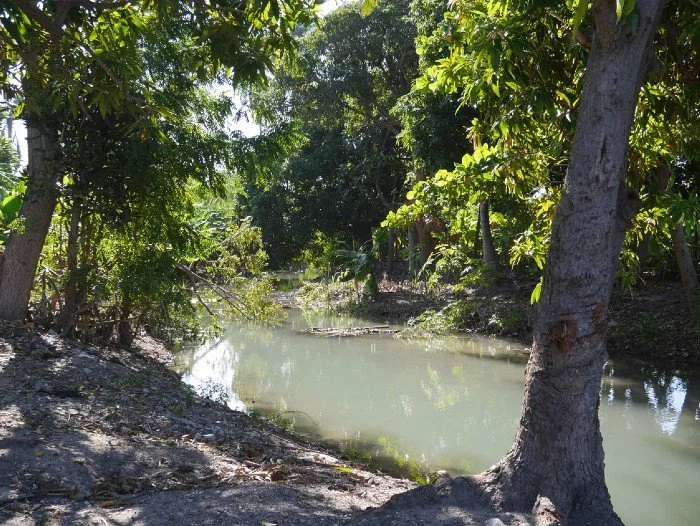
Môle-Saint-Nicolas River. Photo: Boukan Guinguette
When Elyse and her family arrived in Saint Domingue, Bertrand de Saltoris, the overseer of the new colony, greeted them enthusiastically. He was eager for them to get established. She watched the children freshly off the ship racing along the beach, laughing and enjoying finally having room to run. She and the other women were clustered together, looking at the white sand beach, blue water, and dense foliage.
“I thought there was a colony here,” one of the women said worriedly.
“There is,” Elyse assured her. “My son told me there’s still work to be done, but we’ll be living comfortably soon.”
The woman nodded, looking doubtful. Privately, Elyse shared those doubts. She looked at the group of men gathered around Monsieur Saltoris, deep in conversation. There had been more than 500 people on the ship, but that included women, children, and old men. Were there enough young men to do the work needed here? She could see Edmé, Sebastien, and Robert looking at the river running into the dense trees. The looks of concern they wore left her feeling discouraged.
Claudine, standing by her side, noticed too. Elyse gave her hand a reassuring squeeze.
Saint Domingue: July 1764
“We were lied to, Maman,” said Edmé, her youngest son, with desperation in his voice. Anne, his wife, put a hand on his shoulder.
The whole family had pooled all their funds to pay for passage. They’d been promised farmland in exchange for working to build roads and clear land. Yes, it would be hard work, but they were farmers. They were prepared. However, the colony that was supposed to be waiting for them turned out to be non-existent. And the farmland had flooded, sweeping away the good soil. They were living in tents, barely surviving on meager rations.
Elyse looked around at her sons, dirty and sweaty from the day’s labors. Her daughters-in-law, (Claudine now heavy with child), and her grandsons were all thin and pale, their clothes faded by the sun.
“There’s a group going inland to Le Mirebalais,” said Sebastian. “The land there is better, and it’s already settled. We’d have better living conditions while we get established. I think we should join them.”
Elyse nodded. Anything, she thought, is better than this.
Saint Domingue: August 1764
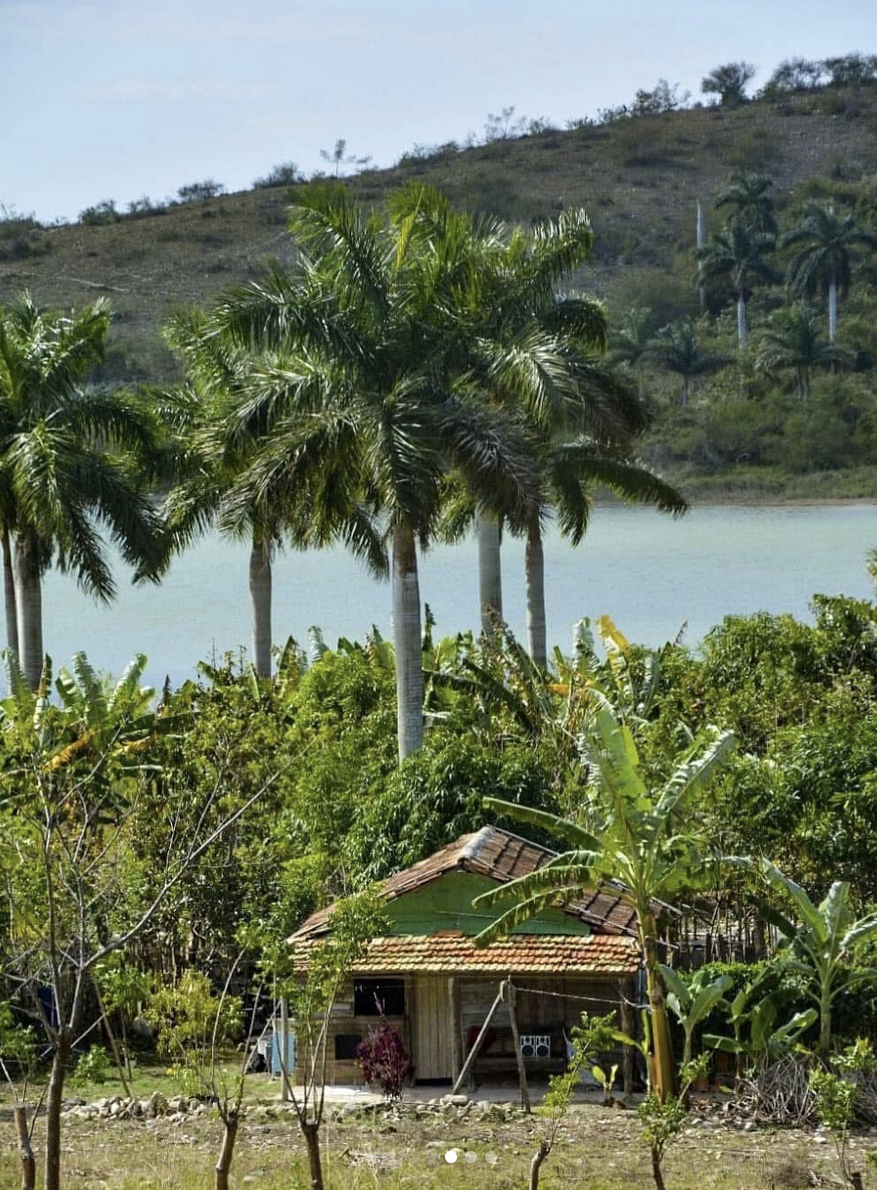
Mirebalais, Haiti today. Photo: Centre Culturel Spirituel & Traditionel
A month later, Elyse and her family were among the almost 200 Acadians who arrived in Le Mirebalais. Their hopes of receiving land were quickly dashed-–the plantation owners wanted workers, not landowners. They did at least have small houses that provided better comfort than the tents at Môle-Saint-Nicolas. Elyse settled in with Sebastien and Claudine so she could help with the baby.
Her new grandson arrived later that month, but he was small and weak. Sebastian, despite his exhaustion, beamed as he held his son. Fifty-six might be old to be a first-time father, but he didn’t care.
Robert congratulated him and Edmé clapped him on the back and winked. “Good job, old man! Glad you finally figured out how it all works.”
Yves studied the baby intently, then looked up at his father, Robert, and grinned.
“He looks like an old man, Papa!” he said, which got a laugh out of everyone.
Elyse had hoped for a granddaughter, but she couldn’t complain. A new grandchild was something to celebrate. Still, she was worried; everyone was exhausted and far too thin. They were all working on the sugar plantation, which was grueling, dangerous labor. Claudine and Elyse were the only two who weren’t expected to be in the fields, but the rest (including her 10- and 13-year-old grandsons) were out from sunup to sundown.
Edmé kissed Elyse, then collected his wife and sons so they could go back to their little house. Robert followed suit. Sebastien handed the baby back to Claudine and kissed her on the top of her head. Elyse could see the concern in his face. The baby was very small and Claudine was having trouble feeding him.
“I’m going to bed, ma chere,” he said quietly.
Elyse got up and took her grandson. “You go too, Claudine. I’ll put the little one to bed.”
Claudine nodded and gave her a wan smile before following her husband to their pallet.
Saint Domingue: September–November 1764
Elyse would remember that August night as the beginning of the very bad times. Early in September, Edmé suffered a bad cut while working in the cane fields. It became infected, and despite the doctor’s best efforts, Edmé died later in the month, burning with fever.
And the family was granted no reprieve to mourn and recover: Claudine and Sebastien’s son died in early October. The sickliness he’d shown since birth never improved. They buried him in a small grave next to Edmé’s.
The weeks after that went from heartbreak to nightmare. A yellow fever epidemic broke out, and in quick succession, Sebastien, Marie, and Elyse’s last two grandsons all succumbed. Anne (now Edmé’s widow) lingered a bit longer, but died in early November.
So all too quickly, Robert, Claudine, and Elyse were the last of their family. Robert moved into the little house that Claudine and Elyse shared. Their grief was overwhelming, but at least they weren’t alone. Robert worked in the cane fields and Claudine cooked for the family who owned the plantation. Robert was grimly determined to survive but came home every night angry and exhausted. Elyse wearily tended their house and cooked meals that were eaten in silence.
Saint Domingue: December 3rd, 1764
Robert woke to a quiet house and sat up, concerned. Maman was usually awake before him, making breakfast. He went to her curtained pallet and tapped on the frame.
“Maman?” he whispered.
No answer.
Fearing the worst, he slid back the curtain. Elyse was gray and cold. He bent down and kissed her forehead.
“I’m sorry you were so troubled, Maman. Be at peace,” he said through stifled tears.
He sat with her a few moments, then got up, slid the curtain back in place, and went to tell Claudine

1: Grand-Pre, Nova Scotia. 2: Môle-Saint-Nicolas, Haiti. 3: Mirebalais, Haiti.