
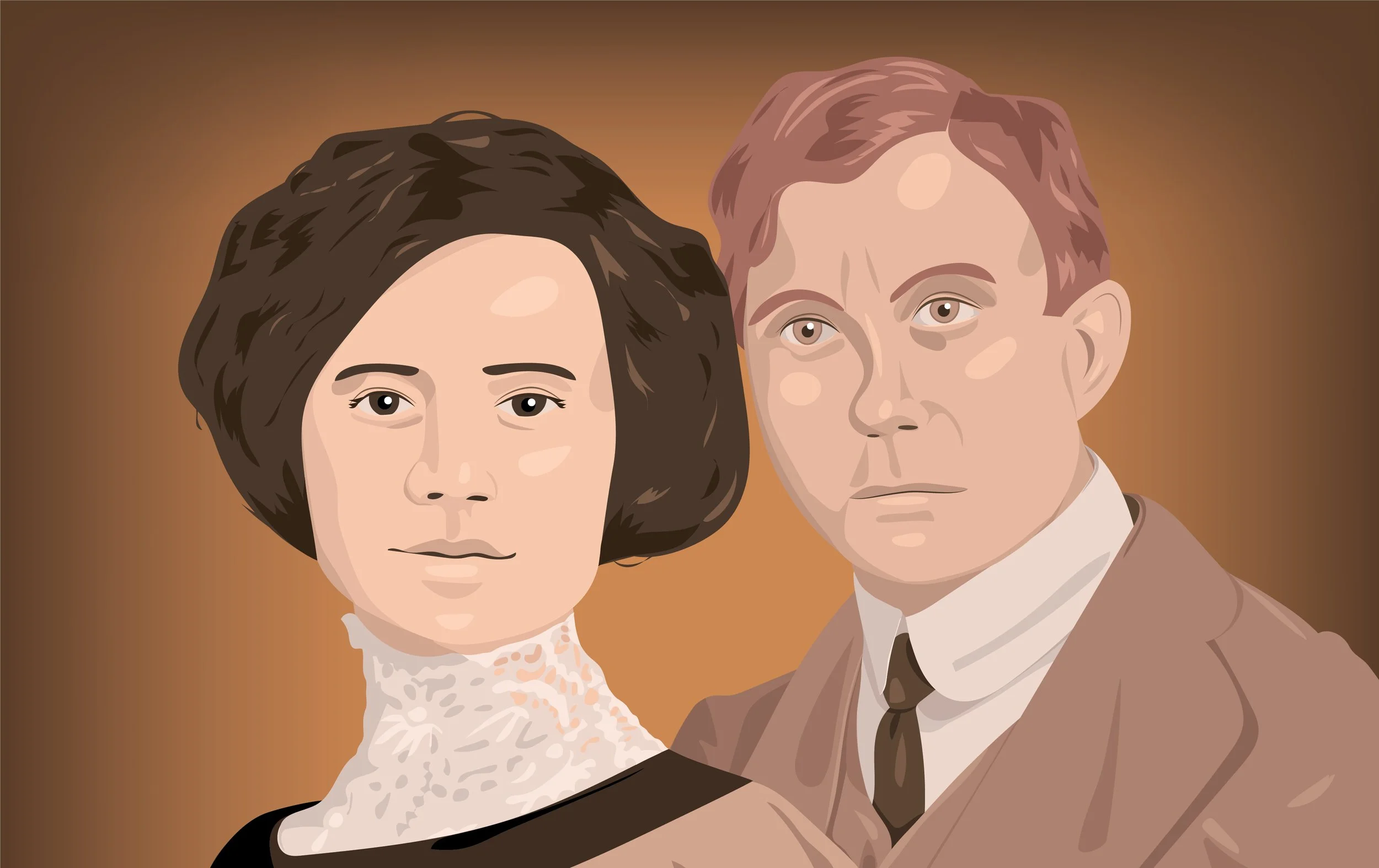
Partnership
Meet two performers who became partners in their careers, their travels, and their lives.
Written by Eric Shipley and Charlotte Easterling
Decatur, Illinois: August 18th, 1913
“My interest in Abraham Lincoln began at an early age,” said Seamus to the audience at the Mattoon Chautauqua that had encamped in Decatur. “And it was largely due to my father, Sean Scully, who was thoroughly impressed by him. In fact, he and my mother, Marian, took me to meet him. I was just three, so my memories of the details are vague… except one.
“According to my parents, I was fidgety and kept humming Camptown Races, which it seems was my favorite song. My father kept hushing me. So much so, my mother had to hush him.” The audience laughed.
“We stood in line for what seemed like forever, but we eventually got to the front, where my view was blocked by a box. It had shiny silver handles that I tried to touch, but Mother pulled my hand away.
“Then my father lifted me up so I could see what, or as it turned out, who, was in the box. Of course, I saw Abraham Lincoln. I was shocked and scared. I’d thought he’d be sitting and talking to people, not lying in a box. He looked so strange: still and pale, eyes closed. I started crying, and Mother took me from Father and carried me away and tried to quiet me.”
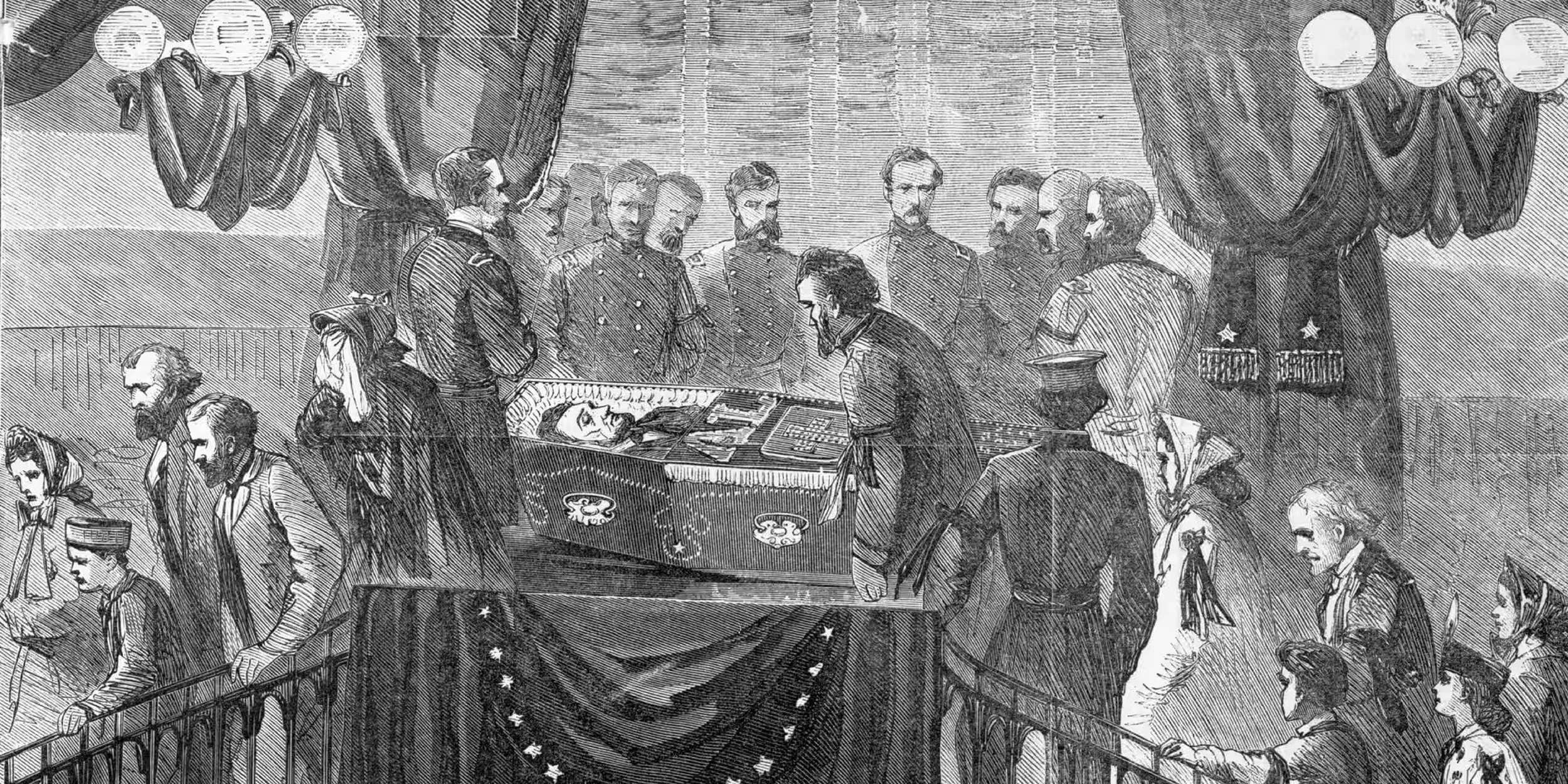
Image from history.com
Seamus could see the audience was rapt (as talented storytellers like him always watched for). He confidently went on with his talk, and when he finished, they applauded loudly.
A good turnout for a hot, muggy evening, he thought
When he got backstage a reporter from the Decatur Daily Herald was waiting to talk with him. (It was nothing new. As one of the managers of the Chautauqua, he often talked with reporters to promote the show.)
After the interview, he went to find Charlie Euler, one of the other managers. Charlie introduced him to some new speakers: first, a woman named Rena Hagerty, and next, a young man whose hand Seamus shook absently.
Charlie cleared his throat to get Seamus’s attention. “You and Rena share an interest in Alfred Lord Tennyson,” he said. “That’s what her first reading will be.” He turned to Rena. “And Seamus is doing a series about the homes of great poets, including Tennyson.”
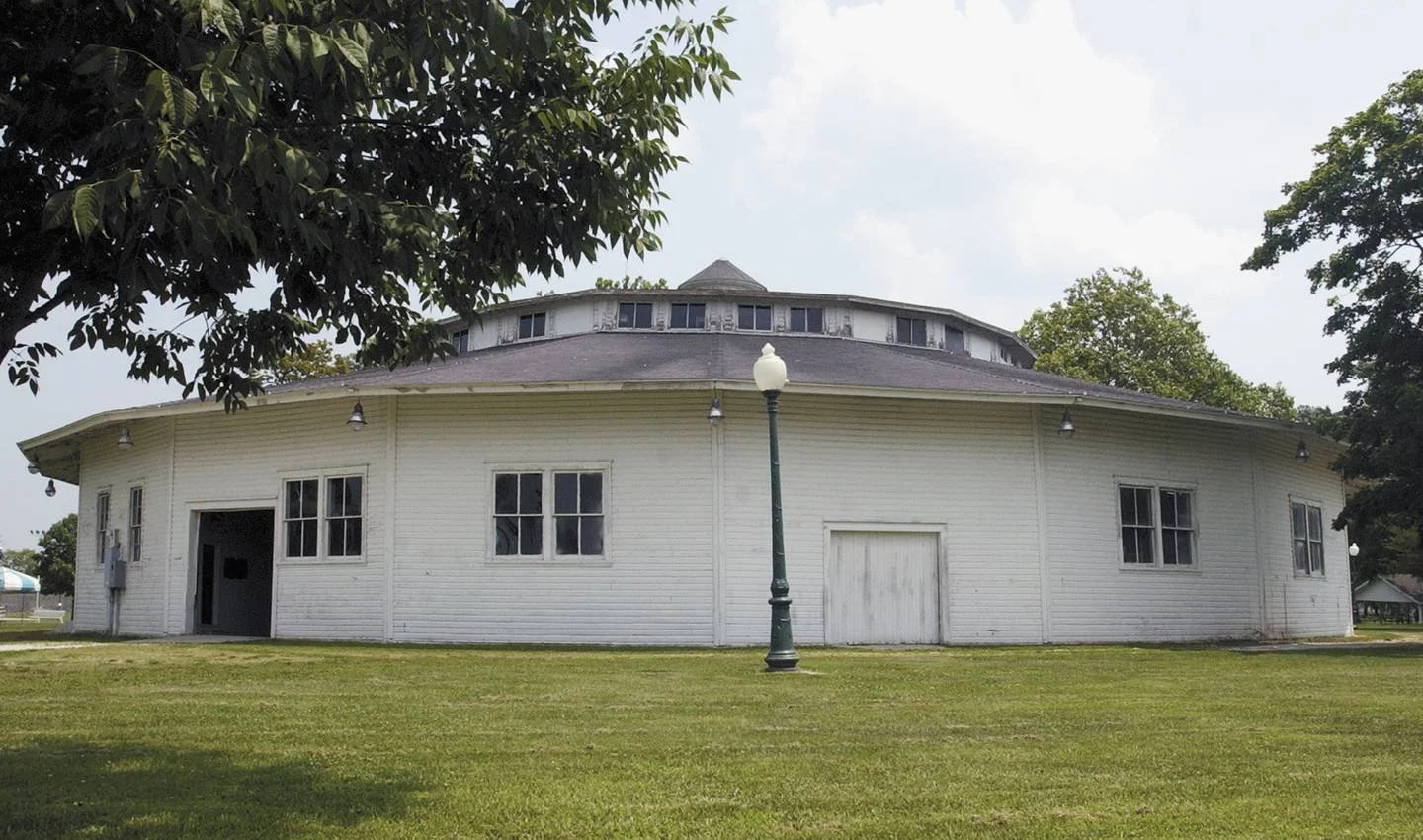
Chautauqua arena in Shelbyville, Illinois. Photo: shawlocal.com
Charlie went on to tell him that the young man would be speaking about Shakespeare. Seamus nodded politely and offered some encouragement. Then, with a lingering glance at Rena, he walked away and made a mental note to ask Charlie the young man’s name again.
Seamus went to Rena’s reading the next morning. She was a wonderful speaker, and he was delighted that she ended with “Ulysses,” his favorite Tennyson poem. The end, which was especially moving:
“...and tho’,” she quoted, “we are not now that strength which in old days moved earth and heaven, that which we are, we are; one equal temper of heroic hearts, made weak by time and fate, but strong in will to strive, to seek, to find, and not to yield.”
After she took her bow, amid a hearty round of applause, she walked off the stage. Seamus hurried to talk with her.
“That was wonderful,” he said. “I’ve always loved Tennyson.” Then, after an awkward pause, “Would you care to join me for lunch?”
She was surprised and, slightly shy, but accepted. So soon, between bites of food, they were talking about poetry, Seamus’s travels, and the fact that they both graduated from Illinois Wesleyan (although 20 years apart). Rena was a reader at the university, and her studies had focused on English literature. She told him she’d never had an opportunity to travel overseas but hoped to visit Italy some day.
That lunch was the beginning. Before long, they were spending their limited free time exploring the towns where the Chautauqua stopped—historic sites, museums, and libraries lured them away from the tents and stages of the traveling show. They also discovered a shared love of the unknown and unfamiliar. So, perhaps inevitably, they got engaged while they were visiting their families in Bloomington. It was Christmas eve of 1913, and he slipped the ring on her finger while they stood on the stone arch bridge in Miller Park.
The Mediterranean Sea: March 26th, 1914
Seamus put his arm around Rena’s waist as they stood on the deck of the ship, watching the moon over the water as they made their way to Naples. They had been married just over two weeks and had begun their shared life with a voyage to Italy.
“It’s so beautiful,” said Seamus, “an ideal way to honeymoon.”
Rena leaned slightly into him and closed her eyes. In addition to their honeymoon, they had celebrated her 30th birthday on the ship.
Life couldn’t be better, she thought.
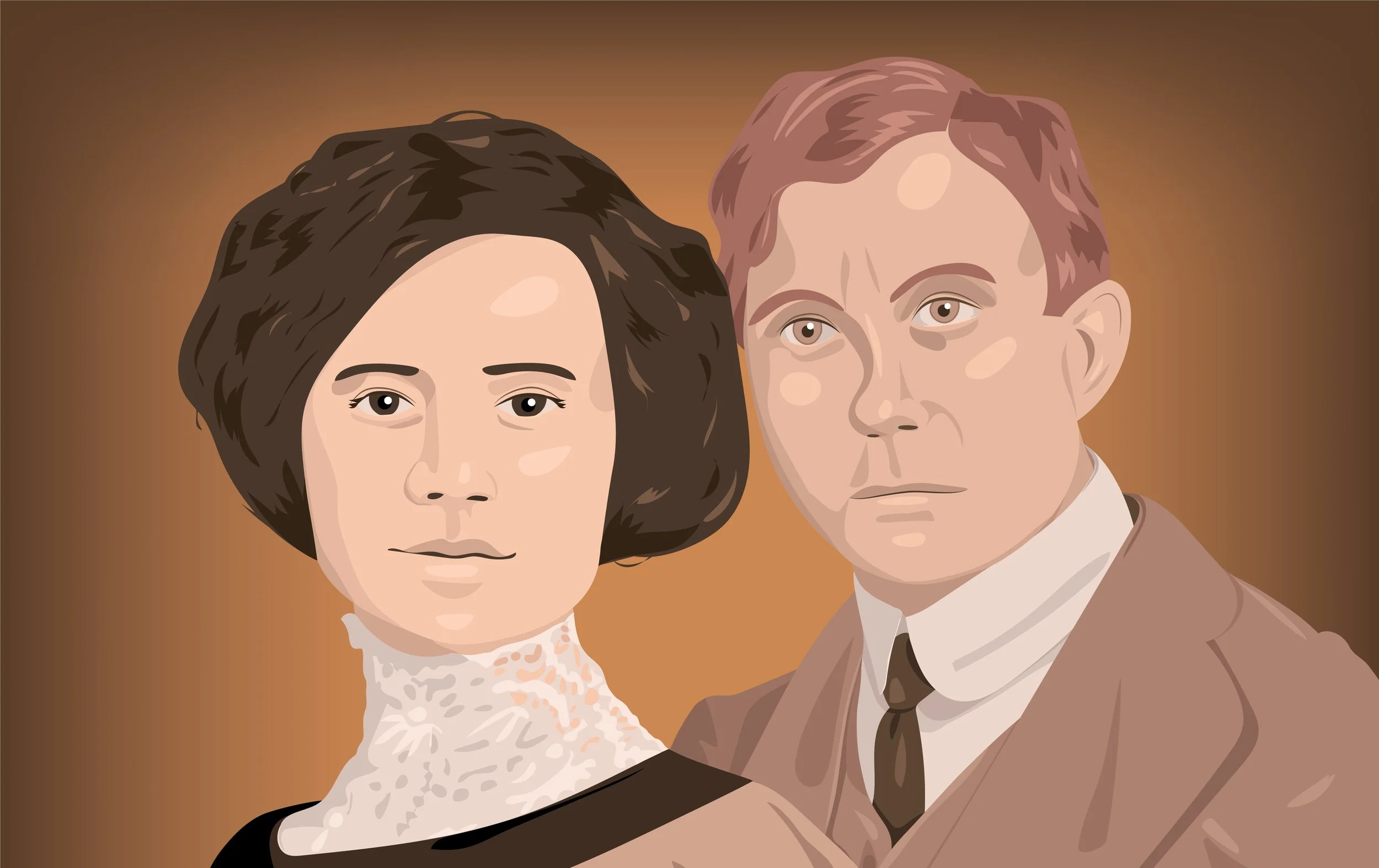
Illustration by Charlotte Easterling
Naples, Italy: March 27th, 1914
“Seamus? What’s wrong?” Rena asked with concern.
Seamus was reading the message the desk clerk had given them when they checked in. He looked stricken and sat down on the bed.
“Darling?” Rena was frightened now.
“My mother died,” he whispered. “She fell and hurt herself on the 15th and passed on the 18th.”
“Oh, Seamus.” Rena sat next to him and took his hand.
“They buried her already,” he said in a choked voice. “It all happened while I was gone.”
Rena stood. “Stay here. I’ll go see about changing our return tickets so we can go home.”
Seamus gently pulled her back. “No. There’s nothing I can do there.” He wiped at his eyes, and they sat giving and receiving comfort.
***
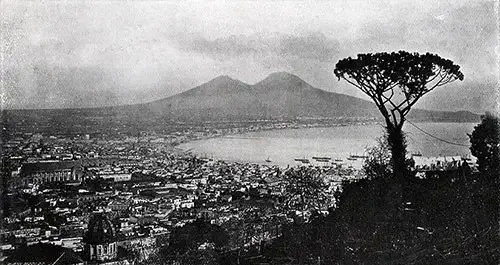
Naples, Italy circa 1906. Photo: GGA Image ID # 1766ff04b6
Despite the sad pall cast by the death of Seamus’s mother, Marian, they spent the rest of their honeymoon as planned. Their shared love of exploring and history and art led them to Pompeii, Rome, Venice, and Florence. They got to see Michelangelo’s David, the Coliseum, several Bernini sculptures, Botticelli’s The Birth of Venus, and a host of other art, architecture, and sculpture. Seamus found, somewhat to his surprise, that it did much to alleviate his grief.
All too soon, they were standing arm in arm at the railing of the liner taking them home.
“In spite of everything, sweetheart, it was a wonderful honeymoon and adventure,” Seamus said and got a lingering kiss in return.
Decatur, Illinois, 1919
Over the next five years, Seamus and Rena continued with the Chautauqua but also spoke and read at places like churches and YMCAs. And they continued traveling, visiting England, Ireland, and Quebec. But their shared travels were about to end, at least for a while.
In 1919, Rena’s niece Sadie wrote to ask if they could take in her daughter, Anna. Her husband had died in the flu epidemic and Sadie had gotten very sick as well. She needed to go stay with her parents to recuperate and didn’t want to uproot her daughter. Naturally, they agreed, and Anna came to live with them in October. She was eight years old.
Taking care of the girl changed their lives. They weren’t able to travel together, so Rena stayed home with her. She delighted in reading to the girl and buying her books.
“Rena, your sister is going to need a truck to get Anna home if you keep buying all of these for her,” Seamus told her one evening, picking up a copy of “Little Women” from a stack.
Rena laughed. “I know, but she loves reading and I want to encourage it.”
Seamus had to agree. He’d noticed that Anna always had a book with her, and he had even seen her giving a reading to some of her dolls once.
“Do you miss being on the road and doing your readings?” he asked Rena one time.
She nodded, and felt her eyes prickle with tears. She missed the Chautauqua and the time it gave her with Seamus. Taking care of Anna had been a joy, but she was also eager to return to the life they had built.
Seamus sat next to her and put his arms around her. He had to admit that he didn’t enjoy the Chautauqua as much without her and was finding it more tiring. At 58, the busy schedule of travel, performance, promotion, and management was less appealing than it had been when he was younger.
Decatur, Illinois: April, 1921
Rena’s sister returned and collected Anna as soon as she was able. Rena hugged the girl she had grown so fond of while Seamus loaded the car with Anna’s belongings. He gave Anna a goodbye hug too, and Rena gave her a parting gift of “Rilla of Ingleside,” the most recent book in the Anne of Green Gables series. They waved as Sadie and Anna drove off. They both felt a mixture of sadness and relief.
They stood, arm in arm, until the car was out of sight. They both sighed, but before long, Seamus asked, “How do you feel about Paris this September?”
She laughed and hugged him.
“I’ll take that as a yes,” he said and stole a kiss.
1921-1929
They continued with the Chautauqua, although Seamus shifted most of the management responsibilities to Charlie. He and Rena focused on doing their readings, exploring the towns on the circuit, and planning their travels in the off season.
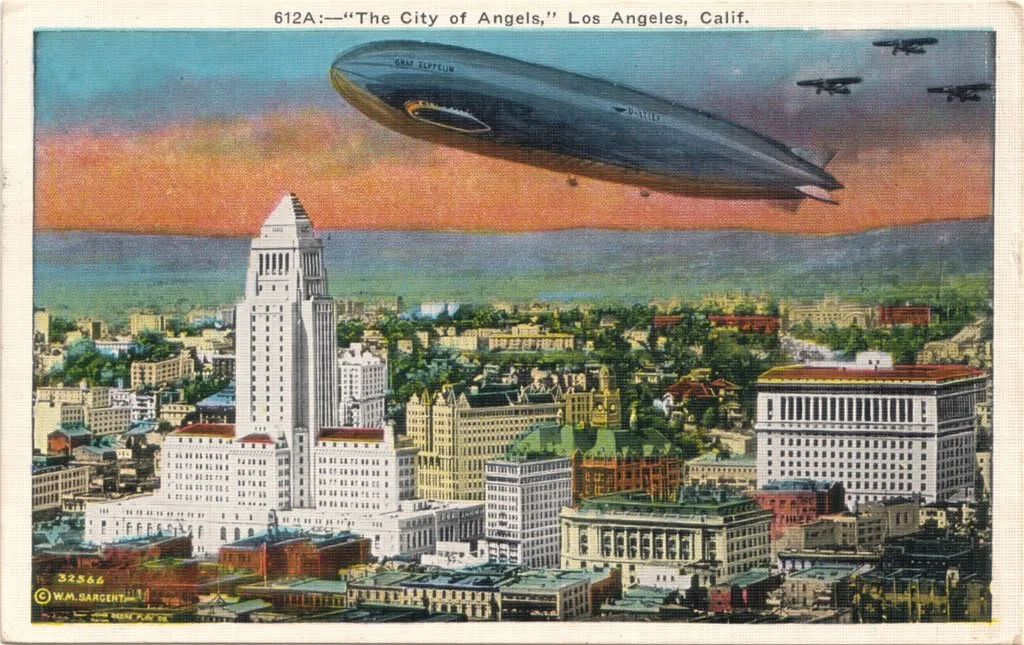
Los Angeles in 1929. Image: losangelespast.blogspot.com
This came to an end, however, in 1929 when Seamus developed a bad cough that turned out to be tuberculosis. The doctor suggested a drier climate to aid in his recovery, so they moved to Los Angeles. But not to be deterred, as soon as Seamus had recovered enough to be out and about, they started attending lectures, visiting museums, seeing movies (a new, pleasant diversion), and traveling up and down the California coast. They even ventured far enough to see the Grand Canyon in Arizona and the cliff dwellings in the Four Corners region.
On the train back home, Seamus took her hand. “Thanks for being my partner on all of our adventures.”
Rena smiled and leaned into him. “I can’t think of a better way to spend my life.”
They huddled together for a poignant moment, then Seamus kissed her hand and said, “You do know we have quite a problem.”
Rena sat up, worried, “What’s that?”
“We have to figure out where to go next.”
And with that, they started planning their next adventure.
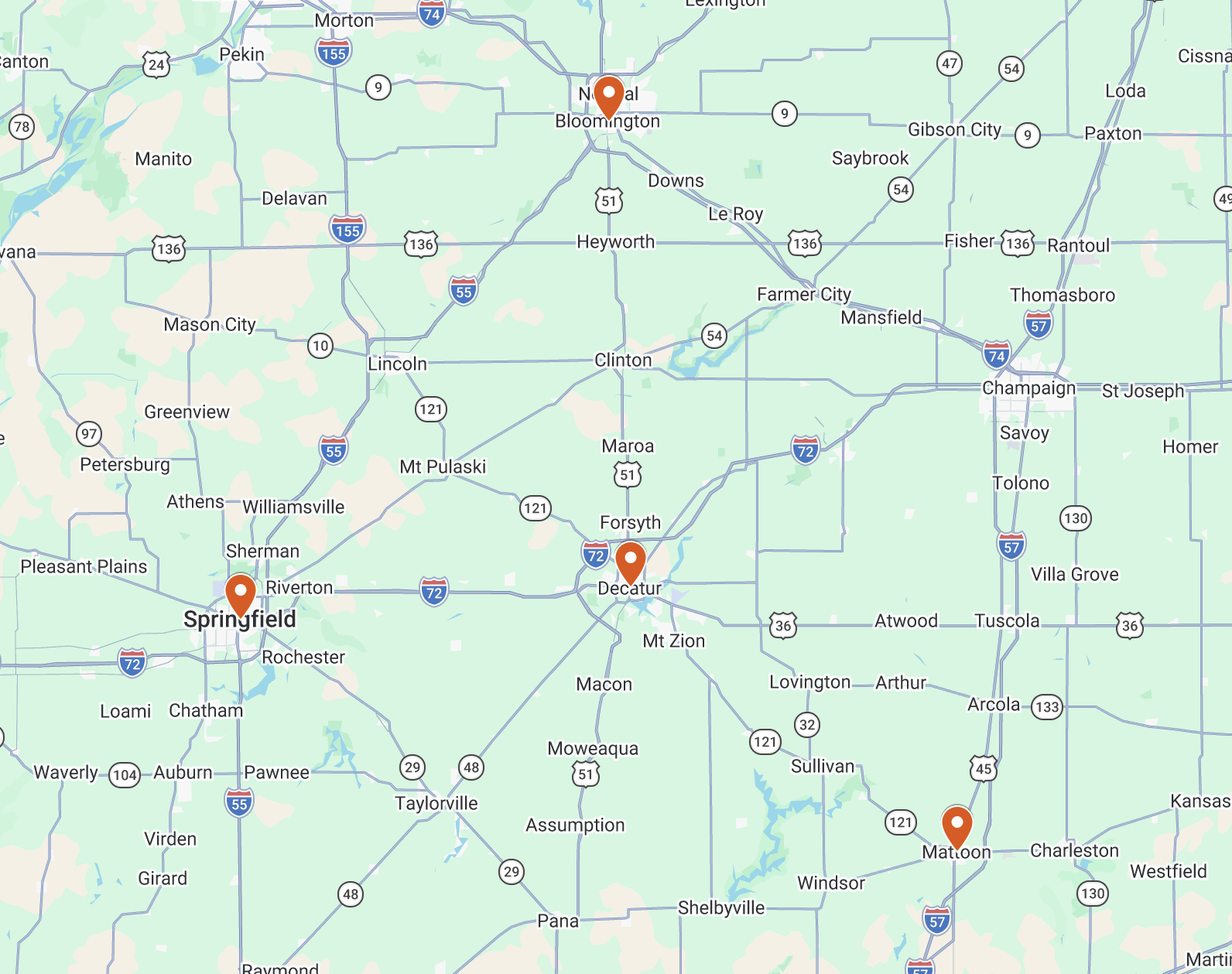
Bloomington (top), Springfield (left), Decatur (center), and Mattoon (right), Illinois. Map: Google maps.