
An Acadian Tragedy
Elyse Hilaire and her family were among the thousands of Acadians who were deported from Canada. Their story had a uniquely tragic end.
Written by Eric Shipley and Charlotte Easterling
The Minas Basin headed north: January 1764
“What’s wrong, Mamie?” Yves asked when he saw his grandmother, Elyse Hilaire, with a strange look.
She stood at the ship’s stern and didn’t reply immediately. Then she looked down at him fondly and put a hand on his head.
“Just thinking some long thoughts, mon cher.”

Grand-Pré today, photo: novascotia.ca
Grand-Pre was fading into the distance. Soon, it wouldn’t be visible. Robert, her oldest son, appeared beside her. (He and Marie, his wife, had come aft to see how she was doing.) He put an arm around her thin shoulders, at which she patted his hand.
“We’re going to be all right, Maman,” he murmured, laying his head against her white hair. “Thinking about Papa?”
“Oui.”
Robert saw how tightly her lips were pressed together and how her face was even more deeply lined than just a few months ago.
Such heartbreak, he thought. Such anger… but she’s earned it.
“I’ll never visit his grave again,” Elyse went on. “All thanks to the damned British!”
Being expelled had reopened some very old wounds. Henri, her husband, had died almost thirty years ago. He had joined a group of other Acadian farmers and a handful of warriors from the local Mi’kmaq tribe whom she’d distrusted at first. Now. though…
Good people, she thought. Staunch allies and friends.
Henri’s group had been guarding a parcel of farmland when the British raiders attacked. Henri had been killed along with one of the Mi’kmaq. For Elyse, the memory was vivid. The Mi’kmaq leader, Jean Baptiste (the French name he’d taken), had given her the news:
Many British struck with no warning. Henri fought bravely. I saw him kill one of their soldiers, but then he was cut down. You can be proud; I was honored to do battle alongside him.
She’d appreciated the words, but they’d done nothing to lessen her terrible loss and grief. Over time, but not quickly, her grief had retreated only to be replaced by deep resentment and rage.
She pounded her fist against the gunwale. She was proud that she and her family had refused to bend knee and swear allegiance to the English king, but they’d paid dearly for their defiance. After Great Britain had taken over Acadia, the damned British troops had continued their attacks and had tried to starve out the Acadians by burning their crops. (They’d nearly succeeded.) And then the deportations.
Kicking us out of our own homes and giving them to British colonists!
They had fought and resisted to no avail, which renewed thoughts of her daughter Justine. Her husband Louis had been captured and taken to England. They’d never learned of his ultimate fate, but there was little doubt he’d died. So, in the first wave of deportations, Justine and her children had left Acadia, bound for Louisiana. But they never got there. A sickness had swept through their ship, taking away Justine and many others. Then, when the ship was turned away from New Orleans, it had gone to England instead. Elyse didn’t know what had become of Justine’s children. It was still a deep ache.
The eastern Atlantic Ocean headed south: February 1764
She found a measure of happiness watching her middle son, Sebastien, as he fussed over his wife, Claudine. They had been married four years, and at long last she was expecting their first child. Despite the warmth now that they had reached the Caribbean, he kept wanting her to wear a shawl or sit under a blanket. Elyse finally stepped in.
“Sebastien, you leave her be! She’s thirty years younger than you. If anyone needs that blanket, you do.”
“Maman!” Sebastien exclaimed. Claudine hid a smile.
Elyse waved him off. “Come on, come tell me about the colony at Saint Domingue. Captain says we’ll be there day after tomorrow. I’m ready to see our new paradise.”
Sebastien scowled but relented and sat beside her. He was proud of himself for securing a place for all of them on the vessel going to Môle-Saint-Nicolas.
“It’s like Grand Pre, on the coast,” he said. “The river makes for rich farmland. We’ll have to build everything, but in no time we’ll be prosperous again.”
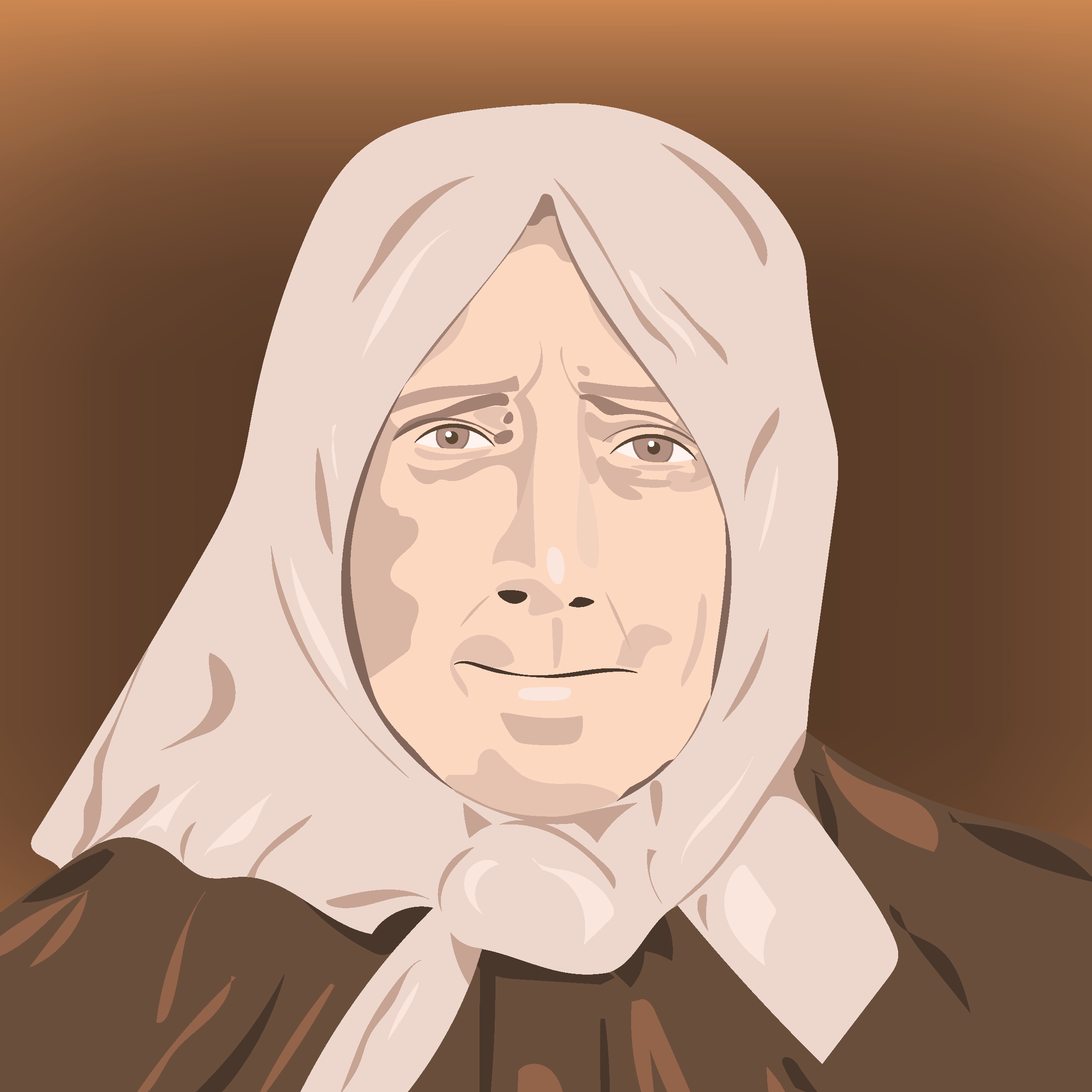
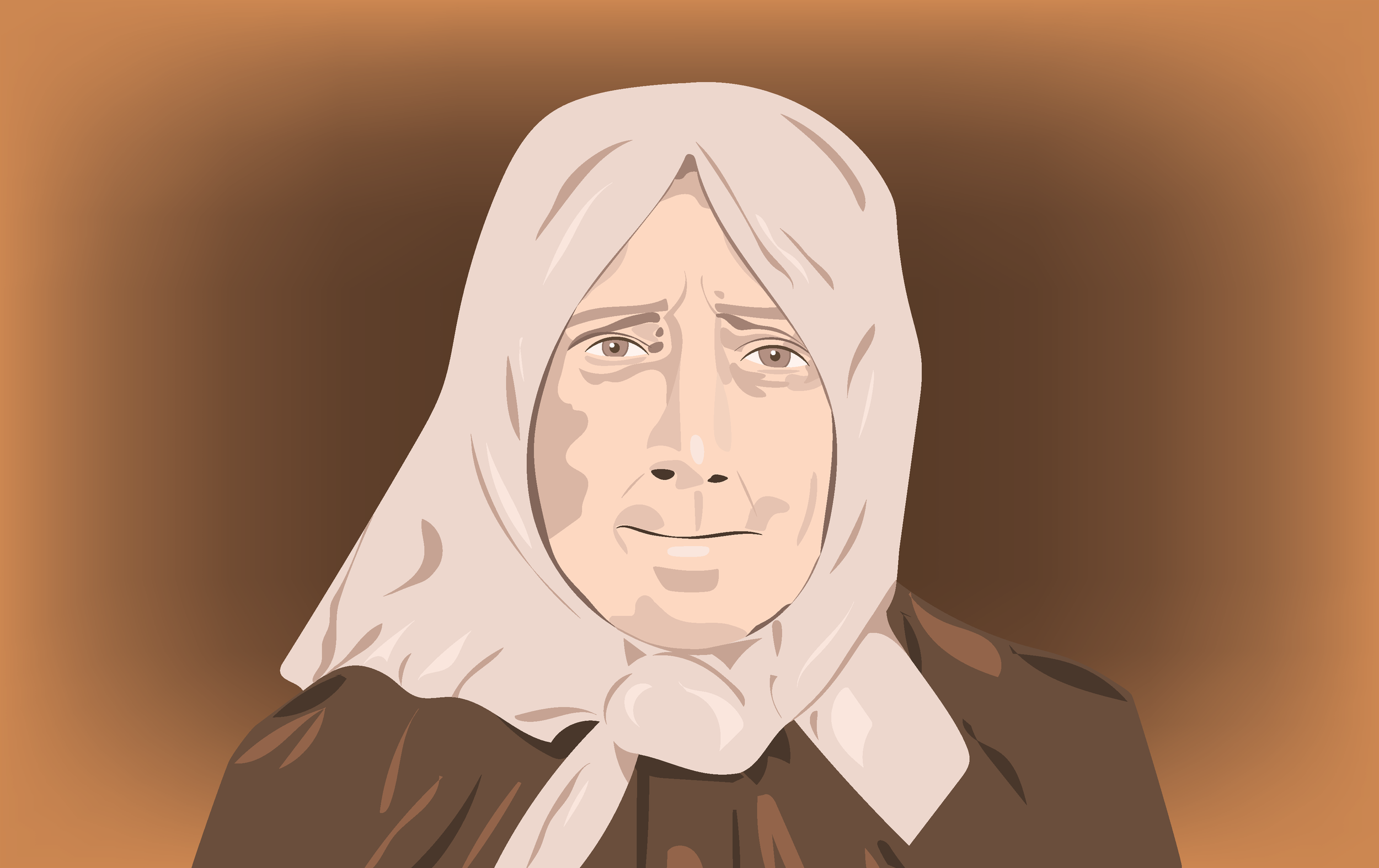
Illustration of Elyse Hilaire by Charlotte Easterling
He cast a glance at his wife who was talking with some of the other young wives, so Elyse shooed him in Claudine’s direction. Left by herself, she brooded about the very likely prospect that she’d never get over being forced out of Grand-Pre, but the promise of a fresh start in Saint Domingue became more alluring with each day. And she felt incredibly blessed—she and her three sons, their wives, and her grandsons were all alive and together.
Maybe there is hope, she thought, trying to boost her own spirits.
She stood and stretched gingerly. She would be seventy-eight next month, old to be starting over, but there was no point in feeling sorry for herself. The worst was behind them. Or so she thought.
Saint Domingue: Early February 1764
“Mamie! Tell us about Grand Pre!” shouted Elyse’s grandsons.
It was a familiar refrain. One that made her wistful. When she was young, she’d discovered a talent for telling stories, and in her youthful, more hopeful life, she’d started writing them down, but they’d been lost when the British burned her house. She wondered whether she could have published her stories if she hadn’t had to struggle to feed and support her family through the British oppression.
More possibilities stolen, she thought resentfully.
Her grandsons looked at her doubtfully, which made her put on a strained smile. She was determined not to visit her regrets on this younger generation.
“Once there was a beautiful land called Acadia…” she began.
Saint Domingue: Late February 1764

Môle-Saint-Nicolas River. Photo: Boukan Guinguette
When Elyse and her family arrived in Saint Domingue, Bertrand de Saltoris, the overseer of the new colony, greeted them enthusiastically. He was eager for them to get established. She watched the children freshly off the ship racing along the beach, laughing and enjoying finally having room to run. She and the other women were clustered together, looking at the white sand beach, blue water, and dense foliage.
“I thought there was a colony here,” one of the women said worriedly.
“There is,” Elyse assured her. “My son told me there’s still work to be done, but we’ll be living comfortably soon.”
The woman nodded, looking doubtful. Privately, Elyse shared those doubts. She looked at the group of men gathered around Monsieur Saltoris, deep in conversation. There had been more than 500 people on the ship, but that included women, children, and old men. Were there enough young men to do the work needed here? She could see Edmé, Sebastien, and Robert looking at the river running into the dense trees. The looks of concern they wore left her feeling discouraged.
Claudine, standing by her side, noticed too. Elyse gave her hand a reassuring squeeze.
Saint Domingue: July 1764
“We were lied to, Maman,” said Edmé, her youngest son, with desperation in his voice. Anne, his wife, put a hand on his shoulder.
The whole family had pooled all their funds to pay for passage. They’d been promised farmland in exchange for working to build roads and clear land. Yes, it would be hard work, but they were farmers. They were prepared. However, the colony that was supposed to be waiting for them turned out to be non-existent. And the farmland had flooded, sweeping away the good soil. They were living in tents, barely surviving on meager rations.
Elyse looked around at her sons, dirty and sweaty from the day’s labors. Her daughters-in-law, (Claudine now heavy with child), and her grandsons were all thin and pale, their clothes faded by the sun.
“There’s a group going inland to Le Mirebalais,” said Sebastian. “The land there is better, and it’s already settled. We’d have better living conditions while we get established. I think we should join them.”
Elyse nodded. Anything, she thought, is better than this.
Saint Domingue: August 1764

Mirebalais, Haiti today. Photo: Centre Culturel Spirituel & Traditionel
A month later, Elyse and her family were among the almost 200 Acadians who arrived in Le Mirebalais. Their hopes of receiving land were quickly dashed-–the plantation owners wanted workers, not landowners. They did at least have small houses that provided better comfort than the tents at Môle-Saint-Nicolas. Elyse settled in with Sebastien and Claudine so she could help with the baby.
Her new grandson arrived later that month, but he was small and weak. Sebastian, despite his exhaustion, beamed as he held his son. Fifty-six might be old to be a first-time father, but he didn’t care.
Robert congratulated him and Edmé clapped him on the back and winked. “Good job, old man! Glad you finally figured out how it all works.”
Yves studied the baby intently, then looked up at his father, Robert, and grinned.
“He looks like an old man, Papa!” he said, which got a laugh out of everyone.
Elyse had hoped for a granddaughter, but she couldn’t complain. A new grandchild was something to celebrate. Still, she was worried; everyone was exhausted and far too thin. They were all working on the sugar plantation, which was grueling, dangerous labor. Claudine and Elyse were the only two who weren’t expected to be in the fields, but the rest (including her 10- and 13-year-old grandsons) were out from sunup to sundown.
Edmé kissed Elyse, then collected his wife and sons so they could go back to their little house. Robert followed suit. Sebastien handed the baby back to Claudine and kissed her on the top of her head. Elyse could see the concern in his face. The baby was very small and Claudine was having trouble feeding him.
“I’m going to bed, ma chere,” he said quietly.
Elyse got up and took her grandson. “You go too, Claudine. I’ll put the little one to bed.”
Claudine nodded and gave her a wan smile before following her husband to their pallet.
Saint Domingue: September–November 1764
Elyse would remember that August night as the beginning of the very bad times. Early in September, Edmé suffered a bad cut while working in the cane fields. It became infected, and despite the doctor’s best efforts, Edmé died later in the month, burning with fever.
And the family was granted no reprieve to mourn and recover: Claudine and Sebastien’s son died in early October. The sickliness he’d shown since birth never improved. They buried him in a small grave next to Edmé’s.
The weeks after that went from heartbreak to nightmare. A yellow fever epidemic broke out, and in quick succession, Sebastien, Marie, and Elyse’s last two grandsons all succumbed. Anne (now Edmé’s widow) lingered a bit longer, but died in early November.
So all too quickly, Robert, Claudine, and Elyse were the last of their family. Robert moved into the little house that Claudine and Elyse shared. Their grief was overwhelming, but at least they weren’t alone. Robert worked in the cane fields and Claudine cooked for the family who owned the plantation. Robert was grimly determined to survive but came home every night angry and exhausted. Elyse wearily tended their house and cooked meals that were eaten in silence.
Saint Domingue: December 3rd, 1764
Robert woke to a quiet house and sat up, concerned. Maman was usually awake before him, making breakfast. He went to her curtained pallet and tapped on the frame.
“Maman?” he whispered.
No answer.
Fearing the worst, he slid back the curtain. Elyse was gray and cold. He bent down and kissed her forehead.
“I’m sorry you were so troubled, Maman. Be at peace,” he said through stifled tears.
He sat with her a few moments, then got up, slid the curtain back in place, and went to tell Claudine

1: Grand-Pre, Nova Scotia. 2: Môle-Saint-Nicolas, Haiti. 3: Mirebalais, Haiti.
Subscribe to learn more about the real people
and historic events behind this story.
The King’s Daughter
Josephine was a young woman who was sent to the new world to help secure France’s place in North America.
Jean Soulier carried his infant daughter up the steps of the convent. She was a few months old now. He could feel her fist clutching his vest, and when he glanced down, he saw her gazing up at him.
He lay her in the turning cradle and wrapped her thin blanket around her more tightly. He ran the back of his finger across her soft, chubby cheek, then placed a piece of paper on her chest, weighted with his dead wife’s rosary. He rotated the cradle until she was safely inside, rang the bell by the door, and hurried down the steps. He knew the holy sisters would be able to care for her far better than he could.
Sister Anne came to the door and looked around after picking up the baby, hoping to see someone watching, but knowing she wouldn’t. This was a common occurrence. Babies were left in their care all the time. She looked at the piece of paper that Jean’s priest had provided for him. It read, “This child is Josephine Soulier, born in Paris, 1649. Her parents are Jean Soulier and Armandine Vaux. Her mother died of plague.”
1669
Josephine quickly tucked her hair under her coif, then hurried after Louise. Morning devotions were at 5:00, and the sisters would punish them if they were late. Josephine paused to tie her apron, and Louise looked back at her impatiently.
“Come on, girl! Sister Phillippe will have us cleaning up shit all day if you don’t hurry up!”
They ran to the chapel and then slowed to a respectable pace once they were almost outside the door. Running would also spark Sister Phillippe’s outrage. They stepped into the candlelit chapel, and Josephine sighed contentedly. The smell of candles and incense filled the room, and the silence was broken only by the quiet rustling and shuffling of women getting settled. She had never told anyone, not even Louise, but she wanted to join the holy sisters now that she was old enough. She settled onto her knees, clasped her hands, and lowered her head.
This is where I belong, she thought, as the morning liturgy began.
After devotions, Josephine and Louise sat together for breakfast. Josephine looked up after saying grace to see Louise smirking at her.
“You’re thanking God for watery gruel and stale bread?”
Josephine frowned at her friend. “We should be grateful for what we have. Let’s eat.”
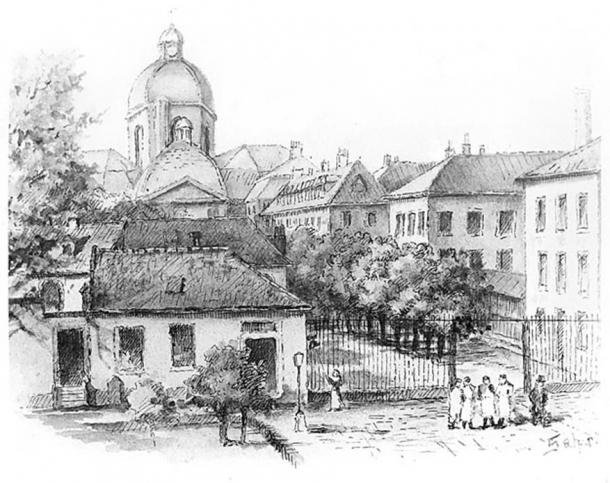
The Salpêtrière in Paris, circa 1670. Image: Wellcome Images
She tucked into her meager meal, hoping it would end the conversation. Louise had come to the Salpêtrière orphanage when she was 10. She was from a family with nine sons and two daughters, and her parents couldn’t afford to care for all of them. Louise reminisced about life outside the orphanage often, telling Josephine about the fine clothing people wore, the delicious foods they ate, and how they walked around freely.
“You don’t know what you’re missing because you’ve never been outside these walls,” Louise told her. “You think it’s not so bad because it’s all you’ve ever known.”
Josephine had wanted to respond angrily and point out that a family so poor they had to give away their daughter probably didn’t wear fine clothes or eat delicious food, but she held her tongue. They finished their meal in silence and then continued their day.
The rest of their morning was taken up by tending to the young children at the orphanage and by bible study until midday devotions. Their afternoon was spent spinning and sewing. Some of the girls learned how to make lace, but Josephine’s hands had never been clever enough for that. Louise tipped her head toward the lace-makers.
“Those scobberlotchers will end up at the king’s court, making fancies for all the ladies while we’re still here picking nits out of our hair.”
Josephine took a deep breath and was about to confess to Louise about her wish to become a nun, when Sister Martine appeared by her side and gestured for her to follow. Louise raised her eyebrows, then quickly returned to her work.
Josephine followed Sister Martine across the courtyard and into a small room. She was surprised to see two women she’d noticed the nuns talking with over the last few days. They were well-dressed, and suddenly Josephine understood who they were. She had heard other girls talking about them. Then her heart dropped as she realized her hopes of becoming a nun would never be fulfilled.
“Josephine, we’re recruiting young women to go to New France so the men there will be able to marry. The king will pay your way and provide you with a trousseau and a small dowry. We know you’ll be proud to serve your king and country this way. We’ll be back in two days to collect you and the other girls for the journey.”
Sister Martine nudged her out of the room. As they crossed the courtyard, Josephine saw another nun escorting a girl to meet the women.
I’m a fille du roi, she thought, stunned.
Two days later
Josephine was among a cluster of young women gathered in the courtyard, waiting for the coaches that would take them away. She was bleary-eyed after a fitful night’s sleep. Louise and the other two girls who shared their bed had complained at her because she was tossing and turning so much. She’d finally fallen asleep in the wee hours, only to be shaken awake soon after for devotions and then a hurried breakfast.
Now she stood with her stomach churning and her head throbbing. All the women in the group had new dresses, coifs, and shoes, and each had a small trunk next to her that held their modest trousseau of sewing supplies. The night before, Josephine had tucked her dowry money of 2 livres at the bottom of her trunk alongside her rosary and Bible (which contained the worn piece of paper with her parents’ names on it). She fidgeted and sighed, and Louise nudged her and pointed at the approaching coaches. “There they are!” Josephine nodded, but couldn’t speak.
The two women who had recruited Josephine and the other filles du roi stepped out of the first coach, setting off a flurry of activity. Men began loading the trunks while the nuns directed the young women. Josephine grabbed Louise’s hand so they wouldn’t get separated. Sister Phillippe hustled them into a coach with six other women where they sat, hip-to-hip, knees almost touching across the narrow aisle between their seats. They looked at each other silently. Josephine saw a mix of terror and excitement in their faces. There was a sudden jerk that made them all cry out, and then the coach was moving. Josephine turned as much as she could to look out the back window. She’d never seen the Salpêtrière from the outside. The heavy gate closed, and she watched as the walls grew smaller and smaller, and then were gone when they turned a corner.
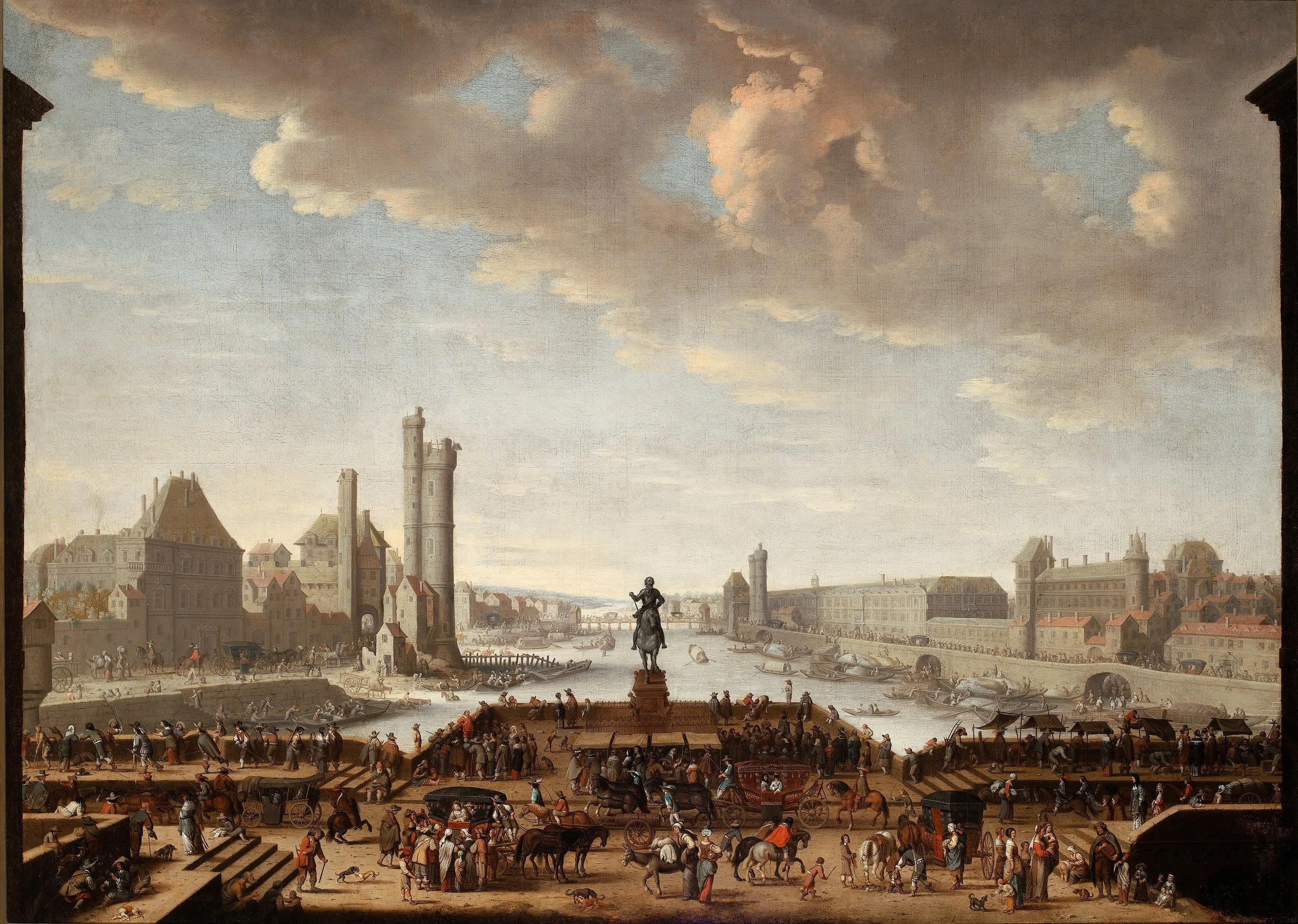
The Pont Neuf in the 1660s. By Unknown author,Jean Petit (d. 1651) (?) - www.wilanow-palac.pl, Public Domain, https://commons.wikimedia.org/w/index.php?curid=20154921
As she looked out a side window, Josephine was shocked by how many people filled the street. Louise had told her Paris was a big city teeming with people, but she’d never imagined what that looked like. Some of the people stopped and stared at their coaches as they left the orphanage, and she heard some of the men jeering at them. One of them shouted, “Whores!” as they rolled past. Josephine gasped in outrage and pulled away from the window. But the sights soon drew her back, and she gazed out at the city, fascinated by everything that had been just outside the walls of her home for all of her life.
Louise leaned close and whispered, “See, I told you,” before resting her head against Josephine’s shoulder and dozing. Josephine felt her own eyelids getting heavy, and drifted off as well.
She woke up when the coaches stopped. She couldn’t tell how long they’d been traveling but was surprised to see that they’d left Paris behind.
The door to the coach opened and a man’s voice said, “You can step out, but stay close to the coach.”
They climbed out awkwardly, navigating the small steps down to the ground with a bit of help from the soldier who had opened the door for them. Josephine stared at the surroundings. It was quiet, other than the voices of the men who were tending to the horses. She heard birds and the wind in the trees.
Their chaperones, the two women who had recruited them, finally introduced themselves as Madame Lavigne and Madame Blanchet. They were handing out bread, cheese, and wine, which most of the girls gobbled up eagerly. Josephine, however, studied her cheese before nibbling at it. She’d tasted it just a couple of times before when the orphanage had received some as a gift at Christmas. The soldier who had helped them out of the coach came back and started hurrying them inside again.
Louise groaned a bit. “I’m not used to sitting so much. I’ll have to practice for this life of leisure, though, once I have a rich husband in the colonies.”
Josephine laughed. “Rich?! I heard they all went to the colonies because they were poor.”
Sylvie, who was sitting across from them, spoke up. “I heard some of them are prisoners who were exiled from France.” She sounded scandalized, but Josephine noticed that her eyes were sparkling with excitement.
The coach lurched forward, and Louise had the final word on the subject.
“Someone owns the land and runs things in New France. I plan on finding one of them who does and marrying him.”
Same day, a few hours later
After a tolerable (at least to Josephine) continuation of the trip, they reached the convent where they would spend the night, and they arrived in time for evening devotions. Josephine wished she had kept her rosary in her pocket instead of packing it away–she felt naked without it as she knelt in the chapel.
Their evening meal was richer than any she had ever eaten. Rather than the thin broth she was used to, they were given a thick stew full of meat and vegetables. There was butter for the bread, and they were given cider to drink. After the meal, the nuns brought out something Josephine had never seen before. It was dark and sticky and smelled delicious. She glanced around to see how others were eating it, then picked up her spoon and cut off a soft bite. It was smooth on the inside and tasted unlike anything she’d had before. The exclamations from around the table told her the other women were just as delighted.
They slept at the convent that night, two per bed, two beds to a room. Josephine curled up next to Louise. Her stomach was gurgling a bit–she wasn’t used to such food as she’d eaten that day! She drifted off to sleep, hearing Sylvie’s soft snores from the other bed. What was a rare experience for all of them became routine as they worked their way to Dieppe. The farther they got from Paris, the more excited they were to reach the new world.
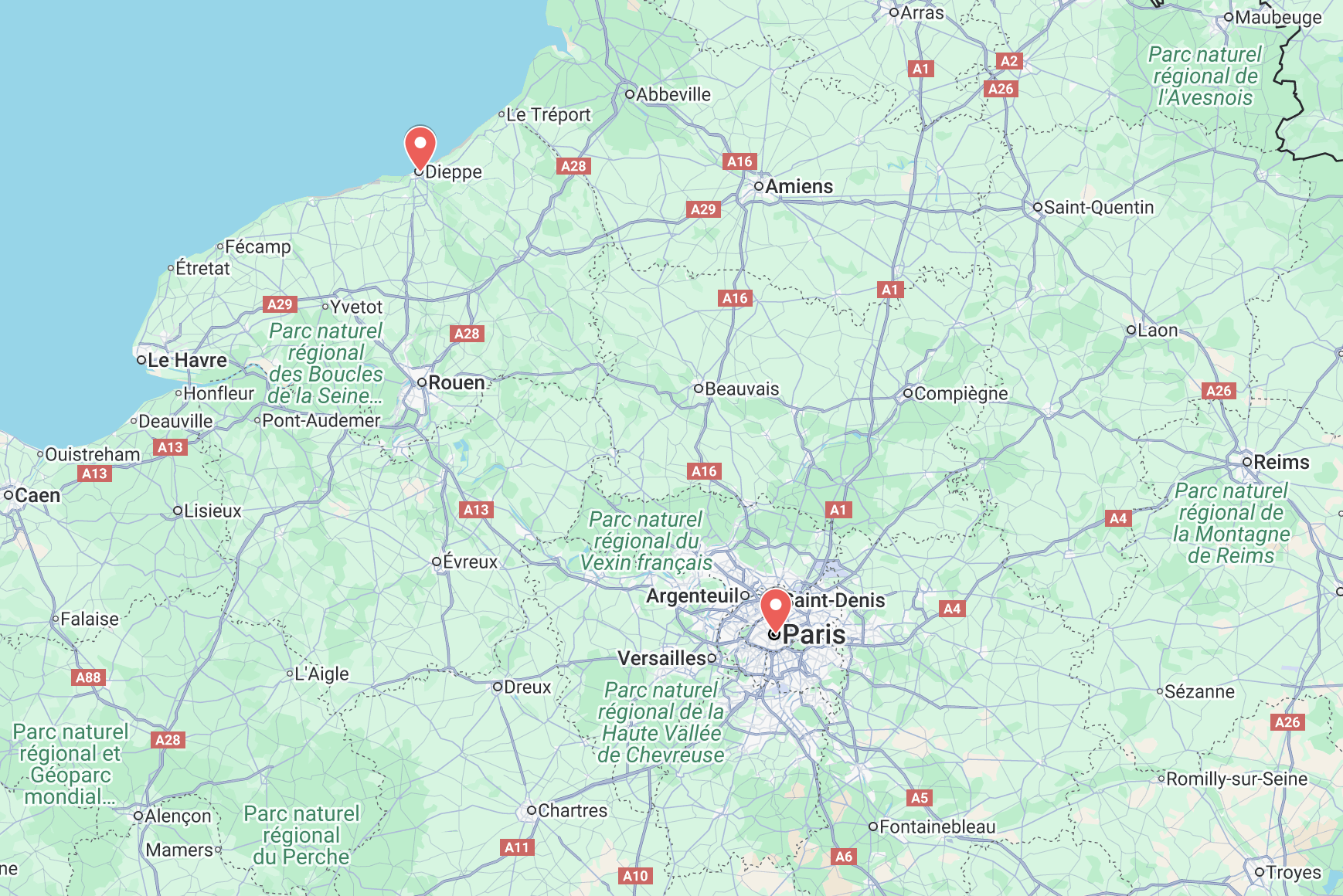
The journey from Paris to Dieppe would have taken 3-4 days. Map: Google Maps.
May, 1669
Louise worked her way down to the lower deck of the ship taking them to New France, and then quickly covered her nose and mouth with her handkerchief. Josephine had adjusted to the smell enough to breathe openly, but she still noticed the foulness. It had been bad from the beginning. Now, a month into the journey, it was almost unbearable.
Louise came and sat beside her. “How is she?”
“I don’t think she’ll last the night.”.
Sylvie had gotten the bloody flux about a week ago. Others on the ship were sick as well, but most of them seemed to be recovering, or at least not getting any worse. Sylvie, though, was one who kept getting sicker, and she had refused food for the last two or three days. Now she was sleeping fitfully, occasionally groaning with pain. Josephine was holding her hand, and Louise took her other one.
They sat with her, praying, reading Bible passages to her, and trying to soothe her when a bad stomach cramp made her groan or cry out. As the night passed, she grew still and quiet, and slowly stopped breathing. Louise and Josephine did their best to clean her up before two men from the crew came to collect her early the next morning.
They followed the men to the upper deck, and Josephine took deep breaths of the fresh, salty air. The chaperones and the rest of the women who were well enough gathered on the deck. Captain Boche offered a brief prayer before Sylvie’s body was dropped overboard. The splash it made was pathetically small. Josephine was suddenly overwhelmed by everything that had happened since leaving Salpêtrière. She rushed to lean over the railing of the ship and vomited. A sailor who saw her laughed.
“Looks like someone’s smuggling a stowaway in her belly!”
Louise glared at him and put an arm around Josephine. They found a place to sit, and Josephine pulled a smooth stone out of her pocket. Sylvie had collected a handful of pebbles from the beach at Dieppe before they boarded the ship. As they sailed away, watching the tall tower and the white brick houses grow smaller, Sylvie had handed out the stones. “This is so we can take a piece of France with us to the New World.” Josephine clutched the stone tightly as tears rolled down her cheeks.
“Josephine, look!” Louise said, pointing to the water where a pod of dolphins was racing alongside the ship. Josephine gasped and laughed despite her tears.
“It’s Sylvie!” Louise said. “It’s Sylvie going to heaven!” They held hands while they watched the dolphins leap and splash.
July, 1669
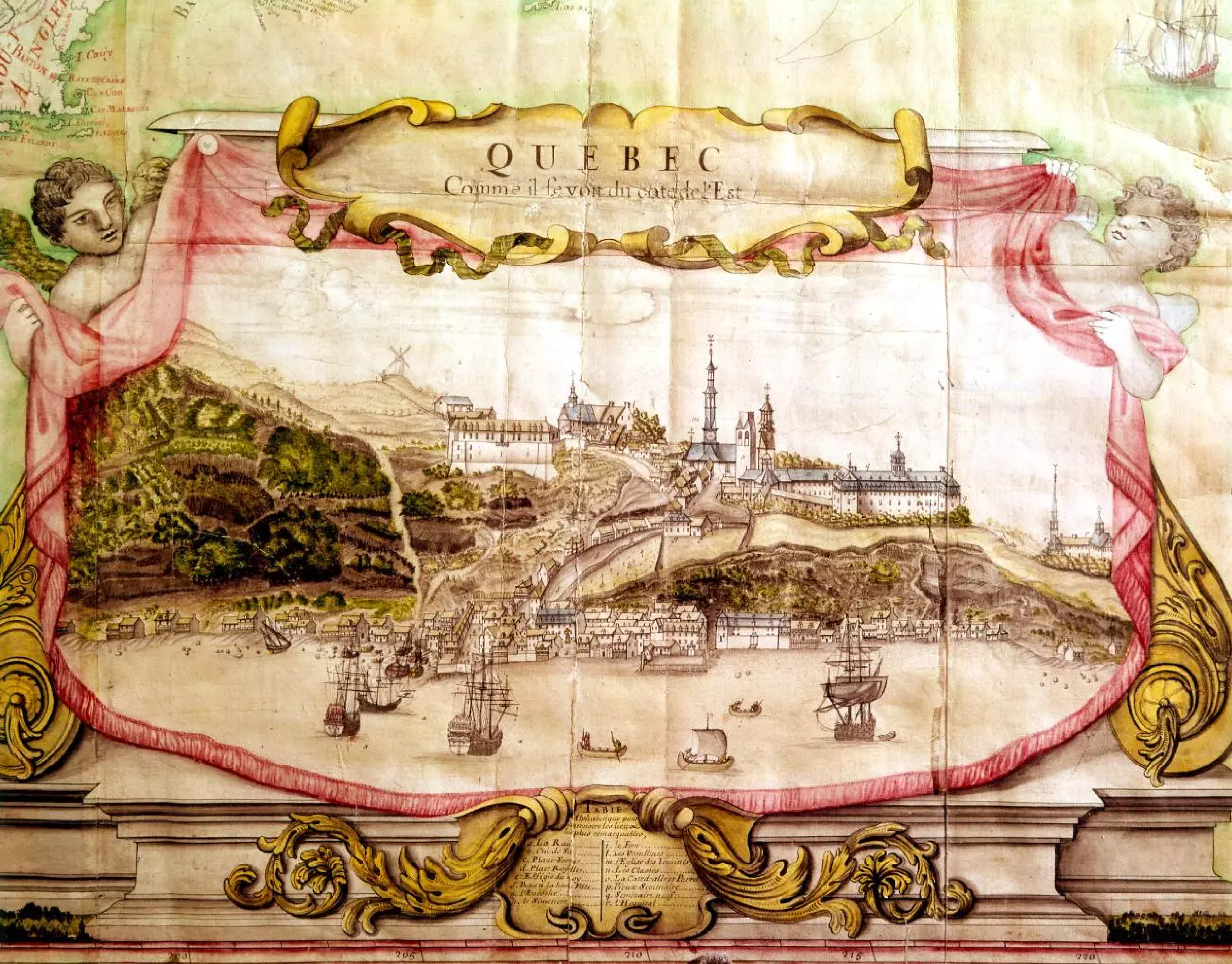
Quebec City c1688; image: quebec-cite.com
As their ship finally arrived in the Quebec harbor, Josephine reflected on the three other women who had died after Sylvie. She watched with a pang of sadness as their small trunks were unloaded from the ship. She stumbled once they were back on land. A rough hand steadied her. It was one of the sailors who was unloading their trunks.
He guffawed crudely. “You’ll get your land legs back soon. Just in time to stick ‘em in the air!”
Madame Blanchet took her arm and hurried her along the dock while Josephine blushed angrily at the loud laughter behind her. While they waited to board the wagons that would take them to the convent, she looked around at her new home: steeples jutting up over city walls, miles of green, rolling hills, and the wide river. She fanned herself a bit. The sun was hot overhead, and the air was muggy and still.
She took a deep breath of this new air and then climbed into the waiting wagon. The journey was almost done.
May, 1670
“Josephine, come look!”
Louise and Marie-Claude were peering into the wigmaker’s shop. She joined them and admired the elaborate styles even though she thought them terribly impractical. Sister Agnes gave them a few minutes, then prompted them to move on.
“You have suitors coming to the social tonight. Let’s go back so you can be rested and cleaned up before evening devotions.”
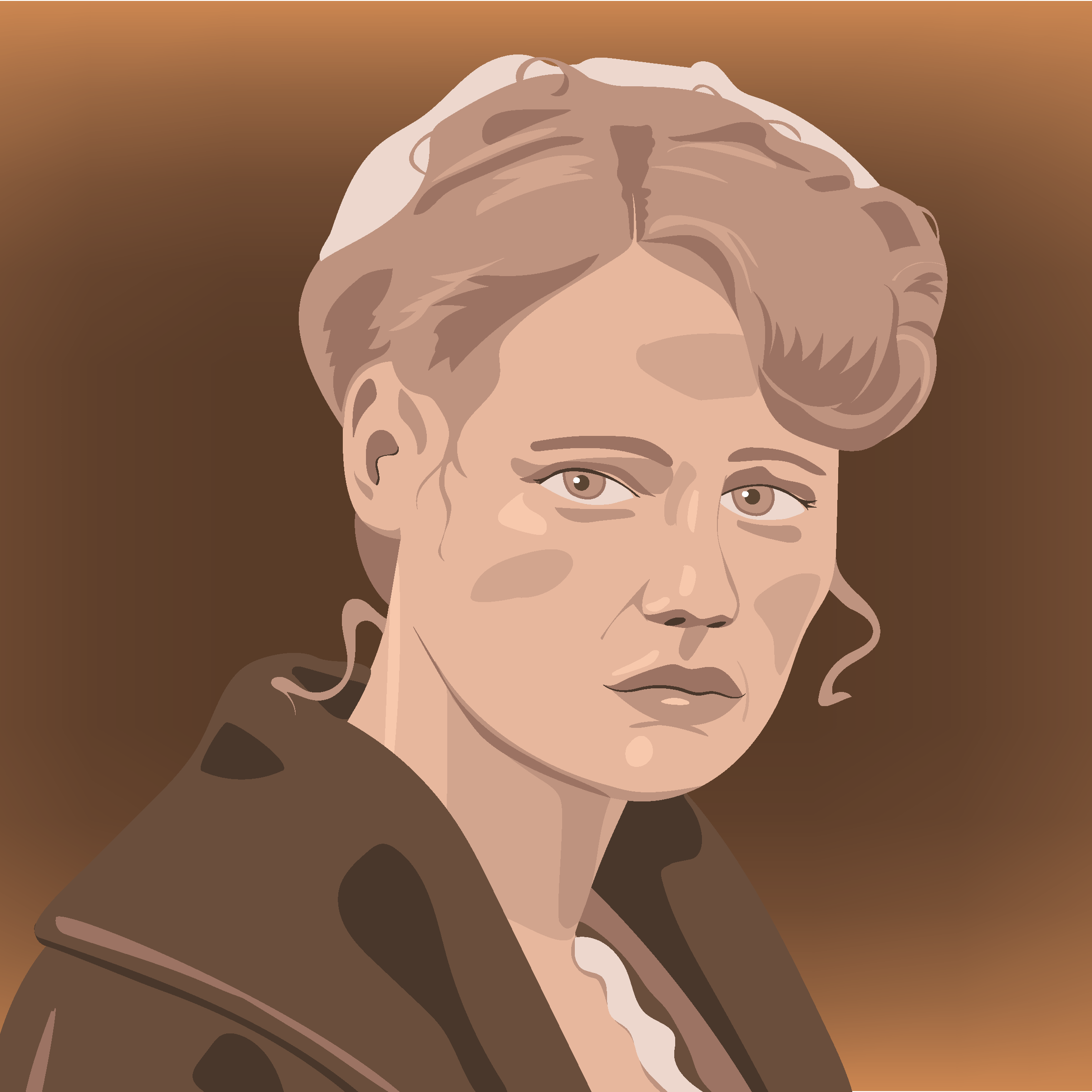
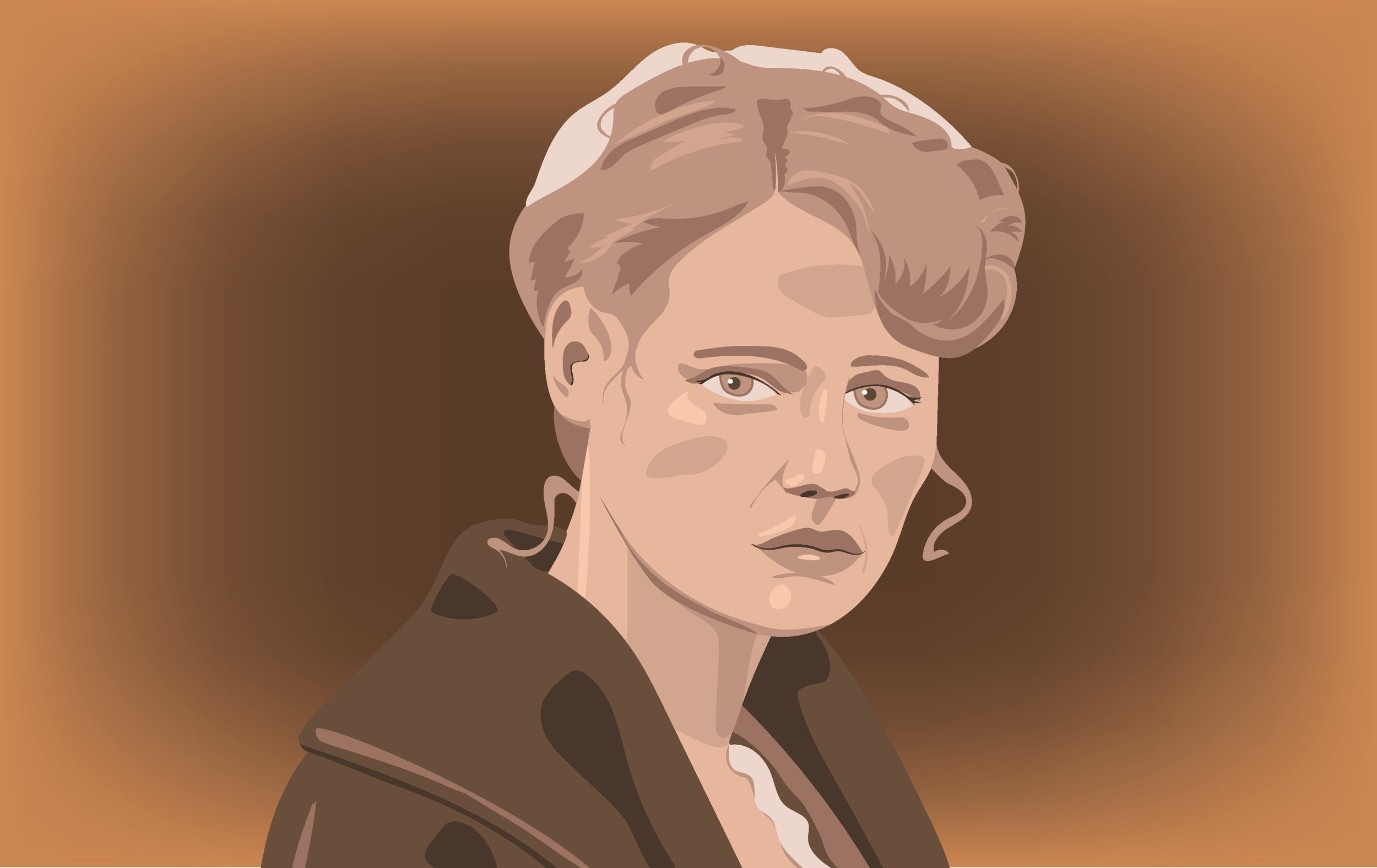
Illustration of Josephine Soulier by Charlotte Easterling
Louise and Marie-Claude walked ahead, talking excitedly. Josephine felt an ache watching them. Plump, rosy-cheeked Louise had decided quickly whose proposal she was going to accept. Jean Renaud and his older brother were traders who imported goods from France and exported furs in exchange. They were wealthy and well-connected, and Jean had been quite taken with Louise since their first meeting. Josephine was happy for her but a bit jealous too. She would be needing some fancy wigs for her new life as Madame Renaud. Josephine’s prospects were more modest.
Despite Sister Agnes’s insistence that they rest, no one did. Having a day off from their seemingly endless lessons in reading, writing, math, and homemaking, combined with the prospect of meeting new suitors left them all too excited. They washed their faces and hands before changing into their nicest dresses–provided by the king’s purse to help them look their best. Marie-Claude helped Josephine with her hair.
“If we plait it like this, it might make your face look rounder,” she said.
Helene, who was standing nearby, snorted. “Nothing will make her look plump, Marie-Claude. The best we can do is help her not look like she’ll blow away in the first blizzard.”
Louise glared at Helene. “Ignore her. She’s just jealous that you look better in green than she does.”
Josephine smiled wanly at her friend. Helene was right, though. When they first arrived in Quebec, Sister Agnes had fussed over her for being too thin, and fretted that it would make it harder for her to find a husband. And some suitors had indeed passed her over, saying they wanted a wife who wouldn’t waste away during the winter. But there were currently three men who were still courting her–two who had just finished their periods of servitude and were ready to start their own farms, and one who was a trapper.
Sister Agnes came to fetch them for evening devotions. They followed her into the chapel to pray and receive blessings. Josephine’s prayer was always the same: “Please guide me to choose the right man to be my husband and father of my children.”
At the social, a man she hadn’t met before introduced himself as Jacques Levesque. He wasn’t handsome, but he was quiet and kind.
“I have a small farm on Île d'Orléans,” he told her. “I built a house there, so it’s ready for a family. I was a soldier, and now I’m a farmer.” He wasn’t boastful, which Josephine liked. She smiled at him.
I believe I would like to see his little farm, she thought.
October, 1676
“Don’t drop that pumpkin, Antoinette!” Josephine called to her daughter as she carried it awkwardly to the root cellar.
“I won’t, Maman!” she called back, then scolded her younger brother when he tried to follow. “Paul, you stay there. You’re too young to help,”
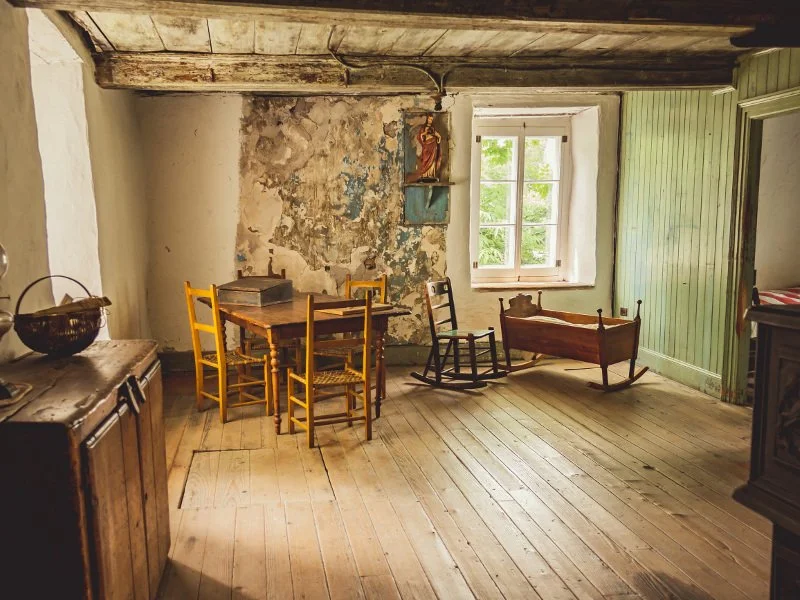
The interior of Maison Drouin at Ste Famille, built 1730, shows what Josephine and Jacques’s home may have looked like. Photo: S. Girard, bonjourquebec.com
Josephine sighed as Paul began to cry. She was kneading bread dough and didn’t want to leave it, so she sang “By the Clear Fountain” to him until he quieted down. Jacques came home while she was singing and laughed with delight. “We’re singing!” he cried and launched into a bawdy drinking song. When he was done, he dropped into a chair in front of the fire and was quickly snoring away.
Josephine sighed again as she shaped her loaves and covered them. Antoinette was fetching another pumpkin, and giggling at Jacques’s snores and snorts. Josephine groaned a bit and pressed her hands against her low back. She was only three months along, but already her body felt heavy and tired. She was relieved that Manette, their youngest, was still sleeping–it gave her a chance to rest for a few minutes. Paul, his tears forgotten, had gone back to playing with his wooden soldiers.
As she settled into a chair, Josephine studied her sleeping husband. The work on the farm had been hard for both of them, and she had tried not to be angry when he went out drinking with ex-soldier friends. Their little house sat on an island in the Saint Lawrence river, giving them stunning views of the water and the thick forest on the other side. Rather than content, though, she felt trapped. Jacques was gone frequently, and life on the island was isolating. Still, she felt safe here. The woods scared her–she had heard tales of wild animals, Indian attacks, and strange creatures ever since she arrived in Quebec. The sounds that carried over the water at night convinced her to stay close to home.
Antoinette came back and leaned against her mother. Josephine put an arm around her. Despite his faults, Jacques had done as he’d promised. He’d given her a home and a family and kept them all safe. They weren’t wealthy, but he managed to provide for them. With a pang of guilt, she thought of the ham that was smoking in their chimney, and the sugar that he had brought home so she could make fruit preserves.
Yes, he’s been good to us, she thought, then got up to check on the bread.
October 10, 1679
“Hold the basket level, Paul, or the potatoes will spill out!”
Josephine was trying to keep an eye on him while she tugged carrots out of the garden. Antoinette was watching Manette and Georges, who was not yet two, but Paul had insisted on coming to help in the garden. He’d been prattling on in great detail about the mighty battles his wooden soldiers had been fighting, and in his enthusiasm, he’d almost lost the produce she’d dug up.
“Like this, Maman?” he asked, concentrating intensely while he held the basket almost level.
“Yes, mon cher, very good,” Josephine mumbled. She was distracted by the weather. Dark, threatening clouds had been gathering since morning, and the temperature had been dropping. The wind was picking up and heavy drops began plopping against the leaves of the pumpkin plants. Josephine quickly gathered a few more carrots, moved the thick cover of straw back over the ones she left in the ground, and then took the basket from Paul.
“Run on ahead and go inside with your brother and sisters,” she ordered.
Josephine watched Antoinette herd her younger siblings inside. She paused to watch the trees across the river shiver and shudder in the wind.
All the leaves will be gone after this storm, she thought, already dreading the view of bare trees she’d have until spring. She wrapped her shawl tighter around herself and whispered a brief prayer for Jacques to get home safely, then hurried inside.
The storm grew stronger as afternoon passed into evening. Although she tried to focus on her cooking, Josephine kept finding reasons to peek out the window to see if Jacques was coming to the door. An especially hard gust of wind blew something against the house, scaring Georges and making him cry. Manette hesitated for just a moment before joining in.
“Paul, sit with them by the fire, let them play with your wooden horses,” Josephine said.
She took the bowl of peeled carrots from Antoinette and began chopping them. She peeked out the window again.
Where is he? She was acutely aware of the worry gnawing in her stomach.
Jacques didn’t come home in time for supper, so Josephine and the children ate without him. She, Antoinette, and Paul took turns reading from the Bible, and then they worked on writing and arithmetic while Josephine put Manette and Georges to bed. Even as she sang to them and tucked them in, she was listening for Jacques.
It was hours later, after Antoinette and Paul had also gone to bed, that there was a knock at the door. Josephine answered, dread washing over her. It was Louis, one of their neighbors on the island. He had his hat in his hands, and he was soaking wet. She hurried him inside to sit by the fire.
“Josephine, I’m so sorry to tell you–the ferry capsized in the storm and Jacques was lost in the river. We searched the shores as long as we could, and we’ll go out again tomorrow, but I’m afraid he’s gone.”
She sunk into the other chair by the fire–Jacques’s chair.
I’m a widow, she thought. Not even 30 years old, and I’m a widow.
Louis put a hand on her arm. “I’m going to go home. I’ll have Sophie come tomorrow to sit with you,” he said.
She nodded numbly. She didn’t look up as he opened the door on the raging storm that had taken her husband away.
October, 1684
Josephine fidgeted, trying to get comfortable so she could sleep. She lay on her side, Etienne next to her with his arm thrown loosely across the expanse of her belly. He mumbled something about dogs dancing in the river, and she poked him lightly in the ribs to make him turn over. He flopped onto his back and slept quietly.
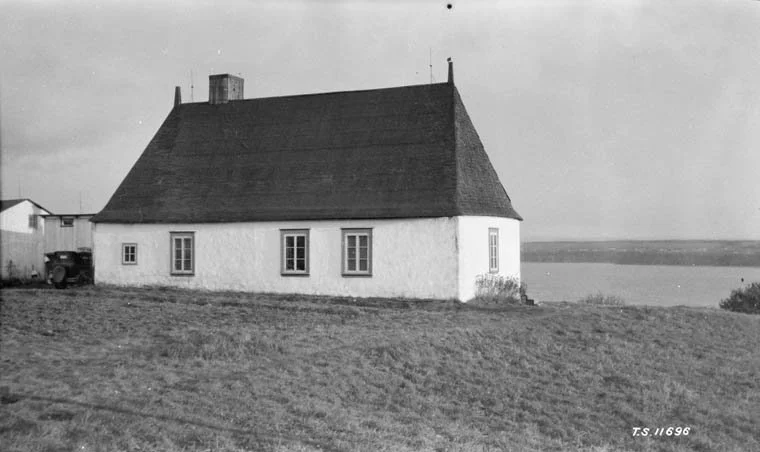
A classic rural New France home; photo: Wikimedia (public domain)
She smiled a bit, looking at him. She’d been reluctant to remarry quickly, despite the reminders she received from Father Aucoin and Sister Agnes that God had sent her here to marry and raise children. She was still young, they told her, and her suitors were eager to start their own families.
Etienne Beaudet hadn’t been in Quebec long when Josephine met him. He was a stonemason from Rouen, just a year older than her. He talked little about his life in France, but then, she also didn’t talk much about her old life. Josephine closed her eyes, listening to his slow breathing. This marriage was not what she had expected. She and Jacques had cared for each other and worked hard together on their little farm. She’d been content. She and Etienne, though–they loved each other almost from the start. And the past had weighed heavily over her and Jacques–his memories of being a soldier, and her experiences as an orphan in Paris. With Etienne, all that seemed far away and nearly inconsequential.
She thought about the conversation she, Etienne, and Paul had had at dinner earlier that evening:
“Please, Maman! I want to be a mason like Papa!” he’d pleaded. “I promise I’ll still work on my lessons too!”
She didn’t respond to Paul and instead addressed Etienne. “Isn’t he too young?” The boy was small and bony, despite the fact that he seemed to eat whenever he wasn’t sleeping.
“He’s a bit young for an apprenticeship,” Etienne had replied. “But I’d keep a close eye on him.” Etienne had looked at Paul appreciatively. “It’d put some muscle on him, too.”
The wind had blown a flurry of leaves against the window just then, reminding Josephine of the October storm that had killed Jacques.
“Not yet,” she’d said decisively. “He’ll be 12 in April, and he can start then.”
“But Maman!”
“Paul, your mother has made her decision,” Etienne had said, then he’d given the boy’s arm a squeeze. “Keep working on your math. It’ll be important when your apprenticeship starts in six months .”
Josephine turned over laboriously, smiling ruefully at the memory. She knew where Paul had gotten his physique. She remembered the skinny little thing she’d been when she arrived in Quebec. Since then, it seemed she lived in a perpetual state of roundness–belly full of baby and breasts full of milk. This one would be her fourth with Etienne. She closed her eyes again, on the edge of sleep, when a low, deep cramp settled into her belly. She sighed, and worked her way up to sitting on the edge of the bed. She would send Etienne to fetch the midwife in the morning–there was time. But her attempts at sleep tonight wouldn’t be successful. She got up to stoke the fire and get everything ready for what would be a long day ahead.
May, 1688
Josephine thought back to that day, when Marie-Madeleine had arrived. She was born with a full head of curly light brown hair like her father’s. Then Gabrielle, less than two years later, had been bald and pink at birth, then full of curiosity when she began to toddle around. The comfortable stone house had been full to bursting with nine children, much to Etienne’s delight. He’d always loved children and had gladly become a father to her first four when they got married.
The memory rushed back to her, and brought with it tears, as she placed a small bundle of flowers on the shared grave where Etienne and their two youngest daughters rested. The measles epidemic had burned itself out by the time the spring flowers had begun to bloom, but it seemed to have taken someone from every family in Rivière-Ouelle.
“I have something to tell you, mon cher,” she whispered to Etienne. “You would have been so happy to hear this.” She placed her hand against her belly, which was just beginning to swell. “One last child for you and me.”
Paul was walking across the cemetery toward her. Antoinette and Manette hung back, watching their younger siblings.
“Are you ready to go back, Maman?” he asked when he got close. She smiled at him. He was the very image of Jacques. He had stepped into Etienne’s role as the head of the family without hesitation. He was only 15, and hadn’t completed his apprenticeship as a stonemason, but he was already taking care of her and his siblings.
Paul held out a hand to help her get up from where she was kneeling. She cast one last look behind her as they walked to the wagon together.
November, 1692
The coach rolled to a stop outside the manor house, and one of Pierre-Henri’s indentured men hurried forward to open the door. He put out his hand and helped Josephine down and then lifted Jean-Etienne out. Josephine took her youngest son’s hand. He was anxious in new situations and stuck his thumb in his mouth. He had just turned four, far too old for that behavior, but she let it go for now. Pierre-Henri strode out to the carriage and greeted her with a kiss.
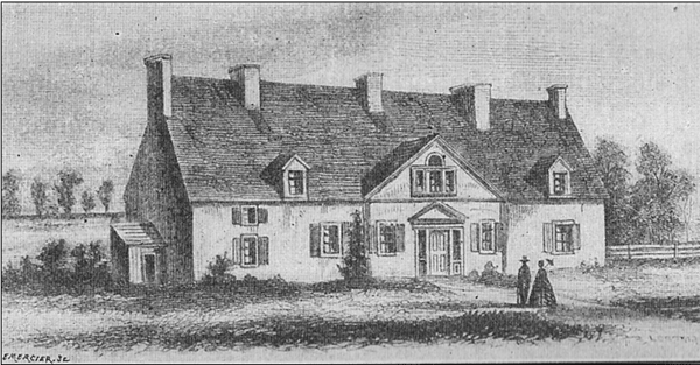
A seigneur’s manor, mid 1700’s; image: societies.learnquebec.ca
“Welcome home, ma chere!” he boomed, then looked behind her slightly wide-eyed as her children poured out of the coaches and his servants unloaded trunks.
“Six of yours plus seven of mine,” he said. “Luckily, we have plenty of room here.” He swept his hand back proudly toward the house.
Pierre-Henri Martin had a relatively small seigneurie in Rivière-Ouelle, but he was still quite comfortably wealthy. He’d lost his wife and youngest son to the same measles outbreak that had claimed Etienne and their youngest pair of daughters. Also like Josephine, he hadn’t been in a hurry to remarry. It had been Louise, who also lived in Rivière-Ouelle with her husband and nine children, who had introduced Josephine to Pierre-Henri.
“You’re too young to live out your days alone,” she’d told Josephine. “Besides, he’s 15 years your senior. Half of his children have already been married off, so he needs to fill up that big house of his.”
Isabelle, the nanny, came out to fetch the younger children. Manette and Georges glanced over at Josephine, and she waved at them to follow. This would be an adjustment for everyone. Jean-Etienne began to wail when Isabelle picked him up to take him inside.
“He’ll be fine,” Pierre-Henri said. “The little ones will adapt the fastest.” He took her hand and tucked it into his arm. “Now, Madame Martin, let me welcome you home properly and introduce you to everyone. You’ll want to spend time with the cook so you can plan the feast for our party next week.”
Josephine’s head spun a bit. It wasn’t just the children who would need time to adjust. She felt a bit embarrassed–at 43, managing a household shouldn’t seem like a daunting task. But it did.
Louise would be coming to call tomorrow, and Josephine planned to ask her advice. Just like at Salpetriere, she thought. Louise has always looked out for me. She walked into her new home, feeling proud and nervous as she looked around at the large rooms that she would never have to clean. She heard voices coming from upstairs–her children meeting their new siblings. She smiled up at her husband. She wanted to make him proud of her. She gave his hand a squeeze and then turned to meet her household staff.
February, 1694
“Are you awake, Madame?” Isabelle asked as she poked her head in.
“Yes, please bring her in,” Josephine said. She wrapped her shawl more tightly around herself, then held out her hands for the little bundle. Isabelle settled baby Armandine in her mother’s arms, and then turned to put another log in the fireplace. The winter had been bitterly cold, but it was cozy by the fire.
“Also, Madame, you have a letter from your daughter.” Isabelle handed her the envelope, then quietly slipped out of the room. Josephine read the letter, which included the news that she would be a grandmother for the third time later this year. She laughed and bounced Armandine when she began to fuss.
“You’re going to be an aunt again, little one, and you’re only two weeks old.” Armandine gurgled in response and stuck out her tongue. Having another child when she was 45 and already a grandmother had hardly been something Josephine expected. Pierre-Henri was delighted, of course, and maybe just a bit boastful about still fathering children at the age of 59.
Josephine picked up her mother’s rosary from the night table and showed it to her daughter.
“This belonged to my maman, chere’” she said softly. “I got it when I was just a baby, and now it’s yours.”
Armandine’s face was solemn and uncomprehending as she gazed at the cross. Presently, tiny eyelids fell. Josephine smiled and gently stroked her daughter’s cheek, certain Maman was pleased her name and rosary had been handed down to a new generation.
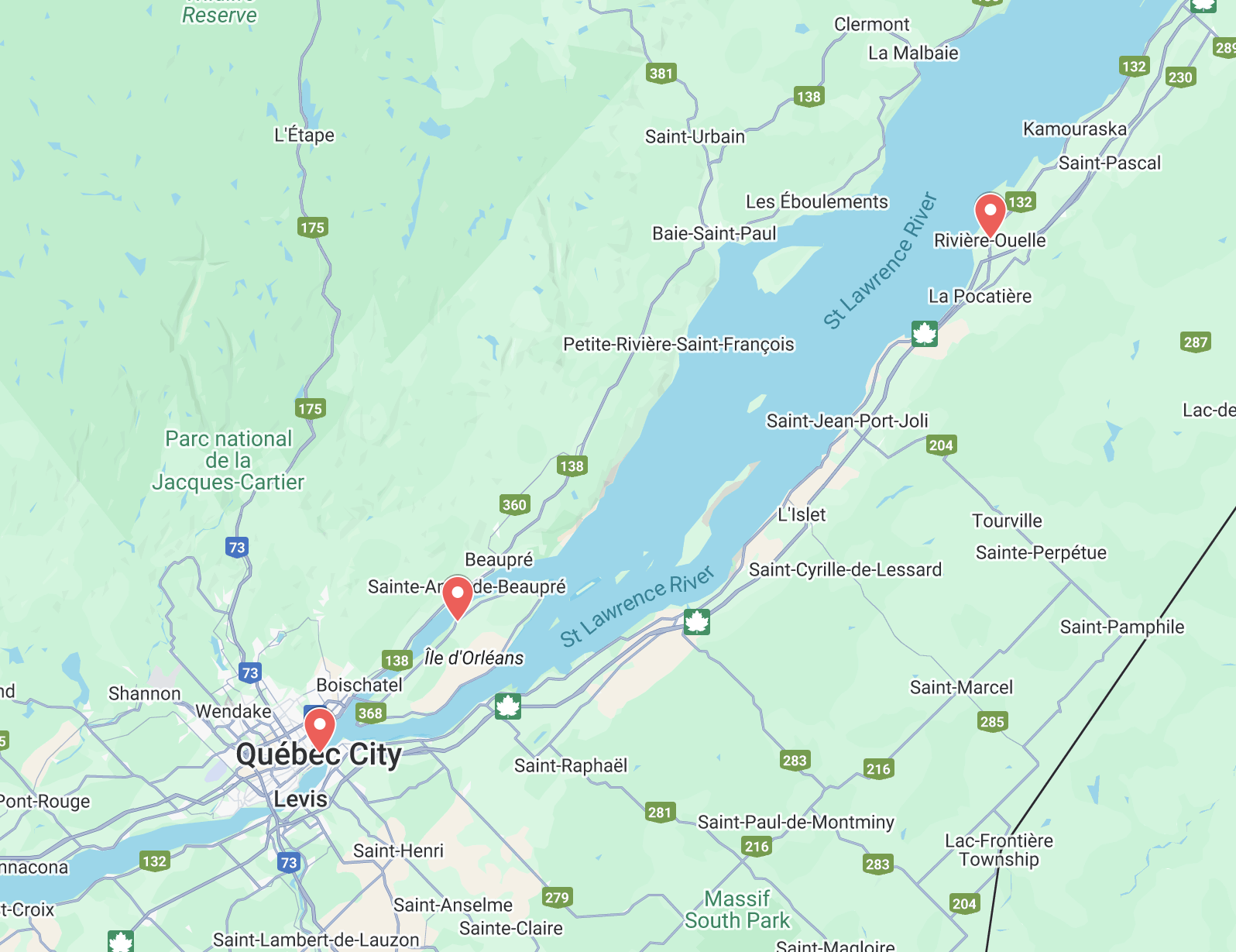
The filles du roi disembarked at Quebec City (left) and stayed there until they married. Josephine’s first two husbands lived at Ste Famille, on Île d'Orléans (center). When Josephine married Pierre-Henri, they lived in Rivière-Ouelle (right). Map: Google Maps.