
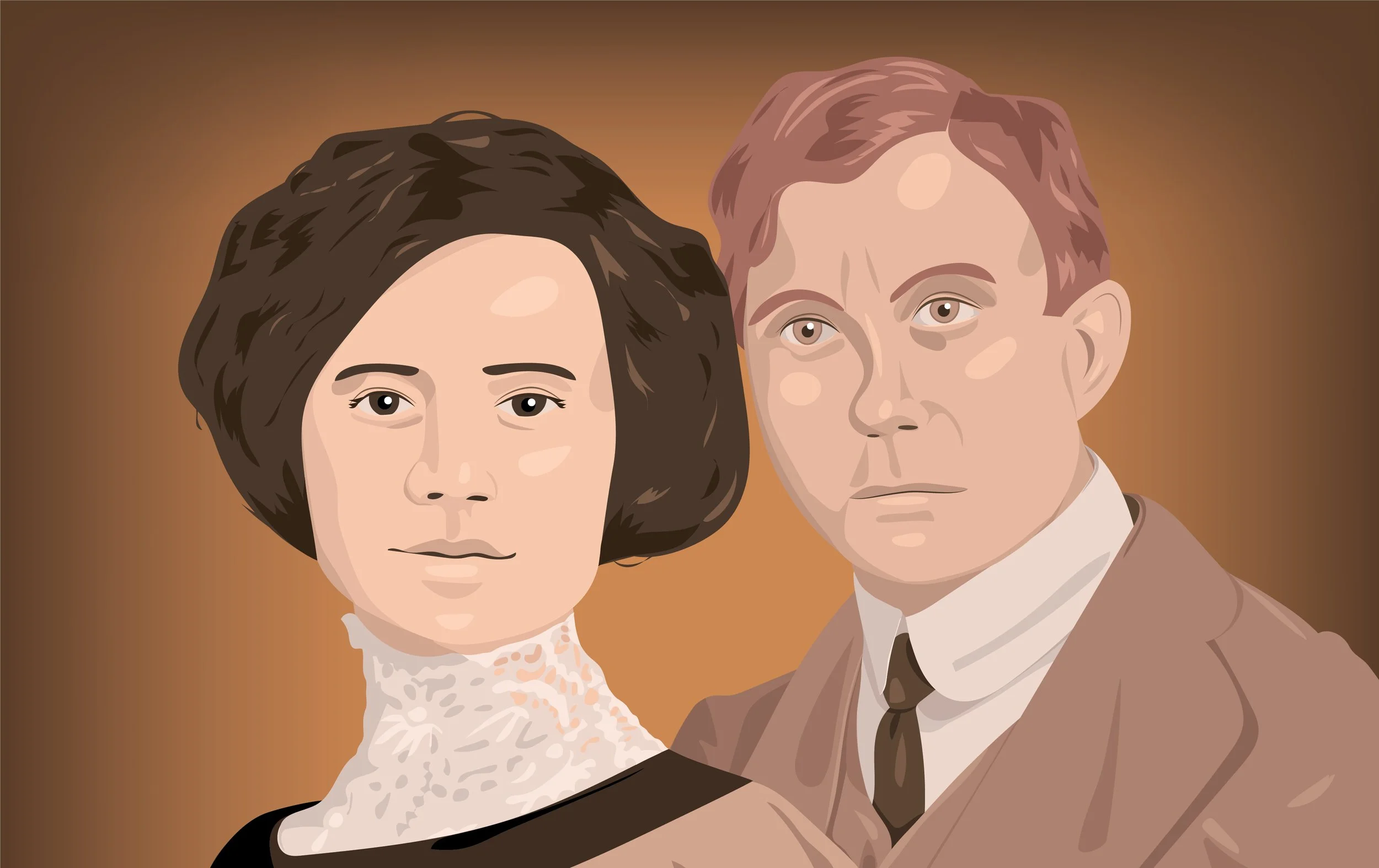
Partnership
Meet two performers who became partners in their careers, their travels, and their lives.
Written by Eric Shipley and Charlotte Easterling
Decatur, Illinois: August 18th, 1913
“My interest in Abraham Lincoln began at an early age,” said Seamus to the audience at the Mattoon Chautauqua that had encamped in Decatur. “And it was largely due to my father, Sean Scully, who was thoroughly impressed by him. In fact, he and my mother, Marian, took me to meet him. I was just three, so my memories of the details are vague… except one.
“According to my parents, I was fidgety and kept humming Camptown Races, which it seems was my favorite song. My father kept hushing me. So much so, my mother had to hush him.” The audience laughed.
“We stood in line for what seemed like forever, but we eventually got to the front, where my view was blocked by a box. It had shiny silver handles that I tried to touch, but Mother pulled my hand away.
“Then my father lifted me up so I could see what, or as it turned out, who, was in the box. Of course, I saw Abraham Lincoln. I was shocked and scared. I’d thought he’d be sitting and talking to people, not lying in a box. He looked so strange: still and pale, eyes closed. I started crying, and Mother took me from Father and carried me away and tried to quiet me.”
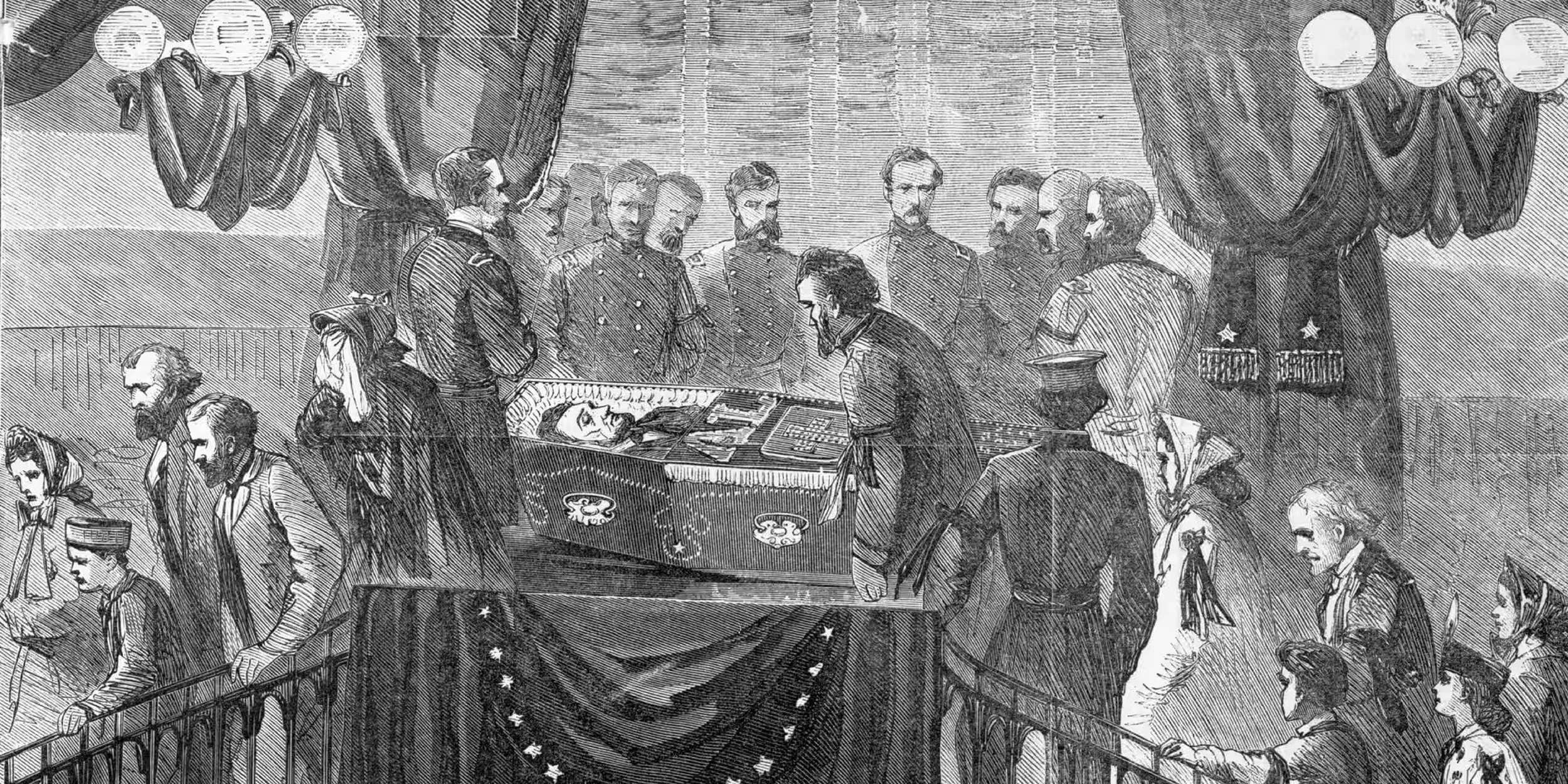
Image from history.com
Seamus could see the audience was rapt (as talented storytellers like him always watched for). He confidently went on with his talk, and when he finished, they applauded loudly.
A good turnout for a hot, muggy evening, he thought
When he got backstage a reporter from the Decatur Daily Herald was waiting to talk with him. (It was nothing new. As one of the managers of the Chautauqua, he often talked with reporters to promote the show.)
After the interview, he went to find Charlie Euler, one of the other managers. Charlie introduced him to some new speakers: first, a woman named Rena Hagerty, and next, a young man whose hand Seamus shook absently.
Charlie cleared his throat to get Seamus’s attention. “You and Rena share an interest in Alfred Lord Tennyson,” he said. “That’s what her first reading will be.” He turned to Rena. “And Seamus is doing a series about the homes of great poets, including Tennyson.”
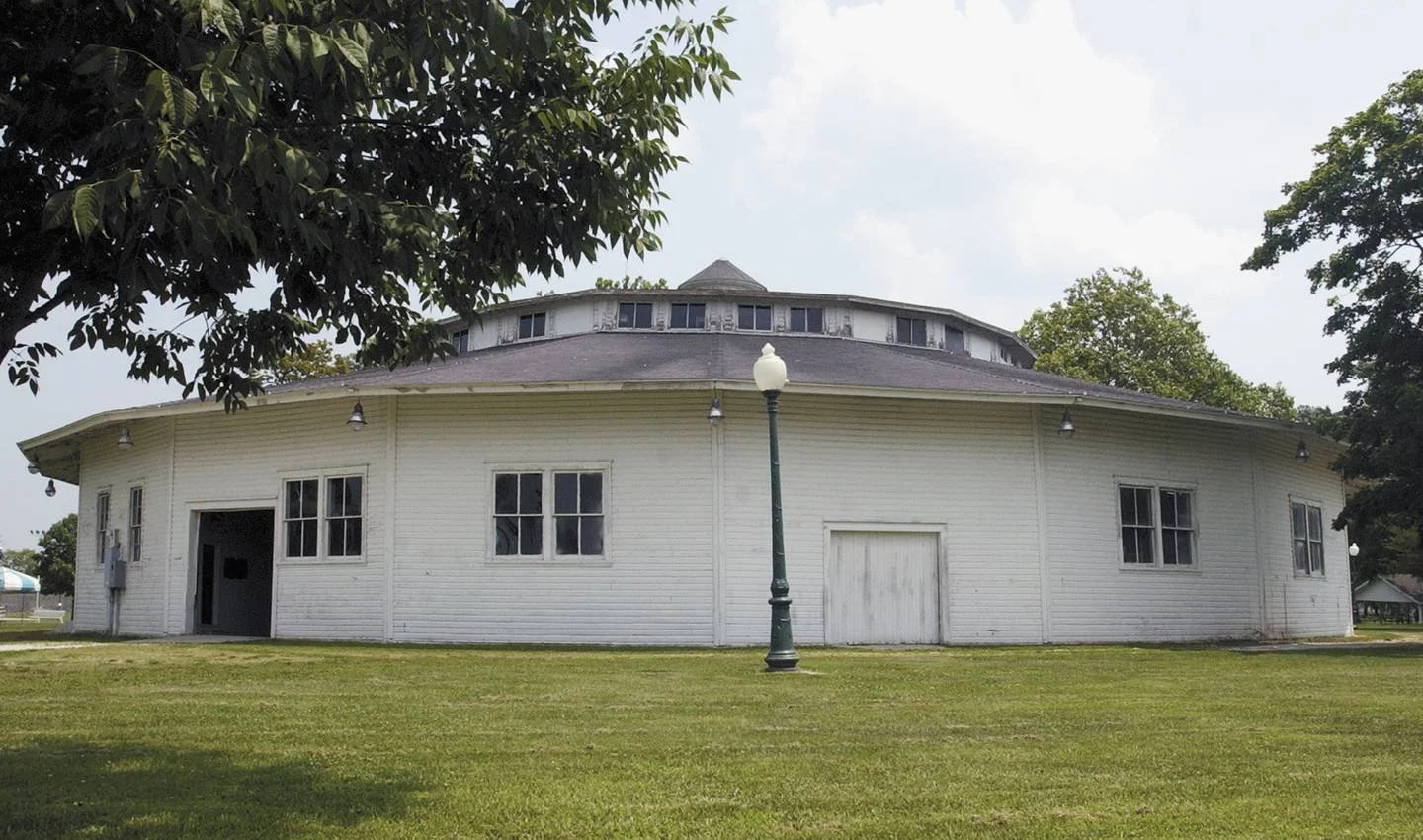
Chautauqua arena in Shelbyville, Illinois. Photo: shawlocal.com
Charlie went on to tell him that the young man would be speaking about Shakespeare. Seamus nodded politely and offered some encouragement. Then, with a lingering glance at Rena, he walked away and made a mental note to ask Charlie the young man’s name again.
Seamus went to Rena’s reading the next morning. She was a wonderful speaker, and he was delighted that she ended with “Ulysses,” his favorite Tennyson poem. The end, which was especially moving:
“...and tho’,” she quoted, “we are not now that strength which in old days moved earth and heaven, that which we are, we are; one equal temper of heroic hearts, made weak by time and fate, but strong in will to strive, to seek, to find, and not to yield.”
After she took her bow, amid a hearty round of applause, she walked off the stage. Seamus hurried to talk with her.
“That was wonderful,” he said. “I’ve always loved Tennyson.” Then, after an awkward pause, “Would you care to join me for lunch?”
She was surprised and, slightly shy, but accepted. So soon, between bites of food, they were talking about poetry, Seamus’s travels, and the fact that they both graduated from Illinois Wesleyan (although 20 years apart). Rena was a reader at the university, and her studies had focused on English literature. She told him she’d never had an opportunity to travel overseas but hoped to visit Italy some day.
That lunch was the beginning. Before long, they were spending their limited free time exploring the towns where the Chautauqua stopped—historic sites, museums, and libraries lured them away from the tents and stages of the traveling show. They also discovered a shared love of the unknown and unfamiliar. So, perhaps inevitably, they got engaged while they were visiting their families in Bloomington. It was Christmas eve of 1913, and he slipped the ring on her finger while they stood on the stone arch bridge in Miller Park.
The Mediterranean Sea: March 26th, 1914
Seamus put his arm around Rena’s waist as they stood on the deck of the ship, watching the moon over the water as they made their way to Naples. They had been married just over two weeks and had begun their shared life with a voyage to Italy.
“It’s so beautiful,” said Seamus, “an ideal way to honeymoon.”
Rena leaned slightly into him and closed her eyes. In addition to their honeymoon, they had celebrated her 30th birthday on the ship.
Life couldn’t be better, she thought.
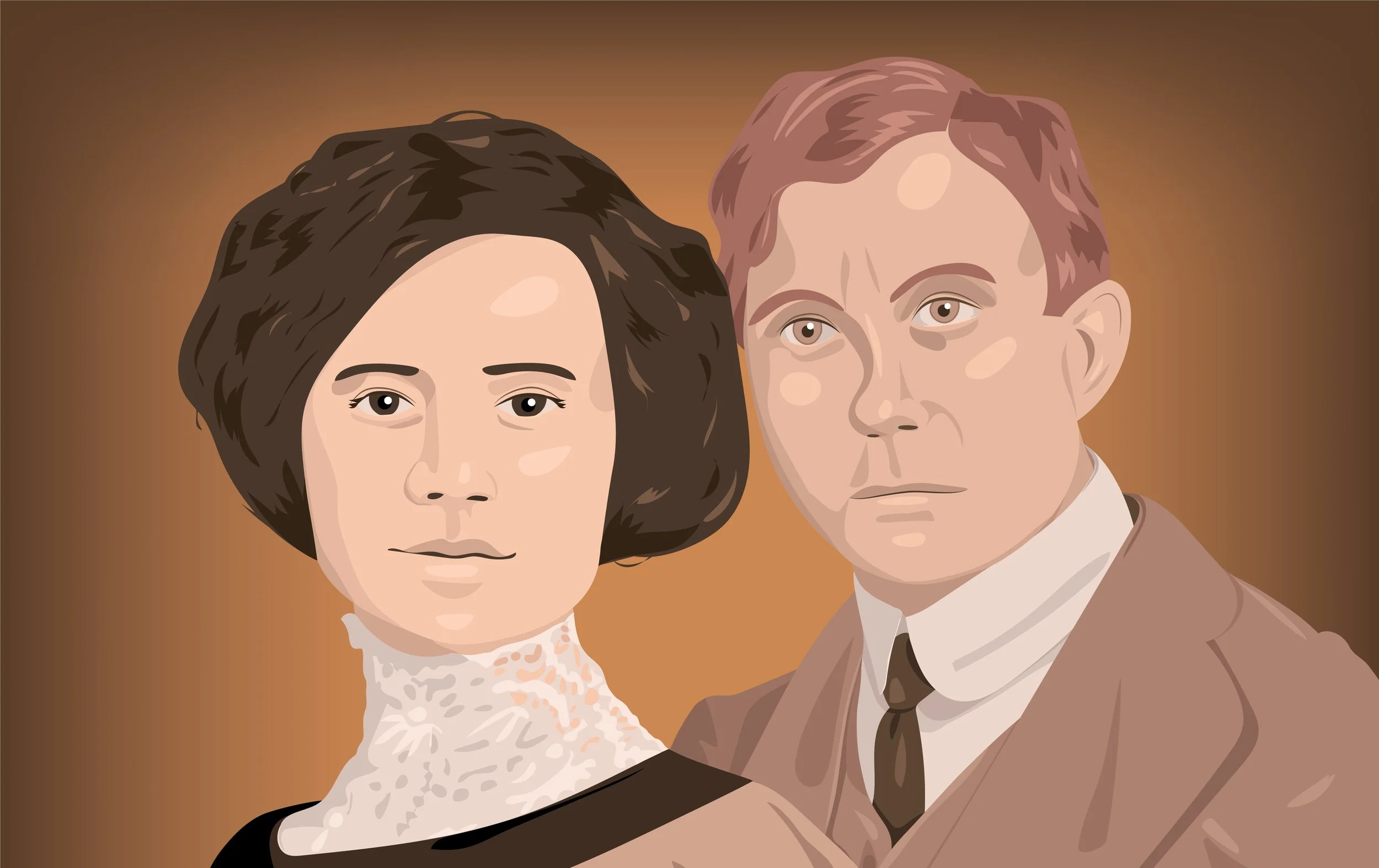
Illustration by Charlotte Easterling
Naples, Italy: March 27th, 1914
“Seamus? What’s wrong?” Rena asked with concern.
Seamus was reading the message the desk clerk had given them when they checked in. He looked stricken and sat down on the bed.
“Darling?” Rena was frightened now.
“My mother died,” he whispered. “She fell and hurt herself on the 15th and passed on the 18th.”
“Oh, Seamus.” Rena sat next to him and took his hand.
“They buried her already,” he said in a choked voice. “It all happened while I was gone.”
Rena stood. “Stay here. I’ll go see about changing our return tickets so we can go home.”
Seamus gently pulled her back. “No. There’s nothing I can do there.” He wiped at his eyes, and they sat giving and receiving comfort.
***
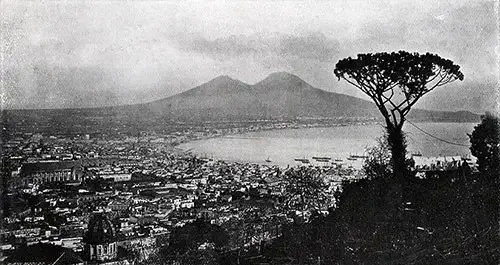
Naples, Italy circa 1906. Photo: GGA Image ID # 1766ff04b6
Despite the sad pall cast by the death of Seamus’s mother, Marian, they spent the rest of their honeymoon as planned. Their shared love of exploring and history and art led them to Pompeii, Rome, Venice, and Florence. They got to see Michelangelo’s David, the Coliseum, several Bernini sculptures, Botticelli’s The Birth of Venus, and a host of other art, architecture, and sculpture. Seamus found, somewhat to his surprise, that it did much to alleviate his grief.
All too soon, they were standing arm in arm at the railing of the liner taking them home.
“In spite of everything, sweetheart, it was a wonderful honeymoon and adventure,” Seamus said and got a lingering kiss in return.
Decatur, Illinois, 1919
Over the next five years, Seamus and Rena continued with the Chautauqua but also spoke and read at places like churches and YMCAs. And they continued traveling, visiting England, Ireland, and Quebec. But their shared travels were about to end, at least for a while.
In 1919, Rena’s niece Sadie wrote to ask if they could take in her daughter, Anna. Her husband had died in the flu epidemic and Sadie had gotten very sick as well. She needed to go stay with her parents to recuperate and didn’t want to uproot her daughter. Naturally, they agreed, and Anna came to live with them in October. She was eight years old.
Taking care of the girl changed their lives. They weren’t able to travel together, so Rena stayed home with her. She delighted in reading to the girl and buying her books.
“Rena, your sister is going to need a truck to get Anna home if you keep buying all of these for her,” Seamus told her one evening, picking up a copy of “Little Women” from a stack.
Rena laughed. “I know, but she loves reading and I want to encourage it.”
Seamus had to agree. He’d noticed that Anna always had a book with her, and he had even seen her giving a reading to some of her dolls once.
“Do you miss being on the road and doing your readings?” he asked Rena one time.
She nodded, and felt her eyes prickle with tears. She missed the Chautauqua and the time it gave her with Seamus. Taking care of Anna had been a joy, but she was also eager to return to the life they had built.
Seamus sat next to her and put his arms around her. He had to admit that he didn’t enjoy the Chautauqua as much without her and was finding it more tiring. At 58, the busy schedule of travel, performance, promotion, and management was less appealing than it had been when he was younger.
Decatur, Illinois: April, 1921
Rena’s sister returned and collected Anna as soon as she was able. Rena hugged the girl she had grown so fond of while Seamus loaded the car with Anna’s belongings. He gave Anna a goodbye hug too, and Rena gave her a parting gift of “Rilla of Ingleside,” the most recent book in the Anne of Green Gables series. They waved as Sadie and Anna drove off. They both felt a mixture of sadness and relief.
They stood, arm in arm, until the car was out of sight. They both sighed, but before long, Seamus asked, “How do you feel about Paris this September?”
She laughed and hugged him.
“I’ll take that as a yes,” he said and stole a kiss.
1921-1929
They continued with the Chautauqua, although Seamus shifted most of the management responsibilities to Charlie. He and Rena focused on doing their readings, exploring the towns on the circuit, and planning their travels in the off season.

Los Angeles in 1929. Image: losangelespast.blogspot.com
This came to an end, however, in 1929 when Seamus developed a bad cough that turned out to be tuberculosis. The doctor suggested a drier climate to aid in his recovery, so they moved to Los Angeles. But not to be deterred, as soon as Seamus had recovered enough to be out and about, they started attending lectures, visiting museums, seeing movies (a new, pleasant diversion), and traveling up and down the California coast. They even ventured far enough to see the Grand Canyon in Arizona and the cliff dwellings in the Four Corners region.
On the train back home, Seamus took her hand. “Thanks for being my partner on all of our adventures.”
Rena smiled and leaned into him. “I can’t think of a better way to spend my life.”
They huddled together for a poignant moment, then Seamus kissed her hand and said, “You do know we have quite a problem.”
Rena sat up, worried, “What’s that?”
“We have to figure out where to go next.”
And with that, they started planning their next adventure.
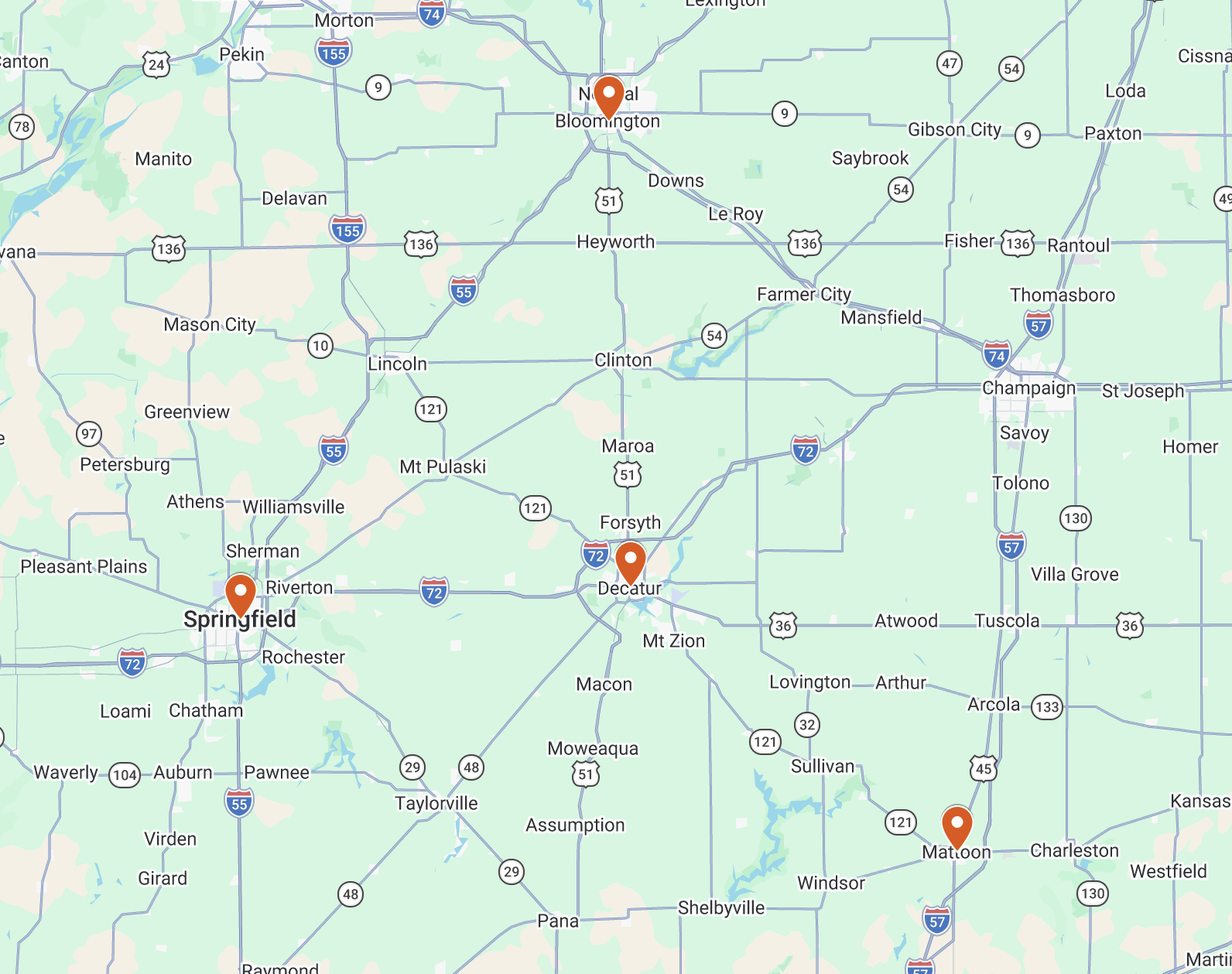
Bloomington (top), Springfield (left), Decatur (center), and Mattoon (right), Illinois. Map: Google maps.
Subscribe to learn more about the real people
and historic events behind this story.
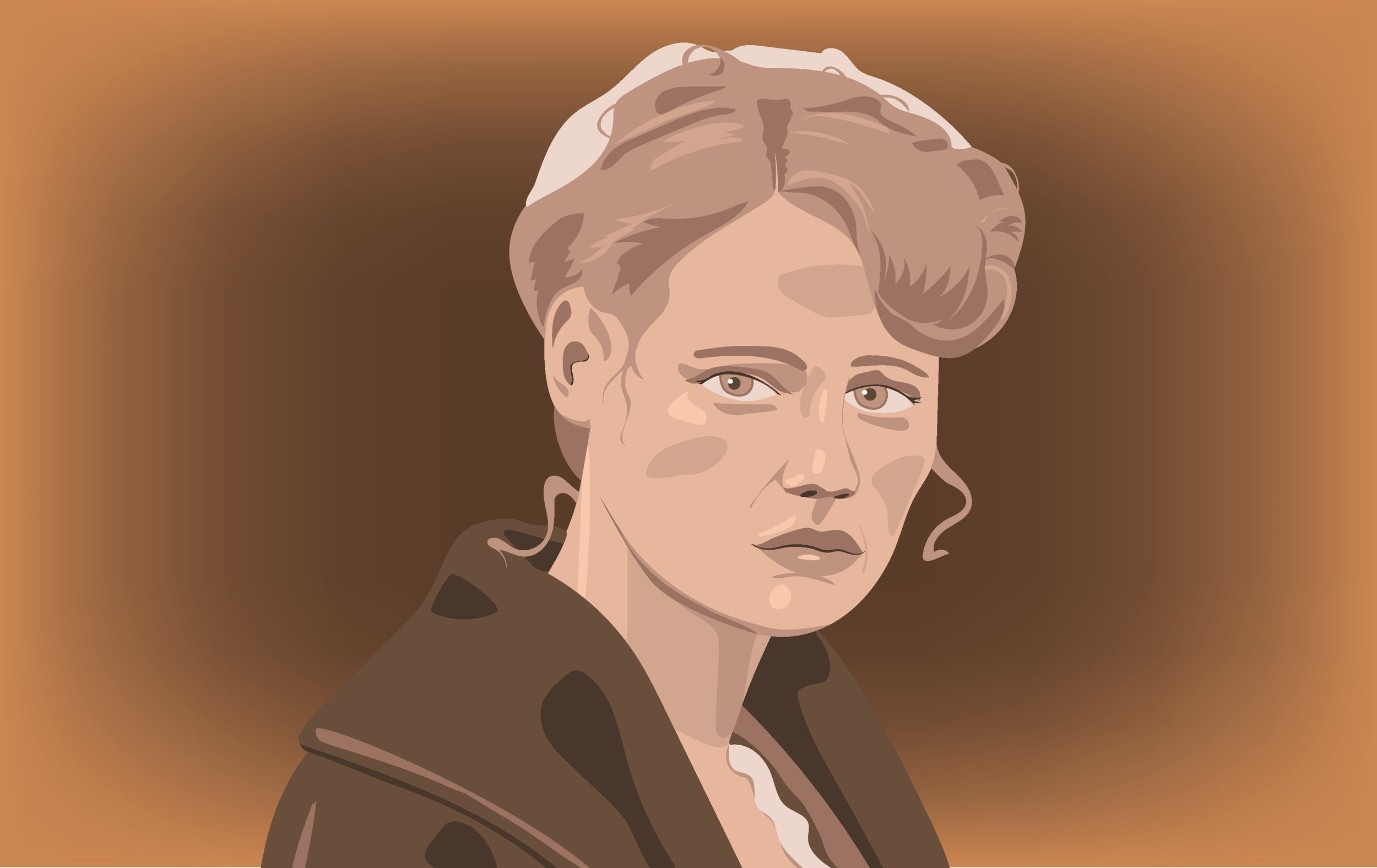
The King’s Daughter
Josephine was a young woman who was sent to the new world to help secure France’s place in North America.
Jean Soulier carried his infant daughter up the steps of the convent. She was a few months old now. He could feel her fist clutching his vest, and when he glanced down, he saw her gazing up at him.
He lay her in the turning cradle and wrapped her thin blanket around her more tightly. He ran the back of his finger across her soft, chubby cheek, then placed a piece of paper on her chest, weighted with his dead wife’s rosary. He rotated the cradle until she was safely inside, rang the bell by the door, and hurried down the steps. He knew the holy sisters would be able to care for her far better than he could.
Sister Anne came to the door and looked around after picking up the baby, hoping to see someone watching, but knowing she wouldn’t. This was a common occurrence. Babies were left in their care all the time. She looked at the piece of paper that Jean’s priest had provided for him. It read, “This child is Josephine Soulier, born in Paris, 1649. Her parents are Jean Soulier and Armandine Vaux. Her mother died of plague.”
1669
Josephine quickly tucked her hair under her coif, then hurried after Louise. Morning devotions were at 5:00, and the sisters would punish them if they were late. Josephine paused to tie her apron, and Louise looked back at her impatiently.
“Come on, girl! Sister Phillippe will have us cleaning up shit all day if you don’t hurry up!”
They ran to the chapel and then slowed to a respectable pace once they were almost outside the door. Running would also spark Sister Phillippe’s outrage. They stepped into the candlelit chapel, and Josephine sighed contentedly. The smell of candles and incense filled the room, and the silence was broken only by the quiet rustling and shuffling of women getting settled. She had never told anyone, not even Louise, but she wanted to join the holy sisters now that she was old enough. She settled onto her knees, clasped her hands, and lowered her head.
This is where I belong, she thought, as the morning liturgy began.
After devotions, Josephine and Louise sat together for breakfast. Josephine looked up after saying grace to see Louise smirking at her.
“You’re thanking God for watery gruel and stale bread?”
Josephine frowned at her friend. “We should be grateful for what we have. Let’s eat.”
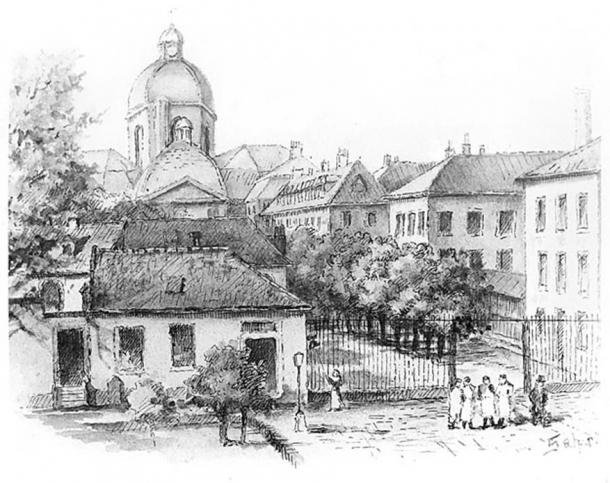
The Salpêtrière in Paris, circa 1670. Image: Wellcome Images
She tucked into her meager meal, hoping it would end the conversation. Louise had come to the Salpêtrière orphanage when she was 10. She was from a family with nine sons and two daughters, and her parents couldn’t afford to care for all of them. Louise reminisced about life outside the orphanage often, telling Josephine about the fine clothing people wore, the delicious foods they ate, and how they walked around freely.
“You don’t know what you’re missing because you’ve never been outside these walls,” Louise told her. “You think it’s not so bad because it’s all you’ve ever known.”
Josephine had wanted to respond angrily and point out that a family so poor they had to give away their daughter probably didn’t wear fine clothes or eat delicious food, but she held her tongue. They finished their meal in silence and then continued their day.
The rest of their morning was taken up by tending to the young children at the orphanage and by bible study until midday devotions. Their afternoon was spent spinning and sewing. Some of the girls learned how to make lace, but Josephine’s hands had never been clever enough for that. Louise tipped her head toward the lace-makers.
“Those scobberlotchers will end up at the king’s court, making fancies for all the ladies while we’re still here picking nits out of our hair.”
Josephine took a deep breath and was about to confess to Louise about her wish to become a nun, when Sister Martine appeared by her side and gestured for her to follow. Louise raised her eyebrows, then quickly returned to her work.
Josephine followed Sister Martine across the courtyard and into a small room. She was surprised to see two women she’d noticed the nuns talking with over the last few days. They were well-dressed, and suddenly Josephine understood who they were. She had heard other girls talking about them. Then her heart dropped as she realized her hopes of becoming a nun would never be fulfilled.
“Josephine, we’re recruiting young women to go to New France so the men there will be able to marry. The king will pay your way and provide you with a trousseau and a small dowry. We know you’ll be proud to serve your king and country this way. We’ll be back in two days to collect you and the other girls for the journey.”
Sister Martine nudged her out of the room. As they crossed the courtyard, Josephine saw another nun escorting a girl to meet the women.
I’m a fille du roi, she thought, stunned.
Two days later
Josephine was among a cluster of young women gathered in the courtyard, waiting for the coaches that would take them away. She was bleary-eyed after a fitful night’s sleep. Louise and the other two girls who shared their bed had complained at her because she was tossing and turning so much. She’d finally fallen asleep in the wee hours, only to be shaken awake soon after for devotions and then a hurried breakfast.
Now she stood with her stomach churning and her head throbbing. All the women in the group had new dresses, coifs, and shoes, and each had a small trunk next to her that held their modest trousseau of sewing supplies. The night before, Josephine had tucked her dowry money of 2 livres at the bottom of her trunk alongside her rosary and Bible (which contained the worn piece of paper with her parents’ names on it). She fidgeted and sighed, and Louise nudged her and pointed at the approaching coaches. “There they are!” Josephine nodded, but couldn’t speak.
The two women who had recruited Josephine and the other filles du roi stepped out of the first coach, setting off a flurry of activity. Men began loading the trunks while the nuns directed the young women. Josephine grabbed Louise’s hand so they wouldn’t get separated. Sister Phillippe hustled them into a coach with six other women where they sat, hip-to-hip, knees almost touching across the narrow aisle between their seats. They looked at each other silently. Josephine saw a mix of terror and excitement in their faces. There was a sudden jerk that made them all cry out, and then the coach was moving. Josephine turned as much as she could to look out the back window. She’d never seen the Salpêtrière from the outside. The heavy gate closed, and she watched as the walls grew smaller and smaller, and then were gone when they turned a corner.
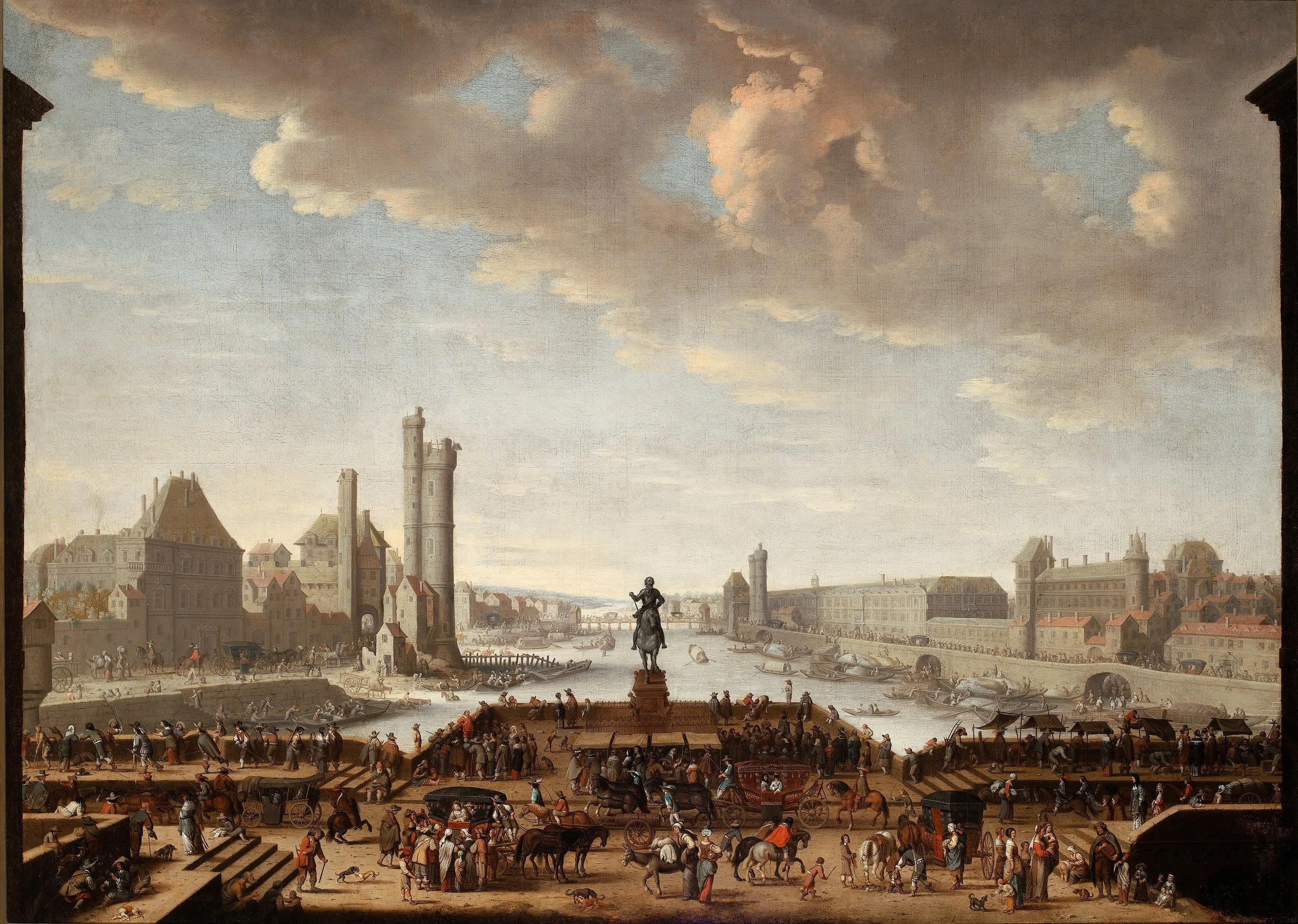
The Pont Neuf in the 1660s. By Unknown author,Jean Petit (d. 1651) (?) - www.wilanow-palac.pl, Public Domain, https://commons.wikimedia.org/w/index.php?curid=20154921
As she looked out a side window, Josephine was shocked by how many people filled the street. Louise had told her Paris was a big city teeming with people, but she’d never imagined what that looked like. Some of the people stopped and stared at their coaches as they left the orphanage, and she heard some of the men jeering at them. One of them shouted, “Whores!” as they rolled past. Josephine gasped in outrage and pulled away from the window. But the sights soon drew her back, and she gazed out at the city, fascinated by everything that had been just outside the walls of her home for all of her life.
Louise leaned close and whispered, “See, I told you,” before resting her head against Josephine’s shoulder and dozing. Josephine felt her own eyelids getting heavy, and drifted off as well.
She woke up when the coaches stopped. She couldn’t tell how long they’d been traveling but was surprised to see that they’d left Paris behind.
The door to the coach opened and a man’s voice said, “You can step out, but stay close to the coach.”
They climbed out awkwardly, navigating the small steps down to the ground with a bit of help from the soldier who had opened the door for them. Josephine stared at the surroundings. It was quiet, other than the voices of the men who were tending to the horses. She heard birds and the wind in the trees.
Their chaperones, the two women who had recruited them, finally introduced themselves as Madame Lavigne and Madame Blanchet. They were handing out bread, cheese, and wine, which most of the girls gobbled up eagerly. Josephine, however, studied her cheese before nibbling at it. She’d tasted it just a couple of times before when the orphanage had received some as a gift at Christmas. The soldier who had helped them out of the coach came back and started hurrying them inside again.
Louise groaned a bit. “I’m not used to sitting so much. I’ll have to practice for this life of leisure, though, once I have a rich husband in the colonies.”
Josephine laughed. “Rich?! I heard they all went to the colonies because they were poor.”
Sylvie, who was sitting across from them, spoke up. “I heard some of them are prisoners who were exiled from France.” She sounded scandalized, but Josephine noticed that her eyes were sparkling with excitement.
The coach lurched forward, and Louise had the final word on the subject.
“Someone owns the land and runs things in New France. I plan on finding one of them who does and marrying him.”
Same day, a few hours later
After a tolerable (at least to Josephine) continuation of the trip, they reached the convent where they would spend the night, and they arrived in time for evening devotions. Josephine wished she had kept her rosary in her pocket instead of packing it away–she felt naked without it as she knelt in the chapel.
Their evening meal was richer than any she had ever eaten. Rather than the thin broth she was used to, they were given a thick stew full of meat and vegetables. There was butter for the bread, and they were given cider to drink. After the meal, the nuns brought out something Josephine had never seen before. It was dark and sticky and smelled delicious. She glanced around to see how others were eating it, then picked up her spoon and cut off a soft bite. It was smooth on the inside and tasted unlike anything she’d had before. The exclamations from around the table told her the other women were just as delighted.
They slept at the convent that night, two per bed, two beds to a room. Josephine curled up next to Louise. Her stomach was gurgling a bit–she wasn’t used to such food as she’d eaten that day! She drifted off to sleep, hearing Sylvie’s soft snores from the other bed. What was a rare experience for all of them became routine as they worked their way to Dieppe. The farther they got from Paris, the more excited they were to reach the new world.
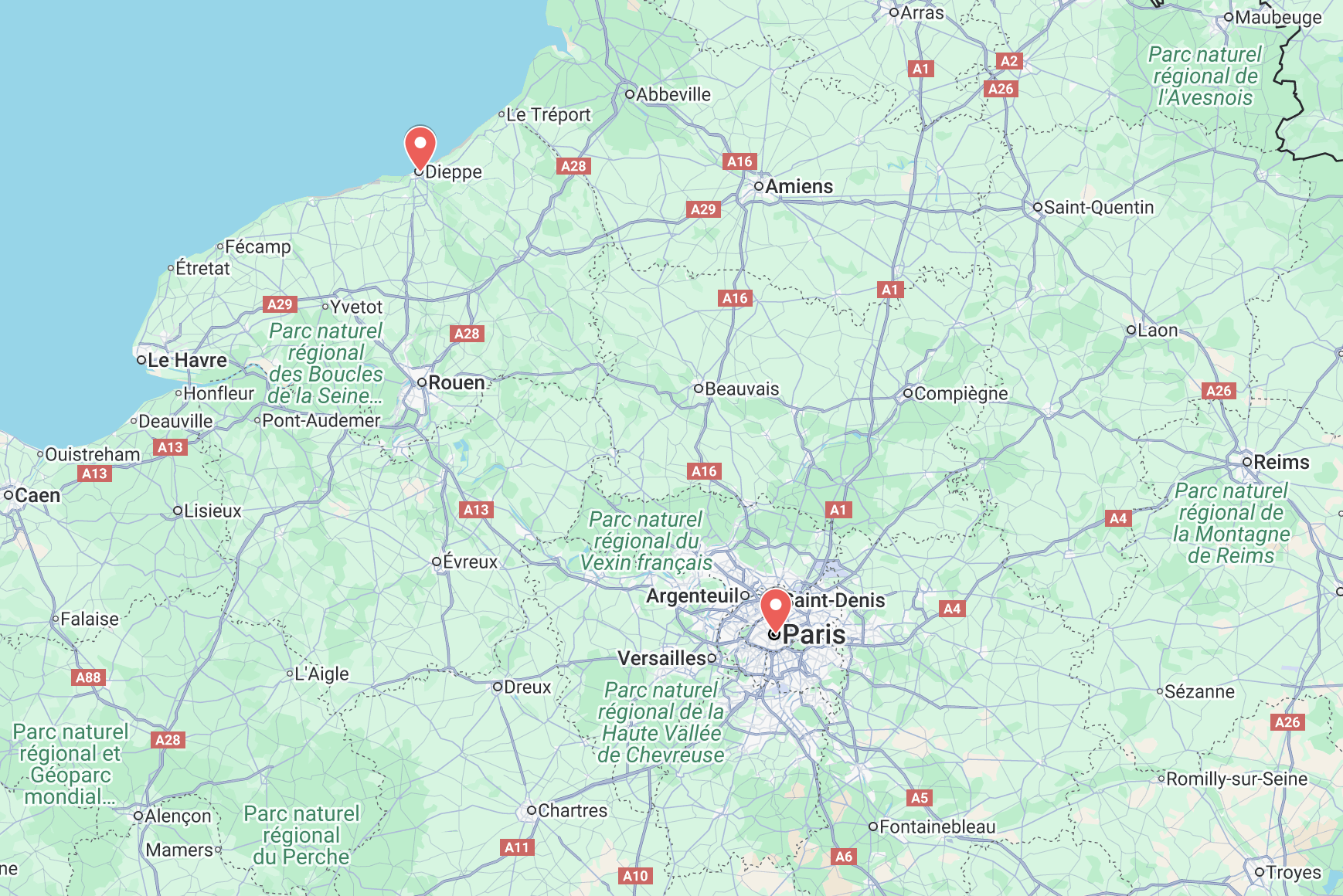
The journey from Paris to Dieppe would have taken 3-4 days. Map: Google Maps.
May, 1669
Louise worked her way down to the lower deck of the ship taking them to New France, and then quickly covered her nose and mouth with her handkerchief. Josephine had adjusted to the smell enough to breathe openly, but she still noticed the foulness. It had been bad from the beginning. Now, a month into the journey, it was almost unbearable.
Louise came and sat beside her. “How is she?”
“I don’t think she’ll last the night.”.
Sylvie had gotten the bloody flux about a week ago. Others on the ship were sick as well, but most of them seemed to be recovering, or at least not getting any worse. Sylvie, though, was one who kept getting sicker, and she had refused food for the last two or three days. Now she was sleeping fitfully, occasionally groaning with pain. Josephine was holding her hand, and Louise took her other one.
They sat with her, praying, reading Bible passages to her, and trying to soothe her when a bad stomach cramp made her groan or cry out. As the night passed, she grew still and quiet, and slowly stopped breathing. Louise and Josephine did their best to clean her up before two men from the crew came to collect her early the next morning.
They followed the men to the upper deck, and Josephine took deep breaths of the fresh, salty air. The chaperones and the rest of the women who were well enough gathered on the deck. Captain Boche offered a brief prayer before Sylvie’s body was dropped overboard. The splash it made was pathetically small. Josephine was suddenly overwhelmed by everything that had happened since leaving Salpêtrière. She rushed to lean over the railing of the ship and vomited. A sailor who saw her laughed.
“Looks like someone’s smuggling a stowaway in her belly!”
Louise glared at him and put an arm around Josephine. They found a place to sit, and Josephine pulled a smooth stone out of her pocket. Sylvie had collected a handful of pebbles from the beach at Dieppe before they boarded the ship. As they sailed away, watching the tall tower and the white brick houses grow smaller, Sylvie had handed out the stones. “This is so we can take a piece of France with us to the New World.” Josephine clutched the stone tightly as tears rolled down her cheeks.
“Josephine, look!” Louise said, pointing to the water where a pod of dolphins was racing alongside the ship. Josephine gasped and laughed despite her tears.
“It’s Sylvie!” Louise said. “It’s Sylvie going to heaven!” They held hands while they watched the dolphins leap and splash.
July, 1669
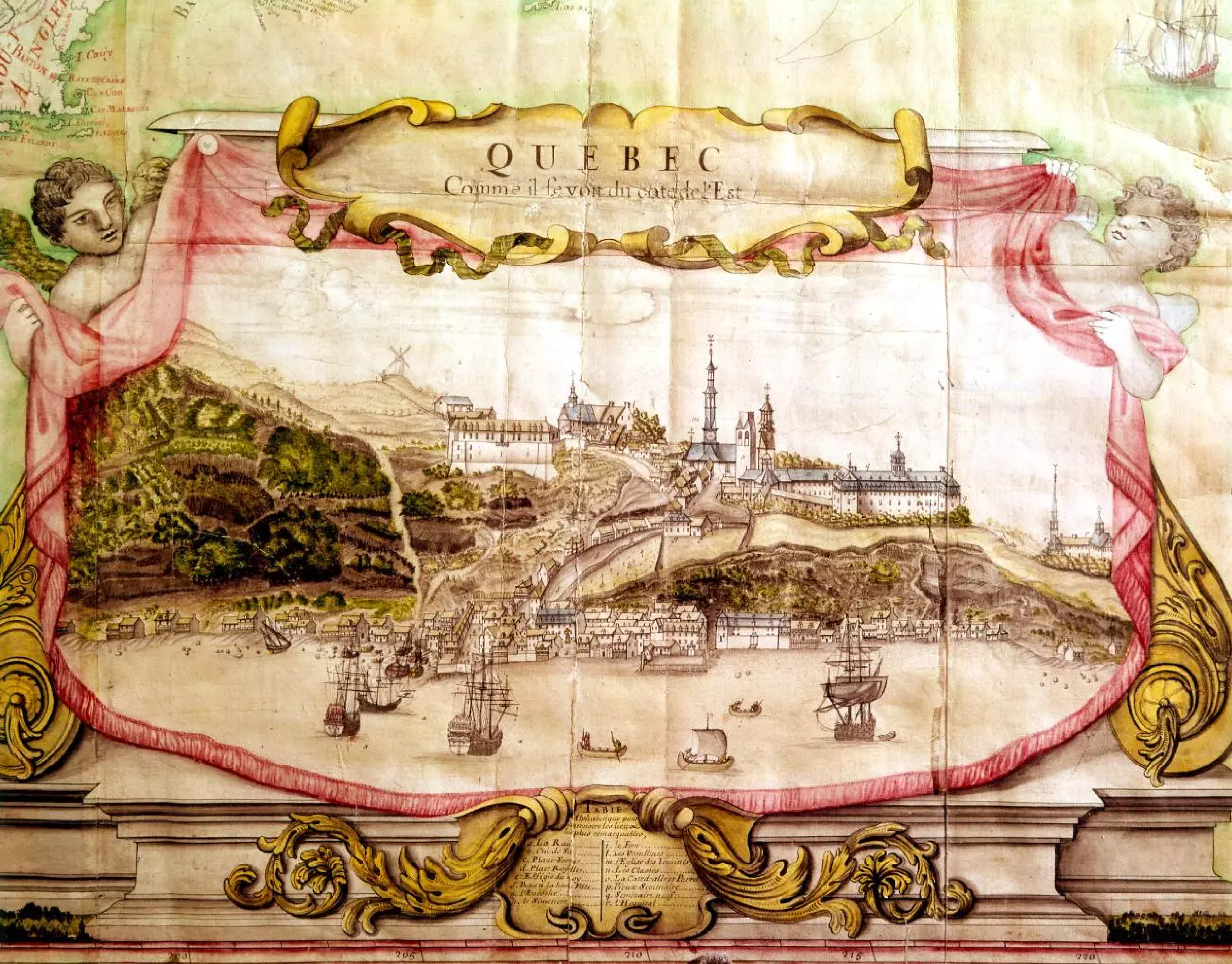
Quebec City c1688; image: quebec-cite.com
As their ship finally arrived in the Quebec harbor, Josephine reflected on the three other women who had died after Sylvie. She watched with a pang of sadness as their small trunks were unloaded from the ship. She stumbled once they were back on land. A rough hand steadied her. It was one of the sailors who was unloading their trunks.
He guffawed crudely. “You’ll get your land legs back soon. Just in time to stick ‘em in the air!”
Madame Blanchet took her arm and hurried her along the dock while Josephine blushed angrily at the loud laughter behind her. While they waited to board the wagons that would take them to the convent, she looked around at her new home: steeples jutting up over city walls, miles of green, rolling hills, and the wide river. She fanned herself a bit. The sun was hot overhead, and the air was muggy and still.
She took a deep breath of this new air and then climbed into the waiting wagon. The journey was almost done.
May, 1670
“Josephine, come look!”
Louise and Marie-Claude were peering into the wigmaker’s shop. She joined them and admired the elaborate styles even though she thought them terribly impractical. Sister Agnes gave them a few minutes, then prompted them to move on.
“You have suitors coming to the social tonight. Let’s go back so you can be rested and cleaned up before evening devotions.”
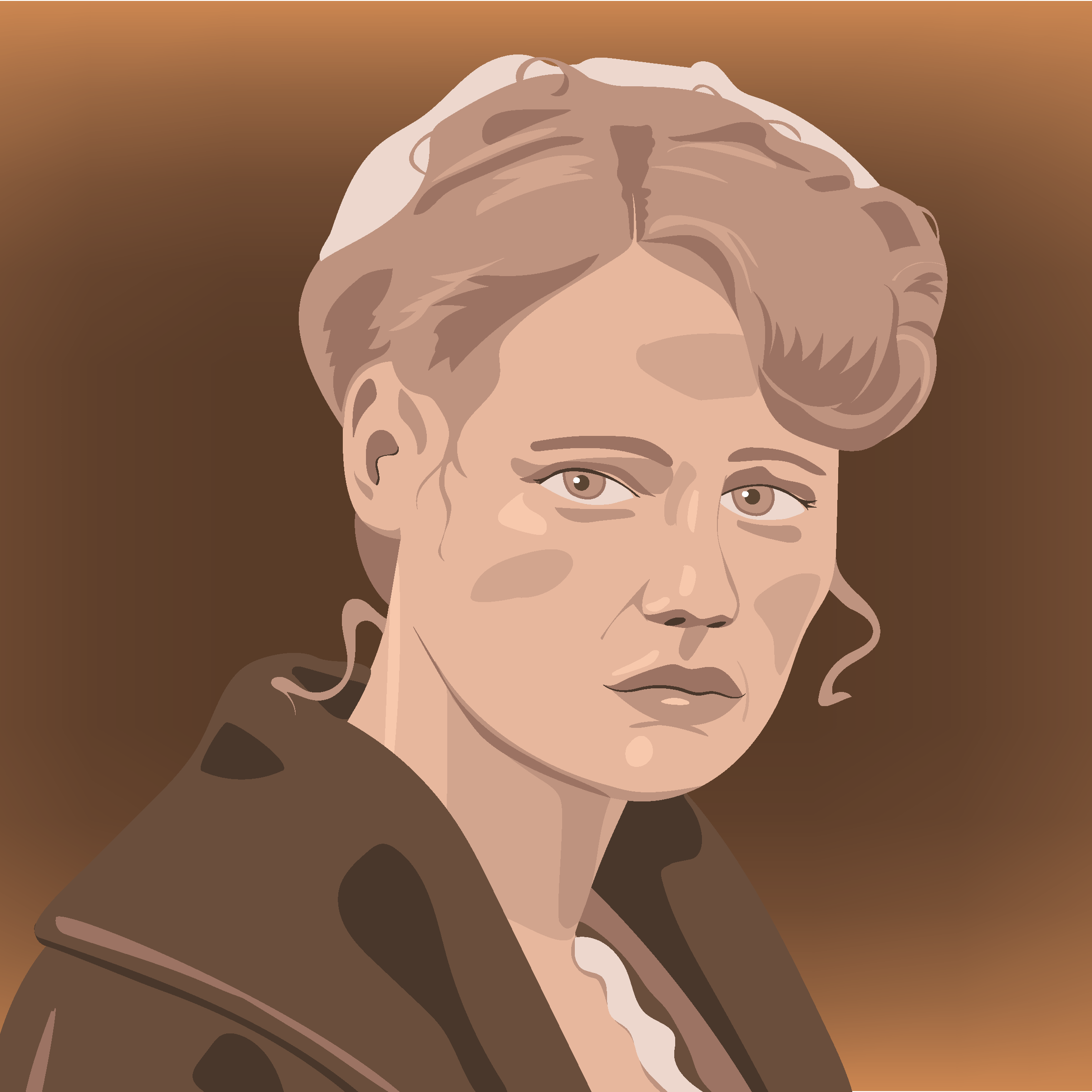
Illustration of Josephine Soulier by Charlotte Easterling
Louise and Marie-Claude walked ahead, talking excitedly. Josephine felt an ache watching them. Plump, rosy-cheeked Louise had decided quickly whose proposal she was going to accept. Jean Renaud and his older brother were traders who imported goods from France and exported furs in exchange. They were wealthy and well-connected, and Jean had been quite taken with Louise since their first meeting. Josephine was happy for her but a bit jealous too. She would be needing some fancy wigs for her new life as Madame Renaud. Josephine’s prospects were more modest.
Despite Sister Agnes’s insistence that they rest, no one did. Having a day off from their seemingly endless lessons in reading, writing, math, and homemaking, combined with the prospect of meeting new suitors left them all too excited. They washed their faces and hands before changing into their nicest dresses–provided by the king’s purse to help them look their best. Marie-Claude helped Josephine with her hair.
“If we plait it like this, it might make your face look rounder,” she said.
Helene, who was standing nearby, snorted. “Nothing will make her look plump, Marie-Claude. The best we can do is help her not look like she’ll blow away in the first blizzard.”
Louise glared at Helene. “Ignore her. She’s just jealous that you look better in green than she does.”
Josephine smiled wanly at her friend. Helene was right, though. When they first arrived in Quebec, Sister Agnes had fussed over her for being too thin, and fretted that it would make it harder for her to find a husband. And some suitors had indeed passed her over, saying they wanted a wife who wouldn’t waste away during the winter. But there were currently three men who were still courting her–two who had just finished their periods of servitude and were ready to start their own farms, and one who was a trapper.
Sister Agnes came to fetch them for evening devotions. They followed her into the chapel to pray and receive blessings. Josephine’s prayer was always the same: “Please guide me to choose the right man to be my husband and father of my children.”
At the social, a man she hadn’t met before introduced himself as Jacques Levesque. He wasn’t handsome, but he was quiet and kind.
“I have a small farm on Île d'Orléans,” he told her. “I built a house there, so it’s ready for a family. I was a soldier, and now I’m a farmer.” He wasn’t boastful, which Josephine liked. She smiled at him.
I believe I would like to see his little farm, she thought.
October, 1676
“Don’t drop that pumpkin, Antoinette!” Josephine called to her daughter as she carried it awkwardly to the root cellar.
“I won’t, Maman!” she called back, then scolded her younger brother when he tried to follow. “Paul, you stay there. You’re too young to help,”
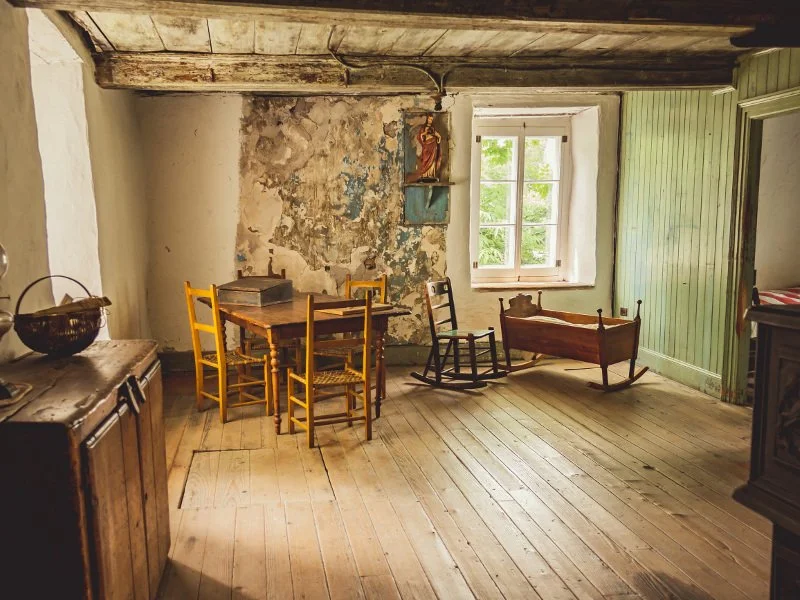
The interior of Maison Drouin at Ste Famille, built 1730, shows what Josephine and Jacques’s home may have looked like. Photo: S. Girard, bonjourquebec.com
Josephine sighed as Paul began to cry. She was kneading bread dough and didn’t want to leave it, so she sang “By the Clear Fountain” to him until he quieted down. Jacques came home while she was singing and laughed with delight. “We’re singing!” he cried and launched into a bawdy drinking song. When he was done, he dropped into a chair in front of the fire and was quickly snoring away.
Josephine sighed again as she shaped her loaves and covered them. Antoinette was fetching another pumpkin, and giggling at Jacques’s snores and snorts. Josephine groaned a bit and pressed her hands against her low back. She was only three months along, but already her body felt heavy and tired. She was relieved that Manette, their youngest, was still sleeping–it gave her a chance to rest for a few minutes. Paul, his tears forgotten, had gone back to playing with his wooden soldiers.
As she settled into a chair, Josephine studied her sleeping husband. The work on the farm had been hard for both of them, and she had tried not to be angry when he went out drinking with ex-soldier friends. Their little house sat on an island in the Saint Lawrence river, giving them stunning views of the water and the thick forest on the other side. Rather than content, though, she felt trapped. Jacques was gone frequently, and life on the island was isolating. Still, she felt safe here. The woods scared her–she had heard tales of wild animals, Indian attacks, and strange creatures ever since she arrived in Quebec. The sounds that carried over the water at night convinced her to stay close to home.
Antoinette came back and leaned against her mother. Josephine put an arm around her. Despite his faults, Jacques had done as he’d promised. He’d given her a home and a family and kept them all safe. They weren’t wealthy, but he managed to provide for them. With a pang of guilt, she thought of the ham that was smoking in their chimney, and the sugar that he had brought home so she could make fruit preserves.
Yes, he’s been good to us, she thought, then got up to check on the bread.
October 10, 1679
“Hold the basket level, Paul, or the potatoes will spill out!”
Josephine was trying to keep an eye on him while she tugged carrots out of the garden. Antoinette was watching Manette and Georges, who was not yet two, but Paul had insisted on coming to help in the garden. He’d been prattling on in great detail about the mighty battles his wooden soldiers had been fighting, and in his enthusiasm, he’d almost lost the produce she’d dug up.
“Like this, Maman?” he asked, concentrating intensely while he held the basket almost level.
“Yes, mon cher, very good,” Josephine mumbled. She was distracted by the weather. Dark, threatening clouds had been gathering since morning, and the temperature had been dropping. The wind was picking up and heavy drops began plopping against the leaves of the pumpkin plants. Josephine quickly gathered a few more carrots, moved the thick cover of straw back over the ones she left in the ground, and then took the basket from Paul.
“Run on ahead and go inside with your brother and sisters,” she ordered.
Josephine watched Antoinette herd her younger siblings inside. She paused to watch the trees across the river shiver and shudder in the wind.
All the leaves will be gone after this storm, she thought, already dreading the view of bare trees she’d have until spring. She wrapped her shawl tighter around herself and whispered a brief prayer for Jacques to get home safely, then hurried inside.
The storm grew stronger as afternoon passed into evening. Although she tried to focus on her cooking, Josephine kept finding reasons to peek out the window to see if Jacques was coming to the door. An especially hard gust of wind blew something against the house, scaring Georges and making him cry. Manette hesitated for just a moment before joining in.
“Paul, sit with them by the fire, let them play with your wooden horses,” Josephine said.
She took the bowl of peeled carrots from Antoinette and began chopping them. She peeked out the window again.
Where is he? She was acutely aware of the worry gnawing in her stomach.
Jacques didn’t come home in time for supper, so Josephine and the children ate without him. She, Antoinette, and Paul took turns reading from the Bible, and then they worked on writing and arithmetic while Josephine put Manette and Georges to bed. Even as she sang to them and tucked them in, she was listening for Jacques.
It was hours later, after Antoinette and Paul had also gone to bed, that there was a knock at the door. Josephine answered, dread washing over her. It was Louis, one of their neighbors on the island. He had his hat in his hands, and he was soaking wet. She hurried him inside to sit by the fire.
“Josephine, I’m so sorry to tell you–the ferry capsized in the storm and Jacques was lost in the river. We searched the shores as long as we could, and we’ll go out again tomorrow, but I’m afraid he’s gone.”
She sunk into the other chair by the fire–Jacques’s chair.
I’m a widow, she thought. Not even 30 years old, and I’m a widow.
Louis put a hand on her arm. “I’m going to go home. I’ll have Sophie come tomorrow to sit with you,” he said.
She nodded numbly. She didn’t look up as he opened the door on the raging storm that had taken her husband away.
October, 1684
Josephine fidgeted, trying to get comfortable so she could sleep. She lay on her side, Etienne next to her with his arm thrown loosely across the expanse of her belly. He mumbled something about dogs dancing in the river, and she poked him lightly in the ribs to make him turn over. He flopped onto his back and slept quietly.
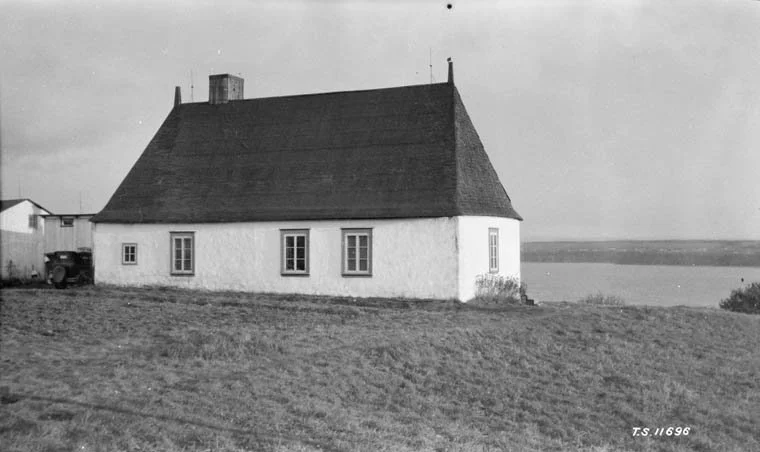
A classic rural New France home; photo: Wikimedia (public domain)
She smiled a bit, looking at him. She’d been reluctant to remarry quickly, despite the reminders she received from Father Aucoin and Sister Agnes that God had sent her here to marry and raise children. She was still young, they told her, and her suitors were eager to start their own families.
Etienne Beaudet hadn’t been in Quebec long when Josephine met him. He was a stonemason from Rouen, just a year older than her. He talked little about his life in France, but then, she also didn’t talk much about her old life. Josephine closed her eyes, listening to his slow breathing. This marriage was not what she had expected. She and Jacques had cared for each other and worked hard together on their little farm. She’d been content. She and Etienne, though–they loved each other almost from the start. And the past had weighed heavily over her and Jacques–his memories of being a soldier, and her experiences as an orphan in Paris. With Etienne, all that seemed far away and nearly inconsequential.
She thought about the conversation she, Etienne, and Paul had had at dinner earlier that evening:
“Please, Maman! I want to be a mason like Papa!” he’d pleaded. “I promise I’ll still work on my lessons too!”
She didn’t respond to Paul and instead addressed Etienne. “Isn’t he too young?” The boy was small and bony, despite the fact that he seemed to eat whenever he wasn’t sleeping.
“He’s a bit young for an apprenticeship,” Etienne had replied. “But I’d keep a close eye on him.” Etienne had looked at Paul appreciatively. “It’d put some muscle on him, too.”
The wind had blown a flurry of leaves against the window just then, reminding Josephine of the October storm that had killed Jacques.
“Not yet,” she’d said decisively. “He’ll be 12 in April, and he can start then.”
“But Maman!”
“Paul, your mother has made her decision,” Etienne had said, then he’d given the boy’s arm a squeeze. “Keep working on your math. It’ll be important when your apprenticeship starts in six months .”
Josephine turned over laboriously, smiling ruefully at the memory. She knew where Paul had gotten his physique. She remembered the skinny little thing she’d been when she arrived in Quebec. Since then, it seemed she lived in a perpetual state of roundness–belly full of baby and breasts full of milk. This one would be her fourth with Etienne. She closed her eyes again, on the edge of sleep, when a low, deep cramp settled into her belly. She sighed, and worked her way up to sitting on the edge of the bed. She would send Etienne to fetch the midwife in the morning–there was time. But her attempts at sleep tonight wouldn’t be successful. She got up to stoke the fire and get everything ready for what would be a long day ahead.
May, 1688
Josephine thought back to that day, when Marie-Madeleine had arrived. She was born with a full head of curly light brown hair like her father’s. Then Gabrielle, less than two years later, had been bald and pink at birth, then full of curiosity when she began to toddle around. The comfortable stone house had been full to bursting with nine children, much to Etienne’s delight. He’d always loved children and had gladly become a father to her first four when they got married.
The memory rushed back to her, and brought with it tears, as she placed a small bundle of flowers on the shared grave where Etienne and their two youngest daughters rested. The measles epidemic had burned itself out by the time the spring flowers had begun to bloom, but it seemed to have taken someone from every family in Rivière-Ouelle.
“I have something to tell you, mon cher,” she whispered to Etienne. “You would have been so happy to hear this.” She placed her hand against her belly, which was just beginning to swell. “One last child for you and me.”
Paul was walking across the cemetery toward her. Antoinette and Manette hung back, watching their younger siblings.
“Are you ready to go back, Maman?” he asked when he got close. She smiled at him. He was the very image of Jacques. He had stepped into Etienne’s role as the head of the family without hesitation. He was only 15, and hadn’t completed his apprenticeship as a stonemason, but he was already taking care of her and his siblings.
Paul held out a hand to help her get up from where she was kneeling. She cast one last look behind her as they walked to the wagon together.
November, 1692
The coach rolled to a stop outside the manor house, and one of Pierre-Henri’s indentured men hurried forward to open the door. He put out his hand and helped Josephine down and then lifted Jean-Etienne out. Josephine took her youngest son’s hand. He was anxious in new situations and stuck his thumb in his mouth. He had just turned four, far too old for that behavior, but she let it go for now. Pierre-Henri strode out to the carriage and greeted her with a kiss.
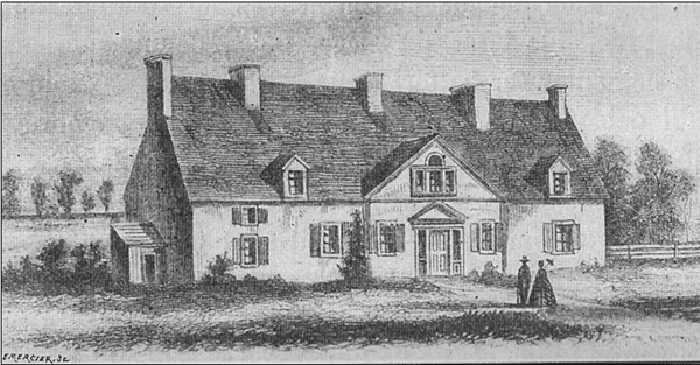
A seigneur’s manor, mid 1700’s; image: societies.learnquebec.ca
“Welcome home, ma chere!” he boomed, then looked behind her slightly wide-eyed as her children poured out of the coaches and his servants unloaded trunks.
“Six of yours plus seven of mine,” he said. “Luckily, we have plenty of room here.” He swept his hand back proudly toward the house.
Pierre-Henri Martin had a relatively small seigneurie in Rivière-Ouelle, but he was still quite comfortably wealthy. He’d lost his wife and youngest son to the same measles outbreak that had claimed Etienne and their youngest pair of daughters. Also like Josephine, he hadn’t been in a hurry to remarry. It had been Louise, who also lived in Rivière-Ouelle with her husband and nine children, who had introduced Josephine to Pierre-Henri.
“You’re too young to live out your days alone,” she’d told Josephine. “Besides, he’s 15 years your senior. Half of his children have already been married off, so he needs to fill up that big house of his.”
Isabelle, the nanny, came out to fetch the younger children. Manette and Georges glanced over at Josephine, and she waved at them to follow. This would be an adjustment for everyone. Jean-Etienne began to wail when Isabelle picked him up to take him inside.
“He’ll be fine,” Pierre-Henri said. “The little ones will adapt the fastest.” He took her hand and tucked it into his arm. “Now, Madame Martin, let me welcome you home properly and introduce you to everyone. You’ll want to spend time with the cook so you can plan the feast for our party next week.”
Josephine’s head spun a bit. It wasn’t just the children who would need time to adjust. She felt a bit embarrassed–at 43, managing a household shouldn’t seem like a daunting task. But it did.
Louise would be coming to call tomorrow, and Josephine planned to ask her advice. Just like at Salpetriere, she thought. Louise has always looked out for me. She walked into her new home, feeling proud and nervous as she looked around at the large rooms that she would never have to clean. She heard voices coming from upstairs–her children meeting their new siblings. She smiled up at her husband. She wanted to make him proud of her. She gave his hand a squeeze and then turned to meet her household staff.
February, 1694
“Are you awake, Madame?” Isabelle asked as she poked her head in.
“Yes, please bring her in,” Josephine said. She wrapped her shawl more tightly around herself, then held out her hands for the little bundle. Isabelle settled baby Armandine in her mother’s arms, and then turned to put another log in the fireplace. The winter had been bitterly cold, but it was cozy by the fire.
“Also, Madame, you have a letter from your daughter.” Isabelle handed her the envelope, then quietly slipped out of the room. Josephine read the letter, which included the news that she would be a grandmother for the third time later this year. She laughed and bounced Armandine when she began to fuss.
“You’re going to be an aunt again, little one, and you’re only two weeks old.” Armandine gurgled in response and stuck out her tongue. Having another child when she was 45 and already a grandmother had hardly been something Josephine expected. Pierre-Henri was delighted, of course, and maybe just a bit boastful about still fathering children at the age of 59.
Josephine picked up her mother’s rosary from the night table and showed it to her daughter.
“This belonged to my maman, chere’” she said softly. “I got it when I was just a baby, and now it’s yours.”
Armandine’s face was solemn and uncomprehending as she gazed at the cross. Presently, tiny eyelids fell. Josephine smiled and gently stroked her daughter’s cheek, certain Maman was pleased her name and rosary had been handed down to a new generation.
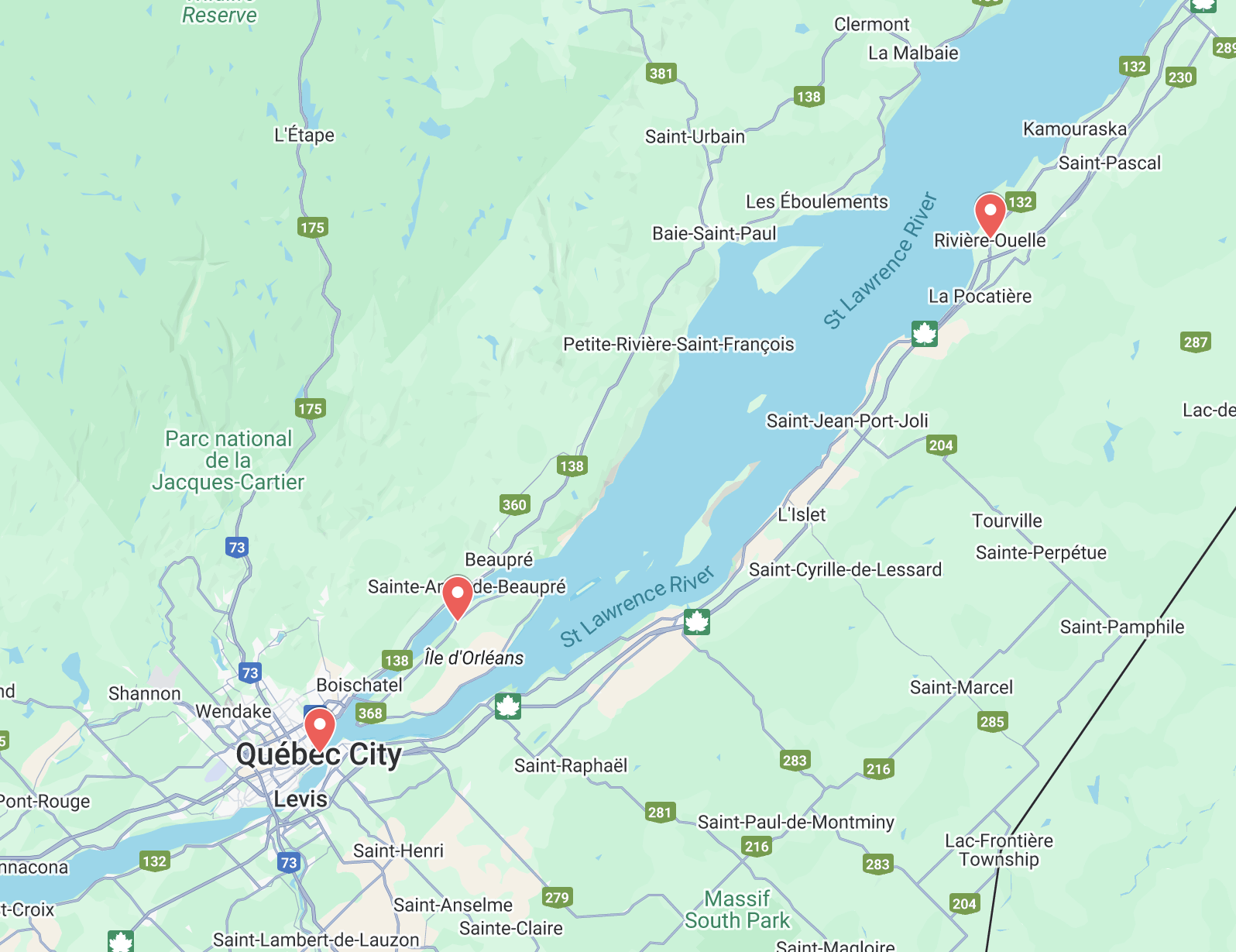
The filles du roi disembarked at Quebec City (left) and stayed there until they married. Josephine’s first two husbands lived at Ste Famille, on Île d'Orléans (center). When Josephine married Pierre-Henri, they lived in Rivière-Ouelle (right). Map: Google Maps.
Subscribe to learn more about the real people
and historic events behind this story.
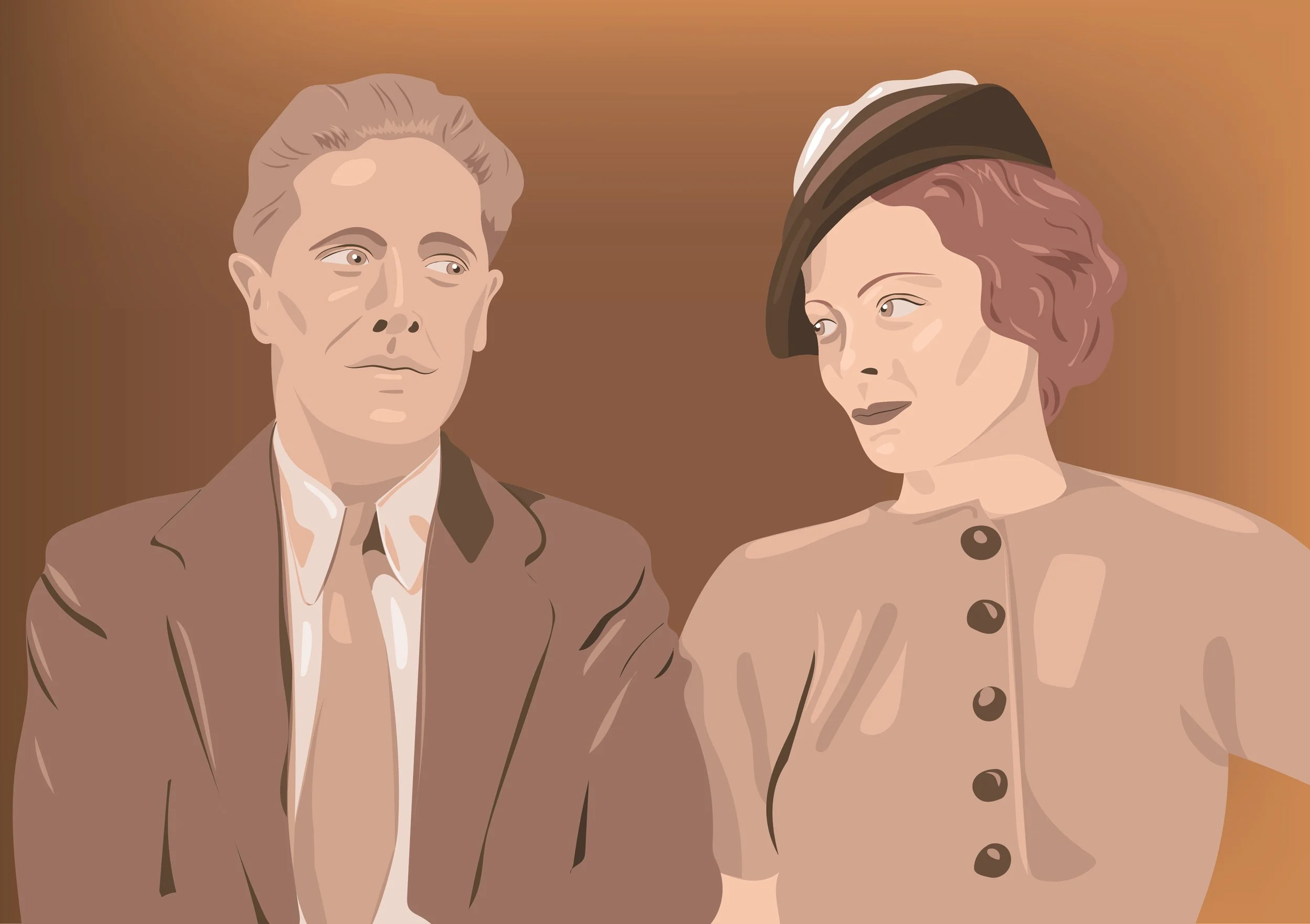
The Arrangement
Joe and Harriett weren’t a typical couple. This is a bonus post for paid subscribers. Join today to read on!
Joe Croft walked into the diner and scanned the few occupied seats. He quickly spotted the nervous-looking redhead sitting in a booth toward the back. He removed his hat as he approached and stopped at her table.
“Are you Harriett?”
She leaned away from him and eyed him suspiciously, then nodded and pointed her cigarette toward the seat across from her. Joe slid into the booth and placed his hat and shopping bag next to him. Harriett studied him through the veil of cigarette smoke. Her eyes were intensely blue.
Subscribe to see the rest of this post and
other bonus content from The Relatives.
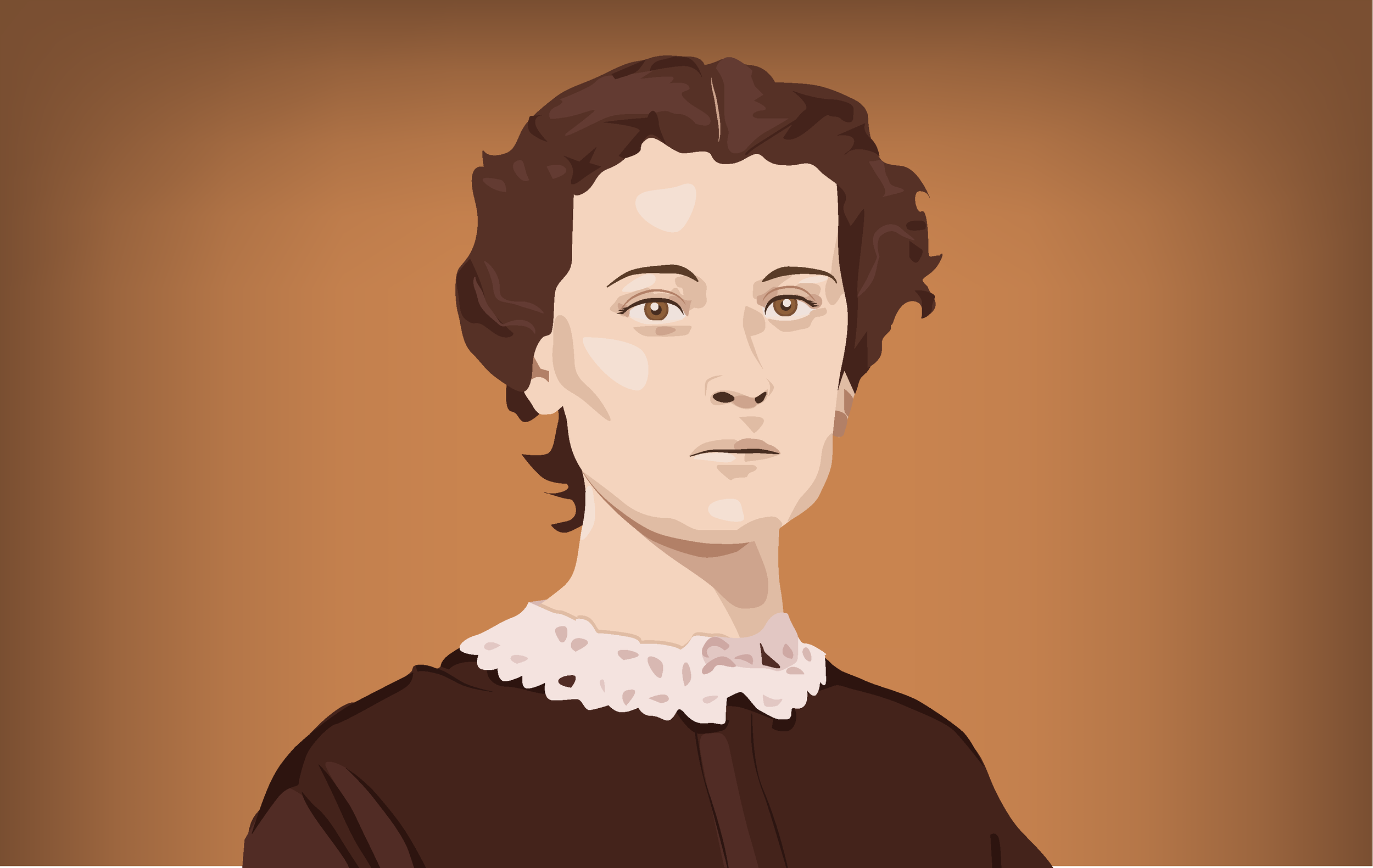
Mistress of the House
Evelyn Wallace knew exactly what she wanted from her life. Along the way, things didn’t go quite as planned.
If there’s one word that describes Evelyn Wallace, it’s persistent. Through hardship, betrayal, and being a single mother, she never gave up. Why, you may ask? It was love–unconditional and unwavering. And it lasted her entire life. But as you’ll see, the road she traveled was lengthy and twisted.
***
In the summer of 1847, when Evelyn was 17, she and her family attended what would become a fateful church revival meeting in central Tennessee, where they lived. At that time, it was very rural, with a sparse population and few churches. So church revival meetings were pretty much the only opportunity for settlers to attend church services. Like most people, Evelyn’s family had traveled to be there (although not as far as many attendees had), and they’d set up camp for the four days the meeting would be happening.
Let’s be clear, though, this was not the kind of revival meeting (or tent revival) that came into being in the 1900’s. There was still a religious aspect, to be sure, but these meetings were in equal part social events that included providing a way for people to look for things like marriage partners, especially young people…

Lincoln County, TN; photo: landwatch.com
***
Because they were camping, all of the cooking was done outside over open fires. This is where we find Evelyn after the morning service of the first day of the revival meeting. Her Ma was getting annoyed. Or Evelyn thought that was the case because she’d almost tipped a pot of beans into the cooking fire.
“Oh for heaven’s sake! Go talk to the boy!” Ma said, doing her best to hide her smile.
Evelyn, for her part, tried to deny (with no success) that she was distracted by James Waite, the handsome young man who’d introduced himself and his two brothers, Bennett and Roger, just before the morning service. (They’d sat in the chairs in front of Evelyn and her family.) The three brothers, now standing together a short way away, were also encamped nearby, but they’d come from their home in Illinois to settle some family business matters, not specifically to attend the revival meeting.
Ma shooed her away, and Evelyn, blushing furiously, didn’t argue. She started to sidle her way toward James but hesitated. Maybe he was just being polite when he’d introduced himself. Then again, she thought he might’ve been flirting too.
Over the last couple of years, the socializing that was part of the revival meetings had taken on a different tone. It was no longer just catching up with friends and family who lived far away. Now it was also meeting potential husbands and wives (although Evelyn didn’t quite recognize it as such).
James saw her and excused himself from his brothers. He came over to talk to her, which made her blush even harder. She wanted to flee in a cloud of embarrassment, but before she could, he was standing right there talking to her.
“We won’t be here too long,” he said. “We came to sell off some land our grandfather owned. He died a few months ago.”
“Oh, I’m sorry,” Evelyn said.
“Thanks,” James murmured and looked away.
“Miss Wallace,” he said looking back awkwardly. “I’d be mightily pleased if you’d let me sit with you at the evening service.”
Evelyn, despite never having been to the ocean, could swear she heard it roaring in her ears. So, unable to find her voice, she just nodded…and blushed… and returned a slightly self-conscious smile.
Bennett and Roger, for their part, exchanged a knowing look when James told them he wouldn’t be sitting with them at the evening service.
***
To no one’s surprise, it was just six months later Evelyn excitedly announced that James had proposed and she intended to accept. Her Ma and Pa, on the other hand, were not quite as joyful. They wanted Evelyn to wait until she was 18 to get married. One thing they couldn’t deny, however, was that James certainly appeared to be serious. When his brothers returned to Illinois, James had stayed on to court Evelyn properly.
Even so, to Evelyn’s rather pointed frustration, it seemed that her Ma and Pa were incapable of accepting why they couldn’t wait the few months until Evelyn’s 18th birthday. When they repeated their demand for information, she had to exert considerable control to keep from snapping at them.
“Once again,” she said after taking a deep breath, “because James and his brothers are going to enlist in the Army to fight in the Mexican War.” (Which had been raging for almost a year at that point.) “He’s staying on here long enough for the wedding,” she went on, “and he’ll get us to his homestead in Arkansas, but he’s anxious to enlist,” she said, thinking that would be the end of it. But it wasn’t.
Ma gave her a dubious look but didn’t articulate what she suspected. Pa’s mind, on the other hand, went to a different matter. He pointed out, again, that the land James had was at least two weeks away (going from central Tennessee to central Arkansas). They were worried about her moving so far away, and although she would never admit it to them, Evelyn agreed. The long journey, in addition to the thought of being so far from home, scared her. And to make her fears worse, the land was in territory that had recently been cleared of the Native tribes who’d lived there for ages. She’d heard stories about the attacks in Tennessee when the Cherokee had first been driven out (leading to what would later be known as the Trail of Tears).
What if there are Indian attacks in Arkansas? She wondered with a thrill of fear.
One comforting thought was that her sister in Texarkana and her brother in St. Louis would come help her settle into her new home. And there were Wallace cousins living not too far from the part of Arkansas she’d be moving to. So Evelyn did her best to quell Ma and Pa’s apprehension, as well as her own.
“It’s just as far away no matter how many months I wait. I love him and want to marry him before he goes to war,” she said emphatically. Concern remained etched in her parents' faces, so she gave them both a hug. “I’ll be fine,” she said. Ma and Pa didn’t look at all reassured but reluctantly agreed that they wouldn’t stop her.
***
The next two months brought the biggest changes in Evelyn’s young life, starting with her wedding. It was happy overall, but the knowledge that she would soon be leaving for a new, distant home lent an underlying air of melancholy that went unacknowledged even as her journey to Arkansas began the next morning.
It took a little more than two weeks to get to their farm, and on the way, Evelyn constantly marveled at how lush and green the scenery was. Once they arrived, it hadn’t taken long to set up housekeeping, but despite the captivating landscape, it didn’t really feel like home yet.
I suppose that will come with time, though, she thought as she stood at the door of their little house, watching the sunrise.
The hills that surrounded their property were brightening and shifting from black to green as the sun came up. This was usually calming, but not today. She couldn’t fight down a feeling of dread knowing that James would be leaving that morning for Alton, Illinois to enlist. He’d arranged to meet up with Bennett and Roger there, and after they signed up, they’d start three months of training. What really worried her, however, was that after basic training, they’d be sent to fight in Mexico.

Washington County, AR; photo: TripAdvisor
She was struggling to hold back tears when he came to the door with his pack. He kissed her and promised to come back, then gently pressed his hand against her belly. She had told him the day before that she was expecting, knowing he probably wouldn’t be there when the baby was born.
“Now don’t fret,” he said. “Your brother should be here tonight, and your sister won’t be far behind.”
She nodded, and unable to speak, watched and waved until she couldn’t see him any longer. She lingered in the doorway for a while after that, hoping against hope he’d turn around and come back. But she knew that was foolish. For the first time since they’d met, she felt much too young for everything that was happening. She reminded herself that Ma had taught her everything she needed to know to run a household, and in addition to her brother and sister, her cousin Levi had sent his oldest son, Levi Junior, to stay with her and help out with chores. So she wasn’t alone.
“But none of them are James,” she said to herself with a sigh.
The sun was fully up now, so she shook off her dreary thoughts, smoothed her skirt, and cast one more longing glance up the road James had taken.
***
Not long after he’d left, Evelyn started getting letters from James. The first one described getting to the induction and training camp in Alton, and letters continued to arrive every week or two (mail service being what it was back in the mid-19th century). They didn’t stop even when James had been in combat. He wanted to be supportive during her pregnancy even though he was fighting in the war. In all of this correspondence, they made decisions about things like what the baby’s name would be: Mason, if it was a boy, and Madeleine, if it was a girl. Evelyn treasured every letter, not just because she wanted him to be involved in these kinds of choices, but also, perhaps more importantly, because it was reassurance he was still alive. Even so, it wasn’t until Mason (yes, she gave birth to a boy) was six months old that she finally got the letter she’d been hoping for. She read it, then re-read it, and then, for good measure, read it a third time, partly to help the news to sink in and partly because Mason wouldn’t stop fussing and wiggling.
“Daddy’s coming home!” she said, grinning like a fool while bouncing him. Mason, for his part, was impressively unimpressed and determined to continue fussing.
As happy as Evelyn was, the letter also contained bad news: James and his brothers had all contracted malaria. And while James and Roger were doing better, Bennett was very sick. But Evelyn didn’t have long to consider this as Mason started wail, apparently offended that he wasn’t getting her undivided attention. When he finally allowed himself to be mollified, Evelyn put him in his crib and turned to preparations for James’ homecoming.
***
As it turned out, however, James was forced to delay his return. Bennett continued to weaken and died as quickly as James and Roger regained their strength. All three brothers had prepared to lose each other in the war, but that didn’t help when dealing with the shock of losing Bennet to an illness rather than a bullet. Roger and James took care of sending Bennett’s body back to his home for burial, then made their goodbyes to head back to their own homes.
So James returned to Arkansas through a combination of walking and getting the occasional wagon ride from infrequent passersby. And Evelyn constantly kept an eye out until one day he appeared as a distant speck far up the dirt road that ran by their homestead. Soon, he was at the doorstep dropping his pack on the porch.
This, Evelyn thought, makes up for all the waiting.
She exclaimed in delight and jumped into James’ arms. After an extended period of hugging and kissing, she lifted Mason out of his crib and introduced him to his father. James took the baby and held him out to take a good look.
“Why, you’re a fine lookin’ young ‘un!” he said, marveling at his son.
Soon he sat down with Mason in his lap and an arm around Evelyn’s waist. She leaned into him, thinking about the long, happy years they had ahead, now that the hardest days were over. Little did she know, her not-too-distant self would find this sentiment to be overly optimistic.
***
And just a few days later, Evelyn did indeed realize (with more than a little chagrin) how naive she’d been. Mason was teething, and nothing would quiet him. And much worse, soon after getting home, James had come down with a fever and rash that Evelyn feared might be smallpox instead of a malaria relapse. So she had her hands full tending to him and keeping a close eye on Mason for any sign he might be sick too. Thankfully, Levi Jr. had come to help out again, which Evelyn told him repeatedly was a life-saver.
He just smiled shyly and said. “Glad I can help out family.”
After a couple of weeks, Evelyn started to relax. Mason remained healthy, especially his lungs (which he constantly demonstrated by wailing loudly), and James looked to be on the mend too. Then one morning, she woke up with a fever and rash like James had had. For some reason, though, it hit her harder, which she didn’t understand until she realized she was expecting again. She decided to wait until she was well before telling James, just to be sure that everything was fine. But that didn’t take long.
“Mustn’t shirk. Got to get up and get back to work,” she told herself as soon as she could get on her feet and do chores.
Before long her strength returned and brought with it her characteristic optimism.
1849 will be a good year, she thought.
***
But once again, her optimism came into tragic conflict with reality. Her prediction for 1849 didn’t work out. Her second pregnancy ended with a stillborn son. After that she’d sworn off making rosy predictions about the future, and it was just as well–it wasn’t even halfway through 1850 now, and she’d miscarried her third pregnancy.
She lay on her side, sobbing quietly while Martha, the local midwife, stopped cleaning up and went to pat Evelyn’s hand.
“There, there, love,” she said in her thick Irish accent.
Evelyn tried to regain her composure, but despite Martha’s kindness, she felt guilty and completely alone. She and James both wanted a big family, but after two failed pregnancies, she was worried that she wouldn’t be able to give James more than their one child. This thought alone broke her heart, but when the very real possibility that Mason might end up being an only child occurred to her, her misery felt unbearable.
Martha pulled the blanket over her and said, “Now you get some rest, dearie.”
Evelyn could hear her sister, Isabel, cajoling Mason to eat, but he was upset by the sounds coming from the bedroom, and wanted to come see her to get comfort and reassurance. That wouldn’t be good for him, however, so she pulled herself into a ball and wished that James was there.
But he was far away. He’d had to rush off to Illinois when he got word that his stepmother had died suddenly, which left his father alone to take care of his farm and five children.
“I’m so sorry,”James had apologized, “but my Pa needs my help.”
So do I, Evelyn had thought, but kept that response in her head and instead said, ”I understand. He’s surely overwhelmed.”
At the time, it was easier not to feel resentful knowing that he planned on being back in time for the birth that now wouldn’t happen. But as usual, nothing had gone as expected.
***
Shortly after her miscarriage, Evelyn wrote to James to give him the sad news. She hoped the letter would reach Illinois after he’d left to come back home, but in James’ reply letter he wrote:
Pa’s already courting a new bride, and she’s just a little older than me.
Evelyn’s first reaction was shock, but then she realized it wasn’t all that surprising, maybe even a bit amusing.
James’ father was a small, unassuming man who’d been married three times at that point, and each time he remarried, his wives got progressively younger.
“He sure doesn’t let the grass grow under his feet… or on his wives’ graves,” she said out loud, but only Mason was there to hear her, and he just gave her a curious look.
Given the impending nuptials, Evelyn expected James to be reassured that his father would have someone to take care of his household and children. Consequently, she expected James to come home very soon. But oh those pesky expectations. Instead of James himself coming down the road, she got another letter where James told her he was staying in Illinois for the wedding.
She couldn’t decide whether she was more sad or furious. Without a doubt, she understood the importance of family, but she and Mason were his family too! How could James constantly put his father before them?
It was also hurtful that his letter was so brief and impersonal, but she didn’t have time to give it much thought. She wiped away angry tears and shoved the letter into her apron pocket. She’d answer it later–right now she had her own family to attend to.
***
In the following weeks, it was hard to overcome lingering resentment, but Evelyn managed to do so. And now, months later, all she could feel was joy as James slipped into the bedroom and sat down next to her on the bed. She handed him their daughter, and he ran a finger along her tiny cheek.
“Clementine?” he asked.
Evelyn nodded and let her grateful tears flow–she’d been terrified to even think about names, just in case, but James had convinced her to tell him what she’d chosen as the day got closer. She wiped her eyes, and marveled at her daughter ’s wrinkled little face as she yawned.
James caressed the tiny head and said, “Hello there,Clementine.”
*
Isabel hadn’t been able to come help with Evelyn’s fourth pregnancy, but cousin Levi seemed to have an endless supply of teenage children to share as helpers. His daughter Nancy was in the kitchen, washing Mason’s face and hands so he could meet his baby sister. James went out to join her and started on one of his long-winded jags, prattling on about the giant birds he saw one afternoon when he was in Illinois, and how they had tried to carry off one of their calves. Evelyn sighed and decided to rescue her from the story before it went on any longer. She called to Nancy and asked her to bring Mason in.

Recreation of the Piasa Thunderbird, first seen in the late 17th century by European explorers near Alton, IL; Photo: Burfalcy/Wiki Commons/CC BY SA 3.0
James had always been a fan of tall tales, and Evelyn had enjoyed listening to them. But it seemed that over the last few years, his stories had changed. He’d taken to telling her ominous stories about the Indians who had lived in the area, knowing that she was afraid of attacks and raids. And he’d become fixated on the skeleton of a giant human that one of their neighbors had claimed to find while digging a well. The skeleton got bigger every time James told the story, and he was convinced that they could sell it and become rich. She tried to dismiss the stories as just more of his tomfoolery, but they bothered her. It was almost as if he believed that his grandiose tales were true.
What bothered her the most, though, was that James’ behavior was a continuation (worsening, really) of strange patterns she’d observed over the past few years. He’d been making regular trips to Illinois to visit his family, and they were always months long.
They argued about those trips frequently, but it made no difference–James would be off on another visit to help his family, leaving Evelyn resentful and embarrassed. Her family and neighbors were ready to help while James was away. She gladly accepted the help, even though she noticed the looks that passed between people when she mentioned that James had gone again.
She was thankfully distracted from this line of thought when Nancy led Mason into the bedroom. The little boy’s eyes widened when he saw his new sister. Evelyn’s heart jumped at his reaction, and once again, any bitterness about James was swept away.
***
This routine on the part of James persisted, frustratingly for Evelyn, over the next few years, which she was pondering as she fanned herself trying to mitigate the Texas heat. It was March of 1865, and Evelyn was heavily pregnant again, the result of one of James’ infrequent trips home. It seemed to be going well, but for once, she wasn’t getting her hopes up.
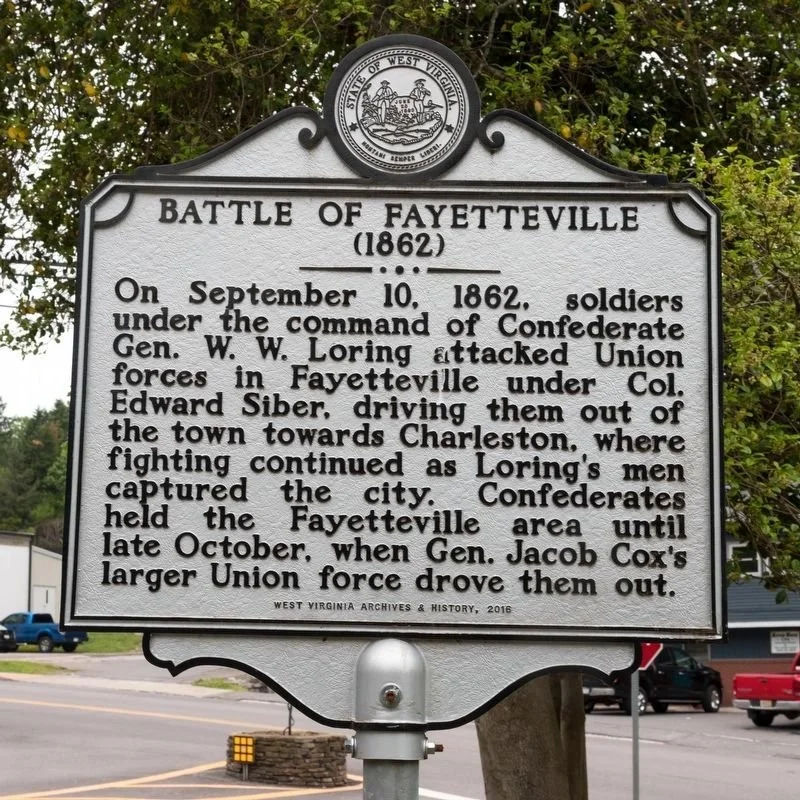
Battle of Fayetteville marker; photo: J.J. Prats, 2023
Her sister came into the room and announced “The Yankees took Fayetteville.”
Evelyn groaned and struggled out of her chair. Isabel put a hand on her back to steady her, then showed her the newspaper.
She was disturbed–their farm was only 40 miles from Fayetteville, and there had been a steady stream of Union and Confederate soldiers through the area. James had come back from Illinois and talked about his younger brother Amos joining the Union army. He looked haunted as he described seeing him off, and Evelyn knew James was remembering Bennett, who was just 20 when he died.
At first, Evelyn was happy to have James home. His presence made her feel safe. By autumn, though, she noticed that his erratic behavior had returned. He was telling his rambling stories again, most of them spiraling off into nonsense. He was ill, with fever and frequent relapses of the rash she’d seen before. When she tried to take care of him, he called her “Margaret,” and he was calling the children by the wrong names as well. Evelyn tried to tell herself that it was just delirium from the fever, but she was ashamed when she saw the contemptuous looks Mason cast at his father.
Once he was sufficiently recovered from his fever, James said that he had to go back to Illinois. This time, Evelyn hadn’t pressed him for an explanation. She closed the door behind him and went to write to her sister in Texarkana, asking to stay with her for the duration of the war.
*
Not long after that, her son Ewell was born, while the family–minus James–was living in Texarkana with her sister and her family. Mason joked quietly that he was relieved to finally have another boy in the house so that he wasn’t outnumbered anymore.
“Your sisters appreciate your patience,” Isabel told him, and he blushed and mumbled “Thank you kindly, ma’am”.
Isabel took Ewell from Evelyn and put him in his crib.
“Number six for you,” she said, and looked at her pointedly. Evelyn plucked at her dressing gown. She’d told Isabel everything, and was relieved and horrified that Isabel had come to the same conclusion as Evelyn–James had a second family in Illinois.
Isabel shooed the children out of the room and then turned back to Evelyn.
“Your husband is a lunatic,” she said. “You should see the letters he wrote to us.”
Evelyn nodded. She knew all too well.
“You’re better off without him,” Isabel went on, and again, Evelyn nodded in response. She had gone over everything in her mind countless times, and had finally come to a decision. After the war, she would go home and divorce James. She wasn’t sure she’d be able to prove that he was a bigamist, but there were enough people who’d attest to his insanity. She sighed as she settled back against the pillows. The thought of what was ahead exhausted her. She closed her eyes, and was asleep before Isabel slipped out of the room.
***
True to her decision, when the Civil War had drawn to a close, Evelyn returned to their farm in Arkansas with the full intention of divorcing James.
“Oh Mason,” Evelyn whispered as he guided the wagon past the ruins of farmhouses.
Nothing but chimneys, she thought.
The unfairness of it overwhelmed her. The people in their part of Arkansas hadn’t even wanted to secede, and here they were with nothing left. She dreaded seeing the remains of their home. She didn’t have any idea how they’d start over, or, more to the point, if they could.
As they approached their house, Mason gasped. “Ma?”
She squeezed Mason’s arm. They both saw. James was working to clear away the debris that was everywhere. He saw the wagon roll in and stopped to wave to them. Evelyn’s heart did a slow somersault–seeing him there next to the camp he’d set up reminded her of meeting him all those years ago. And like that day at the camp meeting, James held his hand out to her.
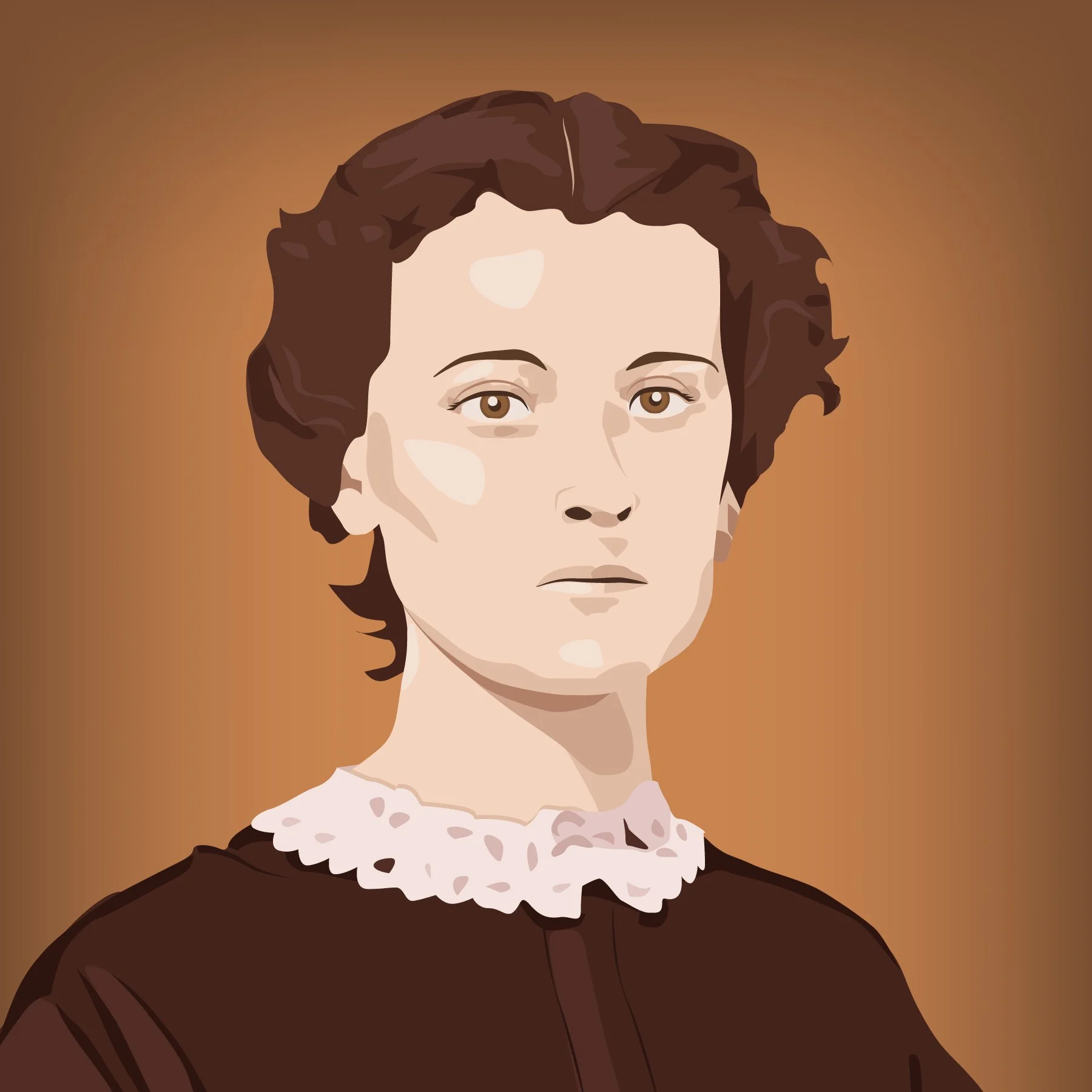
Illustration of Evelyn Wallace Waite
“Welcome home, Mrs Waite,” he said.
He leaned in to kiss her, but she pulled back. She handed Ewell to Mason and asked him to keep an eye on the other children. It was time to have a serious, likely unpleasant, conversation with James, who watched intently while she climbed down from the wagon and led him away. When they were out of earshot of their kids, Evelyn started, uninterested in beating around the bush.
“I know about your other family,” she said matter-of-factly. “Your other wife is Margaret, yes?”
James looked stricken but took a deep breath and answered, “Yes.”
Evelyn nodded. “And how many children?”
Again, James looked greatly embarrassed and uncomfortable, which actually pleased Evelyn.
“Six,” he finally answered. “But we lost two of them while they were just babies.” He looked down at his feet. “And there’s another one on the way.”
Evelyn closed her eyes and sighed. She’d prepared what she would say to James if he came back. She’d run through it in her head so many times that she could recite it almost without thinking.
“James, I’m not going to make this decision for you. You have to choose which family you want to be with. If it’s this one, you can’t ever go back to your other family. If it’s your other family, you have to go now and stay gone forever.”
She felt like a monster for suggesting that he abandon his pregnant second wife, but then she considered the number of times James had done exactly that to her.
James was still looking at his feet but said, “I want to be with you, Evvie. I want to rebuild our home.” Then he looked her squarely in the eyes.
“And what will happen to your other family?” she asked.
“My brothers will help Margaret. That’s what they’ve done all the other times I’ve been away.”
Evelyn realized she hated James a little bit.
Maybe even a bit more than that, she thought.
Even so, she couldn’t help but be glad he was going to stay with her and their children. She shivered, and he motioned for her to come sit by the fire he’d started. He hurried to get her some coffee, glancing over at her the whole time. He handed her the cup and she gave him a tiny smile and let her fingers brush over his when she took it. The look of relief on his face softened her hurt, angry heart.
I guess we’ll try, she thought without a tremendous feeling of optimism.
***
Evelyn recalled that conversation, and her misgivings, as she stood on the train platform. She and James and the children had worked incredibly hard trying to rebuild their farm, but to no avail.
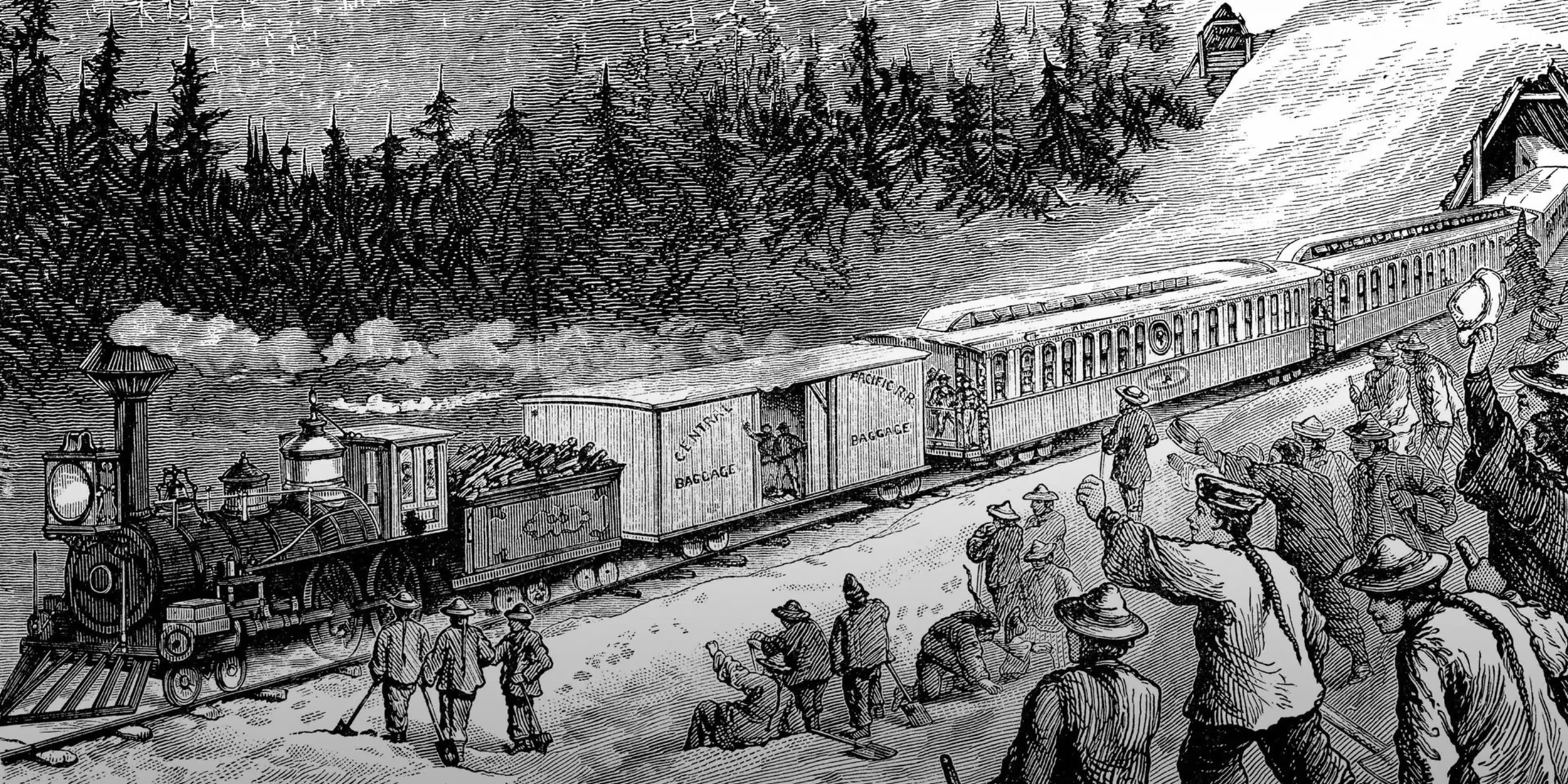
Transcontinental railroad; image: The History Channel
It made her so sad her chest ached. She closed her eyes and remembered the way the sun looked coming up over the hills and the smell of pine.
A porter walked up to her and pointed to Mason who was standing at the end of the platform.
“Excuse me, ma’am,” he said. “That’s your husband over there, isn’t it?”
Evelyn shook her head. “No, that’s my son. I’m a widow.”
She had decided it was a lie she could live with.
The porter looked abashed and mumbled an apology. Mason spotted them and hurried to help with the trunks. Clementine and Vera looked after the younger children while Evelyn looked for the conductor. She knew moving to Oregon was the right decision, but at the moment it all felt overwhelming.
Soon, they were settled, with the exception of Mason, onto the benches that would serve as their seats. When Mason made his way back to them, he looked rumpled and sweaty from getting their trunks situated. He scooped up four-year-old Annie and put her on his lap, where she leaned against his chest. Evelyn watched, grateful to Mason for being more of a father to his siblings than their actual father had ever been. James had left for the last time two months before Annie’s birth, whereupon Mason, just 18 when she was born, had stepped in to help raise her.
“Ma, you’re telling people you’re a widow?”
Evelyn sat up straighter. Her head was throbbing and she didn’t want to talk about any of this.
“It’s easier, Mason,” she snapped. “A widow is respectable.”
“It’s nothing to be ashamed of,” he told her. “He’s the one who left.”
Evelyn gave him a look, and Mason dropped the conversation. He was 22 now, and knew better than to push his mother when she was done talking.
***

Baker County, OR; photo: landwatch.com
Although Evelyn had never let on to Mason, she’d been filled with doubt about the decision to leave Arkansas. Selling the land their farm had been on hadn’t brought in a lot of money, but it was enough to put them on a train to Oregon and to buy them a few acres in Baker County.
She sat on the porch of their farmhouse, resting after showing Annie how to make flapjacks. She closed her eyes and allowed herself to mull the turn her life had taken.
Despite her trepidation, she had to admit that the move had been good for the family. They’d been living on their new farm five years now, and it was flourishing under Mason’s guidance. She also knew that the younger children had adapted quickly and were happy here–it was the only home they remembered. Her older daughters had eventually settled in well, even though they’d needed a little more time. Clementine had married last year and was expecting her first child in the spring.
Evelyn hoped she would live to see her first grandchild. For a while she’d been able to dismiss her headaches and clumsiness as exhaustion from moving the family and rebuilding their life. But when her vision began to fade and she developed a noticeable tremor in her hands, she’d resigned herself to seeing a doctor. He’d diagnosed her with syphilis and given her mercury pills, along with a stern warning to live virtuously to avoid spreading her disease to anyone else.
She was humiliated, and furious that James had managed to let her down one last time. It had, of course, come from him–she’d been faithful to him her entire life.
It’s a secret that’ll die with me, she thought before pushing past that memory. No use lingering on something she couldn’t change.
Isabel had written to Evelyn three years ago, in 1872, with news that both James and his other wife were dead. There had been an outbreak of typhoid fever that had carried them both off and left six of their children orphaned. Evelyn felt tears welling in her eyes, behind her closed eyelids. The unfairness of it all struck her once again. She and the children, and even his other wife, had all deserved better from him.
Mason clumped up the porch steps, Ewell running behind him to wash up for breakfast. Evelyn quickly wiped her eyes. Mason paused before going inside.
“You all right, Ma?”
She looked up at him. She couldn’t make out his features in the shadows of the porch, just his silhouette. So like James he was, at least on the outside. She took great comfort, though, in the fact that on the inside, he was nothing like his father in all the best possible ways. She had to fight to hold back tears once again when Mason held out his hand to help her up.
“Let’s go have us some breakfast,” she said. “We’ll see how well Annie did with those flapjacks.”
***
Mason paused outside the telegraph office and soaked in the warmth of the late afternoon sun. He hoped this weather would hold. It was Ma’s favorite, and he liked the idea of burying her on such a fine day. He had just sent word to Isabel, letting her know that Ma had passed.
He was glad that she had lived to meet Inez, her first granddaughter. She seemed about to burst with pride, but had declined the offer to hold the baby–Evelyn had grown so weak that she was afraid of dropping her. She wasn’t too weak, though, to fix Clementine’s husband Thomas with a fierce look.
“You be a good man and take care of my daughter and grandbabies!”
Thomas seemed startled by the emphatic command, but he had assured her that he would be a good husband and father.
Evelyn died the following year, in 1877. Her family had been close by, but only Mason was in the room with her when she opened her eyes one last time. She asked him to find her wedding band and help her put it on. Mason did, even though he couldn’t understand.
“He was a different man the day he gave that to me,” was the only explanation she offered. “I’m very proud of you,” she said. “You’re a good man.”
“Thanks, Ma,” Mason whispered, finding it hard to maneuver words around the lump that had suddenly appeared in his throat.
Nothing more was said or needed. Mason held her hand until she drew her last breath.
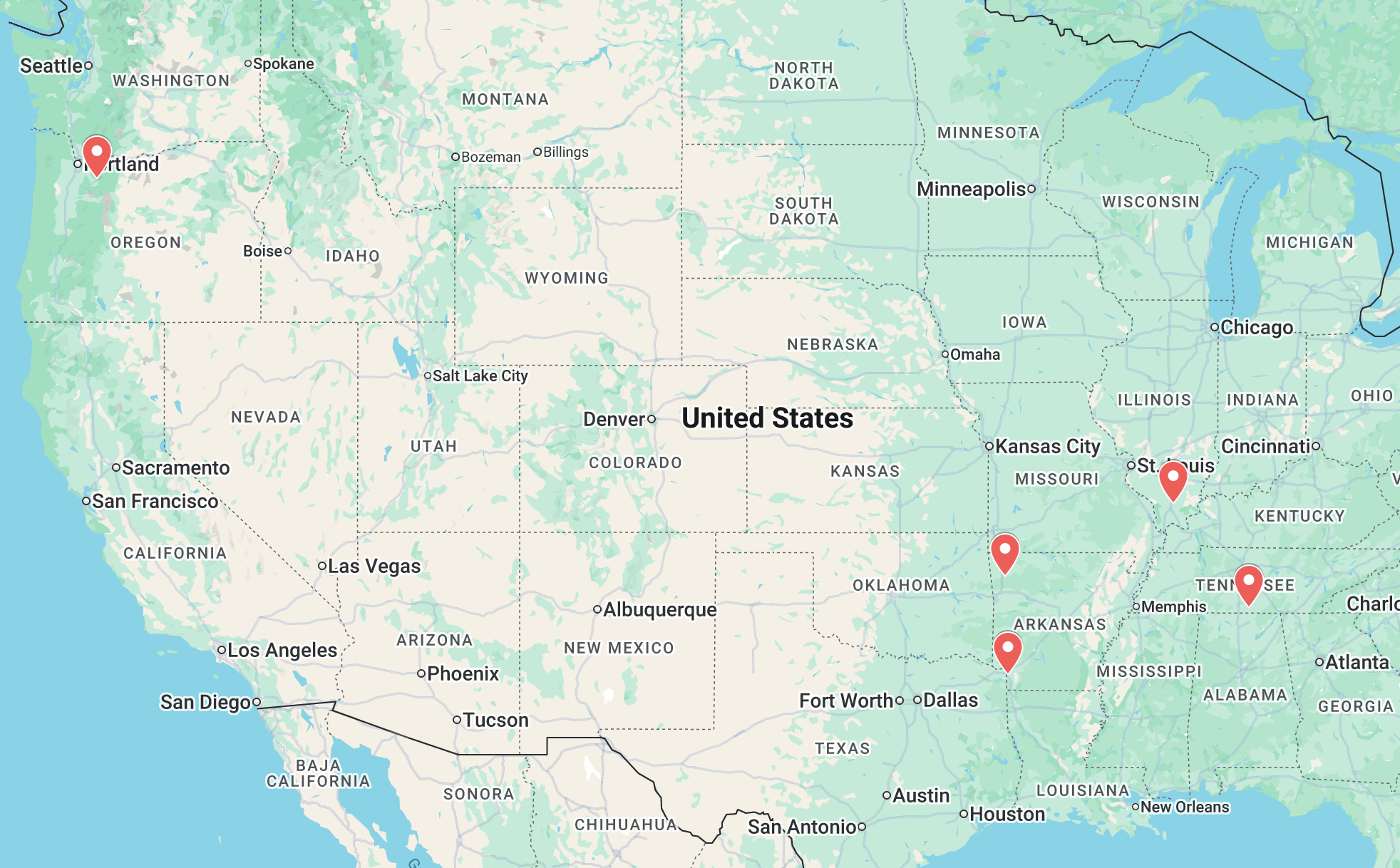

Location in the story. Top left: Baker County, Oregon; Center top: Washington County, Arkansas. Center bottom: Texarkana, Texas. Top right: Marion, Illinois. Bottom right: Lincoln County, Tennessee.