
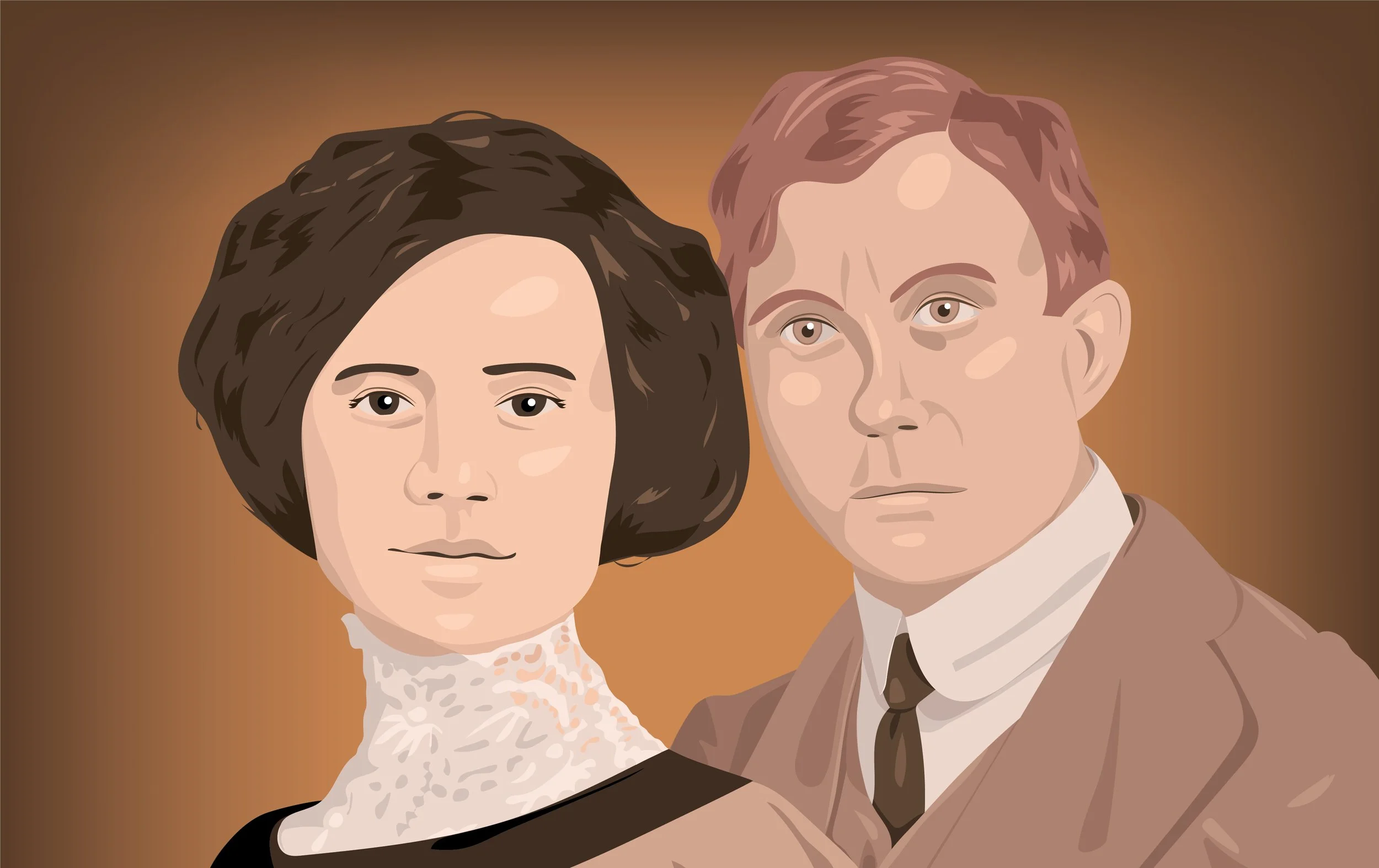
Partnership
Meet two performers who became partners in their careers, their travels, and their lives.
Written by Eric Shipley and Charlotte Easterling
Decatur, Illinois: August 18th, 1913
“My interest in Abraham Lincoln began at an early age,” said Seamus to the audience at the Mattoon Chautauqua that had encamped in Decatur. “And it was largely due to my father, Sean Scully, who was thoroughly impressed by him. In fact, he and my mother, Marian, took me to meet him. I was just three, so my memories of the details are vague… except one.
“According to my parents, I was fidgety and kept humming Camptown Races, which it seems was my favorite song. My father kept hushing me. So much so, my mother had to hush him.” The audience laughed.
“We stood in line for what seemed like forever, but we eventually got to the front, where my view was blocked by a box. It had shiny silver handles that I tried to touch, but Mother pulled my hand away.
“Then my father lifted me up so I could see what, or as it turned out, who, was in the box. Of course, I saw Abraham Lincoln. I was shocked and scared. I’d thought he’d be sitting and talking to people, not lying in a box. He looked so strange: still and pale, eyes closed. I started crying, and Mother took me from Father and carried me away and tried to quiet me.”
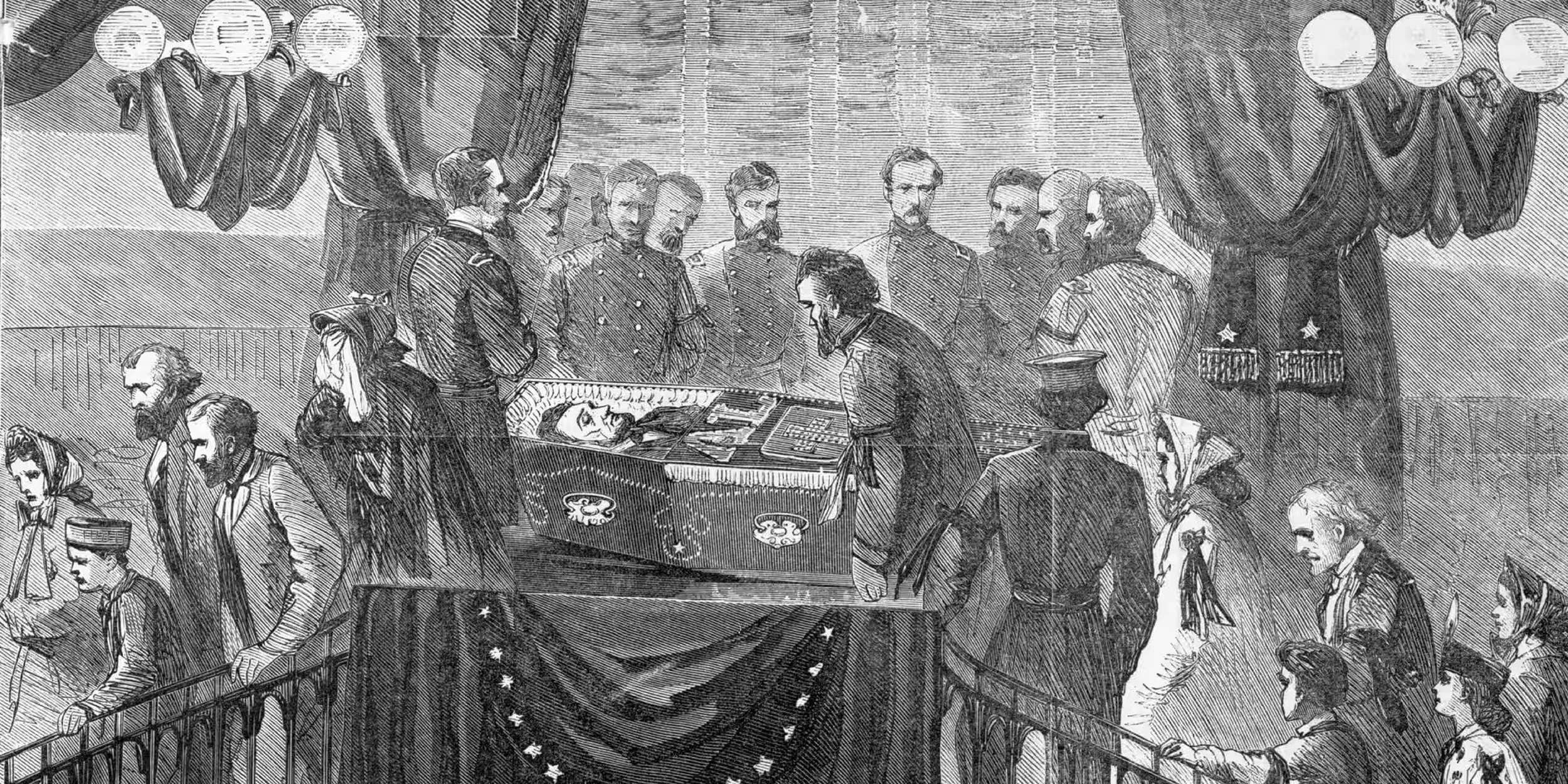
Image from history.com
Seamus could see the audience was rapt (as talented storytellers like him always watched for). He confidently went on with his talk, and when he finished, they applauded loudly.
A good turnout for a hot, muggy evening, he thought
When he got backstage a reporter from the Decatur Daily Herald was waiting to talk with him. (It was nothing new. As one of the managers of the Chautauqua, he often talked with reporters to promote the show.)
After the interview, he went to find Charlie Euler, one of the other managers. Charlie introduced him to some new speakers: first, a woman named Rena Hagerty, and next, a young man whose hand Seamus shook absently.
Charlie cleared his throat to get Seamus’s attention. “You and Rena share an interest in Alfred Lord Tennyson,” he said. “That’s what her first reading will be.” He turned to Rena. “And Seamus is doing a series about the homes of great poets, including Tennyson.”
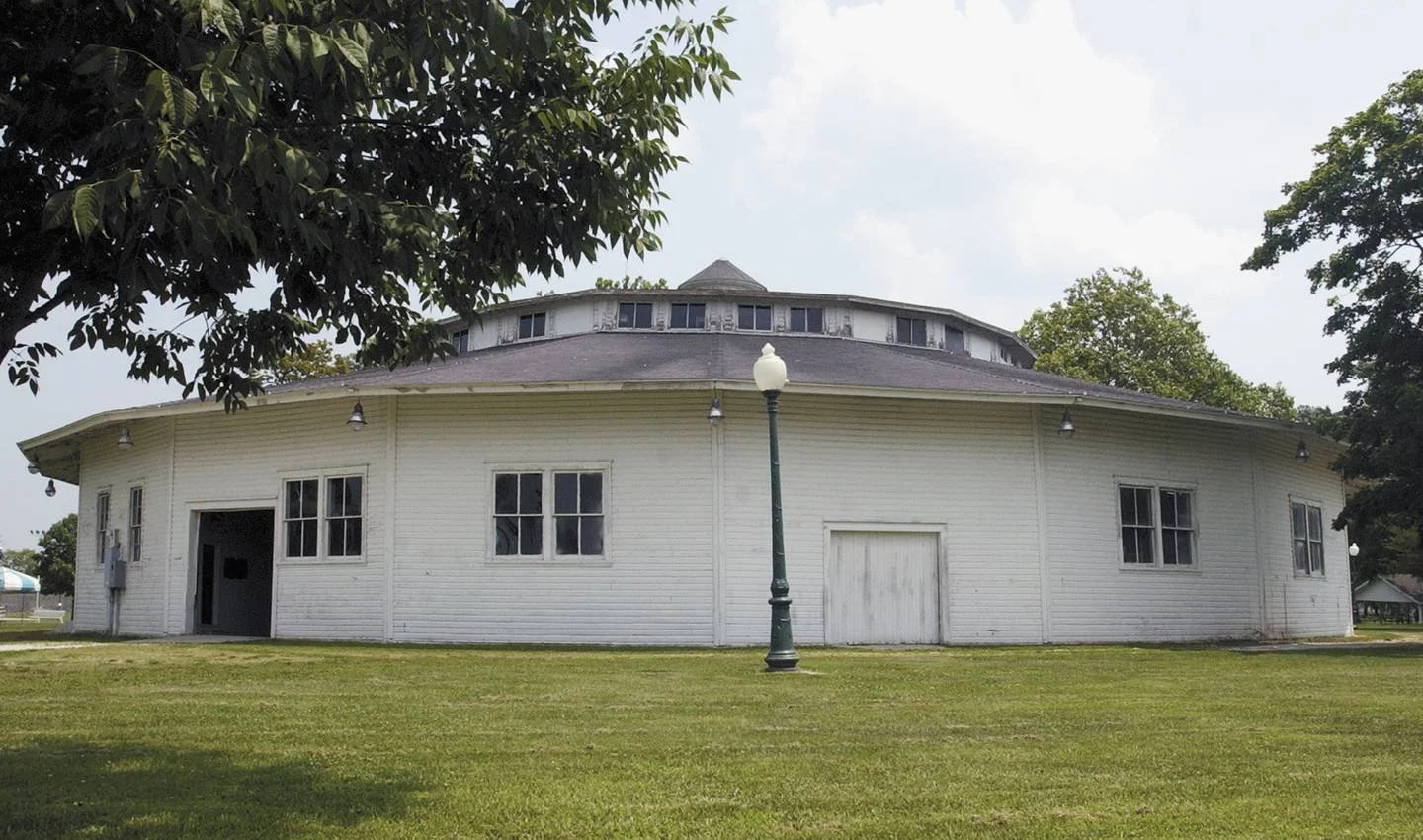
Chautauqua arena in Shelbyville, Illinois. Photo: shawlocal.com
Charlie went on to tell him that the young man would be speaking about Shakespeare. Seamus nodded politely and offered some encouragement. Then, with a lingering glance at Rena, he walked away and made a mental note to ask Charlie the young man’s name again.
Seamus went to Rena’s reading the next morning. She was a wonderful speaker, and he was delighted that she ended with “Ulysses,” his favorite Tennyson poem. The end, which was especially moving:
“...and tho’,” she quoted, “we are not now that strength which in old days moved earth and heaven, that which we are, we are; one equal temper of heroic hearts, made weak by time and fate, but strong in will to strive, to seek, to find, and not to yield.”
After she took her bow, amid a hearty round of applause, she walked off the stage. Seamus hurried to talk with her.
“That was wonderful,” he said. “I’ve always loved Tennyson.” Then, after an awkward pause, “Would you care to join me for lunch?”
She was surprised and, slightly shy, but accepted. So soon, between bites of food, they were talking about poetry, Seamus’s travels, and the fact that they both graduated from Illinois Wesleyan (although 20 years apart). Rena was a reader at the university, and her studies had focused on English literature. She told him she’d never had an opportunity to travel overseas but hoped to visit Italy some day.
That lunch was the beginning. Before long, they were spending their limited free time exploring the towns where the Chautauqua stopped—historic sites, museums, and libraries lured them away from the tents and stages of the traveling show. They also discovered a shared love of the unknown and unfamiliar. So, perhaps inevitably, they got engaged while they were visiting their families in Bloomington. It was Christmas eve of 1913, and he slipped the ring on her finger while they stood on the stone arch bridge in Miller Park.
The Mediterranean Sea: March 26th, 1914
Seamus put his arm around Rena’s waist as they stood on the deck of the ship, watching the moon over the water as they made their way to Naples. They had been married just over two weeks and had begun their shared life with a voyage to Italy.
“It’s so beautiful,” said Seamus, “an ideal way to honeymoon.”
Rena leaned slightly into him and closed her eyes. In addition to their honeymoon, they had celebrated her 30th birthday on the ship.
Life couldn’t be better, she thought.
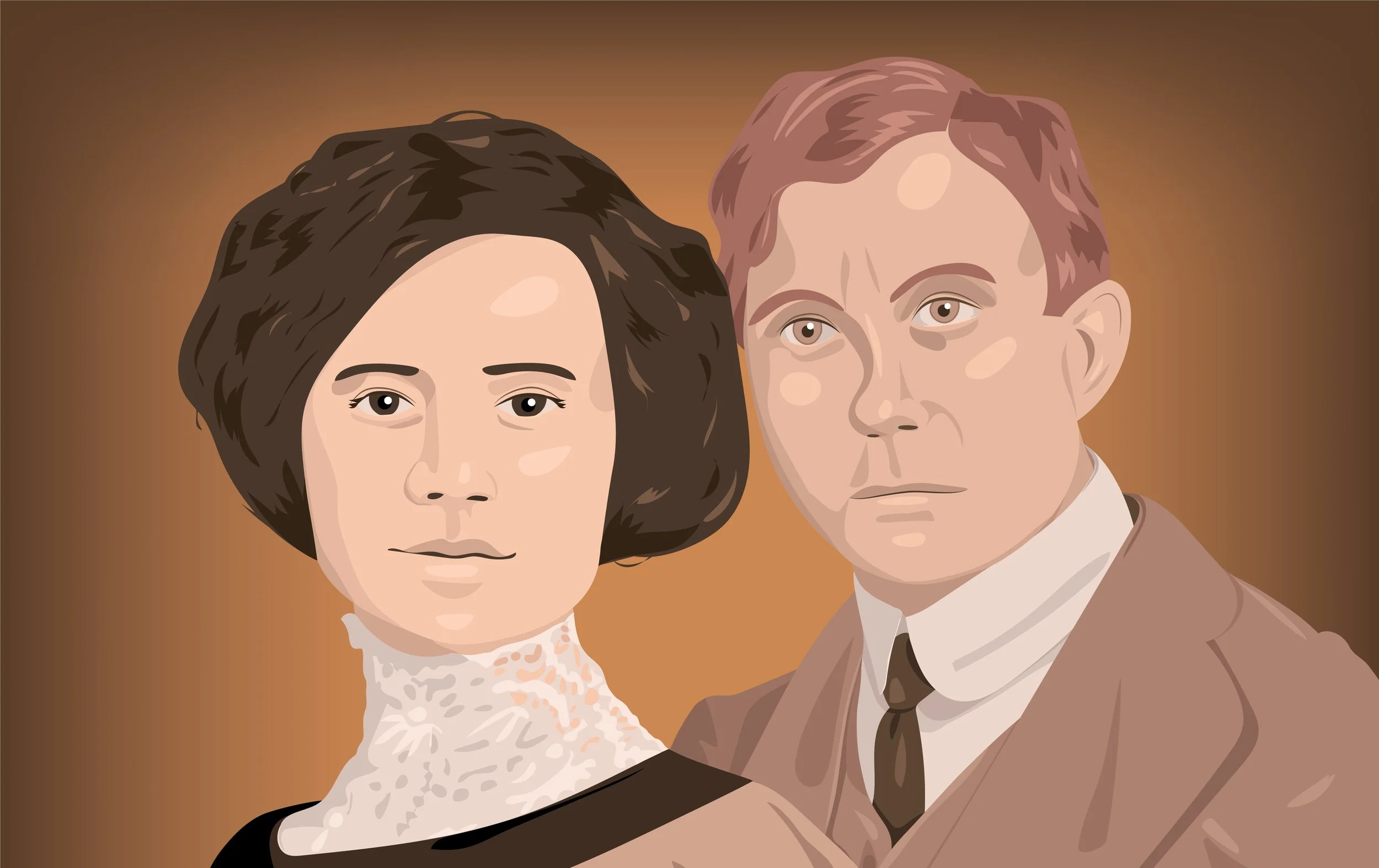
Illustration by Charlotte Easterling
Naples, Italy: March 27th, 1914
“Seamus? What’s wrong?” Rena asked with concern.
Seamus was reading the message the desk clerk had given them when they checked in. He looked stricken and sat down on the bed.
“Darling?” Rena was frightened now.
“My mother died,” he whispered. “She fell and hurt herself on the 15th and passed on the 18th.”
“Oh, Seamus.” Rena sat next to him and took his hand.
“They buried her already,” he said in a choked voice. “It all happened while I was gone.”
Rena stood. “Stay here. I’ll go see about changing our return tickets so we can go home.”
Seamus gently pulled her back. “No. There’s nothing I can do there.” He wiped at his eyes, and they sat giving and receiving comfort.
***
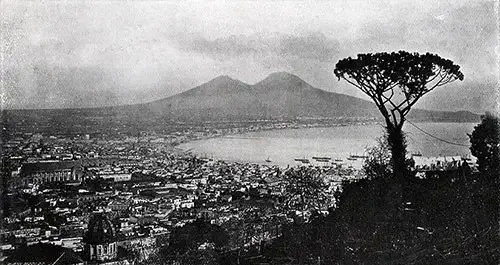
Naples, Italy circa 1906. Photo: GGA Image ID # 1766ff04b6
Despite the sad pall cast by the death of Seamus’s mother, Marian, they spent the rest of their honeymoon as planned. Their shared love of exploring and history and art led them to Pompeii, Rome, Venice, and Florence. They got to see Michelangelo’s David, the Coliseum, several Bernini sculptures, Botticelli’s The Birth of Venus, and a host of other art, architecture, and sculpture. Seamus found, somewhat to his surprise, that it did much to alleviate his grief.
All too soon, they were standing arm in arm at the railing of the liner taking them home.
“In spite of everything, sweetheart, it was a wonderful honeymoon and adventure,” Seamus said and got a lingering kiss in return.
Decatur, Illinois, 1919
Over the next five years, Seamus and Rena continued with the Chautauqua but also spoke and read at places like churches and YMCAs. And they continued traveling, visiting England, Ireland, and Quebec. But their shared travels were about to end, at least for a while.
In 1919, Rena’s niece Sadie wrote to ask if they could take in her daughter, Anna. Her husband had died in the flu epidemic and Sadie had gotten very sick as well. She needed to go stay with her parents to recuperate and didn’t want to uproot her daughter. Naturally, they agreed, and Anna came to live with them in October. She was eight years old.
Taking care of the girl changed their lives. They weren’t able to travel together, so Rena stayed home with her. She delighted in reading to the girl and buying her books.
“Rena, your sister is going to need a truck to get Anna home if you keep buying all of these for her,” Seamus told her one evening, picking up a copy of “Little Women” from a stack.
Rena laughed. “I know, but she loves reading and I want to encourage it.”
Seamus had to agree. He’d noticed that Anna always had a book with her, and he had even seen her giving a reading to some of her dolls once.
“Do you miss being on the road and doing your readings?” he asked Rena one time.
She nodded, and felt her eyes prickle with tears. She missed the Chautauqua and the time it gave her with Seamus. Taking care of Anna had been a joy, but she was also eager to return to the life they had built.
Seamus sat next to her and put his arms around her. He had to admit that he didn’t enjoy the Chautauqua as much without her and was finding it more tiring. At 58, the busy schedule of travel, performance, promotion, and management was less appealing than it had been when he was younger.
Decatur, Illinois: April, 1921
Rena’s sister returned and collected Anna as soon as she was able. Rena hugged the girl she had grown so fond of while Seamus loaded the car with Anna’s belongings. He gave Anna a goodbye hug too, and Rena gave her a parting gift of “Rilla of Ingleside,” the most recent book in the Anne of Green Gables series. They waved as Sadie and Anna drove off. They both felt a mixture of sadness and relief.
They stood, arm in arm, until the car was out of sight. They both sighed, but before long, Seamus asked, “How do you feel about Paris this September?”
She laughed and hugged him.
“I’ll take that as a yes,” he said and stole a kiss.
1921-1929
They continued with the Chautauqua, although Seamus shifted most of the management responsibilities to Charlie. He and Rena focused on doing their readings, exploring the towns on the circuit, and planning their travels in the off season.
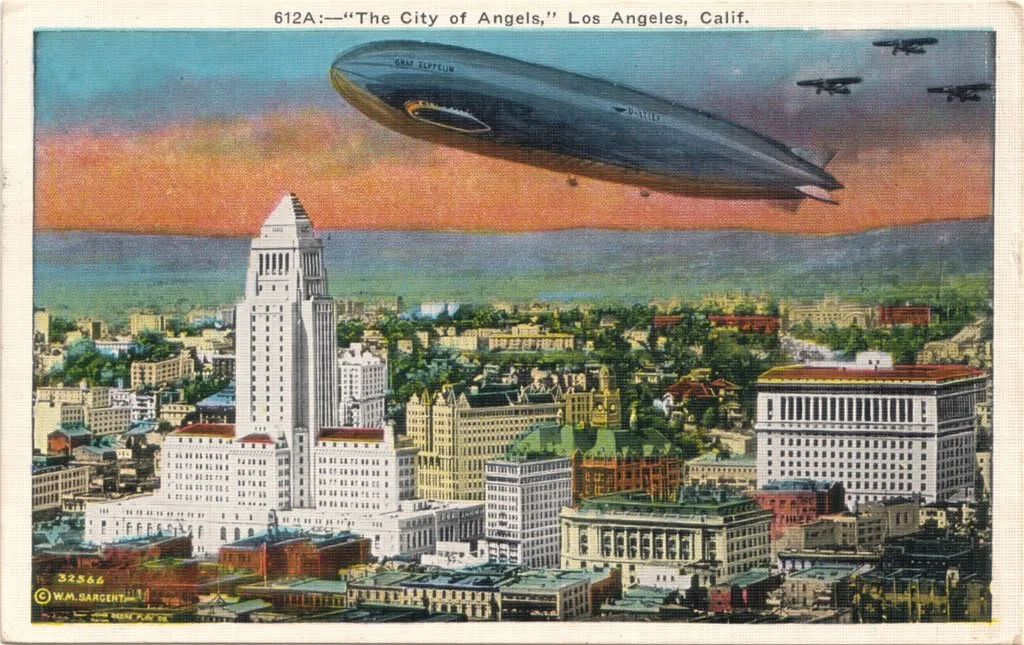
Los Angeles in 1929. Image: losangelespast.blogspot.com
This came to an end, however, in 1929 when Seamus developed a bad cough that turned out to be tuberculosis. The doctor suggested a drier climate to aid in his recovery, so they moved to Los Angeles. But not to be deterred, as soon as Seamus had recovered enough to be out and about, they started attending lectures, visiting museums, seeing movies (a new, pleasant diversion), and traveling up and down the California coast. They even ventured far enough to see the Grand Canyon in Arizona and the cliff dwellings in the Four Corners region.
On the train back home, Seamus took her hand. “Thanks for being my partner on all of our adventures.”
Rena smiled and leaned into him. “I can’t think of a better way to spend my life.”
They huddled together for a poignant moment, then Seamus kissed her hand and said, “You do know we have quite a problem.”
Rena sat up, worried, “What’s that?”
“We have to figure out where to go next.”
And with that, they started planning their next adventure.
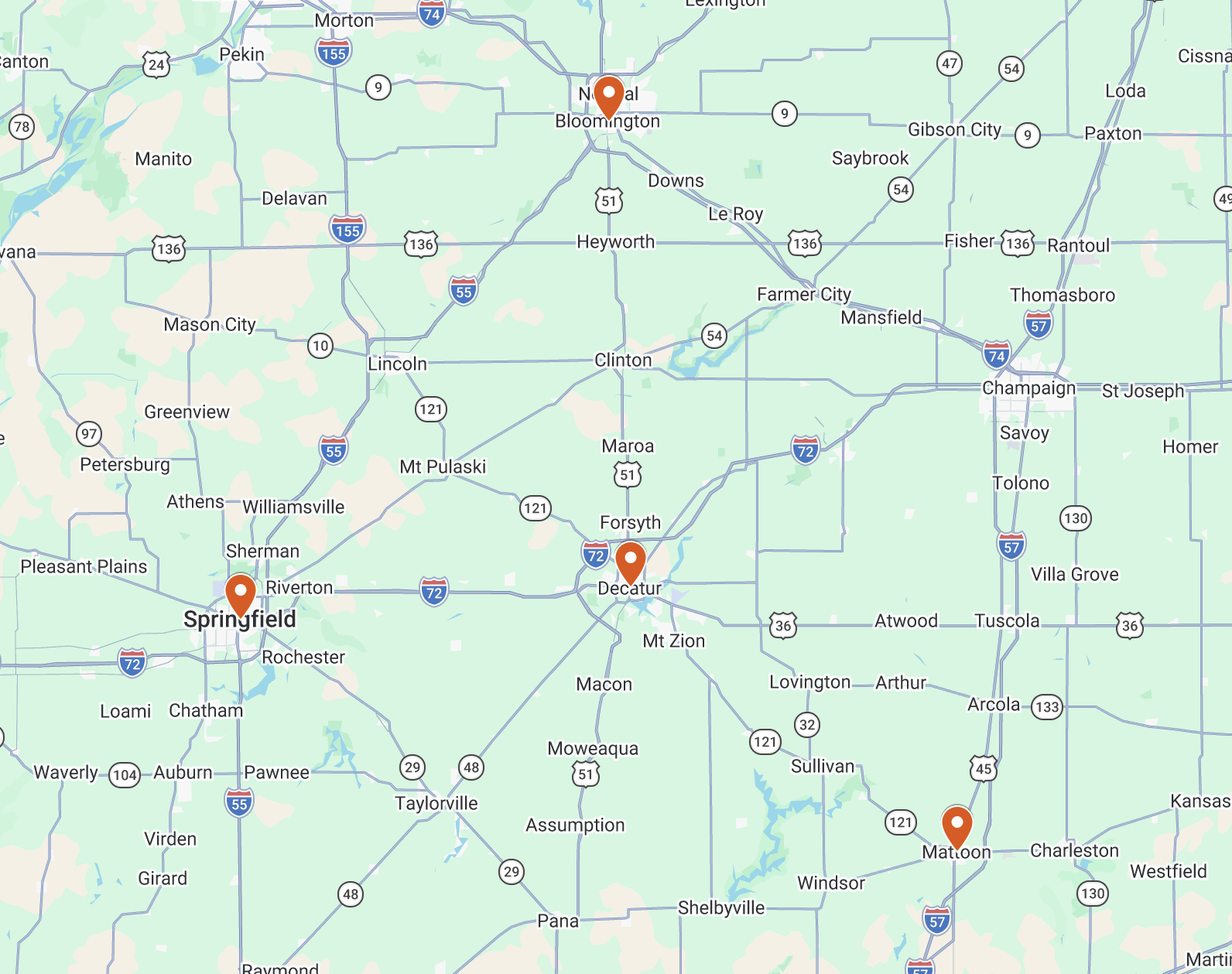
Bloomington (top), Springfield (left), Decatur (center), and Mattoon (right), Illinois. Map: Google maps.
Subscribe to learn more about the real people
and historic events behind this story.
From Strongman to Strong Man
Dominicus Klimas was a Lithuanian immigrant working to find his place in the world. He found his strength in the circus.
Written by Eric Shipley and Charlotte Easterling
Orange, Massachusetts, 1928
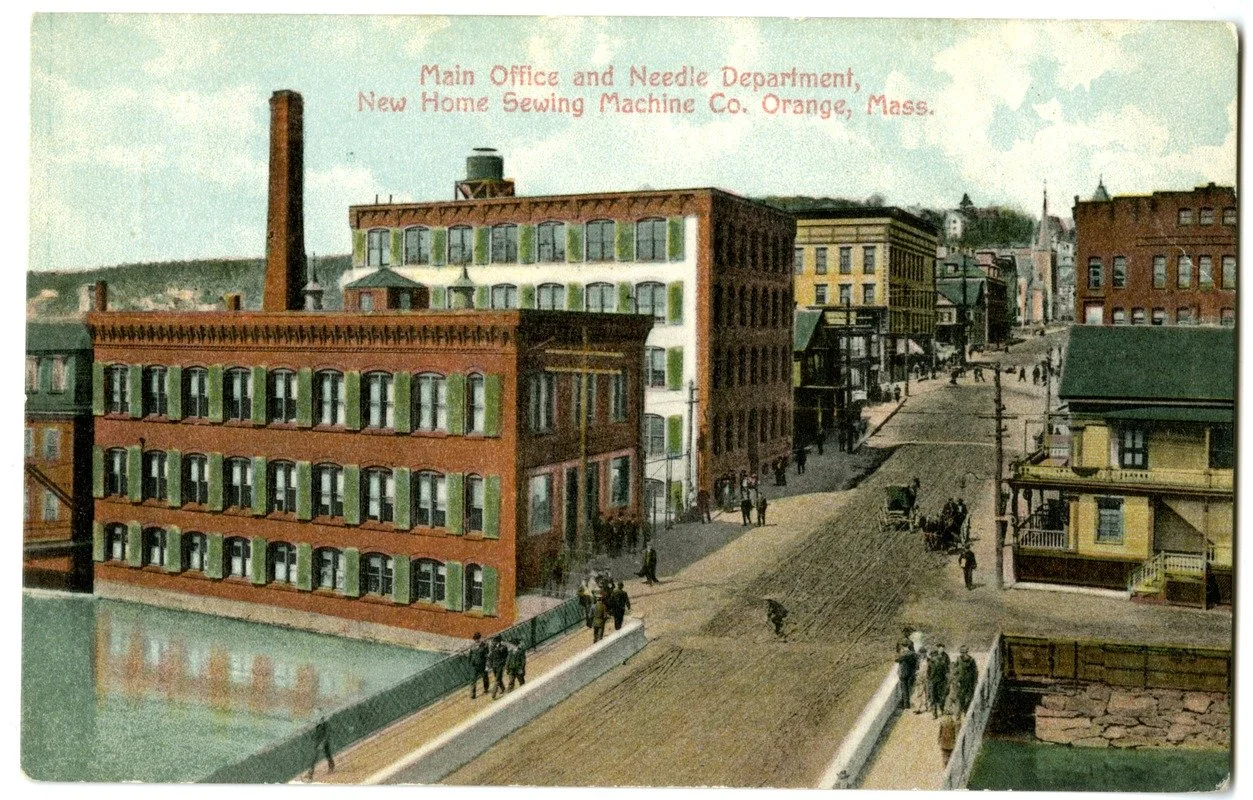
Orange, Massachusetts; View from the South Main St. bridge looking north. Image: digitalcommonwealth.org
Joe pulled his car into the field where the circus was starting to tear down. Seated next to him was his brother-in-law, Dominicus, a bear of a man with wavy red hair.
“Sure about this?” Joe asked.
The second-guessing was irritating, especially now that it was down to the last minute.
“Yes,” Dominicus replied with exasperation. “We talked about this. My mind is made up.”
Joe rubbed his forehead. “Okay, okay. I still have a hard time believing you’re running away to join the circus, of all things… But you’re twenty. Do as you please.”
Dominicus looked away. “I have to. You know why.”
The whole family had been excited about going to the circus, but his youngest sister, Flora (just five years old) and little brother, Freddie (who, at twelve years old, hated being called “little”) had been especially thrilled. Dominicus hoped they hadn’t noticed how making plans to go had reignited some long-standing feuds.
Papa was partly to blame. Freddie was actually his bastard son, and Mother had never forgiven his infidelity. Thereby, Myra, his not-so-sweet sixteen sister, hated Papa. Then there was Karolina, his older sister (by two years) who, according to Mother, had had the unforgivable nerve to elope with James, a man she didn’t approve of.
Thankfully, there was no trouble surrounding his sister Audra. She was only a year younger than Dominicus and was married to Joe (who Mother did approve of). This kept the outing from being a complete disaster, but without Papa and Karolina, it felt like the family was hopelessly fractured.
He had been captivated by the circus, though. The bright lights and shows and the cheerful hustle and bustle felt like something he had to be part of. But was he running away? Maybe, but it felt right.
He turned back to Joe. “Take care of yourself and Audra, yes?”
“Of course.”
They hugged briefly, then Dominicus grabbed the small bag that held his few belongings and got out of the car. He gave a quick wave goodbye, then turned and ran across the field towards the circus lights.
***
“You’re a big one,” said the manager, a wiry, dark-haired man who introduced himself as Bruno. “I’ll wager you’re strong too?”
Dominicus nodded eagerly. “Yes, sir! I am!” he said and hefted a nearby crate.
Bruno was impressed. “What’s your name?”
“Dominicus Klimas.”
“Russian?”
“No, sir! Lithuanian!” Dominicus hated being called Russian.
This time, Bruno was unimpressed. “Whatever. You’re hired.” They shook hands, and with that, Dominicus had joined the circus.
***
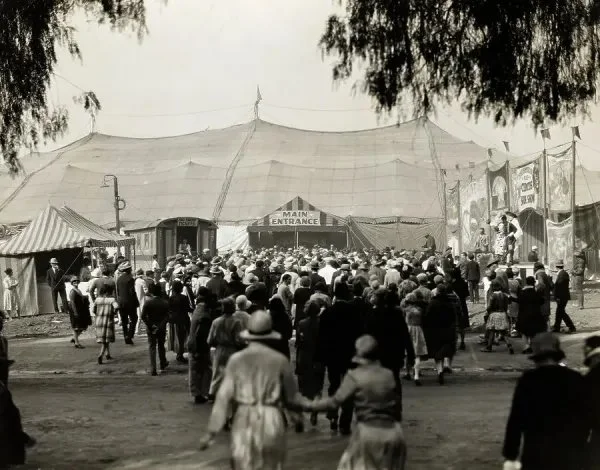
Photo shows a crowd of people at the entrance to a circus tent. On the right, sideshow attractions can be seen. Ca. late 1920s-early 1903s. Photo: fineartstorehouse.com
He never regretted his choice. Every day, he felt useful: setting up and tearing down, driving trucks, making repairs, tending to the animals (which he enjoyed greatly, even though it could be both dangerous and disgusting—especially the elephants).
When he got an hour or two off, he would sometimes visit a nearby town. The pay wasn’t great, but room and board was free, and beer (sometimes whiskey or vodka) was plentiful. There were other benefits he hadn’t expected, like the women in the troupe who would congregate and watch when he was working with his shirt off. They often wanted to do more than watch.
June, 1929
The noon sun was hot, and Dominicus was getting a drink of water when Bruno walked up.
“Sergei is leaving,” he said without preamble.
Sergei was the strongman, one of their most popular acts. He’d been with the circus for a few years and had decided to break into acting in the movies. Dominicus was sorry to hear this. He liked and respected Sergei. With the man’s tremendous strength, he could’ve easily been a bully, but he wasn’t.
“We need a new strongman,” Bruno continued. “Sergei won’t leave for a few more weeks, so he’ll train you.”
It took a moment, then Dominicus realized what Bruno was saying.
“You want me to be the new strongman?”
Bruno laughed. “Sure! A big Russian redhead will be a crowd pleaser.”
Dominicus bristled. “I said before, I’m not Russian! I’m Lithuanian!”
Bruno was still unimpressed. “Okay, fine. You’ll need to grow a mustache and you should exaggerate your accent. Doesn’t matter what it is—audiences love an accent.”
“So you want me to talk too?!” Dominicus could feel his heart racing. “I’d rather shovel elephant shit!”
“What is it with you big guys? Sergei was the same way when he started.” Bruno shrugged and put his hands up. “It doesn’t matter. He got good at his act, and so will you. He’ll teach you what you need to know. Congratulations!”
Bruno offered a handshake that Dominicus took, dazed and confused. What just happened? He thought.
August, 1929
“You’ll do great, kid!”
Dominicus jumped, startled by the clown on stilts who called down to him on the way to the stage.
“Thanks,” he called back, then returned to squirming in his very snug singlet. He felt like he hadn’t had a choice in being the new strongman, and the lights and crowds that had been so enticing now unnerved him. He did his best to put his trepidation aside and focus on the act Sergei had helped him create. The demonstrations of strength and showmanship still made Dominicus uncomfortable—they were all designed to make things seem more dramatic and dangerous than they actually were.
Bruno, theatrical in his red tailcoat and black top hat, introduced him. “And now, be amazed by the prodigious strength of our Russian giant! Introducing the Mighty Dominicus!”
Being called Russian yet again made Dominicus angry, but Bruno clearly didn’t care. And he wasn’t the first one Bruno had rebranded, which brought to mind a certain conversation with Sergei:
“No, brother, I’m Irish. My name is really Sean.”
Dominicus did a double-take. “So your Russian accent is a put on.”
“Aye lad. I protested, but Bruno wouldn’t budge,” said Segei/Sean with a laugh and wink.
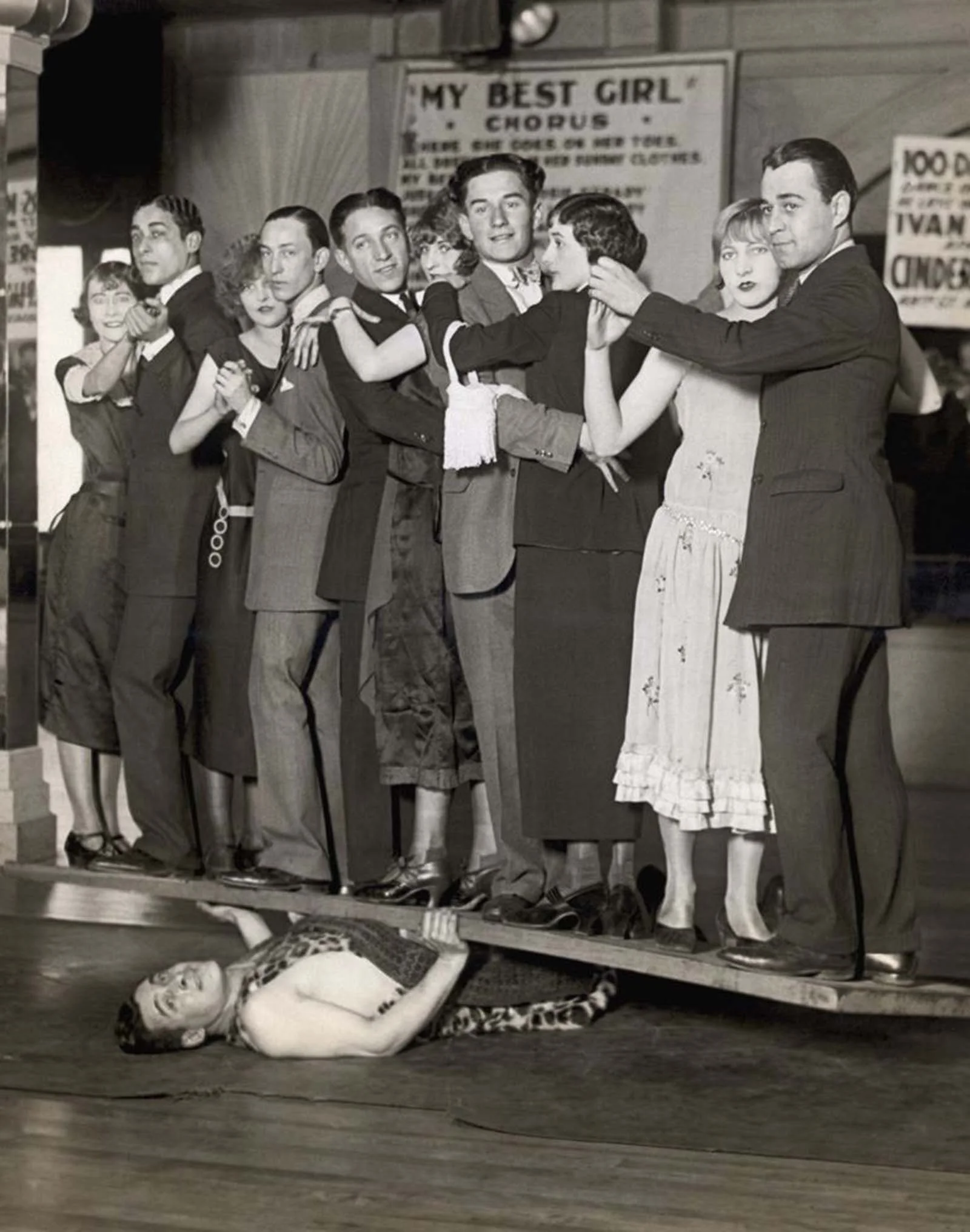
An example of a strongman act: Ivan “The Great” demonstrates his strength by holding a plank with five dancing couples on it. 1924. Photo: rarehistoricalphotos.com
Dominicus scowled as uncharitable thoughts about Bruno occurred to him, but he decided to keep the scowl; it worked well for his performance. So he strode onto the stage and began. He flexed his muscles and strutted about, lifting a series of heavy objects and playing up the difficulty with some of them. To his delight, there was soon applause and cheering from the audience.
After that first show, he got over his nervousness and started inviting audience members to sit on a platform he would lift, pick weights for him, and choose bars for him to bend. After his performances, he would circulate in the crowd and revel in the delight people showed when he lifted them. And if it got him a kiss from a pretty girl, so much the better.
October, 1929
Dominicus sent postcards and letters to his family, but they didn’t write back. Until one day when a letter from Audra arrived. He was thrilled until he read the bad news: Mother had died.
He was shocked and saddened and felt a deep sense of loss. She’d been just forty-five! Audra wrote that they’d been to visit her just a few days before her death, and she’d seemed fine. The doctors said it was a stroke, so there was nothing that could’ve been done. Even so, Dominicus was crushed. And to make things worse (if that was possible), Audra’s letter was delivered after Mother’s funeral, so he didn’t get a chance to attend it.
November, 1929
Another letter came from Myra not long after Audra’s. It was a terse note telling him that Joe had died of a ruptured appendix not long after Mother’s death. Dominicus was again shocked and saddened. He’d always expected to see Joe again. And as with Mother, by the time he got Myra’s note, Joe’s funeral had already happened. It brought tears to his eyes.
Finally, at the end, Myra wrote that Papa was coming to get all of them and move them to New York where he was living and working.
He’s finally taking care of the family, dominicus thought, glad for a bit of good news.
He wrote back the same day, sharing good memories and offering what comfort he could.
August, 1930
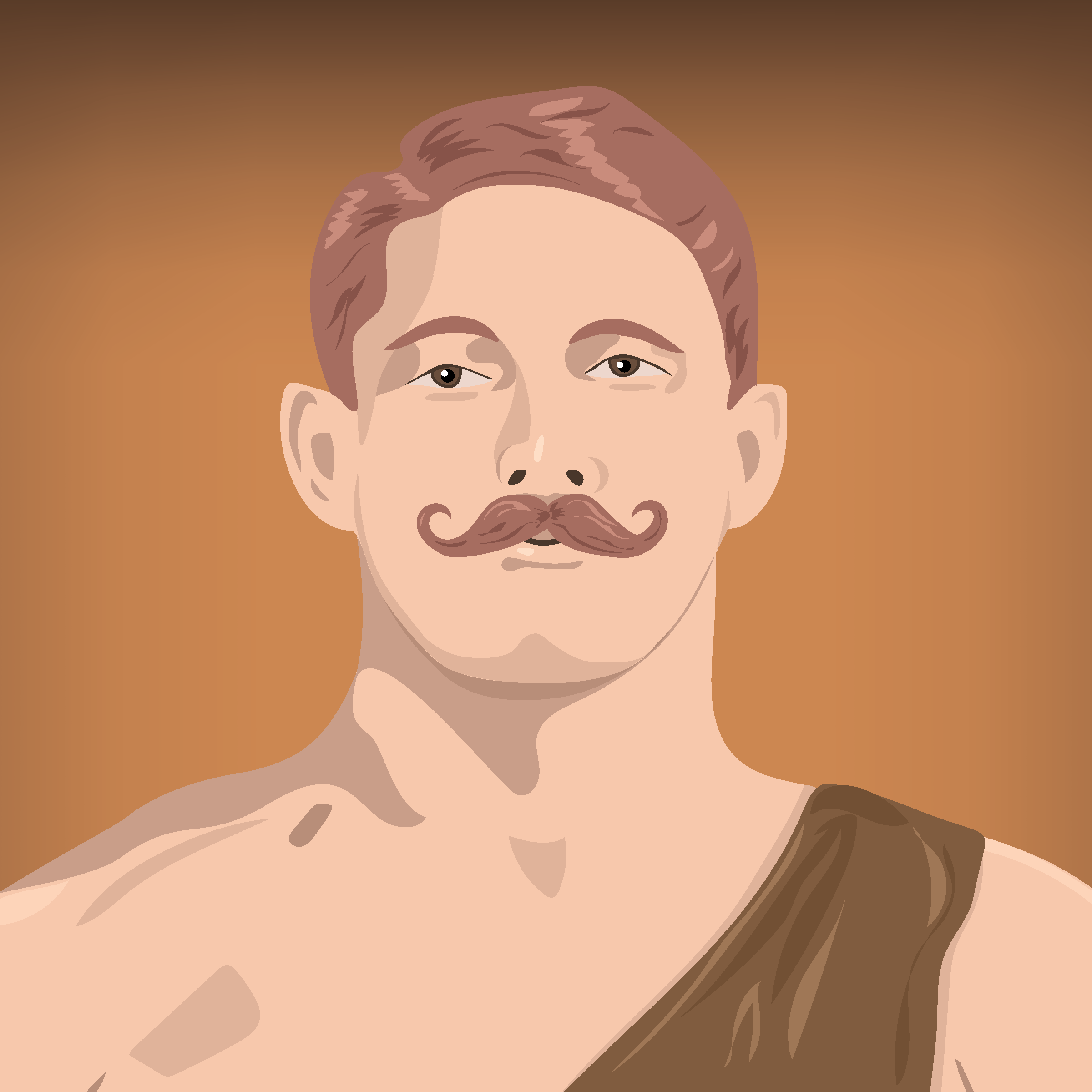
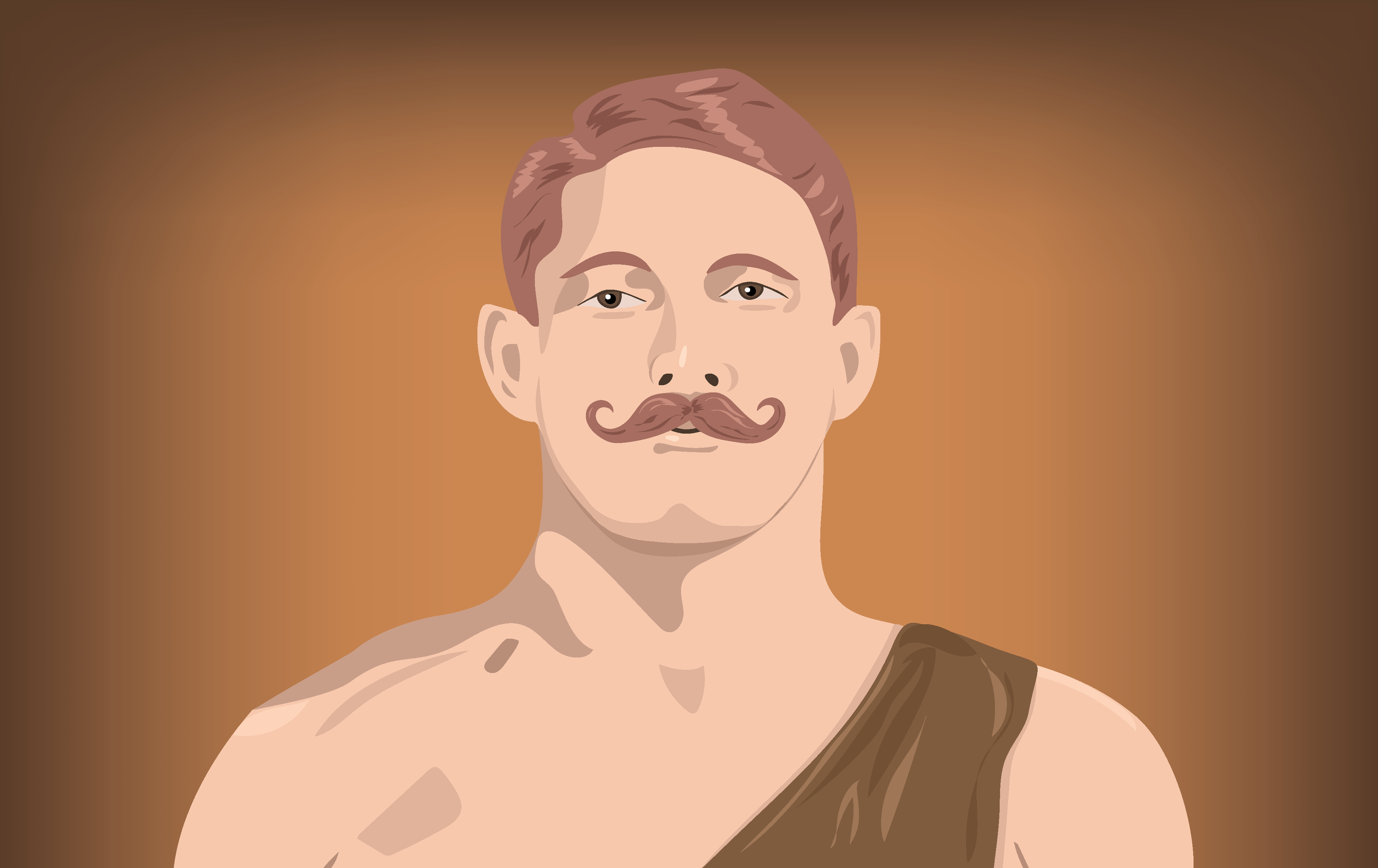
Illustration of Dominicus Klimas by Charlotte Easterling
It was months later when Bruno announced that they’d be stopping in Nashua, where Karolina lived. Dominicus wrote to her and asked her to come visit. She promptly wrote back (which surprised and elated him) and accepted his invitation. So shortly after the circus was set up just outside Nashua, she arrived with her two oldest children in tow. She was taken aback to see him in his costume with his red handlebar mustache.
It didn’t take long for her to get over her surprise, then she introduced him to Adrian, who was seven, and Helen, who was five. They were wide-eyed, and Dominicus was concerned it might, at least partly, be fear. So he got down on one knee.
“Hello there,” he said to them.
They continued to stare but seemed a bit less shy, so he put a hand on each of their heads, then gently scooped them up, one after the other, and set them on his broad shoulders. Karolina laughed and clapped. After a minute, however, they started looking anxious. She helped get them back down, and then held on to their hands. Dominicus said that he’d made arrangements for them to do and see anything they wanted for free.
“Oh, thank you,” she said, smiling gratefully. She would’ve given him a hug, but upon hearing that everything was free, the two children started to tug at her.
“Slow down and stay with me!” Karolina shouted to be heard over the roar of the crowd. The kids relented, but only just. She knew impatient whines weren’t far off and gave Dominicus a small, wan smile.
“How are you? You look tired,” he said.
She dismissed it with a shake of her head. “I have four children, Dominicus. How else should I look?”
“Mama!” the children chorused.
Dominicus turned to them. “What would you like to do?”
After a short debate, they settled on going to see the elephants.
“Then that’s where we’ll start,” he said and mimed an elephant trunk with his forearm. They all laughed, then he guided them to the main tent. Nobody got in their way.
***
Later, when they were eating and the kids were distracted, Karolina confided that James had lost his job. He was looking for work but hadn’t found anything yet.
“I’m sorry. I wish I could help. This damn–” Karolina cut him off with a finger to her lips.
“Sorry,” Dominicus apologized. “This Depression has everyone hurting.”
Karolina agreed and continued eating without saying anything more. Dominicus realized the conversation was over and went on eating as well. Afterwards, the children were getting sleepy, so they said their goodbyes. Before they left, though, Dominicus slipped some money into her hand. She started to protest, but this time he cut her off.
“Just some traveling money.”
May, 1931
Dominicus was still with the circus when he heard from Myra again. More bad news—Papa had died. Myra was eighteen now and wrote that she’d taken Freddie and Flora back to Massachusetts. Audra, however, was staying in New York and wouldn’t say what she was going to do on her own.
Dominicus read this, thought for a moment, then went to find Bruno.
June, 1931
The circus was in Orange again.
Where it all started, Dominicus thought with a sigh. Except Mother and Papa and Joe aren’t here.
This would be his last stop. After his final performance, he said his farewells, which concluded by exchanging thanks and a handshake with Bruno. Afterwards, he lingered for a minute and looked around, then got into a truck waiting in the surrounding field. The youngster in the driver’s seat wisely stayed quiet as they pulled out and headed into town. Dominicus clutched his small bag of belongings. It was the same one he had when he started out, except it was now stuffed with souvenirs. And the field they’d just left could easily be the same one where Joe had dropped him off three years ago.
He wasn’t sure how to feel. The happiest time he’d known was ending, and it was daunting to think about what might come next. But at the same time, he felt strangely good. When he left before, he was running away. Now, he was going back to take up his responsibilities. He smirked at the irony. It seemed like being the strongman was what had taught him to actually be a strong man.
He looked in the rearview mirror. He couldn’t see the circus anymore.
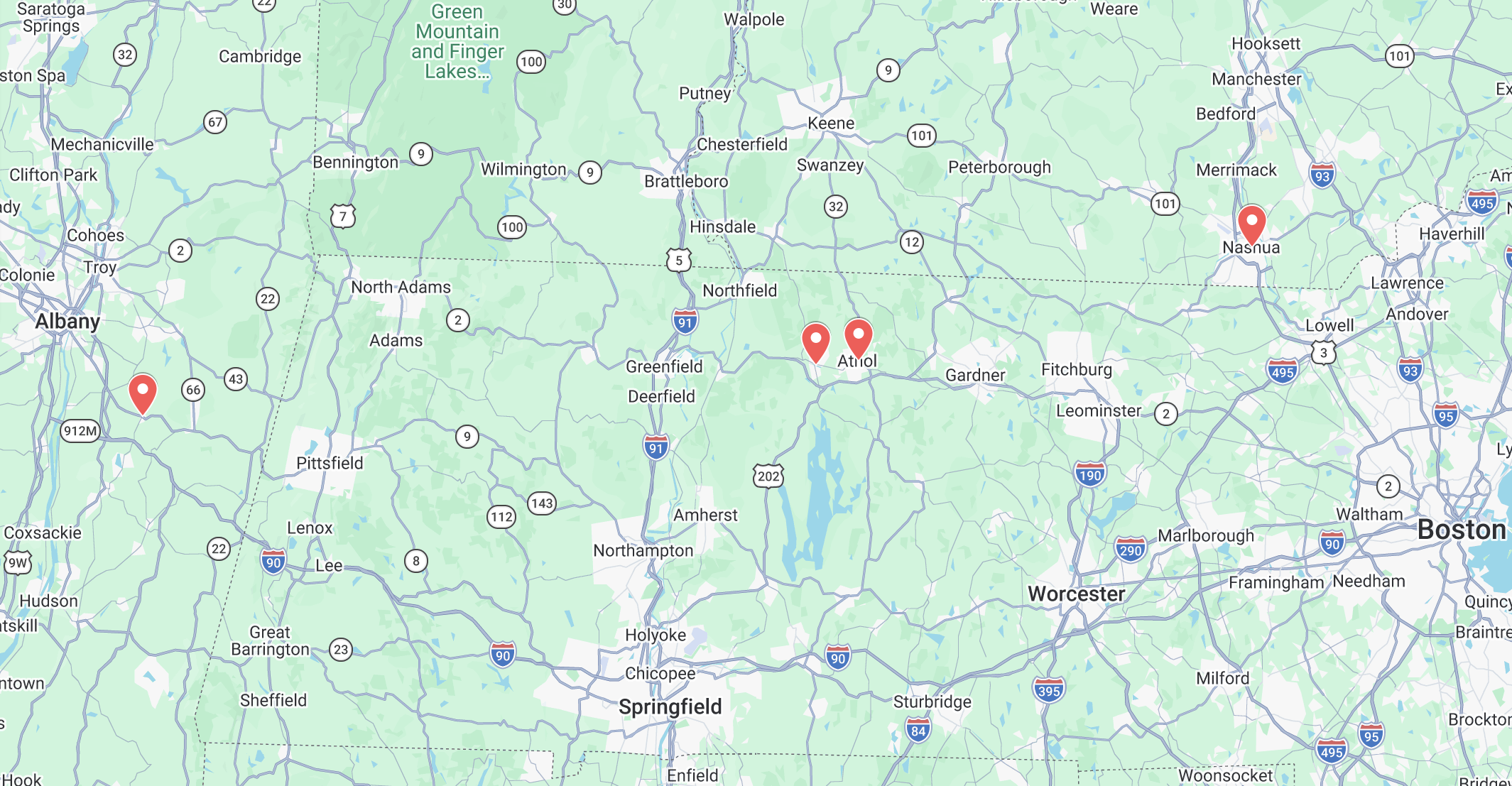
Map of the locations in the story, left to right: Nassau, New York (where Dominicus’s father lived); Orange, MA; Athol, MA (where Dominicus’s mother lived); and Nashua, NH. Map: Google Maps.