
Carlisle
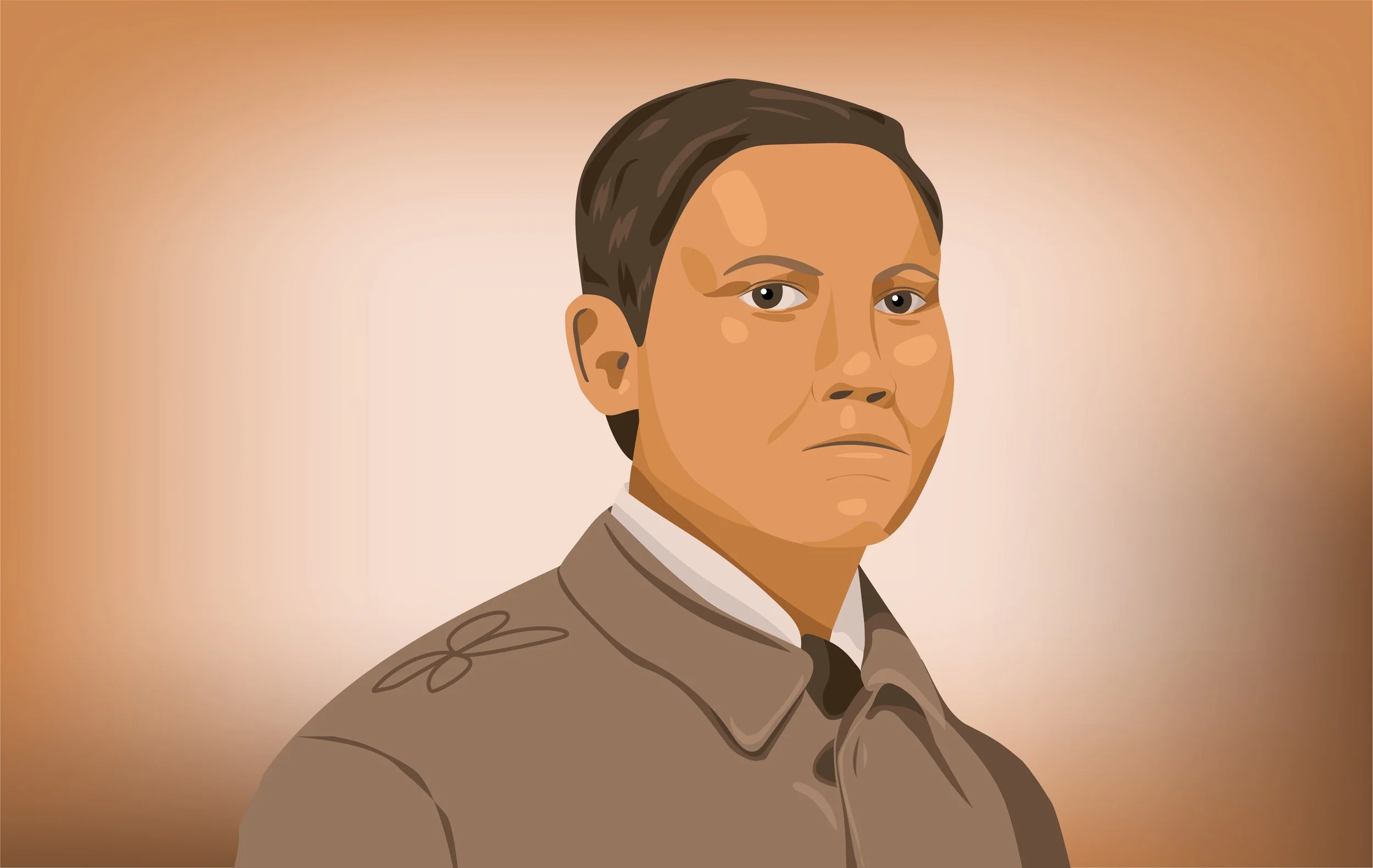
Deer Foot was 18 when he was sent to Carlise Indian School, far from his home in South Dakota.
Written by Charlotte Easterling and Eric Shipley
Pine Ridge Indian Reservation: September 1886
“You are eighteen winters, now,” Deer Foot’s Até said, sizing up his son (who wasn’t especially tall but carried strength on his lean frame and intelligence in his dark eyes). “You are a man, so I will speak to you as a man. You will have to go east to the school of the wasichu.”
Deer Foot knew Até was referring to the Carlisle Indian Industrial School in the state called Pennsylvania. Many children from the reservation had been sent there already, including his older sister, Crane Woman, who had gone four years ago when she was his age. So he wasn’t entirely surprised, but it was still distressing. It was the end of any hope that he might be a warrior.
“The wasichu have said we will lose our pay and food if you don’t go,” Até continued. “There is barely enough to live on as it is.”
Deer Foot was stoic, as was expected of an Oglala man. “I understand.”
Até nodded and clapped him on the shoulder, then walked away to leave Deer Foot to his thoughts.
The name the white men at Carlisle had given Crane Woman was Emma He Bear.They’d received reports that she was doing well and was learning, but all the news came through letters the Black Robes translated. It left him feeling apprehensive about what to expect so far from home.
Pine Ridge Indian Reservation: October 5th, 1886
Deer Foot’s Iná gave him the new shirt and moccasins she’d been beading so he would look his best for his journey, then his younger sisters gave him small gifts that he tucked into his bag along with the food he was taking.
Até handed him a knife. “Let your strength carry you where you need to go.”
Deer Foot took courage from those words and squeezed the medicine bag that hung under his shirt. He was determined to make his family proud.
Carlisle, Pennsylvania: October 10th, 1886
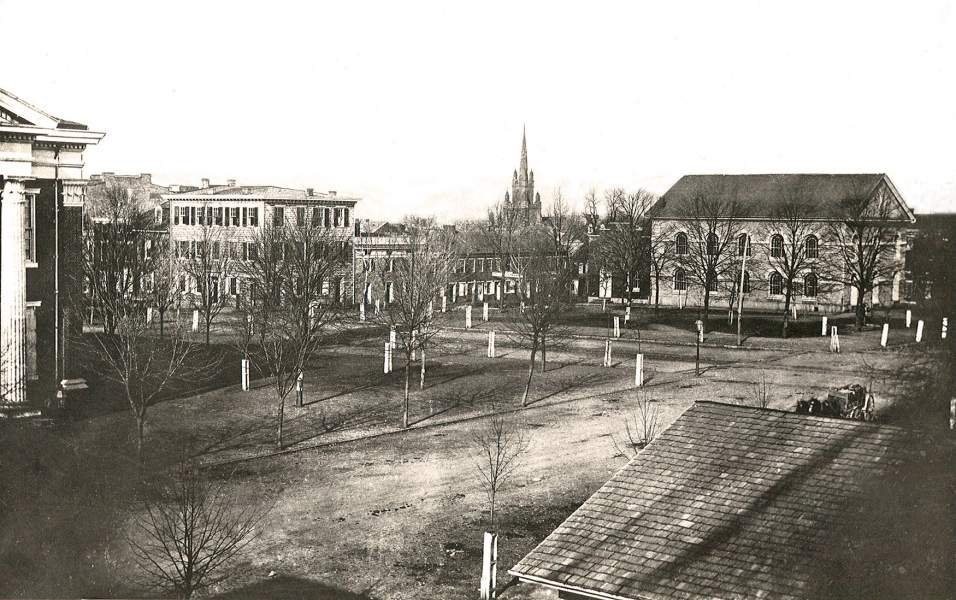
The trip on the wasichu train had been hard, especially for the little ones. Deer Foot had done his best to comfort them, by telling stories and pointing to things outside the windows. He was afraid he hadn't helped much, but it was all he could think to do. And as they pulled into Carlisle and saw the crowds of white people, he had a sinking feeling that things were soon going to get worse.
He and the other students were led through town as they walked to the school. The white families who lived in Carlisle had gathered to watch as if it were some kind of bizarre parade. Adults and children waved and called to them as they walked by. The youngest child from the train, a boy they called Mouse, grabbed Deer Foot’s hand and clung to him until Deer Foot picked him up and carried him.
“Don’t pay attention to the wasichu,” he whispered, as much for himself as for Mouse.
***
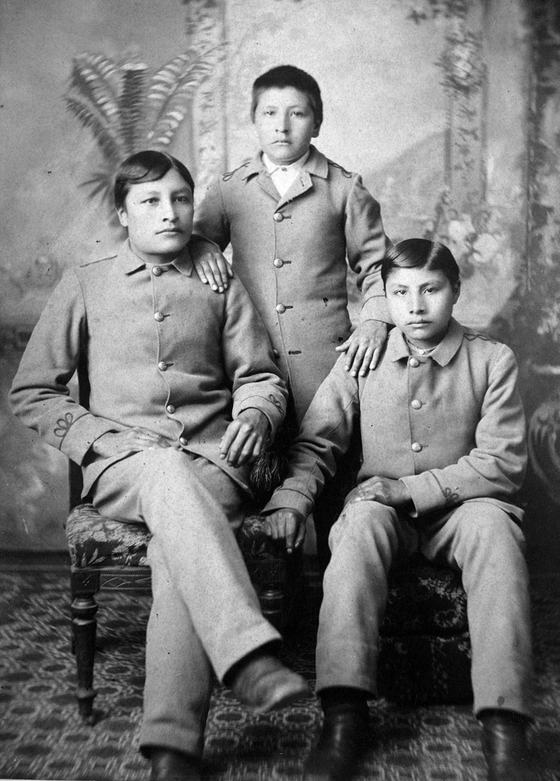
Carlisle uniforms; photo: Smithsonian Institution, National Anthropological Archives
Once they arrived at the school, the boys and girls were quickly separated from each other and led away. Deer Foot spoke a bit of English, but not enough to understand everything he was being told. Some of the children who spoke more English interpreted, but the whole process was rushed and confusing.
One of the white men handed Deer Foot a stack of clothing (that he would come to know as the Carlisle uniform) and gestured for him to put them on. He did, and the clothes he’d been wearing, including his fine new shirt and moccasins, were taken away. He tried to keep his medicine bag tucked inside his new clothes, but the man who was watching him yanked it off his neck and threw it onto the pile with the other possessions he’d taken. Deer Foot never saw any of his belongings again—not the presents from Iná and his sisters, and not the knife Até had given him.
His new clothes were horribly uncomfortable, tight, itchy, and stiff. The underclothes were made of flannel and were a misery. Even worse were the boots. They pinched and rubbed his feet painfully and made it hard to walk.
One of the other boys leaned toward Deer Foot.
“These boots were made for dainty white feet,” he whispered.
Deer Foot snickered and whispered back, “But they make those dainty wasichu feet so noisy when they walk. They couldn’t sneak up on anything.”
The wasichu watching them overheard and ran over. He hit them with a stick he was carrying and barked: “Be quiet! There’ll be no more of that heathen savage talk!”
Deer Foot was stunned; no one had ever spoken to him or treated him that way. He and the other boy exchanged a look of shock then stood quietly, faces to the front.
***
After changing clothes, they were taken into a room and seated in chairs, where they had their hair cut off. The younger boys cried, believing that someone in their family had died since that was the only reason they knew of to cut off a person’s hair. Deer Foot was again stunned, seeing his braids falling away.
Now I look like I have wasichu hair, he thought mournfully but said nothing.
Finally, they were told through the interpreters to choose English names. Deer Foot didn’t understand, so the interpreter told him that they just wanted him to point at a name. He did so, and after a brief back-and-forth, he was given a sign to hang around his neck. The interpreter told him it was his new name: Matthew He Bear.
Summer 1887
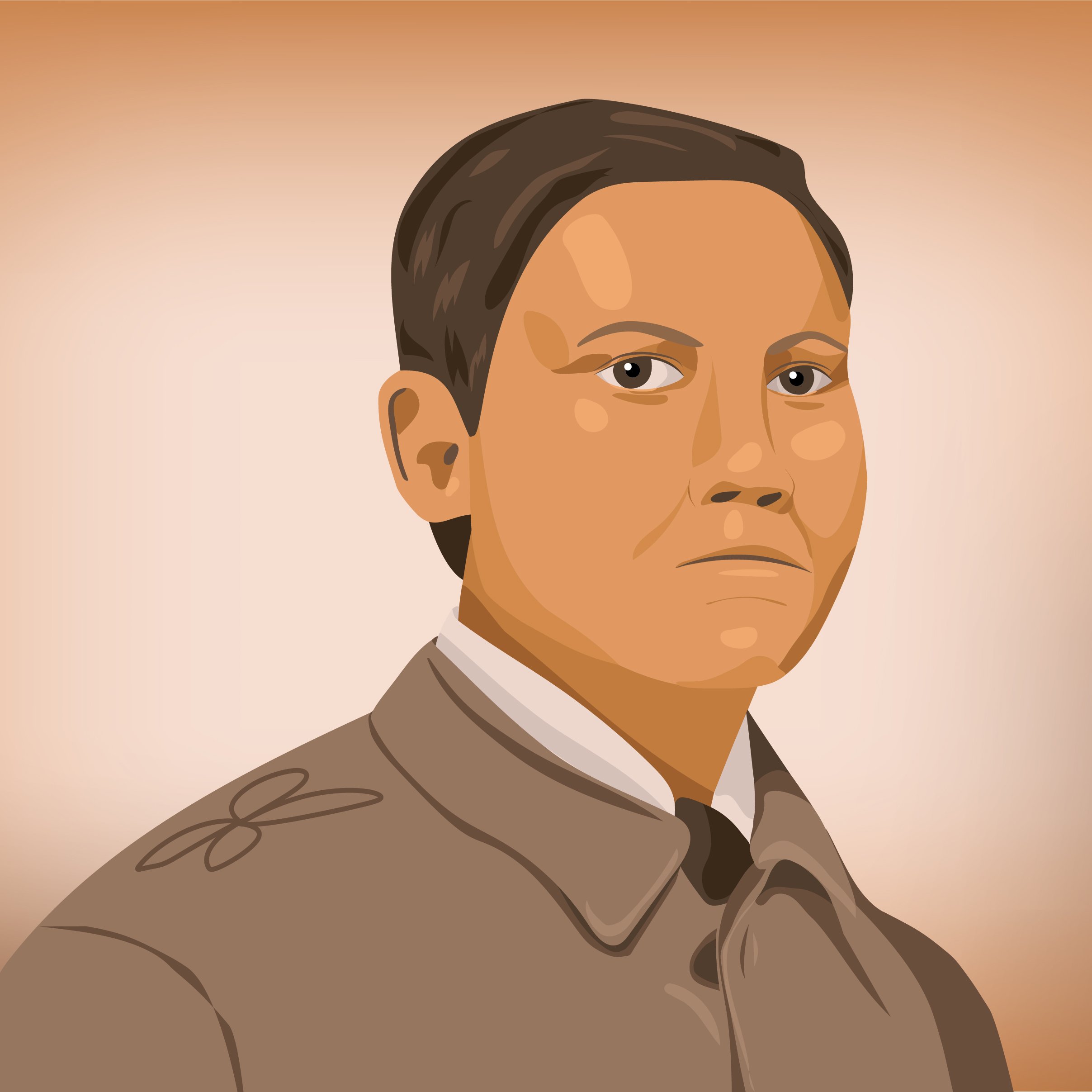
Illustration by Charlotte Easterling
Life at Carlisle didn’t get easier in the ensuing months. Matthew accepted his new name, recognizing that he wasn’t the same person he’d been when he arrived. He learned to speak and write English well enough to get by, and he figured out how to stay out of trouble, mostly, in order to avoid beatings and other punishments like having to spend the night alone in the guardhouse or not getting a meal. (Which might not be such a bad thing; wasichu food didn’t taste good and often upset his stomach—too much bread, not enough meat. Not enough of what Iná had made.)
It was all horrific, but being disciplined with a cane or fist or whip was still especially shocking. It was utterly foreign to the way Oglala parents reared their children. Even more shocking was seeing those beatings inflicted on small children, like Mouse. Matthew had tried to intervene once but had been so viciously whipped he’d collapsed. The bruises had taken weeks to fade, and he still had at least one scar. Afterwards, the wasichu policy of forbidding students from comforting anyone who’d been punished was even more strictly enforced, as was making older students dole out punishments. And they quickly learned that they couldn’t let the teachers see any signs of mercy. If they did, the student who was supposed to inflict the beating would get one as well.
The harshness was traumatizing, so not surprisingly, students ran away frequently. They were usually caught and brought back, but it became a badge of honor to have run, even if they didn’t get far. Some who ran never came back.
Because they made it home? Matthew wondered. Or because they died?
When he thought about that, he was especially aware of the idea of running away that lingered at the back of his mind.
Spring 1888
The weather was starting to turn warmer when Matthew was sent on his first outing. Percy Swinnerton had a large farm near the tiny community of Edgewood, Pennsylvania. Matthew was told he would spend the next seven months on that farm, learning a trade and living in a white household. None of that interested him in the slightest, but he supposed it would be bearable.
“You won’t be sleeping in the house,” said Mr. Swinnerton when Matthew arrived. “I made you a place in the barn. I have daughters, so you understand.”
But Matthew didn’t understand at all. He’d been raised to treat women and girls with respect. He saw, however, that it would be perilous to protest, so all he said was, “Yes, sir.”
***
It wasn’t long before he discovered that his teachers had lied about what his outing would be. It had little to do with learning and assimilating but very much to do with chores: plowing, feeding the animals, exercising the horses, and anything else Mr. Swinnerton told him to do. And in reality, Matthew liked moving around and being outside much better than sitting in the stuffy classrooms at Carlisle. But if he didn’t do the work to Swinnerton’s satisfaction, it would lead to a slap on the head or sometimes a whipping. If he was really displeased, Matthew would get little food for one or more meals.
Sunday was the only time he was allowed to be around the family (most notably the three Swinnerton sisters whom Matthew found neither interesting nor attractive). They would go to church, all dressed in their finest (which for Matthew was his Carlisle uniform), and Mr. Swinnerton would proudly show him off to the other white folk at the church. Inevitably, he’d be asked (or more accurately told) to recite a bible passage, and he would reluctantly oblige. This earned him a condescending pat on the shoulder and a “Good lad!” from Swinnerton. He was also allowed to have dinner with the family on Sundays. The food was better than any he’d had at Carlisle, but he still didn’t like it.
I’d give anything to taste one of Iná’s stews, he often thought.
Each Sunday still ended just like every other day, with him going back to his bedroll in the barn. He’d lie awake in the darkness until exhaustion overcame him. More and more he’d dream of home and his family, and Até’s parting words.
Let your strength carry you where you need to go.
The Swinnerton farm: October 3rd, 1888
Matthew was running barefoot across the plains when a herd of antelope began to overtake him. They surrounded him, pressing so close that he was lifted off the ground and carried along. He was terrified that he’d be trampled, but the antelope whispered to him.
Run with us.
So he did. Even though his feet didn’t touch the ground, he felt his legs become as powerful as those of the animals around him…
He woke up, sprawled on his bedroll, then stumbled to his feet and realized that his dream meant it was time to run. Away. Back home. Before they could send him back to Carlisle.
It was still dark outside, so Matthew quietly gathered his blanket and canteen and the bit of food left from dinner. Then he went to the rack of tools and selected an axe and a blade. It wasn’t as good as the knife Até had given him, but it would do. Last, he went to the horse stalls. He knew each animal, and they liked him as much as he liked them. But he was especially fond of Admiral, a roan stallion. He stroked the horse’s neck affectionately. (The thought of Swinnerton’s outrage at finding Admiral gone made him smile.) “Come on, my friend.”
They made their way to the barn door. Matthew opened it and they walked through. No hesitation, no regret, and no looking back.
My strength will carry me home, he thought.
And it did.
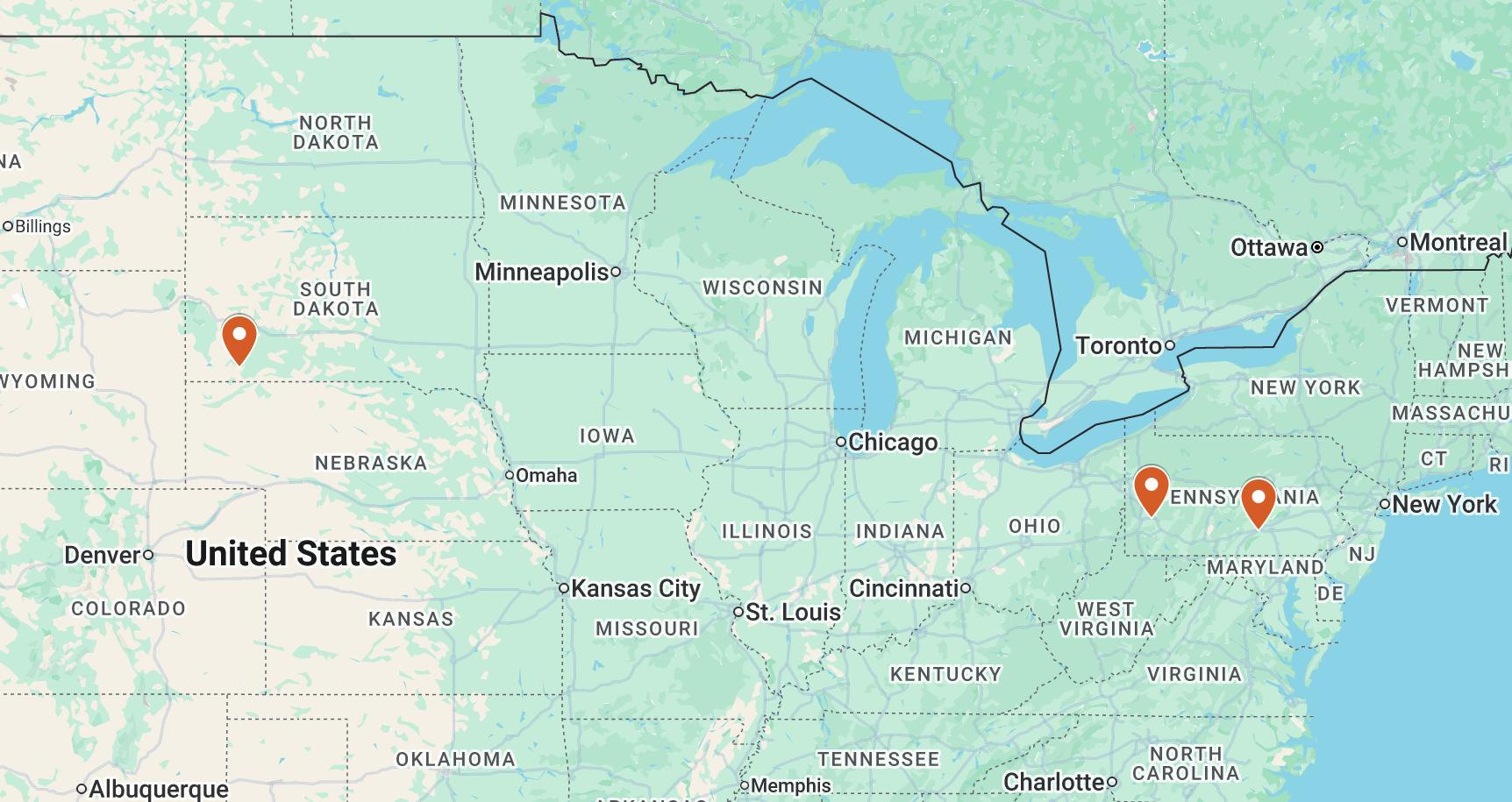
From left to right: Pine Ridge, South Dakota; Edgewood, Pennsylvania; and Carlisle, Pennsylvania. Map: Google Maps