
The Galvanized Yankee
Written by Eric Shipley and Charlotte Easterling
Alton, Illinois, July 5th, 1863:
Gerard Coffman (formerly Gerhardt Kauffmann) had been in the Alton Military Prison for more than a month when they’d gotten the news that the Confederacy had lost the Battle of Gettysburg, and now they’d just heard that the Confederate Army had surrendered a day ago in the Siege of Vicksburg (which was where he’d been captured by Union forces).
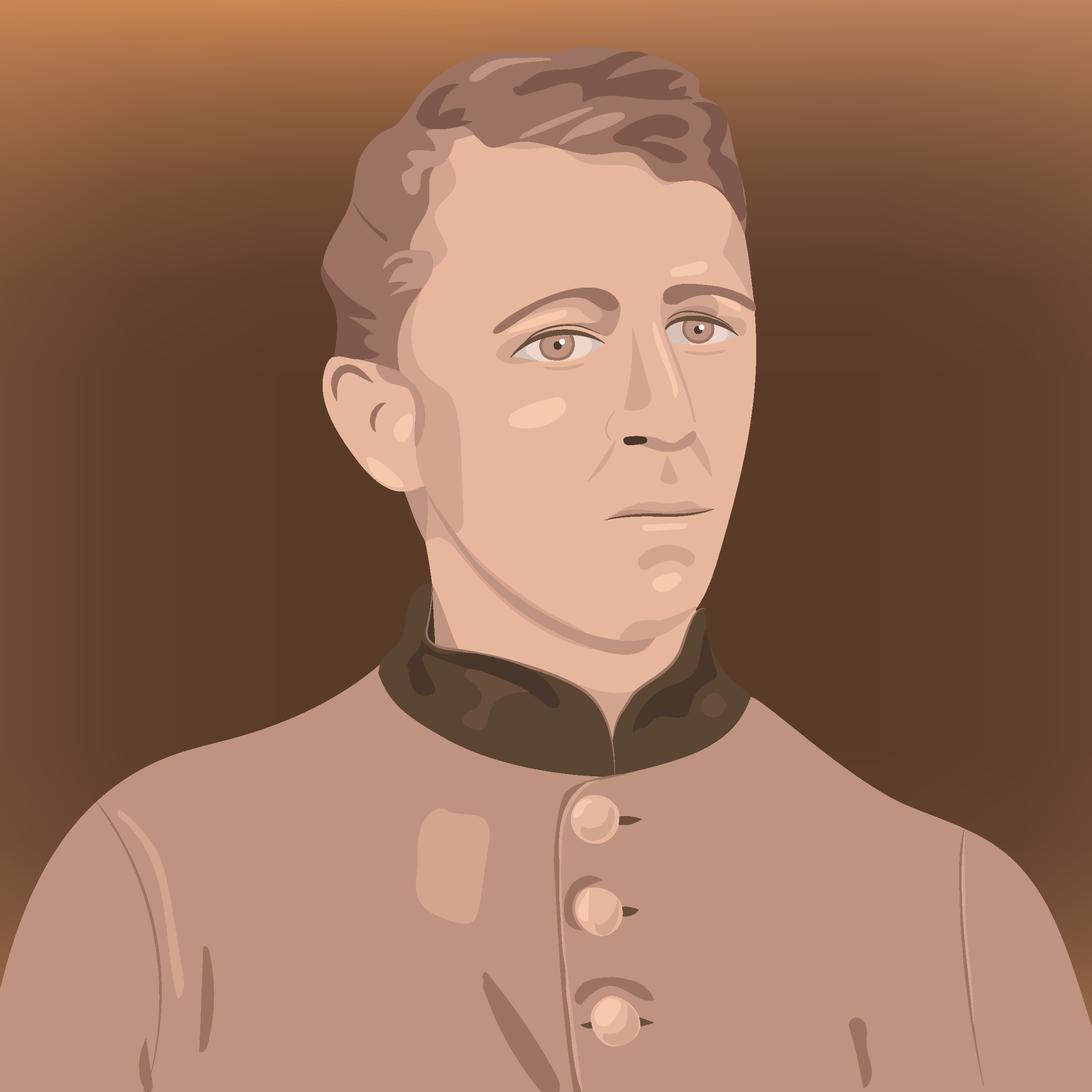
Illustration by Charlotte Easterling
The July 4th celebrations had been loud and vigorous, with plenty of alcohol and singing on the part of the Union guards. When the Rebs had tried to start up their own performance of Bonnie Blue Flag, the tone had changed quickly, with guards yelling at them to shut down that damn traitor noise and brandishing their rifles to show that they meant it.
Now, on the 5th, the celebrations had died down a bit, at least while last night’s revelers nursed their hangovers. But the mood in the prison was dark and felt dangerous. Gerard wanted no part of it, and felt like he had to walk a careful line.
“Well dammit all, anyway,” Gerard said quietly to one of the wounded Confederate soldiers he’d been tending in the camp’s makeshift hospital. (The only thing that distinguished this “hospital” from the rest of the prison is that it had a rudimentary shelter. Otherwise, it was just as insanely crowded and filthy as the rest of the camp.)
The man grimaced but managed a nod, "Ain't that the truth! ”
Gerard helped him get as comfortable as possible and moved on to the next soldier, who, he strongly suspected, was not long for the world. The news about Gettysburg and Vicksburg was depressing, but strangely it was a relief too. With those major losses, the Confederacy most likely couldn’t win the war. As a result, Gerard was glad he’d been captured. If he’d continued fighting to the end, he might very well have been killed, and dying for a dying cause struck him as senseless. It also left him wondering if he’d made a huge mistake by joining the Confederate Army.
The reality of war and combat had taken him by surprise and left him horrified. But that possibility hadn’t even occurred to him when he’d enlisted. (It wasn’t until years later that he realized that being only eighteen years old had a great deal to do with this.)
Now he was questioning why he had enlisted in the first place, and his mind drifted back to the conversation he’d had with his older brother, Friedrich.
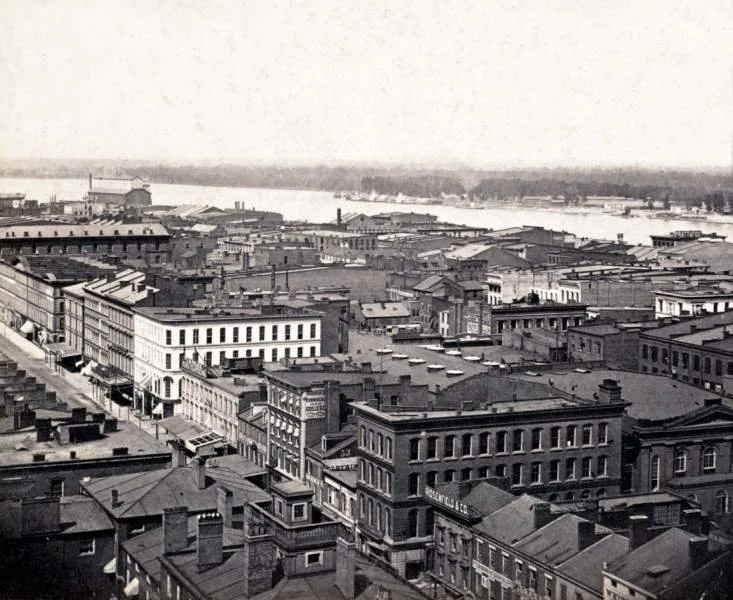
St Louis, c. 1862; photo: Dickinson College
It was in late January of 1862, and he was living with Friedrich in St. Louis, Missouri. (He’d moved in when their father, a German immigrant, died in 1857.)
Missouri was a slave state, but there were many Union supporters in the population, so he’d been thoroughly exposed to the vehement viewpoints of both the Confederacy and the Union.
He knew his decision to enlist in the Confederate Army was partly informed by resentment over feeling separated and disrespected by the rest of his family. (He was the youngest of his siblings and the only one born in the US.) Still, he thought, it might have gone much differently if Friedrich hadn’t been such a dictatorial Arschloch.
Of course, Gerhardt, Friedrich had said, you will enlist in the Union Army as I and you other brothers have!
He’d gone along with whatever Friedrich had said since he’d moved in with him and his family, but he couldn’t stand his brother’s arrogant demand. His reply was just as vehement:
I hadn’t made up my mind which army to join until now. But I’m eighteen, a man! I have the right to make my own choices!
He had to assert his rights to be his own man, so he was going to do exactly that, even if it made him a rebel. And that term produced a wave of sympathy for the Confederacy…
Very well, Friedrich had said. Go! Be your own man, but you won’t do it under my roof!
Gerhardt hadn’t said anything more. He went to his room and gathered his few belongings and walked out the front door without saying another word.
As an additional act of defiance, Gerhardt officially changed his name to Gerard Coffman and enlisted in the Confederate Army on February 1st, 1862.
Alton, Illinois, November 26th, 1863:
The Confederacy’s situation did not improve in the five months following the Union victories at Gettysburg and the Siege of Vicksburg. Now, Gerard had just heard that the Confederate Army had lost the Chattanooga Campaign. To make it worse, it was Thanksgiving and the guards (Union soldiers) were mercilessly harassing the Confederate prisoners with sneering taunts.
“Hey, all you Greybacks! Wanna join us for Thanksgiving dinner? There’s all kinds of things to be thankful for!”
Unlike many of his fellow inmates, Gerard ignored them. Instead, he was focusing on ways he could arrange to be on the winning side.
Alton, Illinois, March 30th, 1864:
In the months after Chattanooga, Gerard had quietly, covertly investigated ways he might get out of prison before the war ended. (He had to be very careful to avoid reprisals from other Confederate prisoners.) At first, he’d felt a twinge of guilt, but then he’d reminded himself that it was Friedfrich being an arrogant jackass that had really made up his mind to enlist in the Confederate Army. And maybe more importantly, given everything he’d seen and heard, it had become crystal clear that he didn’t support slavery, and truth be told, he never had.
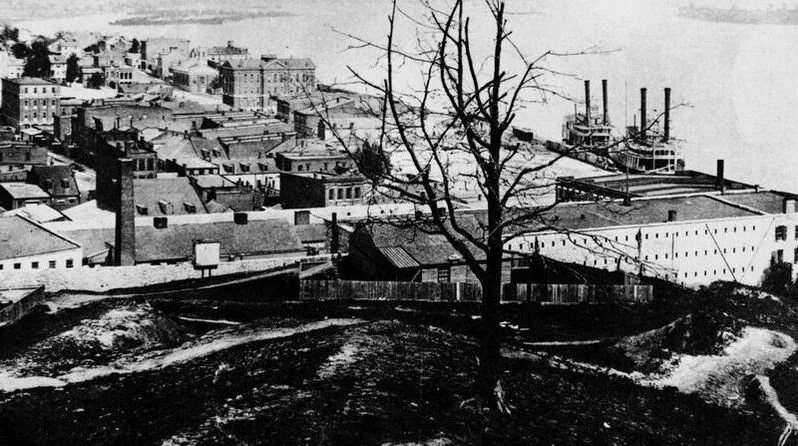
Alton Military Prison in 1861; photo: altonjaegerguards.org
He sat back and silently re-read the letter he would soon, surreptitiously, deliver to a guard he trusted (as far as he felt he could trust anyone).
Alton Military Prison, March 30th, 1864
Col J.P. Sanderson
Sir:
I take the liberty of addressing you for the purpose of learning if there is any possible chance of my getting released.
I have been a prisoner here since the 24th of May, 1863, I was first captured at Vicksburg, and there I left the rebel army. On May 24th, 1863, I reported myself to the Provost Marshall here, to take the Oath of allegiance, and then look around and see if their was any regiment here that I was acquainted in. I do not think that I could serve as well in a regiment that I was not acquainted, as one that I would be acquainted in. I was promised the influence of an officer if I would assist him in getting up a company in here. I went to work and got him a good squad of 34 men, that I think could be relied on. But then the gentleman gave out the notion, and I am here yet. If I should happen to be sent on exchange I well know my fate. I always have offered to go into the army of the Union. This is where all my friends and relations are and there is where I ought to be. I should like to go into Captain Connors Company (K) of the 10th Minnesota, in which I have a great many acquaintances. If you would be so kind as to let me know what my chances are, you would greatly oblige me.
Your Humble Servant
Gerard W. Coffman
Col. J.P. Sanderson
Provost Marshall General
Department of Missouri
St Louis, MO
Alton, Illinois, March 30th, 1865:
It had taken a year of writing more letters and doing his best to build his case for joining the Union Army. Then, exactly a year from when he’d sent his first letter, Gerard finally got the news he’d been waiting for: he was going to be released and sworn into the Union army. His happiness at this news was tempered a bit by finding out that he wouldn’t be joining the regiment in Minnesota as he had hoped. Instead, he was being sent to the Wyoming Territory. He and the rest of his regiment would be helping to protect settlers moving through Lakota country on their way west.
They were marched out of the prison amid the contemptuous jeers of the Confederate prisoners.
“Traitors!” and “Turncoats!” and “You damned Galvanized Yankees!”
Fort Laramie, Wyoming Territory, May 1866
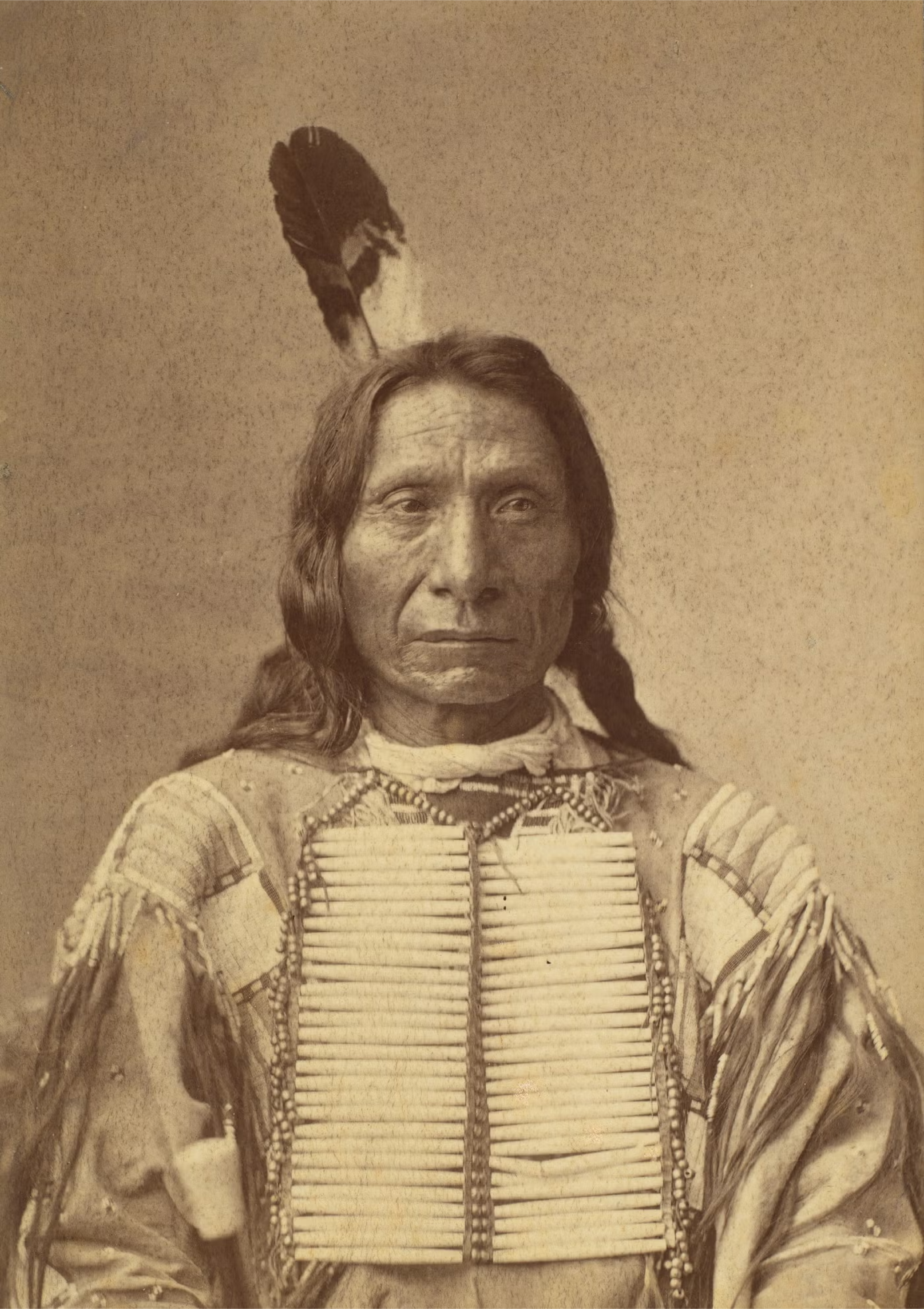
Red Cloud; photo: South Dakota State Historical Society
Red Cloud was glowering as he strode toward the gates, signaling to open them. A group of his men followed closely behind. Gerard, who was among the increased ranks of guards during the negotiations, watched intently. Colonel Carrington and Mr. Taylor, who had traveled all the way from Washington DC, were walking across the yard. The Indian agents were translating their calls to come back and talk. Red Cloud paused and turned to look at them. He made a slashing motion with his hand, signaling that the conversation was over. The group then walked out of the fort, mounted their horses, and rode off as the gates closed behind them.
Colonel Carrington and the men who had been negotiating with Red Cloud and his men looked angry and anxious as they talked. Gerard watched this with interest too. He had been nervous about his assignment in the plains, knowing that Indian attacks were frequent and savage. But most of the Indians he encountered were there to trade, bringing buffalo robes and furs.
He had learned some Lakota and “Hand Talk” (the sign language that served as a universal language for many of the tribes). He found that the Indians who came there were usually amicable, if, understandably, cautious in their dealings with white men. Gerard would practice his clumsy Lakota with them, and they indulged him.
He looked again at the gate where Red Cloud had abruptly left, and worried about what was to come. He’d grown to like Wyoming and the people here. He sympathized with the Indians and with the settlers who were trying to make their way west to build a better life for themselves. Hopefully, there would soon be another agreement in place to prevent all out war, but Red Cloud’s glowering face and Colonel Carrington’s furrowed brow left him thinking there were difficult times ahead.
He worried mostly about finding himself on the wrong side again. He smirked as he thought, I wonder if the Indians will take me if I decide I don’t want to be a Yank anymore?
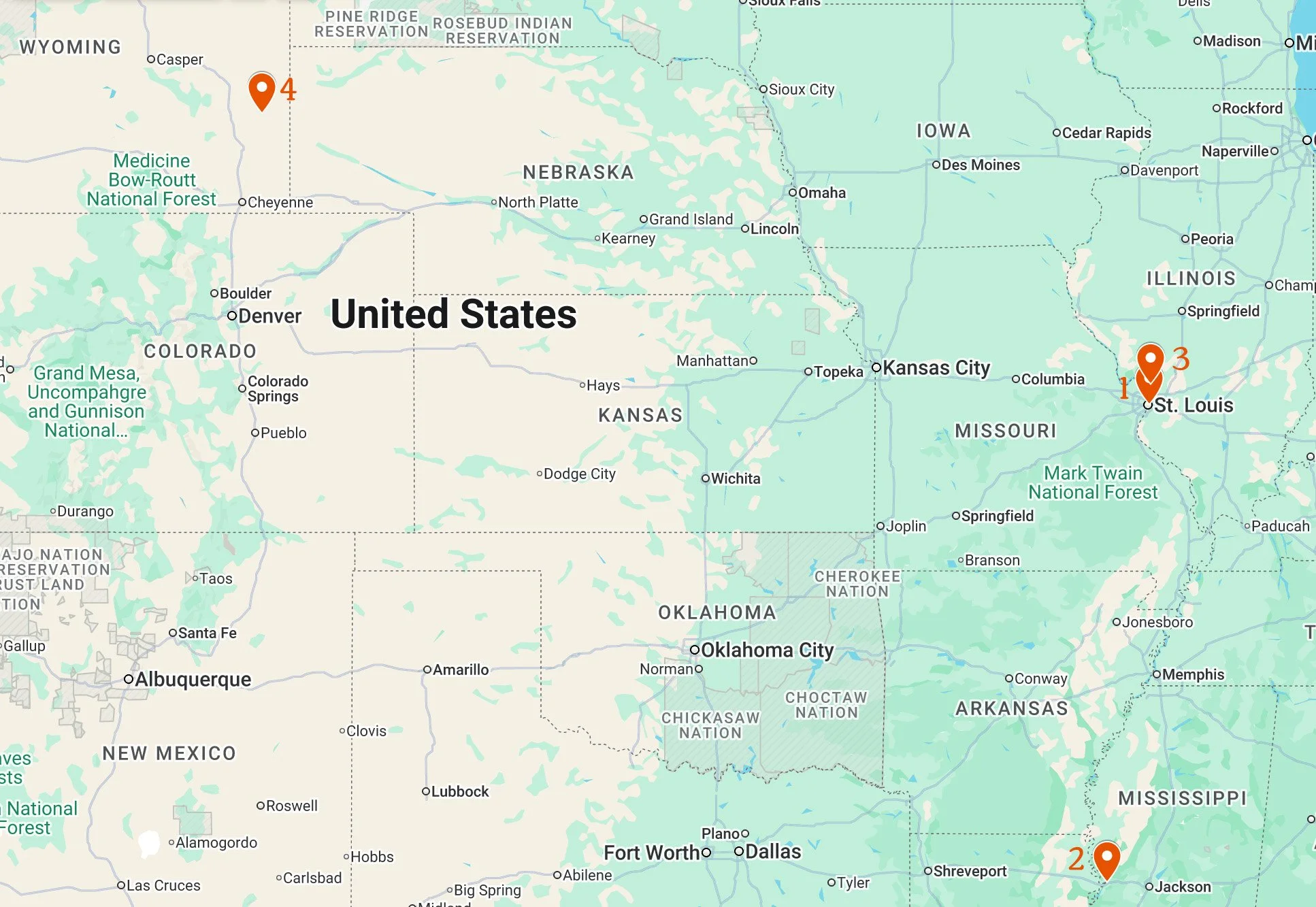
1: St Louis, Missouri. 2: Vicksburg, Mississippi. 3: Alton, Illinois. 4: Fort Laramie, Wyoming. Map: Google Maps.