
A Soldier’s Path
A young soldier discovers the grim realities of war and becomes a witness to history.
Written by Eric Shipley & Charlotte Easterling
August 22nd, 1862
Landon fidgeted under the late summer sun of Athens County, Ohio as he stood in a line of men waiting to enlist in the Union army. His older brothers, George and Liam, had signed up a year ago. Landon had wanted to lie about his age and join up with them, but they had insisted that he wait so he could help out on the family farm for another year. Landon had agreed but only grudgingly so.
He wiped sweat from his shock of dark, curly hair and fanned himself with his hat. He wasn’t especially tall, but his frame was lean and wiry strong from having done farm work his whole life.
The man behind him, a neighbor named Curt Blasedell, muttered, “Reckon we oughta get used to being uncomfortable. Being in the army’s a far sight worse from what I hear.”
“Yep,” Landon agreed. “I believe you’re right.”
There were many other familiar faces, almost all from farms in the county. They were mostly 18, like Landon, or maybe 19. (A few were a little older, but not by much.) Landon had talked with some of them and found that they shared many of the same reasons for enlisting: wanting to defend the Union, needing steady pay, and some were simply looking for adventure. Many admired President Lincoln, just as Landon did, and didn’t believe any state had the right to secede. And there was the slavery question. Ohio wasn’t a slave state, and his family had never owned slaves. They weren’t reformers or radicals, like those abolitionists, but his folks had always taught him slavery was wrong. That was one reason he respected the President so much.
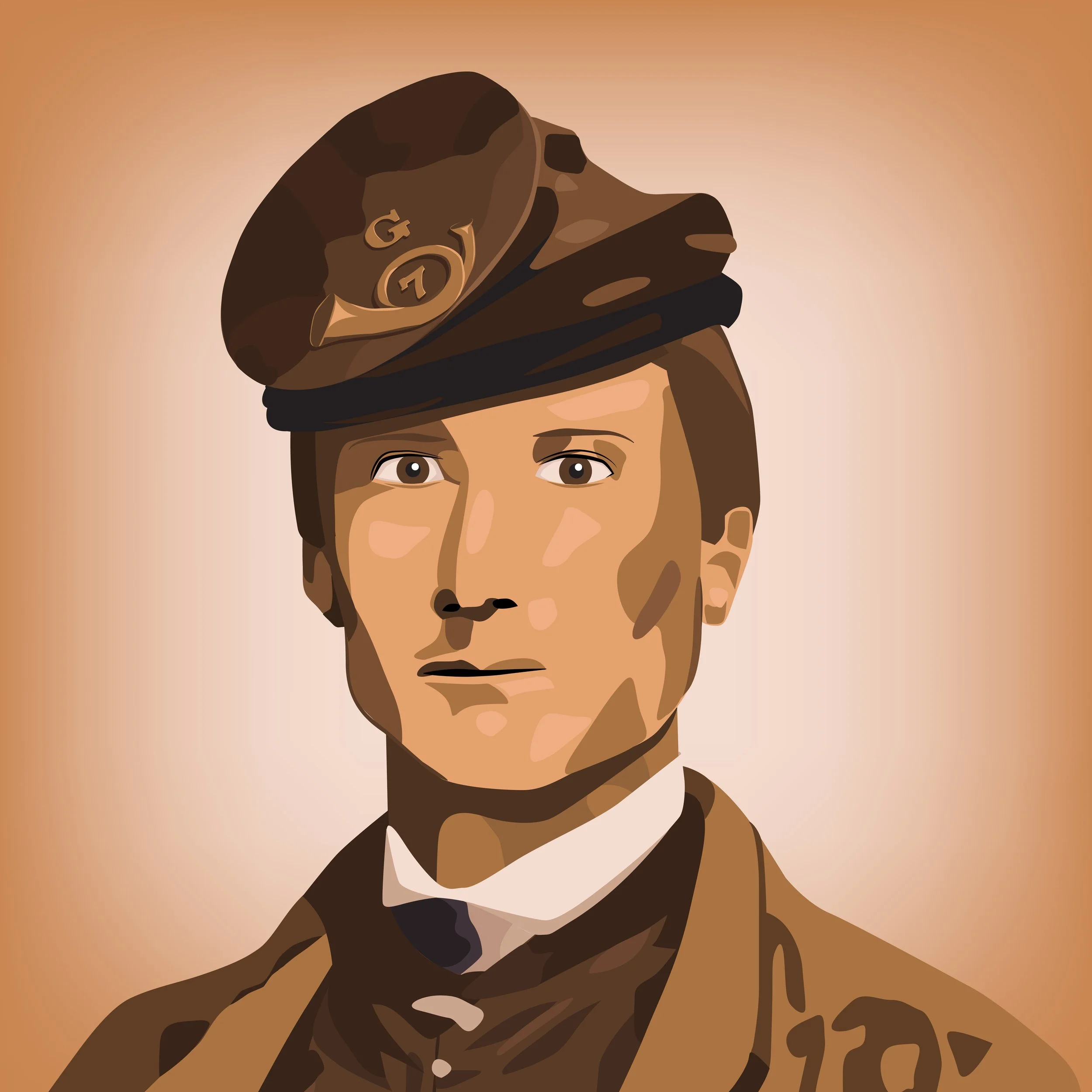
Portrait of Landon Baird. Illustration by Charlotte Easterling.
The newspaper had often published stories about Lincoln and his speeches and such, so there was no doubt he hated slavery and loved his country. He was clearly determined to keep it united. Or see it reunited, as that was now what was needed.
Landon had talked with his family about all of this, and they accepted it. What he hadn’t talked about was the fact that he wanted to get away from the farm and experience life. He’d been born smack dab in the middle of a passle of brothers and sisters and often felt lost in the shuffle.
The line moved forward and he was at last at the table where he would sign his enlistment paper. A tired-looking Union soldier asked some questions and filled in the open spaces, then pushed the paper at him and handed off a pen.
“Sign your name or make your mark there,” the soldier said curtly and pointed at the line for his signature.
He was proud that he could read and write, and took a moment to look over the terms of enlistment. The soldier cleared his throat impatiently and looked exasperated, so he dipped the pen in the ink bottle and, with a flourish, signed his name: Landon K. Baird.
September 9th, 1862
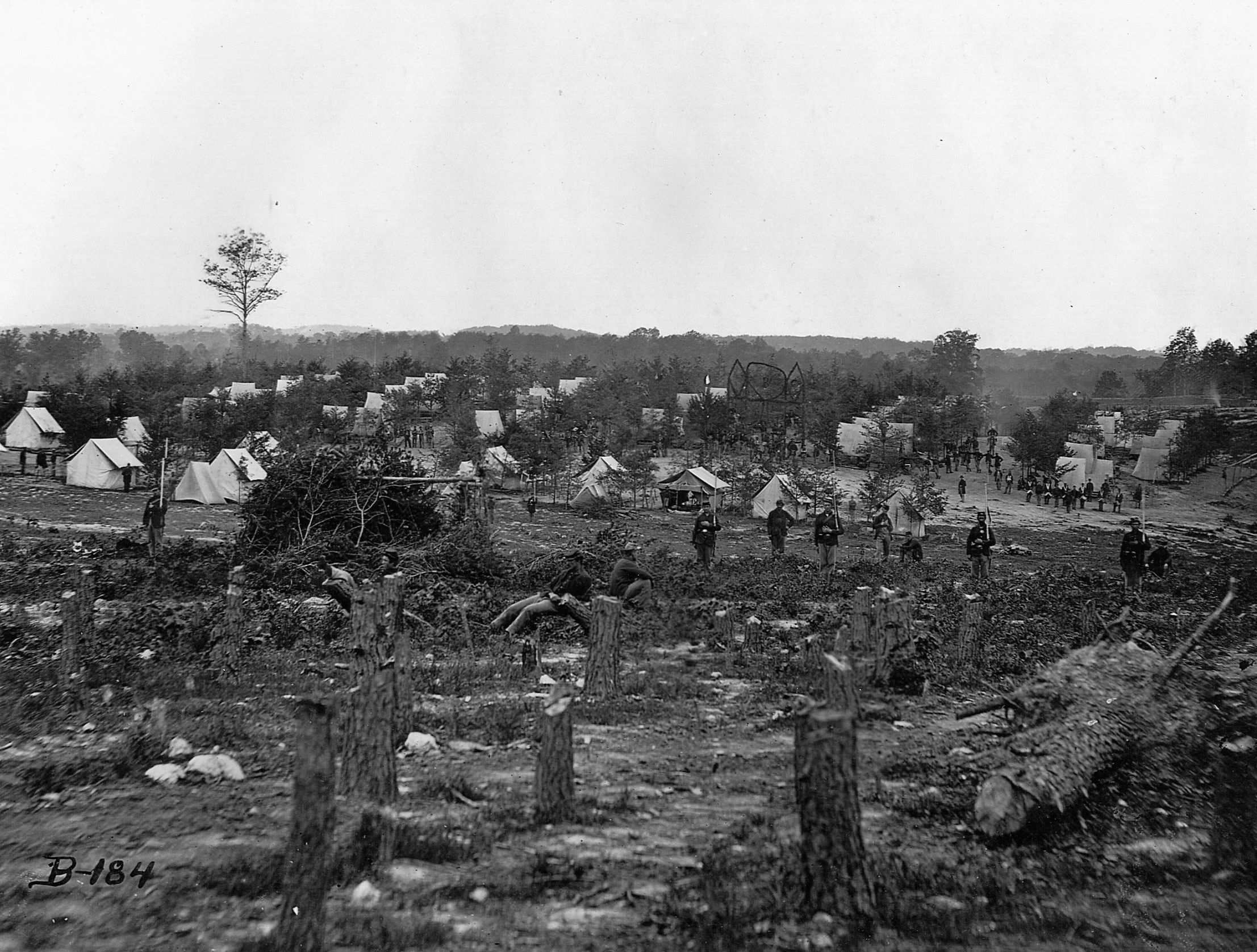
Photo of a Union camp during the Civil War. Photo: warfarehistorynetwork.com
Camp Marietta, where the 92nd Ohio Infantry Regiment was stationed, was pretty much what Landon had expected–muddy and dank with lots of tents and rough shacks, but it was actually no worse than the camp where he’d done his basic training.
He took out his orders and showed them to the guard standing duty at the entrance.
“You’ll be wantin’ to check in with Colonel Putnam,” the guard said and pointed out a shack in the distance. Landon thanked him and trudged off with his small pack. He hadn’t gotten very far when he heard…“Well now, boys, I do believe we got us some fresh fish!”
This from a grizzled soldier of indeterminate age (in a tattered uniform and kepi) who sniffed the air dramatically. This brought chuckles from other similarly grizzled soldiers of indeterminate age (in similarly tattered uniforms and kepis) who stood with him outside what looked to be a mess hall.
Landon felt his face redden. George and Liam had warned him that “fresh fish” is what the older soldiers would call him as a new recruit, but it still made his self-consciousness about being so fresh-faced that much worse. He briefly considered a biting response but decided, wisely, to stay on the way to report to his commanding officer, one Colonel W.R. Putnam who was a lean, older man with graying hair and beard and a stern demeanor.
“Welcome to the 92nd, Private. Go get your uniform, and kit, and ordnance,” he said brusquely. “Get a bunk too. Dinner’s in an hour in the mess you must’ve passed getting here. Better get a move on.”
“Yes, sir!” Landon replied with a salute. He got a perfunctory handshake and was dismissed.
He was glad the meeting had been so mercifully short, and actually, it ended on a good note. He was on his way to get his uniform! It was something he had been looking forward to… until he tried it on. It was hot and itchy, and it didn’t fit well.
This was when he truly came to appreciate his “housewife.” Not a real woman (although he sometimes wished it was), no, “housewife” was what soldiers called their sewing kit. Liam and George had told him to take it when Ma offered and to thank her for it. He had done so but now resolved to thank her again in his next letter. Without those needles and buttons and thread, there was no way he’d make his uniform fit and keep in good repair. So he’d done his tailoring, and then he sat for his first photo (a Daguerreotype) in his uniform, looking proud but a little apprehensive too. In years to come he would look at that photo and reflect on how the apprehension was altogether reasonable.
September 17th, 1863
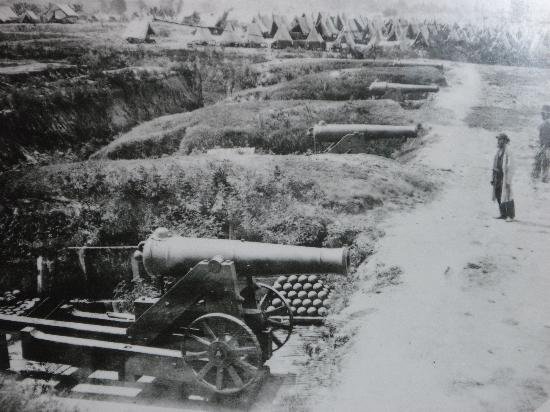
Photo from the Chickamauga Battlefield. Photo: tripadvisor.com
The 92nd was stationed at Chickamauga, Georgia, about 12 miles southeast of Chattanooga, Tennessee. They’d be moving out first thing tomorrow morning with three other Union regiments, marching to battle with the damned graybacks at Chickamauga Creek. It wouldn’t be Landon’s first real fight, so he knew what to expect, or at least he thought he did. He couldn’t figure out why, but he felt the same strange mixture of excitement and terror at the prospect of another battle.
At least it’ll break up the boredom, Landon thought, then remembered what he’d seen in the field hospitals when he’d helped carry wounded. How could he be excited about an engagement that could leave him dead or with some gruesome wound like he’d seen? The prospect of being in the hands of the sawbones (army surgeons) made his stomach churn. They got the “sawbones” nickname because their favored tool was the bone saw. For amputations. And the agonized screams that came with those amputations always lurked at the back of his mind.
He shook his head, trying to clear it, and looked down. There were his muddy, damp boots, which brought another remembrance–early on, his brothers had given him emphatic orders to take care of his feet! And Landon had learned the wisdom of those orders. So, instead of just sacking out on his bedroll with his boots on, he took them off, along with his damp socks, and set them inside his tent to dry.
A sergeant from one of the other regiments noticed this as he was passing by.
“You got good training, Private,” he said, coming over and sitting down with a grunt. (He sported a bit of a paunch and stubble that may have been gray.) “The last thing you need is your feet rotting out from under you.” He rolled a cigarette and looked over at Landon. “First battle?” he asked gruffly.
“Nope.”
“Still nervous though, eh?”
Landon nodded ruefully.
“I am too,” the sergeant said then snorted. “And I’m one o’ them battle-hardened soldiers, or so they say. No shame in being nervous, son. Just remember your training and keep your head about ya.”
Landon found he could only nod again.
The sergeant offered him the cigarette he had just rolled, and Landon took it, even though he didn’t smoke much. The older man rolled another one for himself and they smoked quietly (except for Landon’s occasional coughing) for a few minutes. At last the Sergeant flicked his cigarette stub into the mud and stood up with another grunt.
“Take care of yourself,” he said and they shook hands.
“You too, Sarge.”
It was the older man’s turn to nod. He gave a tight smile, then turned and headed back to his regiment. Landon never saw him again or found out what his fate was. He hadn’t even learned his name.
September 18th, 1863
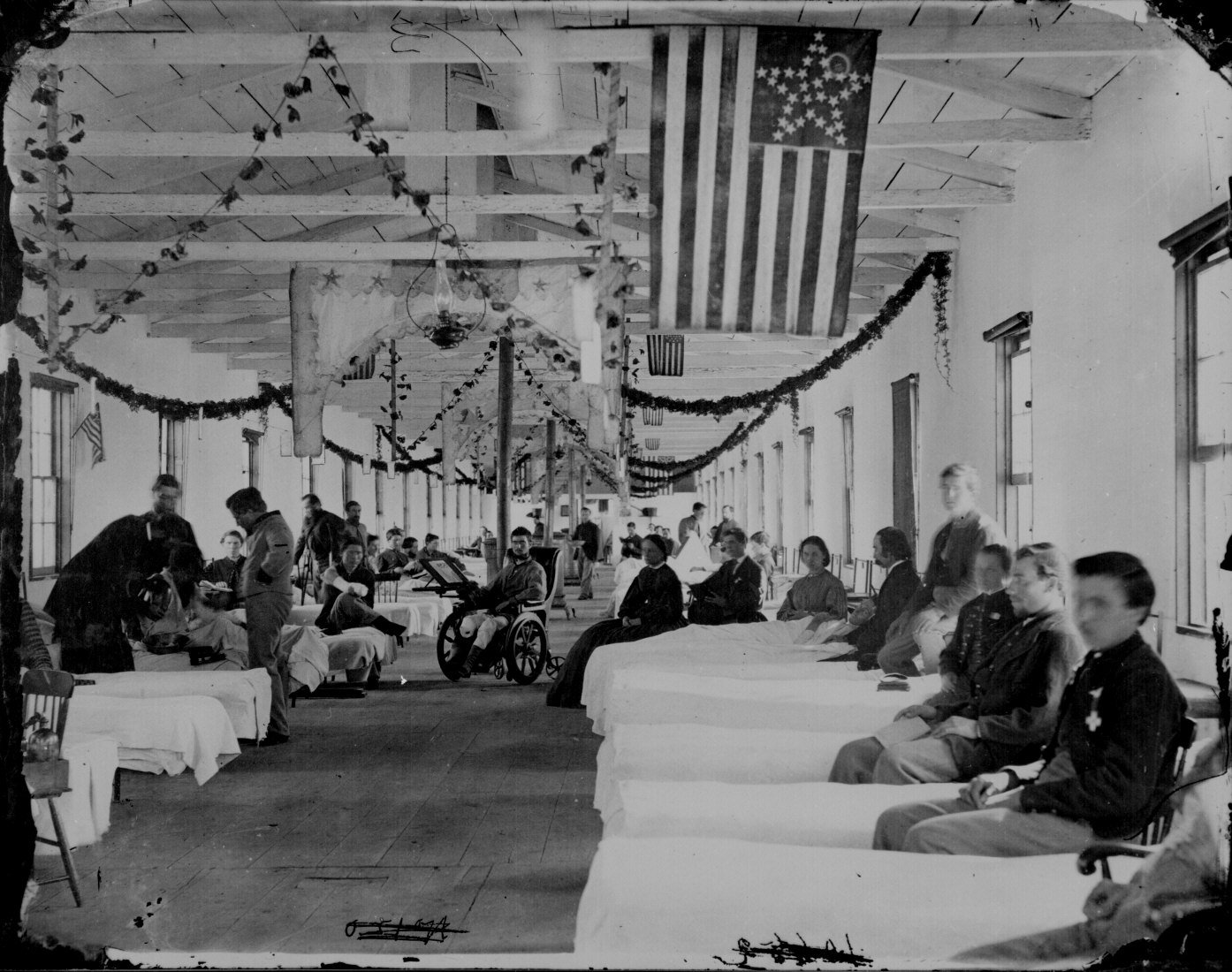
Ward in the Carver General Hospital, Washington, D.C. Photo: National Archives
The battle was worse than anything Landon had ever seen. They were fighting in dense woods, and there was more of everything: smoke, screams, blood, gunfire… and a cacophony of noise. The only thing Landon could hear over it was the sound of his own heart pounding. But he remembered his training, like the sergeant had said, and threw himself into the battle. He stayed focused, even when bullets whistled past.
He fired again and again, and part of his mind recoiled when he saw bodies falling, knowing that he probably had shot at least one of them.
Landon ran forward, and then was stopped by a burning, blinding pain in his right foot. It felt like it was on fire. He looked down, horrified, and saw a mess of blood and shredded boot leather at the end of his right leg. He screamed and dropped to his knees, and the last thing he remembered was being dragged from the battledfield.
May 26th, 1864
Landon wouldn’t see combat again. His foot was too badly injured to be in the infantry, but it was still there, for which he was thankful. It was dreadfully sore most of the time, but when he saw all the veterans with missing limbs, he felt it wouldn’t be right to complain.
After being released from the hospital, Landon had been transferred to the Veteran’s Corps and was now stationed in Washington D.C. He could still handle a rifle and stand and march (although haltingly and with a limp), so he was allowed duties like standing guard. And that was what he was doing this particular day, at none other than the White House!
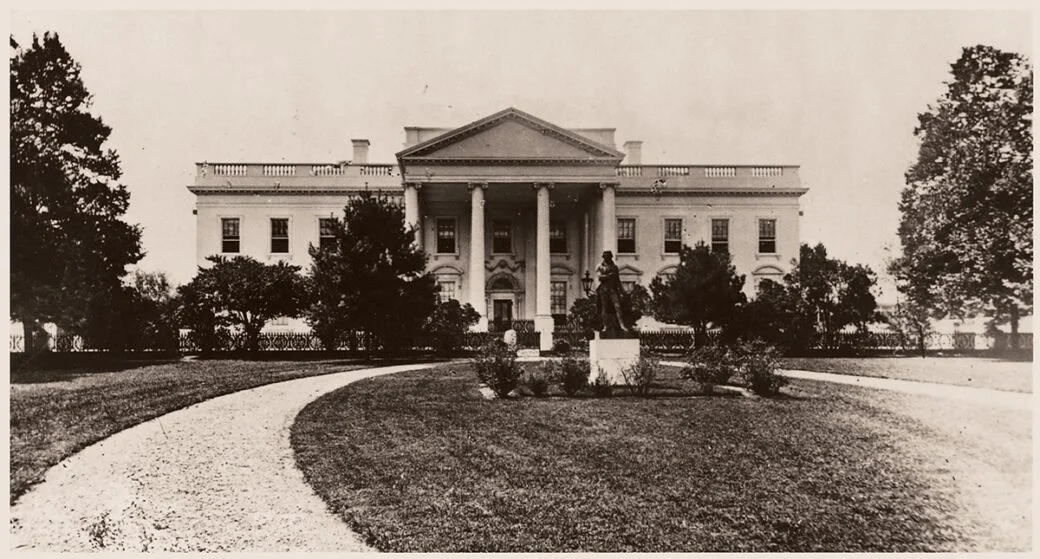
North Front of the White House at the time of Lincoln's inauguration. Photo: Library of Congress
It was humid and the sky looked like a storm was on the way, and sure enough, it wasn’t long before a mighty cloudburst came and drenched everything. He tried not to let the awful pain in his foot distract him–he was determined to stand his watch faithfully, so he kept an eye out for anything amiss, which was hard to do through the sheet of heavy rain. He did see, however, that someone had come onto the porch and was waving him over urgently. He was loathe to leave his post but also worried that something might be seriously wrong. Given that this was the White House, he decided it was better to find out what was going on and hurried over, trying not to limp. It didn’t take long for him to see it was President Lincoln beckoning him.
He got to the porch as quickly as he could and saluted.
“Come stand on the porch until the rain lets up,” Lincoln told him. His voice had a noticeable southern twang. Kentucky maybe?
“Sorry, sir, I have orders to stay at my post,” Landon replied.
“Lincoln’s giving the orders here,” came the sharp reply.
Landon saluted again and said “yes sir!”
He stepped onto the porch and appreciated the relief from being pelted by the driving rain. The President came to stand beside him, and Landon saw that the descriptions of his great height were not exaggerated. Lincoln asked his name and unit and where he’d gotten the limp. Landon told him his story, and Lincoln listened carefully, hands crossed behind his back and head bowed. Landon finished and the president simply stood solemnly, not saying a word.
Presently, he looked up into the distance. When he spoke, his voice was what Landon thought of as reverent.
“Thank you for your brave service,” he said and offered a handshake.
It was something Landon hadn’t dared to hope for. He was dazed, and there was a roaring in his ears, but he didn’t hesitate to accept the handshake.
Then he wasn’t sure what to do or say. But Lincoln soon brightened and asked, “By chance are you partial to jokes?”
“Why, yessiree! I sure do,” Landon replied, whereupon Lincoln shared one about a man and his pet donkey in a bar. Landon laughed and slapped his thigh then told one of his own. Lincoln laughed too, so for the next several minutes, they swapped jokes on the porch of the White House.
Soon the rain started to let up, and Lincoln excused himself, saying that he had business to attend to.
“It was a pleasure to meet you, Private Baird,” he said and once again offered an eagerly taken handshake.
“It was my honor, sir!”
Lincoln patted his shoulder and went back inside the White House.
This was Landon’s most cherished memory, one he was extremely proud of. He vowed then and there that he’d take every opportunity to tell the story. And he did.
April 14th-15th, 1865
Landon was off duty when his friend, Jack Miles, burst into the barracks and told everyone the president had been shot. There was a manhunt underway to catch the assassin, but everything was in confusion. Rumors were swirling about a conspiracy to murder not only the president but also other government leaders.
As fate would have it, though, the only success the conspirators had was with President Lincoln, who died early the next morning, April 15th, 1865.
The outpouring of shock and grief and anger was palpable everywhere. And Landon was in the thick of it. He both fed it and was swept along by it. Somewhere, in all the turmoil, though, he remembered that it wasn’t even a year ago that he’d met Lincoln.
This damned war is all but over! He deserved so much better! Landon thought, his rage subsiding, replaced by a profound sense of loss.
April 15th-21st, 1865

VRC regulation sky blue uniforms (Sergeant Robert Black and Private Herman Beckman of Company F, 8th Veteran Reserve Corps); photo: The Library of Congress, No restrictions, via Wikimedia Commons
Landon, as part of the Veterans Corps, joined Lincoln’s funeral procession in Washington D.C., following the president to where he would lay in state in the Capitol Rotunda until April 21st.
Bells were tolling, minute-guns were firing, and all around were faces that expressed the same anguish Landon felt. When the procession reached its destination, he felt an emotional stab that brought tears to his eyes–he had been here just last month to watch the president’s second inauguration.
What happens now? he wondered. He had heard people say that Andrew Johnson, who was now president, was a drunkard. Could he hold the country together? Had everything they fought for been pointless?
That night, Landon wrote home, finally able to tell about what he’d experienced in the last few days. He encouraged his family to make the trip to Columbus, where the funeral train would be stopping on its way to Illinois. He finished the letter and, with a sigh, set it aside to mail the next day.
June 26th, 1865
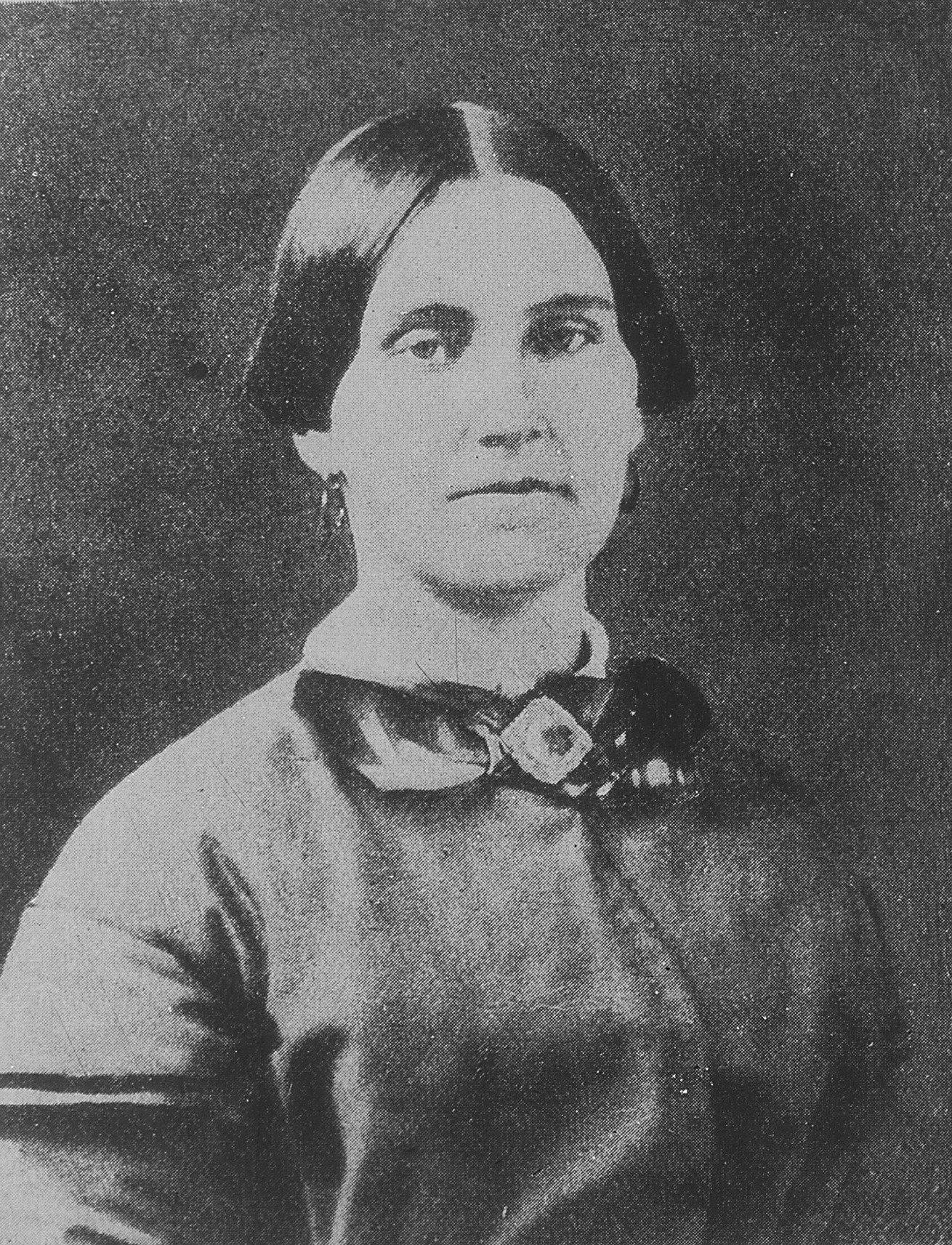
Mary Surrat. Photo: Mathew Benjamin Brady - U.S. National Archives and Records Administration, Public Domain, https://commons.wikimedia.org/w/index.php?curid=18731589
Landon’s friend Jack was also one of Mary Surratt’s guards. Not that any guards were needed. She was in a poorly way, so much so that she’d been excused from attending the last few days of her trial.
Jack came to the entrance of the hall where Surratt’s cell was and waved Landon over. It was time for him to take the next shift of guard duty, but there was clearly something urgent, and Landon guessed what it was.
“The verdict’s back?” he asked quietly.
Jack nodded and whispered as well. “Guilty. They’re gonna hang her. But it’s not public yet, so keep it under your hat.”
“Mum’s the word,” Landon acknowledged and looked back at Suratt’s cell. He couldn’t help but pity her, she was so wretched. At the same time, if she was part of the conspiracy to assassinate President Lincoln, she deserved what she got.
He sighed. “You gonna tell her?”
Jack shook his head emphatically but continued whispering. “Good God, no. There are orders that she can’t be told until the day before.”
I guess that makes sense, Landon thought.
July 7, 1865
Landon had gotten his honorable discharge a little over a week ago but still was given a ticket to attend the executions. (He wasn’t sure why–maybe because he’d been one of Mary Surratt’s guards.) He was told, however, that fewer than 200 such tickets were issued, so he should feel honored. Privately, he considered it more of a duty than an honor, but he kept that to himself and was there with his ticket right on time.
He was sweating copiously. It was hot and felt like it was getting hotter by the minute, but he strongly suspected that wasn’t the main reason for his sweat as he watched the four prisoners being led out: Lewis Powell, David Herold, George Atzerodt, and of course, Mary Surratt. It was only afterwards that he found out how profusely she’d wept and wailed when she was told she would be hanged. He was glad his discharge came through in time so that hadn’t been there.
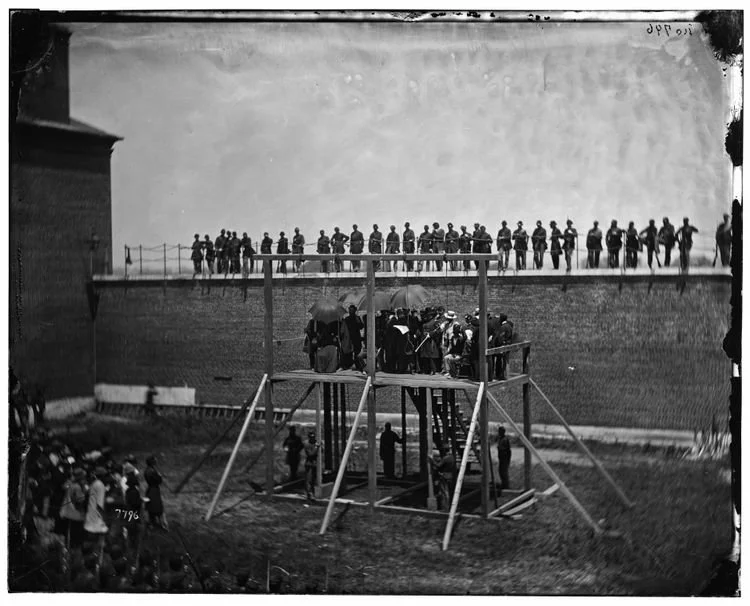
Gen. John F. Hartranft Reads Warrant Reading the Death Warrant, July 7, 1865. Courtesy Library of Congress
It was no surprise that Mary had to be helped across the courtyard then up the steps of the scaffold. When all the prisoners were there, they were forced into chairs. Mary was on the far right.
A nearby soldier nudged him and said, “Hey, Surratt’s got the seat of honor!”
Landon’s eyebrows shot up in disgust, but he didn’t respond. He hadn’t known the far right chair was the “seat of honor” in a group execution. It was still crude, he thought.
For Pete’s sake, they’re gonna be hanged. Show a little decency.
The four were attended by clergy, then had their arms and legs bound with white cloth. The execution order was read, the nooses were tightened around their necks, and white bags were put over their heads. They were helped to stand, and about ten seconds later, dropped to their deaths. It looked to Landon like Surratt died immediately. He supposed he was glad for that and was satisfied justice had been done.
July11, 1865
After the executions, Landon wanted to get out of Washington as soon as he could. He sat on a bench on the bank of the Potomac and brushed his fingers over his train ticket. This is probably the last time I’ll see this place, he thought and wondered whether he regretted that.
He was still in his uniform. He hadn’t had enough money for both the ticket home and civilian clothes, so he’d taken out his housewife (maybe for the last time), stitched up his uniform, and washed it as best he could. He guessed Liam and George were doing the same. They would soon get their own honorable discharges, and then they’d all be reunited back at the family farm in Ohio. He marveled at their extraordinary luck. Liam had been wounded, but not maimed, and George had gotten away with only minor injuries. The main thing was that all three had survived and were in one piece! If Landon believed in miracles (and he wasn’t sure he did) that’s what he’d call it.
He was anxious to see his whole family, but especially those two. He wasn’t the same man he’d been when he’d enlisted three years ago. He’d seen too much. Done too much. Surely it was the same with them? He wondered if they asked themselves the same question that kept nagging at him: Can I put all this behind me?
I just don’t know, he admitted to himself. But come hell or high water, I’m sure gonna try!
And the first part of that was going home. His small bag was beside him, packed with his few belongings. He’d written to his family to let them know when his train would get in, so they’d be there to meet him. (Ma and Pa were beside themselves with delighted relief.) He wasn’t going to stay too long, though. He was just 21–there was too much to see and do…
The End (for now)
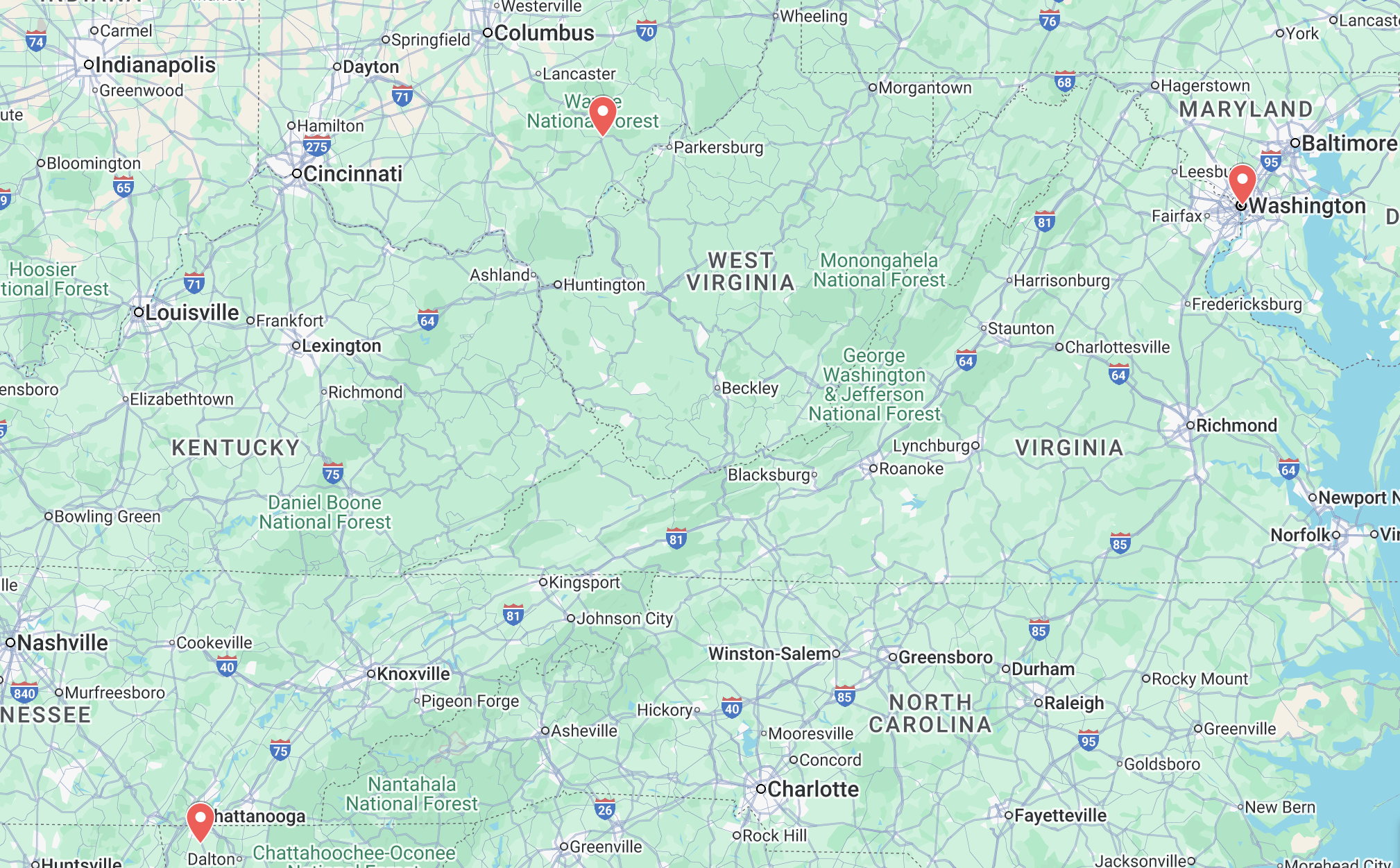
Map showing Athens, OH (top, center), Landon’s home; Chickamauga, GA (bottom), where he was wounded at the Battle of Chickamauga in 1863; and Washington DC (right), where he finished out his service.
Subscribe to learn more about the real people
and historic events behind this story.
The Restless Soul
Bookkeeper, detective, soldier…stowaway? Walter DuBois’s life took some surprising turns.
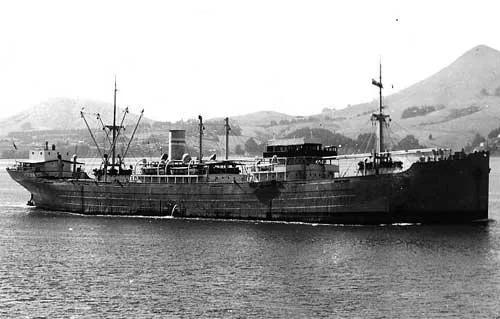
MS Gausdal; photo: warsailors.com
Walter Dubois never knew Nils Nilsen, captain of the MS Gausdal, a Norwegian freighter en route from Venezuela to Cuba. The two did cross paths, however. It was on the morning of June 26th, 1949. The weather was clear with a warm breeze, so Captain Nilsen ordered the hatch coamings to be opened to air out the lower decks. His mood mirrored the weather right up until an agitated crewman informed him he was urgently needed in the hold. He went immediately, of course, and that was when he encountered Walter, or rather, Walter’s body.
Oddly, the only thing found on him was his identification certificate--no money or any other belongings. And after a brief examination, Captain Nilsen concluded that Walter had died from a fractured skull, which raised some questions: Was he robbed and murdered? Or did he fall while trying to stow away? These questions were never answered. After a cursory investigation, Walter was buried at sea. But as you’ll learn, there was much more to Walter’s life than his mysterious, and rather tragic, end.
***
We begin with an ad in the May 8th, 1920 edition of The Caller, the local newspaper of Corpus Christi, Texas: It read:
When you need a cold drink come to the
Uneeda Cold Drink Stand
417 Mesquite St.
(Walter M. DuBois, proprietor)
Now you have to understand just how proud of this ad Walter was. First of all, there was the spelling: You Need A as one word, U-N-E-E-D-A. His mother, Liliana, had objected at first, but he’d talked her into it. Which made him quite pleased with himself, although he hadn’t considered that she was just humoring him as doting mothers sometimes do (especially with their only child). The other thing he was proud of was how impressive it was to be the proprietor of anything at nine years old–okay, almost ten, which Walter was quick to tell anyone who asked his age.
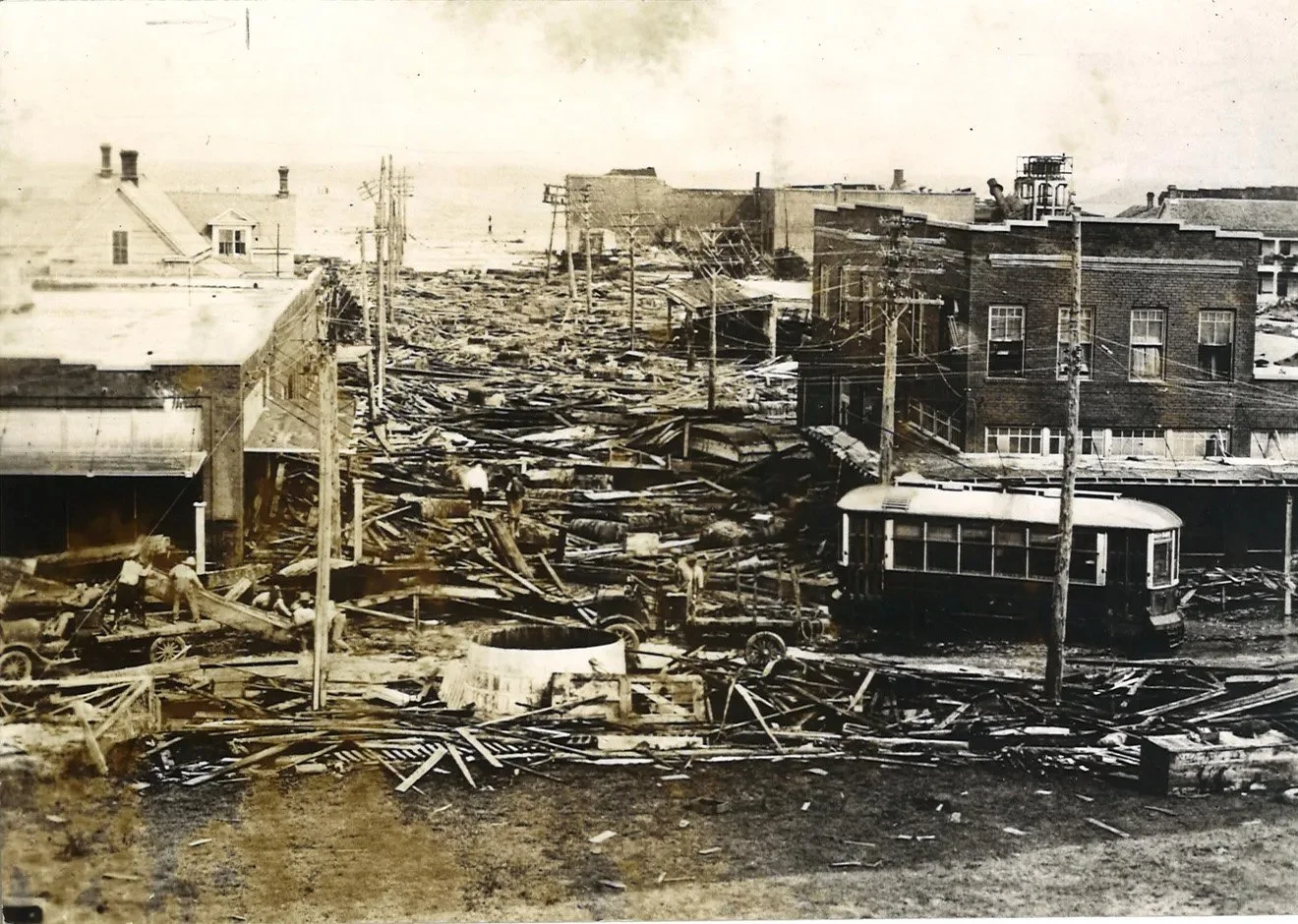
Mesquite Street on September 14, 1919, following the hurricane; photo: Corpus Christi Caller Times
He was sitting in his stand, when he heard a car coming down the road. It was Uncle Al’s Model T. He and Walter’s father, Aaron, were helping out with the rebuilding after a hurricane had hit Corpus Christi the previous fall. They were taking a dinner break, and Walter waved as they pulled into the driveway.
“Hola, Papi, Tio Al!”
Practicing Spanish with Mother was one of the three good things (as far as he was concerned) that had come out of having to stay at home during the flu outbreak. (The papers had called it a pandemic, but Walter didn’t really care. He was just glad it was pretty much over.) Mother said that being able to speak Spanish honored her father, his Grandad Ramon, who’d emigrated from Spain almost fifty years ago.
“Your booth looks really nice,” said Uncle Al.
Walter grinned. “Daddy helped me build it.”
The second good thing about the pandemic was that he’d gotten to help out in Daddy’s workshop.
The front door opened and Mother came out. She gave Daddy a kiss, hugged her brother, and then turned to Walter. “Don’t you have something you want to ask your uncle?”
Walter hesitated. The third good thing about the flu outbreak was that Mother had taught him all about writing. She was delighted that he was good at it, which delighted him, but it also made him desperate not to disappoint her.
Walter saw Mother give Daddy a look.
“Well, go on,” Daddy said and gave him a nudge. “Dinner’s on the table.”
Walter was a bit indignant at being prompted, but knew better than to show it, so he spoke up. “The paper’s having an essay contest for this Liberty Loan thing in July...”
Uncle Al nodded.
“And I was thinkin’ I might write something about the army, but I don’t know much about it. Could I interview you?” Mother had told him to put it just like that, an interview.
A troubled look flashed across Alvaro’s face. He’d gotten back from the Great War more than a year ago, but memories of the trenches and the fighting still haunted him. Walter started to worry the answer would be no, then Uncle Al’s troubled look faded.
“Sure,” he said. “I’d be happy to do that.”
Walter was relieved and elated, but that soon ended as he realized everything he’d have to do over the next few weeks.
His father nudged him again. “Well, what do you say? Go on, time’s a wastin’ young ‘un.”
Walter was sheepish. “Oh, sorry. Gracias, Tio Al!”
***
Walter never thought his essay, “The Benefits of Enlistment in the Army,” would win any prizes. But it did–first prize, in fact, which still amazed him. The best part, though, was that Mother and Daddy (and Uncle Al and Aunt Minnie) were proud of him. Although he had to admit, the $75 prize money was pretty nice too. (By the way, $75 dollars in 1920, would be more than $1,400 in 2025.)
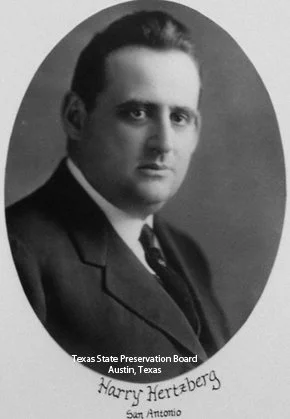
State Senator Harry Hertzberg. Image: By Texas Legislators - http://www.lrl.state.tx.us/mobile/memberDisplay.cfm?memberID=2433, Public Domain, https://commons.wikimedia.org/w/index.php?curid=65345190
And now, he was about to read his essay in San Antonio. It was exciting, but nerve wracking too. And the auditorium was hot and stuffy, so he was sweaty on top of everything else. Before he knew it, though, Senator Hertzberg, who’d recruited him to do the presentation, finished his speech with: “So y’all remember to sign up for a Liberty Loan to keep our great country free!”
Then he turned to Walter and beckoned. “And now, let’s give a warm San Antone welcome to the youngest orator in America, Walter DuBois!”
Walter was nervous as he made his way to the podium. Senator Hertzberg lowered the mic, and Walter stepped up. He found, however, to his utter terror, that he couldn’t remember a single word of his speech. He breathed a sigh of relief, though, when he patted the nifty pocket inside his suit coat and felt the copy he’d put there. (He’d been a bit miffed when Mother had insisted he do so, but now he was very glad she had.) He took it out, unfolded it, and looked out at the audience. There, in the front row, were his parents. Mother smiled and Daddy winked and gave him a thumbs up. And with that, he began speaking.
***
The next eight years flew by with Walter doing all of the normal growing up things, so let’s fast forward to his high school graduation party. He appreciated all the work Mother had done to throw the party, but early on, he whispered to Uncle Al that they needed to talk privately.
They snuck out to the front porch where Uncle Al lit a cigarette.
“Now do I understand correctly that you got a job offer from Gulf Oil, but you want to join the army instead?” He asked, taking a drag.
Walter, who’d started smoking not too long ago, borrowed the matches and lit up as well. “Yessir,” he replied, coughing and blowing smoke from the corner of his mouth.
Alvaro hesitated. He looked like he was fighting some internal battle but said at last: “Take the job with Gulf. It’s in Galveston?”
Walter nodded, surprised and dismayed. He’d thought his uncle would be pleased about him joining the army.
Uncle Al fought another brief internal battle, then went on. “Your dad is sick. He and your mother didn’t want you to know, but I think you should.”
A cold shiver went down Walter’s spine. “Dammit, I shoulda known,” he said clapping a hand on the porch railing. “He’s been havin’ trouble gettin’ around…”
Uncle Al put hand on his shoulder. “They hid it from me too. Don’t kick yourself.” He paused and took another drag. “Anyway, they don’t need to worry about you being in the army, and Galveston is likely closer than wherever the army would send you.”
His tone turned sharp. “And don’t you dare breathe a word of this. Lilly would have my head on a platter if she knew.”
Walter had to agree. Mother’s temper was not to be trifled with.
He paused to let things settle a bit. It was one of those situations where all sorts of feelings and thoughts jumbled against each other. “Do you know what’s wrong?” he asked at last.
Alvaro shook his head. “Not for sure. Sounds like it may be his heart.”
Worry and guilt were at the forefront of Walter’s mind: He still wanted to join the army, no two ways about that, but if the best way to help his folks was to take the job in Galveston, that’s what he’d do.
And so, in August of 1928, Walter started a job as bookkeeper in the Galveston, Texas office of Gulf Oil.
***
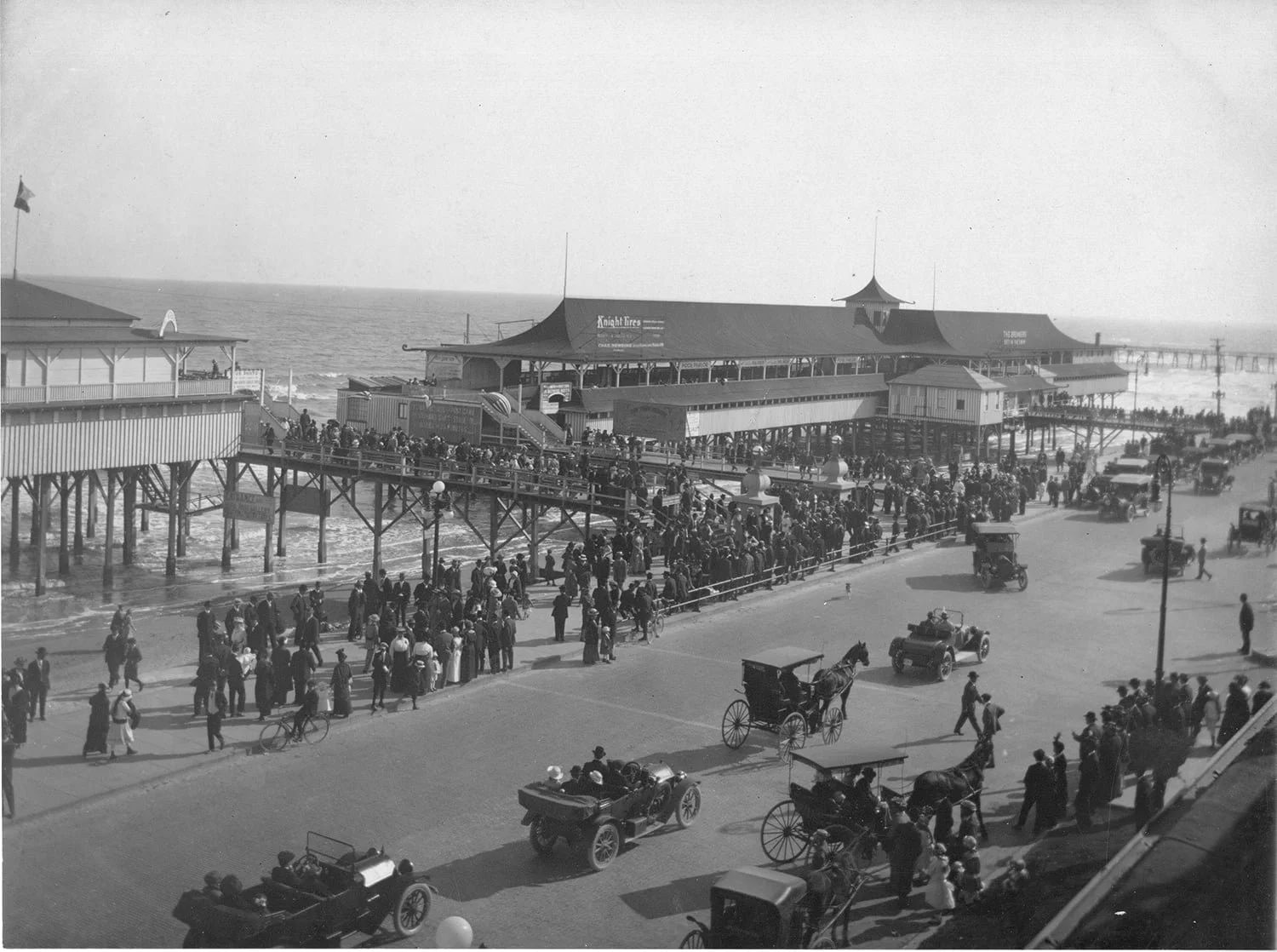
Galveston in the late 1920s; photo: Galveston Historical Society
Another thing you need to know is that Galveston’s nickname at that time was, “Sin City of the Gulf.” And Walter learned quickly that it hit the nail right on the head.
He took a swig of gin and leaned unsteadily against the makeshift bar of his favorite speakeasy. Dad and Uncle Al had warned him about what he’d find in Galveston, and sure enough, they were right. All of the not-so-wholesome opportunities had been a shock… at first. But in the year and a half he’d lived there, Walter’d taken a liking to gambling, even though it’d made for some troublesome debts. And in the same spirit, he’d sampled the offerings at various bordellos and found that they were also to his liking. But tonight, it was just him and a few pals getting drunk.
Afterwards, Walter staggered back to his room at the boarding house and dropped into bed. He was dead to the world until the telephone in the hall rang early the next morning. He winced and groaned and put his pillow over his head, but going back to sleep was not to be. Shortly, there was an equally wince-inducing knock. He got out of bed, noticing he was still in his clothes from last night, and lurched to the door. It was Jake, who rented the room across from him.
“You got a call.”
It was Uncle Al. Dad had died early that morning. The shock brought Walter fully awake. It was far worse than he’d imagined.
“How’s Mother?” he asked.
“About as good as can be expected.”
“Give her my love.” He struggled for words. It felt like he’d been kicked in the stomach, but took a deep breath. “Tell her I’ll be home just as soon as I can.”
“I will. Take care, sobrino.”
“You too. I’ll see y’all soon,” he said and hung up.
Back in his room, he sat on his bed, reeling with a profound sense of loss. He allowed himself some tears. And when they finally stopped, he got cleaned up and went to get a bus ticket home.
***
As you’re probably well aware, funerals are almost always sad, somber affairs, and so it was with the funeral for Aaron DuBois. It was hard for everyone, but I’m sure you also understand it was hardest on Walter’s mother. As a dutiful, loving son, Walter did his best to console her, but it was weeks before she started to get back to normal, and even then, Walter soon realized that “normal” would never be what it had been before Dad died.
He stayed on in Corpus Christi to help out, but that was only partly to support Mother. After the stock market crash last fall, he’d figured his job would be on the chopping block. And sure enough, the axe had fallen. He didn’t say anything about it to Mother, though–she didn’t need any more on her mind.
Little did he know, however, he wasn’t fooling anyone…
“How’s your class going?” Mother asked as they ate dinner after church one Sunday afternoon.
“Pretty good,” Walter said. “You know, I never thought of myself as a teacher, but there it is.” He smiled at her. “And it lets me use all the Spanish you taught me.”
She smiled in return, and they ate in companionable silence for a while.
“I appreciate your staying on to help out after Daddy died,” she said and put down her fork. “But if you’re not going back to Galveston, you need to find something steady here.”
He looked away, clearly ashamed, so she took his hand.
“Now don’t you go feelin’ guilty ‘bout losing your job. It’s nothing you did. This Depression is putting lots of people out of work.”
Walter wasn’t sure he agreed, but was definitely sure that he never should’ve tried to fool her.
“I get a feeling you have something in mind,” he said and was glad to see an old familiar glint in her eyes.
“Just so happens I do. There’s an open spot on the police force, and Mayor Shaffer owes you a favor for those speeches you wrote for his campaign.”
She gave him a sidelong glance. “I could maybe put in a good word too.”
Walter laughed and wondered, not for the first time, just how many connections Mother had in city hall.
“What’ve I always told you?” she asked.
“That it’s good to have friends in high places.”
She nodded. “Yes, indeed. Especially when they owe you favors.”
***
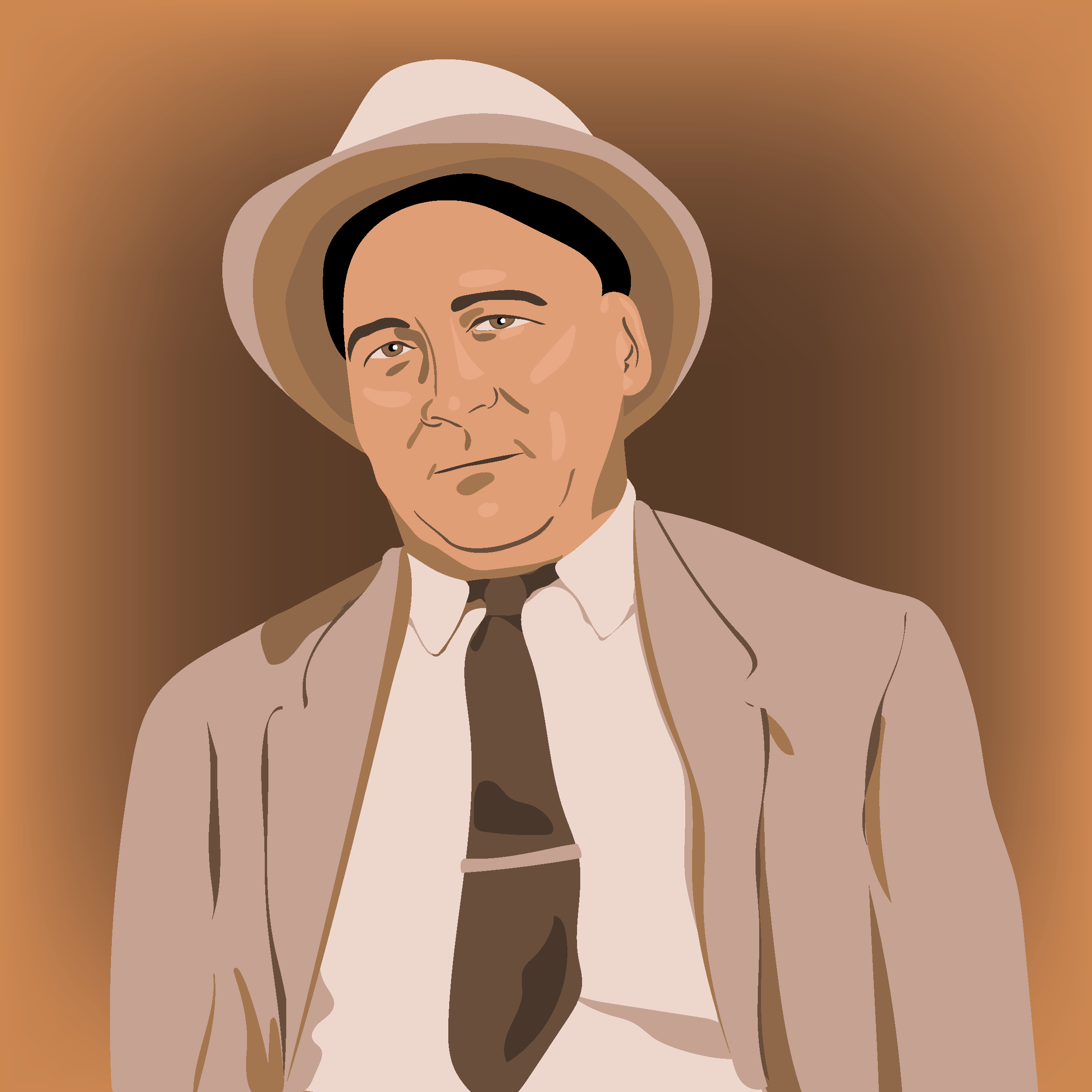
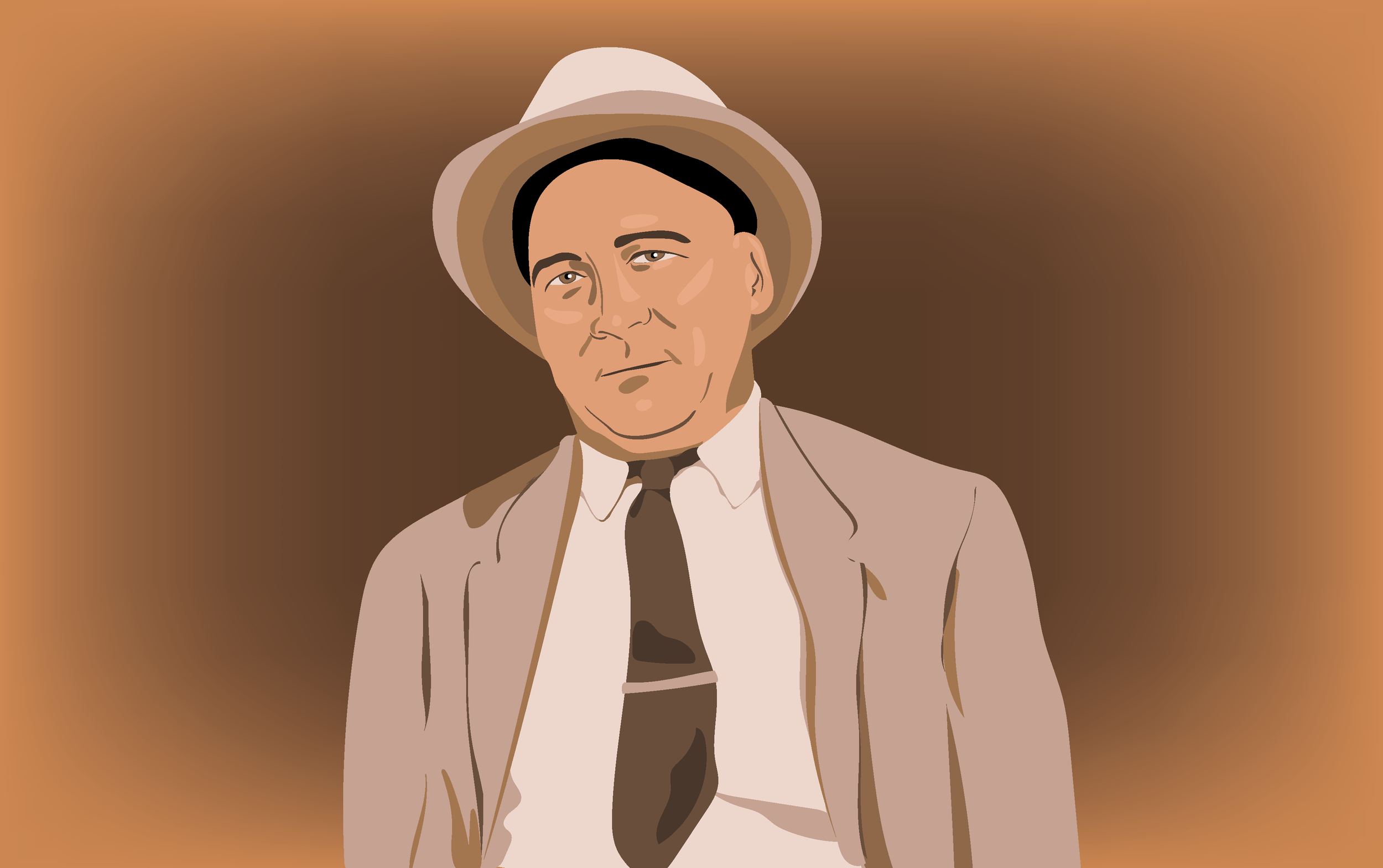
Illustration of Walter DuBois by Charlotte Easterling
Walter, as you might’ve guessed, got the job on the police force, and in less than a year was promoted to detective, which, as it turns out, may have been a bit hasty…
For the first few months, he’d mainly handled thefts and possession busts, but then came his first missing persons case, which ended grimly. He showed up at the scene, a train yard, and tossed his jacket in the back of his car. (Detectives were supposed to wear jackets and ties on duty, but given the sweltering heat of late summer, shirtsleeves would have to do.) He flashed his badge to a uniformed cop keeping a small crowd behind a cordon, and hurried over to another detective near a train car surrounded by firemen.
He recoiled at the strong smell of gasoline and covered his nose.
“Is it the kid, Murph?”
The other detective, older and more grizzled, replied with a grim nod. They watched as two firemen in gas masks lifted a small, still body through the hatch in the top of the tank car. It was a local boy named Billy Smith who’d been reported missing yesterday and had been found just an hour ago.
“Good god,” Walter whispered. “Are we sure it’s an accident?”
Murph nodded again. “Not a sign of anything suspicious.”
Even so, Walter dreaded the thought of writing the report. He tried to focus on the details he’d need to include, but couldn’t take his eyes off that kid’s body being taken away. Then, he realized the next thing he’d have to do would be to pay a visit to Billy’s folks. That thought made his dread even worse, although he hadn’t thought that was possible. The only thing that helped was knowing Murph would be with him.
He spoke to a reporter from The Caller, then looked at Murph and sighed. “I guess we’d better get going.”
Talking to the boy’s parents was just as bad as he’d feared. He felt for them, but there was nothing he could do but tell them Billy hadn’t suffered. (He suspected that was a lie, but it was one he could live with.) He and Murph offered condolences.
Yeah, Walter thought, Lotta good that’ll do…
Afterwards, they quite understandably needed to unwind and headed to a speakeasy typically dominated by cops. Walter immediately slugged back a gin and liked the way it burned going down. It took a bit of the edge off, but the image of that kid, and his folks, kept intruding.
Murph refilled his glass and put a hand on his shoulder. “Today was tough. They’re not usually that bad.”
Walter nodded. He liked being a cop, and he was good at it. But today had shaken him.
One more will smooth things out, he thought and knocked back another gin.
***
Next, we’ll jump ahead to a hot, muggy day in May of 1935. The courthouse where Walter was in a hearing might have had air conditioning. But even if it had, he still would’ve been sweating, as he sat in the witness chair being questioned by the DA.
“I did not hit Chief Mace over the head, as alleged,” Walter said indignantly. “I hit him between the eyes with my fist!”
His lawyer, B. D. Rappaport, one of the most celebrated (and expensive) lawyers in the county, cradled his forehead in his hand. He looked to be in great pain. On the other hand, the DA, Daniel Forsythe, looked immensely pleased.
“I have nothing more, your honor,” he said with a self-satisfied smile.
Judge Westervelt managed to keep a straight face.
“Do you have any questions, Mr. Rappaport?” he asked.
And Mr. Rappaport most certainly did. As he and Walter had discussed, he asked about the events the previous December, just a week after Prohibition ended, when Walter had fired his gun in a bar. Walter said he wasn’t there to cause trouble for anyone–he just needed to track down someone accused of assault.
“So, you were just doing your job. Is that correct?” Rappaport asked.
“Yes, sir,” Walter replied.
“Did you have anything to drink before you fired your gun?”
“Well… yes,” Walter said. “But I wasn’t drunk.”
Rappaport nodded. “And Chief Mace accused you of being drunk on duty? And that’s why you hit him?”
“Yes, sir! He’s always had some grudge against me, ever since I made detective!”
Rappaport gave him a subtle gesture to settle down. “And that’s why you got arrested and fired?”
“Yes, sir,” Walter said, doing his best not to sound resentful.
Rappaport proceeded to admit that Walter had a problem with alcohol, but that his record on the police force (before the bar incident and slugging the chief) was sterling. He followed up with Walter’s other good activities, such as teaching a Spanish class, participating in church fundraisers, and supporting his mother.
“And in conclusion, your honor, he has character references from Mayor William Shaffer and retired State Senator Harry Hertzberg.”
Judge Westervelt looked thoughtful. “Seems like we may have a situation where we can settle this matter without going any further. Do you gentlemen agree?”
Rappaport did. Forsythe, however, looked unhappy, but after a few seconds he nodded reluctantly.
“Looks like you may have a suggestion, Mr. Rappaport,” the judge said. “Care to share it with us?”
“Well, your honor,” Rappaport began. “It’s clear that Mr. DuBois getting fired from the police force has to stand.”
There was unanimous agreement on that point.
“But my suggestion is to drop the charges and send him to a sanitarium for rehabilitation from alcoholism. That way, he can get sober and continue to do good things for the community.”
Forsythe appeared to be weighing his options, but it didn’t take long for him to realize what would be best for his career. Still, he looked like he had a bad taste in his mouth when he said, “Agreed, your honor.”
Judge Westervelt banged his gavel. “So ordered. The charges in this case are dropped. Mr. DuBois, you will report to the Moody Sanitarium in San Antone as soon as arrangements can be made. And best of luck to you, young man.”
***

Ad for Moody Sanitarium; photo: Texas State Historical Association
Anyone who’s been in the hospital for an extended time can sympathize with Walter’s feelings about his time in the sanitarium. And although he was glad not to have to go to trial, and maybe jail, by the time he got out, he doubted whether he’d really gotten off so easy–aversion therapy had been hell. But it had worked. (Even a faint whiff of alcohol would make him sick to his stomach.) So he’d been grateful to get out of the sanitarium and back to Corpus Christi where he could start rebuilding his life.
Now let’s jump ahead to 1939, which also marked a little over 5 years of sobriety and holding down a job.
“Smells great!” he said as he walked into Mother’s kitchen. It wasn’t the one he remembered from childhood, but he’d gotten used to it. There was a glazed cinnamon cake on the counter and he opened the oven where a dish of enchiladas bubbled.
“Mmmm, my favorite.”
“Well, of course,” said Mother giving his arm a squeeze. “What else would I fix for my boy’s 29th?”
Walter patted her hand. Mother selling the old house had been hard, but getting to have the foods he’d grown up with softened the blow. Besides, he knew there was no question that she’d move into Robert’s house when they got married.
Walter realized that was three years ago and shook his head in wonder. He’d been ready to resent Robert, but found he just couldn’t bring himself to dislike the man. He was easy to get along with, and had a good sense of humor, but most importantly, he was good to Mother. She seemed happy again, and that was the main thing.
“Penny for your thoughts,” Mother said.
Walter looked up. “Oh, just thinkin’ ‘bout how time flies.”
“Sure does, but you’ve done a good job getting cleaned up and holding down a job.”
Walter’s smile was rueful. Memories of the sanitarium resurfaced, and yes, he was happy to have a steady job, but he was sick and tired of bookkeeping.
“Somethin’ eatin’ at you?” Mother asked.
Walter hesitated. He had an announcement but had intended to make it after supper. As usual, though, Mother was on to him.
“It’s the war, what with the Japanese, and that Hitler…,” he trailed off, then turned to her. “And I feel like grandad would’ve wanted me to go fight Franco.”
Mother shook her head firmly. “No. He left Spain to get the family away from that kind of trouble. He never would’ve wanted you to get involved.”
Walter was only a bit relieved. The larger problem remained.
“Well, I’m glad to hear that, but still, we’re in this war already; sooner or later it’s gonna be official. And I’ll be better off volunteering.”
Mother sighed. “I suppose you’ve talked this over with your uncle?”
“Yes, ma’am, and he agrees with me.”
“I figured that was the case.” She put her arms around him. “I know you wanted to join up a long time ago.”
That coaxed a small laugh from Walter as he thought: Of course you did.
“Have you signed the papers yet?”
“No, but I will soon.”
She didn’t reply, but hugged him tighter.
***
Walter was quite convinced that the Army was determined to keep him in bookkeeping assignments in hot, humid places for his entire enlistment. He’d done boot camp in Texas, which had gone about as well as boot camp can go. Then, thanks in part to knowing Spanish, he was assigned to an ordnance unit in San Juan, as a clerk–a bookkeeper.
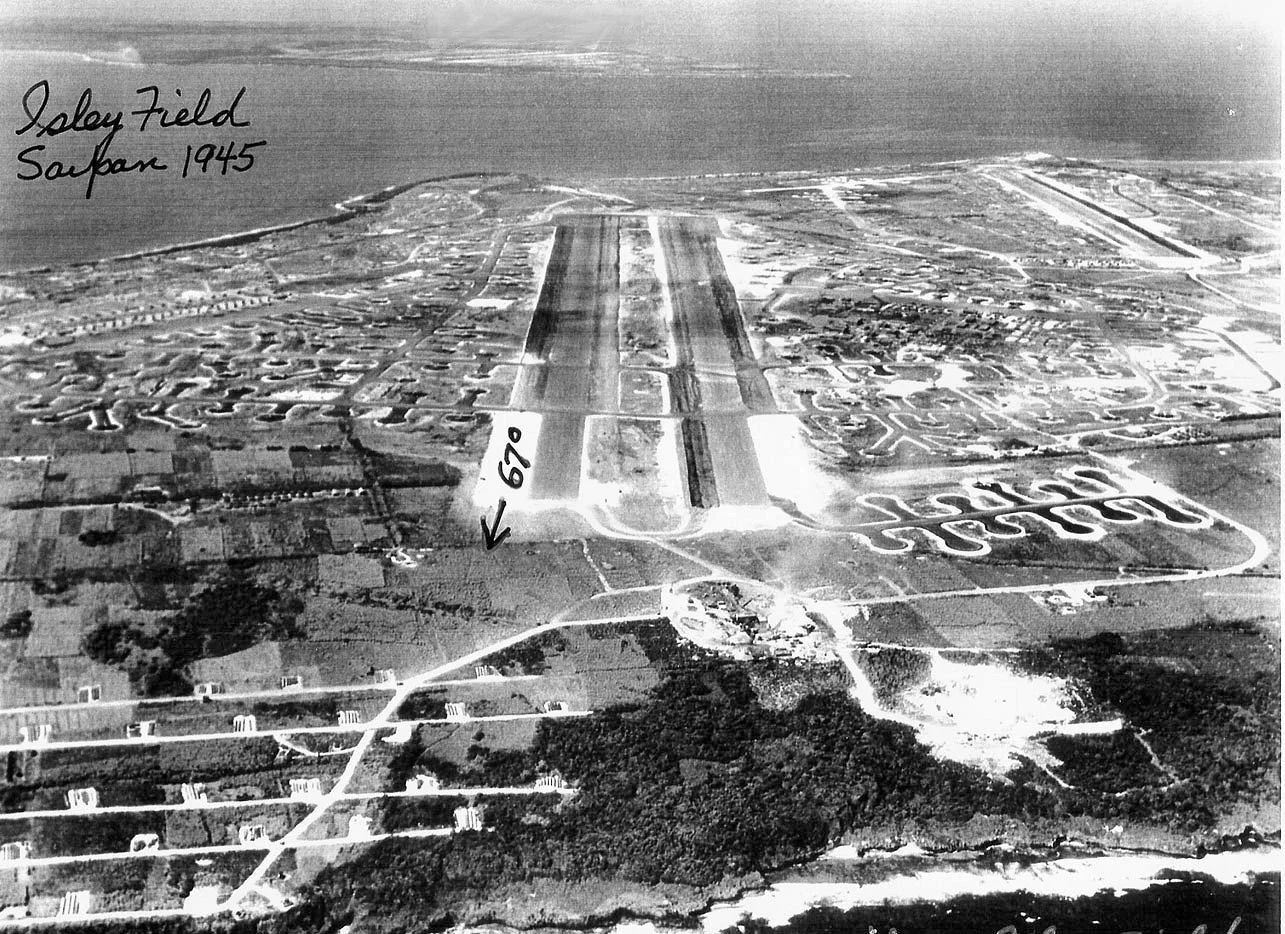
Isley Field, Saipan, 1945; photo: USAAF
This led to being stationed at the B-29 base on Saipan (the Mariana Islands… the tropics) in yet another ordnance unit, as–you guessed it–a clerk. Although by that time, he’d come to grips with the fact that the army was nothing if not ironic. Still, it wasn’t all bad. The transfer included a promotion to sergeant, and the General had given his unit a commendation for their support in the Tokyo bombing campaign called Operation Meetinghouse.
He’d just gotten off duty and was hoping no one else was in the barracks tent so he could take a nap in peace. No such luck. Kowalski, a corporal who bunked next to him, gestured at Walter’s cot.
“Ya got mail, sarge.”
“Yeah. Thanks, Ski. I might’ve missed it.”
Walter picked up the letter and saw it was from his cousin, Jimmy Ellington (a Seabee stationed in Hawaii). He finished reading it, and much to his annoyance, Kowalski (who wasn’t blessed with an overabundance of perceptivity) felt the need to follow up.
“Good news?”
Walter rolled his eyes and muttered something clearly uncharitable. Ski just shrugged and went back to his comic book.
Walter left the tent and stopped to take in all the activity. Meetinghouse had ended in March, but that was four months ago, and the bombing runs hadn’t slowed down much. Something big was up, especially since curiosity was being pointedly discouraged. There were rumors about plans to invade Japan, which worried him, but he didn’t think that’d require quite so much hush-hush.
“I guess we’ll find out eventually,” he said to himself and headed to the mess tent for some chow.
As it turned out, eventually was just a couple of weeks. And what was up was indeed big–very big: the A-Bomb. The news said two Japanese cities Walter hadn’t heard of were completely destroyed in enormous explosions of heat and radiation. He didn’t entirely understand, but he didn’t need to. The war was over! No invasion, just V-J Day and then he was headed home!
***
Walter was honorably discharged and by early 1946 found himself back in Corpus Christi. He was glad to have some time to unwind and reconnect with his family and friends, but as fate would have it, his stay didn’t last much more than a year. Job options were limited mostly to much-hated bookkeeping. And despite his protestations, Mother had launched a well-meaning (but ill-fated) attempt to find him a wife. So, when he’d heard that Gulf Oil had opened a supervisor job in Venezuela, he jumped at the chance.
Hot and humid, again, he thought. But at least it’s not bookkeeping!
And thanks to his army experience, a good record with the company, and fluency in Spanish, he got the job even faster than he’d expected. So it wasn’t long before he was waiting to board his plane. He first gave Aunt Minnie a kiss, then shook hands with Robert and Uncle Al.
“Take care,” said Robert. “Give ‘em hell!”
“Yes, sir, I will.”
Uncle Al pulled him into a hug. “Be careful. Don’t get mixed up in anything dangerous.” His voice broke, but he managed, “And be well, too, sobrino.”
A lump in Walter’s throat kept him from replying, so he simply nodded and smiled.
Then it came to Mother. She wept openly and gave him a kiss on the cheek when he embraced her.
“I sure hate to see you go.”
“I’ll be fine. Like I said, I just need a change of scenery.”
Mother nodded. There was nothing more to say. She’d tried to talk him out of it early on, but after several discussions, she’d finally made peace with his decision. “You take care now, hear?”
“Yes, ma’am. You do the same.”
He kept his arm around her until the boarding call came, then he released her and waved as he headed to his plane.
***
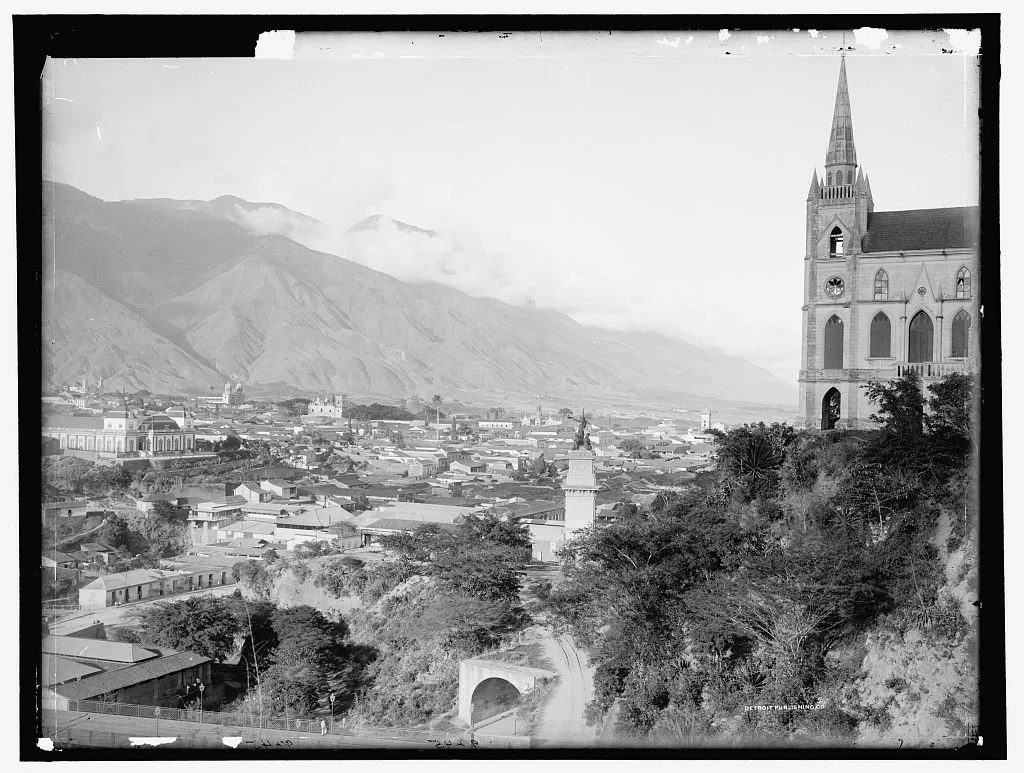
Caracas, c. 1949; photo: Library of Congress, Prints & Photographs Division, Detroit Publishing Company Collection
No one in Venezuela can make a decent glass of tea, Walter thought as he shook his head in disgust and poured sugar into the glass in front of him.
But it was a minor complaint. His job was a definite improvement over his other jobs. And the weather in Caracas wasn’t that different from San Juan and Saipan, so it didn’t bother him too much. What he really liked was the scenery–lots of very old and very new. And his favorite place to sit and watch the comings and goings was a cafe near the seaport. It’d occurred to him that he liked it so much because it reminded him of the port back home. Maybe this is a place I can make life for a while, he thought contentedly.
He sipped his tea, now properly amended, appreciating the coolness in the early evening heat. After a while, he went to wander the docks, avoiding the cargo crews and sailors–they tended to be a rowdy bunch.
Soon, the light was fading. About chow time, he thought and took a shortcut through an alley that led to a diner he liked, and thereby, his meeting with Captain Nilson.
***
Not long after, Robert came down the steps and joined Alvaro in the kitchen. A large cardboard box was open on the table.
“Is she ready?” Alvaro asked.
“Soon,” Robert said. “I’m sure grateful for Minnie’s help. I know Lily is too.”
Alvaro just nodded.
“I was just a friend of the family when Walter’s father died. This seems much harder for her. Stands to reason, I suppose.”
“It is,” Alvaro agreed. “With Aaron, she knew it was coming. She had some time to prepare…”
“And a body to bury,” Robert said.
Alvaro nodded again. “Yes. But it’ll help that there’s a gravestone.”
They continued looking through the box the company had sent. It contained Walter’s possessions: clothes, a few books, some newspapers and magazines and such.
“I wish we could get the police down there to investigate more. It just doesn’t make sense,” said Robert. “You knew him better than I did, but I can’t imagine he would stow away on a ship with just an ID. No money, not even a change of clothes or anything?”
Alvaro shook his head. “I know. Doesn’t make a lick of sense, but they closed the case. Nothing more we can do.”
Robert was hesitant. “Do you think he could’ve been robbed? Killed?”
“Maybe.” Alvaro looked troubled. “We’ll probably never know...” He trailed off when he found Walter’s unfinished letter to his mother. At first, he was unsure whether he should read it but shortly decided to do so. He finished and held his handkerchief to his eyes.
“She should have this,” he said at last, handing the letter to Robert.
“Yes, but after the service.”
They both turned as Lilliana started down the steps with Minnie supporting her. Alvaro went to open the front door, and Robert took her hand at the bottom of the steps.
“You look mighty pretty.”
She managed a wan smile in return and stopped after a few steps. “You know,” she said shakily, “I think he would’ve liked that he was buried at sea. He was always such a restless soul.”
Robert agreed and put his arm around her shoulders as he led her to the car. It was time to say goodbye.
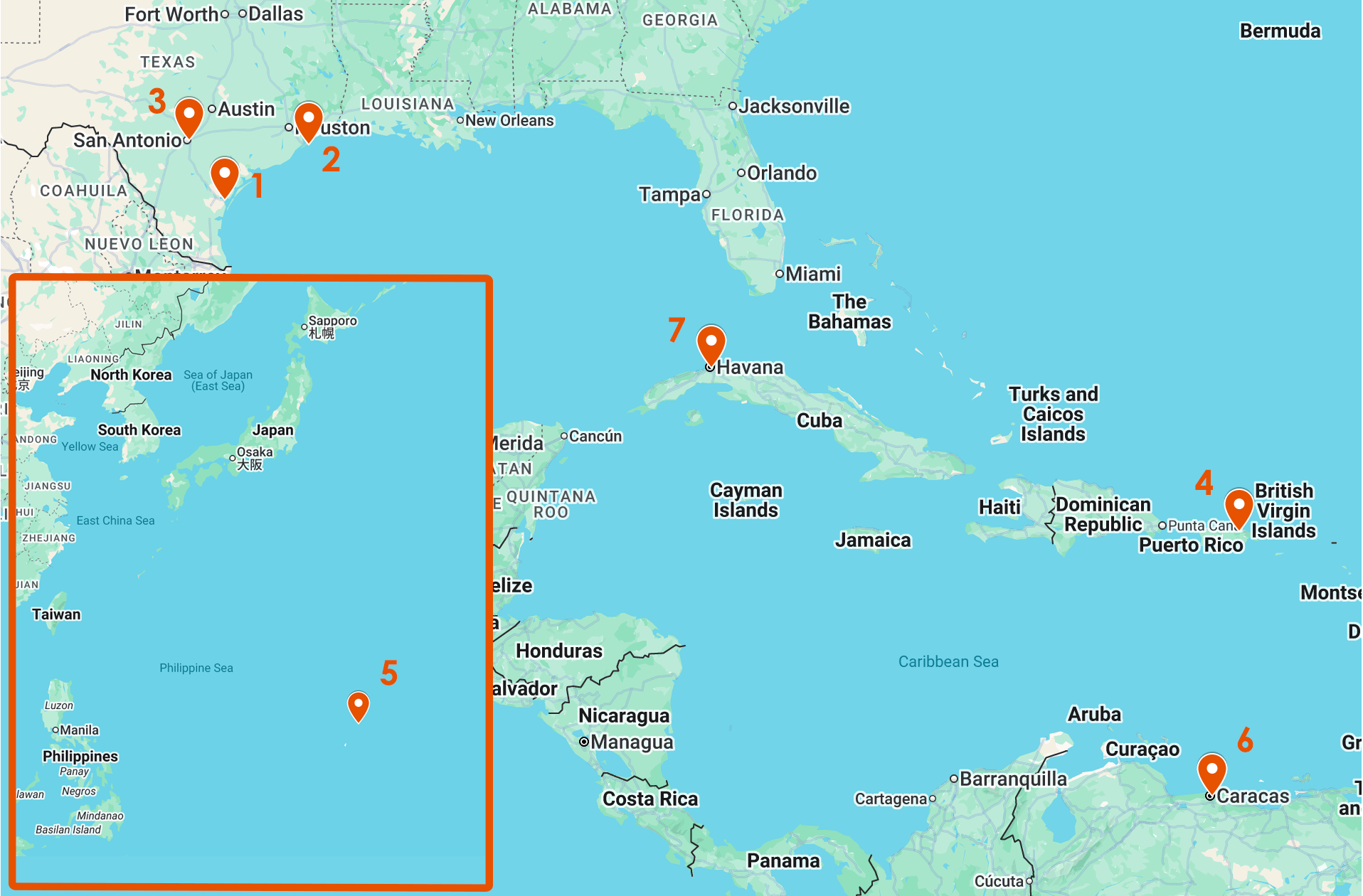
1: Corpus Christi, Texas. 2: Galveston, Texas. 3: San Antonio, Texas (location of the Moody Sanitarium). 4: San Juan, Puerto Rico. 5: Saipan, Mariana Islands. 6: Caracas, Venezuela. 7: Havana, Cuba. The Gausdal was bound for Havana when Walter’s body was disovered. His burial at sea was in the Caribbean.