
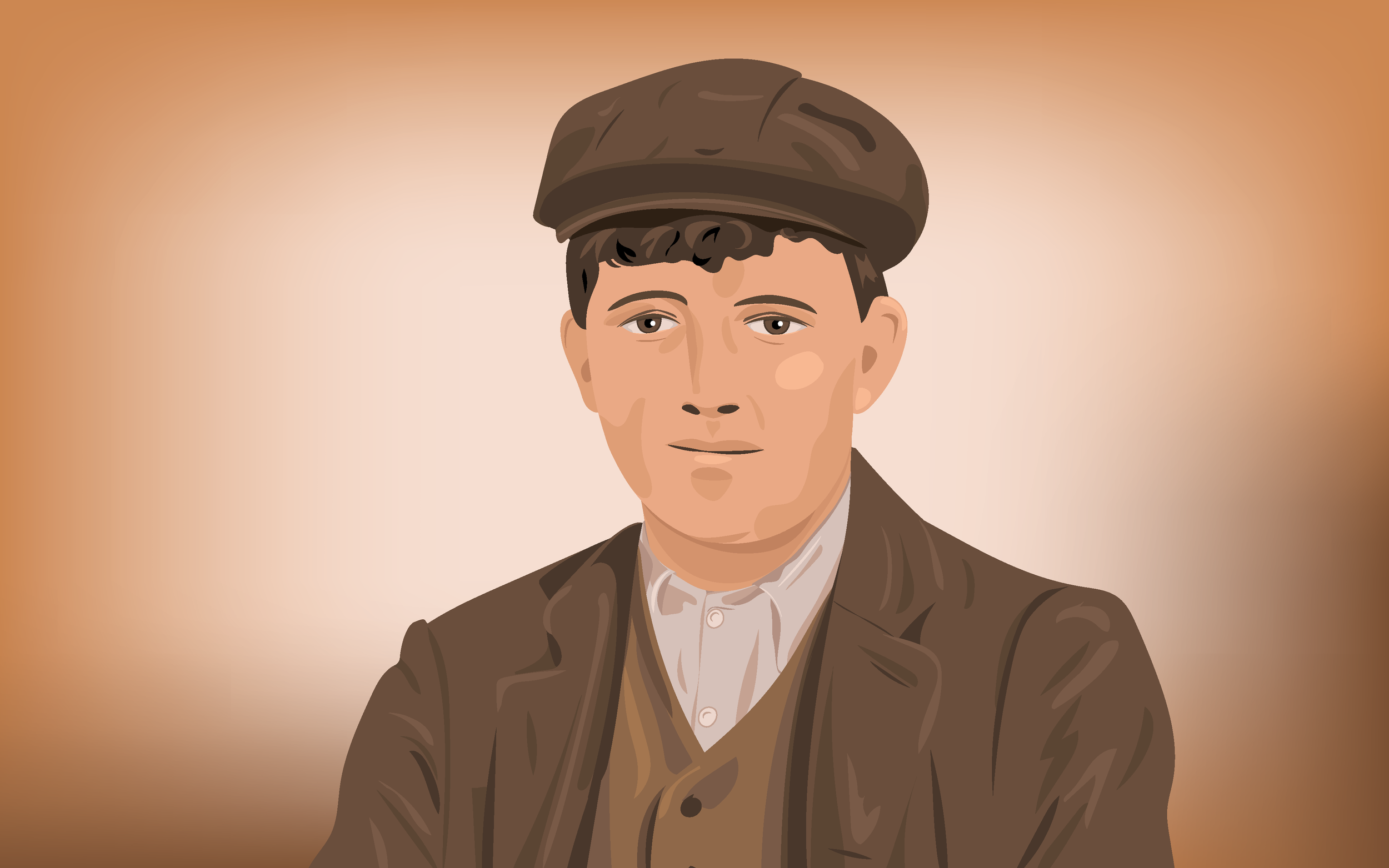
The Werewolf
Jokūbas Mazounas was on his way home from the pub when he had a surprising encounter. This is a subscriber bonus post.
Kaunas, Lithuania, April 1911
Jokūbas Mazounas sat at his favorite table at the pub, beer in hand, and listened to the tales being told by the regulars… again. Even though it was the umpteenth repeat, no one was going to interrupt—partly out of unspoken agreement, partly out of loving those stories.
His friend Algis was weaving his story (entirely fictional, everyone knew) of an encounter with a laumė, a beautiful woodland spirit who had tried to lead him deep into the forest. This story became more elaborate each time he told it, with the laumė becoming more beautiful (and more naked) with each telling.
Jokūbas worked his way to the bar for one more beer before going home. He wasn’t in a hurry. He’d made the decision to go to America and join his older brother, who was now going by the American name of Emil. It was the right decision, but he dreaded breaking the news to his family, especially to his youngest brother, Dari.
He returned to his table with the mug of beer, and Algis came to join him. He was flushed and sweaty, maybe from his animated storytelling, maybe because he was several beers into the evening himself. Probably both.
Another friend, Kostas, stood up from a nearby table (although there really were no tables that weren’t nearby).
“The vilkacis,” he began, and was answered with a mix of jeers and applause. There weren’t any naked forest spirits in this story.
Subscribe to see the rest of this post and
other bonus content from The Relatives.
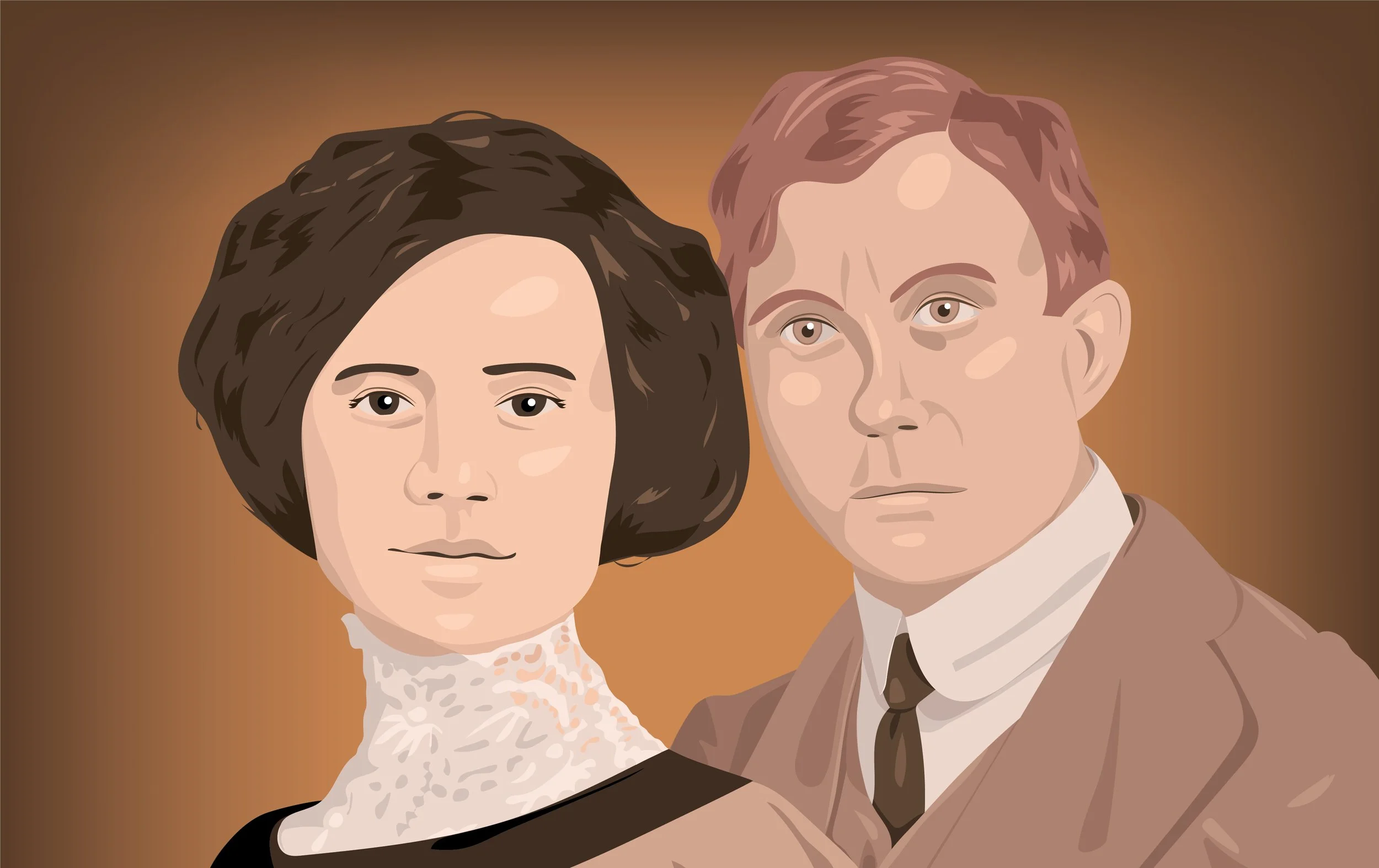
Partnership
Meet two performers who became partners in their careers, their travels, and their lives.
Written by Eric Shipley and Charlotte Easterling
Decatur, Illinois: August 18th, 1913
“My interest in Abraham Lincoln began at an early age,” said Seamus to the audience at the Mattoon Chautauqua that had encamped in Decatur. “And it was largely due to my father, Sean Scully, who was thoroughly impressed by him. In fact, he and my mother, Marian, took me to meet him. I was just three, so my memories of the details are vague… except one.
“According to my parents, I was fidgety and kept humming Camptown Races, which it seems was my favorite song. My father kept hushing me. So much so, my mother had to hush him.” The audience laughed.
“We stood in line for what seemed like forever, but we eventually got to the front, where my view was blocked by a box. It had shiny silver handles that I tried to touch, but Mother pulled my hand away.
“Then my father lifted me up so I could see what, or as it turned out, who, was in the box. Of course, I saw Abraham Lincoln. I was shocked and scared. I’d thought he’d be sitting and talking to people, not lying in a box. He looked so strange: still and pale, eyes closed. I started crying, and Mother took me from Father and carried me away and tried to quiet me.”
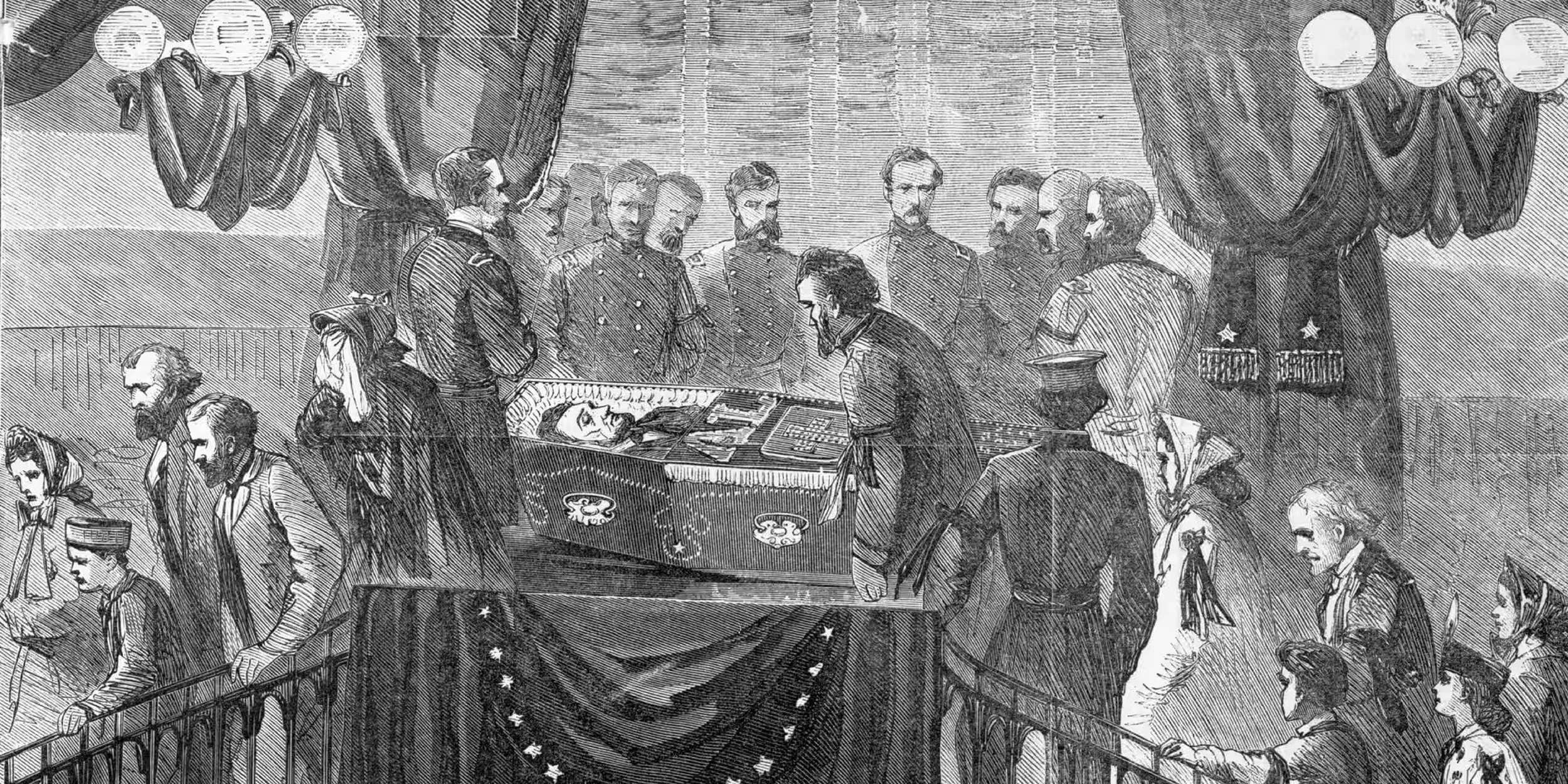
Image from history.com
Seamus could see the audience was rapt (as talented storytellers like him always watched for). He confidently went on with his talk, and when he finished, they applauded loudly.
A good turnout for a hot, muggy evening, he thought
When he got backstage a reporter from the Decatur Daily Herald was waiting to talk with him. (It was nothing new. As one of the managers of the Chautauqua, he often talked with reporters to promote the show.)
After the interview, he went to find Charlie Euler, one of the other managers. Charlie introduced him to some new speakers: first, a woman named Rena Hagerty, and next, a young man whose hand Seamus shook absently.
Charlie cleared his throat to get Seamus’s attention. “You and Rena share an interest in Alfred Lord Tennyson,” he said. “That’s what her first reading will be.” He turned to Rena. “And Seamus is doing a series about the homes of great poets, including Tennyson.”

Chautauqua arena in Shelbyville, Illinois. Photo: shawlocal.com
Charlie went on to tell him that the young man would be speaking about Shakespeare. Seamus nodded politely and offered some encouragement. Then, with a lingering glance at Rena, he walked away and made a mental note to ask Charlie the young man’s name again.
Seamus went to Rena’s reading the next morning. She was a wonderful speaker, and he was delighted that she ended with “Ulysses,” his favorite Tennyson poem. The end, which was especially moving:
“...and tho’,” she quoted, “we are not now that strength which in old days moved earth and heaven, that which we are, we are; one equal temper of heroic hearts, made weak by time and fate, but strong in will to strive, to seek, to find, and not to yield.”
After she took her bow, amid a hearty round of applause, she walked off the stage. Seamus hurried to talk with her.
“That was wonderful,” he said. “I’ve always loved Tennyson.” Then, after an awkward pause, “Would you care to join me for lunch?”
She was surprised and, slightly shy, but accepted. So soon, between bites of food, they were talking about poetry, Seamus’s travels, and the fact that they both graduated from Illinois Wesleyan (although 20 years apart). Rena was a reader at the university, and her studies had focused on English literature. She told him she’d never had an opportunity to travel overseas but hoped to visit Italy some day.
That lunch was the beginning. Before long, they were spending their limited free time exploring the towns where the Chautauqua stopped—historic sites, museums, and libraries lured them away from the tents and stages of the traveling show. They also discovered a shared love of the unknown and unfamiliar. So, perhaps inevitably, they got engaged while they were visiting their families in Bloomington. It was Christmas eve of 1913, and he slipped the ring on her finger while they stood on the stone arch bridge in Miller Park.
The Mediterranean Sea: March 26th, 1914
Seamus put his arm around Rena’s waist as they stood on the deck of the ship, watching the moon over the water as they made their way to Naples. They had been married just over two weeks and had begun their shared life with a voyage to Italy.
“It’s so beautiful,” said Seamus, “an ideal way to honeymoon.”
Rena leaned slightly into him and closed her eyes. In addition to their honeymoon, they had celebrated her 30th birthday on the ship.
Life couldn’t be better, she thought.
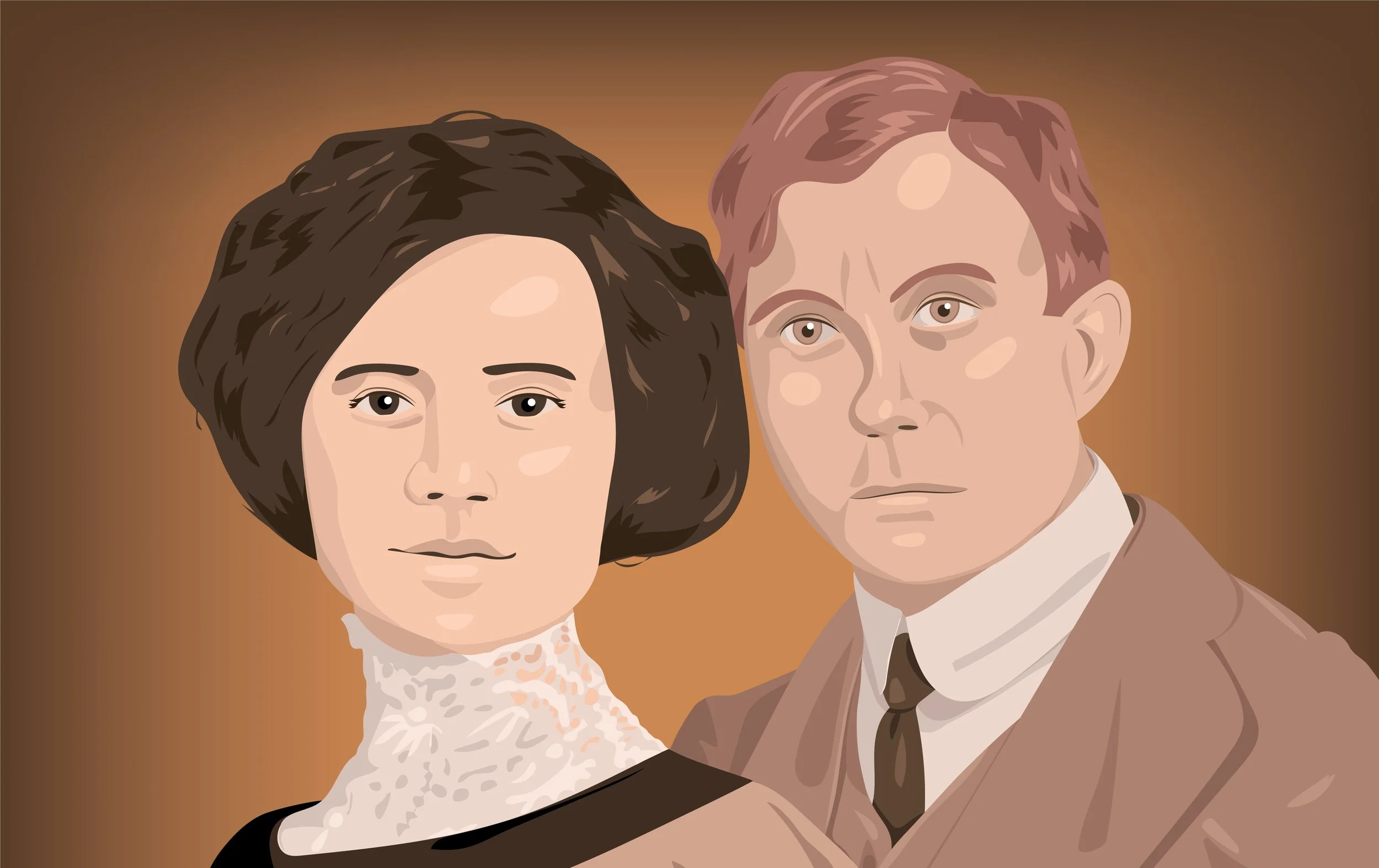
Illustration by Charlotte Easterling
Naples, Italy: March 27th, 1914
“Seamus? What’s wrong?” Rena asked with concern.
Seamus was reading the message the desk clerk had given them when they checked in. He looked stricken and sat down on the bed.
“Darling?” Rena was frightened now.
“My mother died,” he whispered. “She fell and hurt herself on the 15th and passed on the 18th.”
“Oh, Seamus.” Rena sat next to him and took his hand.
“They buried her already,” he said in a choked voice. “It all happened while I was gone.”
Rena stood. “Stay here. I’ll go see about changing our return tickets so we can go home.”
Seamus gently pulled her back. “No. There’s nothing I can do there.” He wiped at his eyes, and they sat giving and receiving comfort.
***
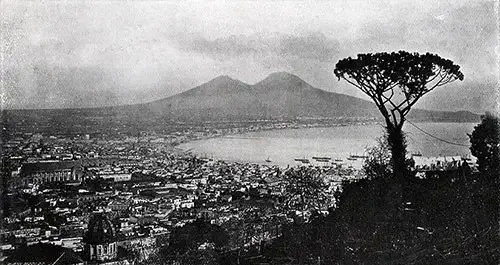
Naples, Italy circa 1906. Photo: GGA Image ID # 1766ff04b6
Despite the sad pall cast by the death of Seamus’s mother, Marian, they spent the rest of their honeymoon as planned. Their shared love of exploring and history and art led them to Pompeii, Rome, Venice, and Florence. They got to see Michelangelo’s David, the Coliseum, several Bernini sculptures, Botticelli’s The Birth of Venus, and a host of other art, architecture, and sculpture. Seamus found, somewhat to his surprise, that it did much to alleviate his grief.
All too soon, they were standing arm in arm at the railing of the liner taking them home.
“In spite of everything, sweetheart, it was a wonderful honeymoon and adventure,” Seamus said and got a lingering kiss in return.
Decatur, Illinois, 1919
Over the next five years, Seamus and Rena continued with the Chautauqua but also spoke and read at places like churches and YMCAs. And they continued traveling, visiting England, Ireland, and Quebec. But their shared travels were about to end, at least for a while.
In 1919, Rena’s niece Sadie wrote to ask if they could take in her daughter, Anna. Her husband had died in the flu epidemic and Sadie had gotten very sick as well. She needed to go stay with her parents to recuperate and didn’t want to uproot her daughter. Naturally, they agreed, and Anna came to live with them in October. She was eight years old.
Taking care of the girl changed their lives. They weren’t able to travel together, so Rena stayed home with her. She delighted in reading to the girl and buying her books.
“Rena, your sister is going to need a truck to get Anna home if you keep buying all of these for her,” Seamus told her one evening, picking up a copy of “Little Women” from a stack.
Rena laughed. “I know, but she loves reading and I want to encourage it.”
Seamus had to agree. He’d noticed that Anna always had a book with her, and he had even seen her giving a reading to some of her dolls once.
“Do you miss being on the road and doing your readings?” he asked Rena one time.
She nodded, and felt her eyes prickle with tears. She missed the Chautauqua and the time it gave her with Seamus. Taking care of Anna had been a joy, but she was also eager to return to the life they had built.
Seamus sat next to her and put his arms around her. He had to admit that he didn’t enjoy the Chautauqua as much without her and was finding it more tiring. At 58, the busy schedule of travel, performance, promotion, and management was less appealing than it had been when he was younger.
Decatur, Illinois: April, 1921
Rena’s sister returned and collected Anna as soon as she was able. Rena hugged the girl she had grown so fond of while Seamus loaded the car with Anna’s belongings. He gave Anna a goodbye hug too, and Rena gave her a parting gift of “Rilla of Ingleside,” the most recent book in the Anne of Green Gables series. They waved as Sadie and Anna drove off. They both felt a mixture of sadness and relief.
They stood, arm in arm, until the car was out of sight. They both sighed, but before long, Seamus asked, “How do you feel about Paris this September?”
She laughed and hugged him.
“I’ll take that as a yes,” he said and stole a kiss.
1921-1929
They continued with the Chautauqua, although Seamus shifted most of the management responsibilities to Charlie. He and Rena focused on doing their readings, exploring the towns on the circuit, and planning their travels in the off season.

Los Angeles in 1929. Image: losangelespast.blogspot.com
This came to an end, however, in 1929 when Seamus developed a bad cough that turned out to be tuberculosis. The doctor suggested a drier climate to aid in his recovery, so they moved to Los Angeles. But not to be deterred, as soon as Seamus had recovered enough to be out and about, they started attending lectures, visiting museums, seeing movies (a new, pleasant diversion), and traveling up and down the California coast. They even ventured far enough to see the Grand Canyon in Arizona and the cliff dwellings in the Four Corners region.
On the train back home, Seamus took her hand. “Thanks for being my partner on all of our adventures.”
Rena smiled and leaned into him. “I can’t think of a better way to spend my life.”
They huddled together for a poignant moment, then Seamus kissed her hand and said, “You do know we have quite a problem.”
Rena sat up, worried, “What’s that?”
“We have to figure out where to go next.”
And with that, they started planning their next adventure.
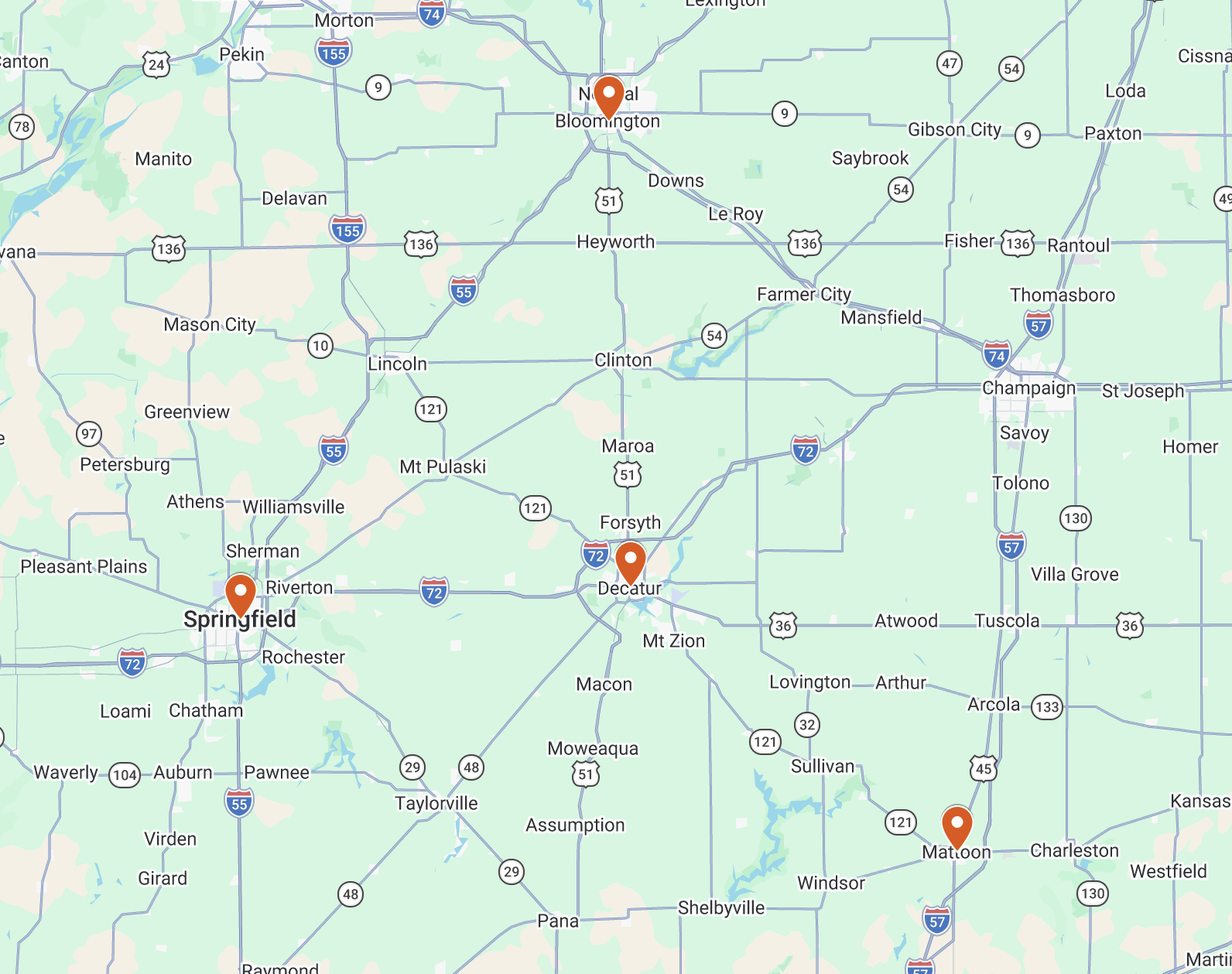
Bloomington (top), Springfield (left), Decatur (center), and Mattoon (right), Illinois. Map: Google maps.
Subscribe to learn more about the real people
and historic events behind this story.
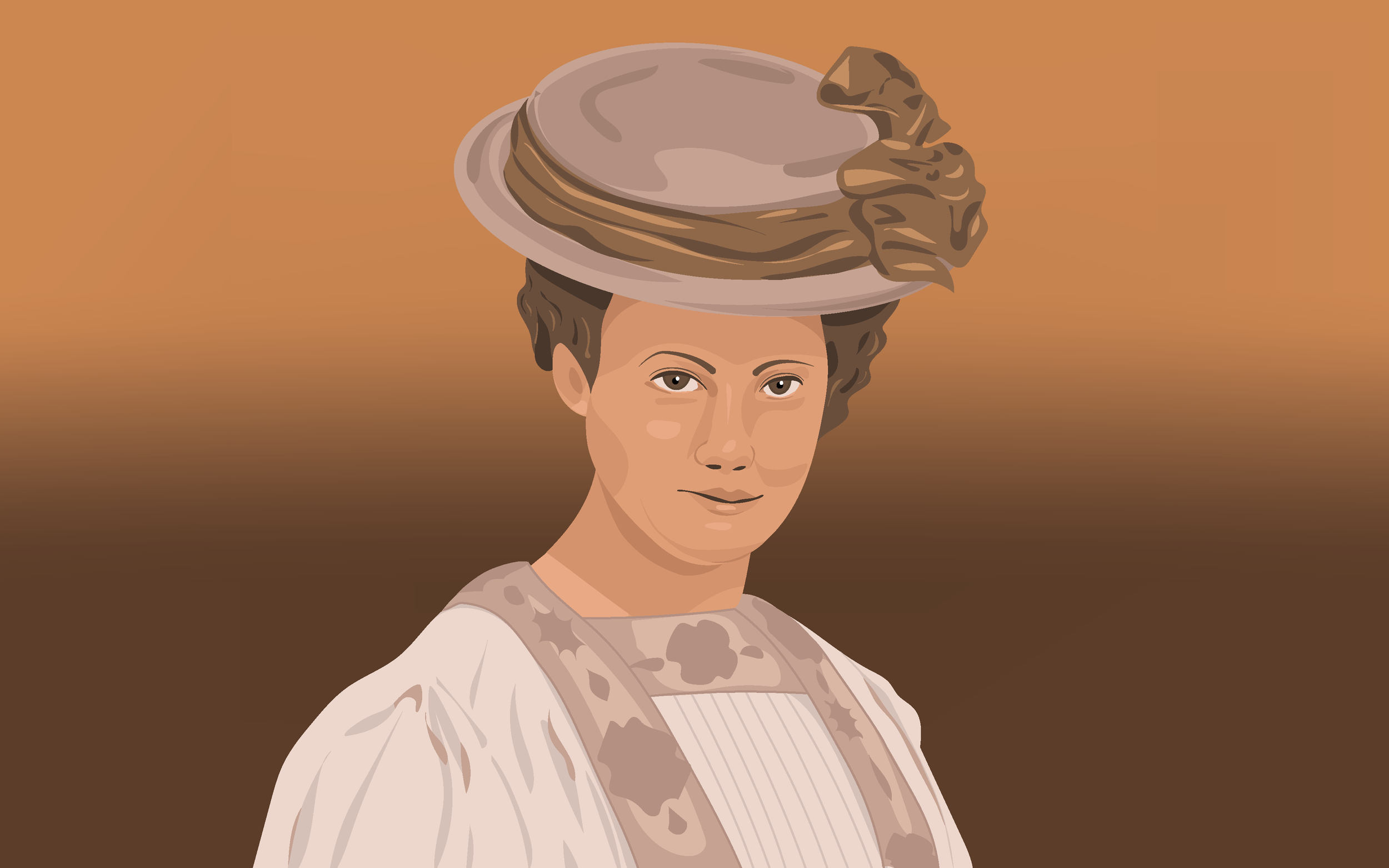
A Good Day
A day in the life of Alice Madigan, a business woman, political activist, and animal lover. This is a subcriber bonus post.
Brainerd, Minnesota, August 1906:
Alice Madigan sighed as she pushed the last hat pin in place and gave herself a quick once-over in the mirror. She could hear raised voices coming from the back room. Auntie Clara and cousin Ellen were arguing again. She knew it was just part of the head butting that came with running a family business (Greninger’s Millinery and Dress Making). It was still exhausting at times.
Her mother, Rosie, came out of the back room, shaking her head.
Once again, the peace-maker, Alice thought.
Rosie saw her and smiled. “You’re off, then? Good luck!”
Alice felt a little drop in her stomach but tried not to let it show. “Yes, thank you. And I’ll just go home after, so I’ll see you there.”
Subscribe to see the rest of this post and
other bonus content from The Relatives.
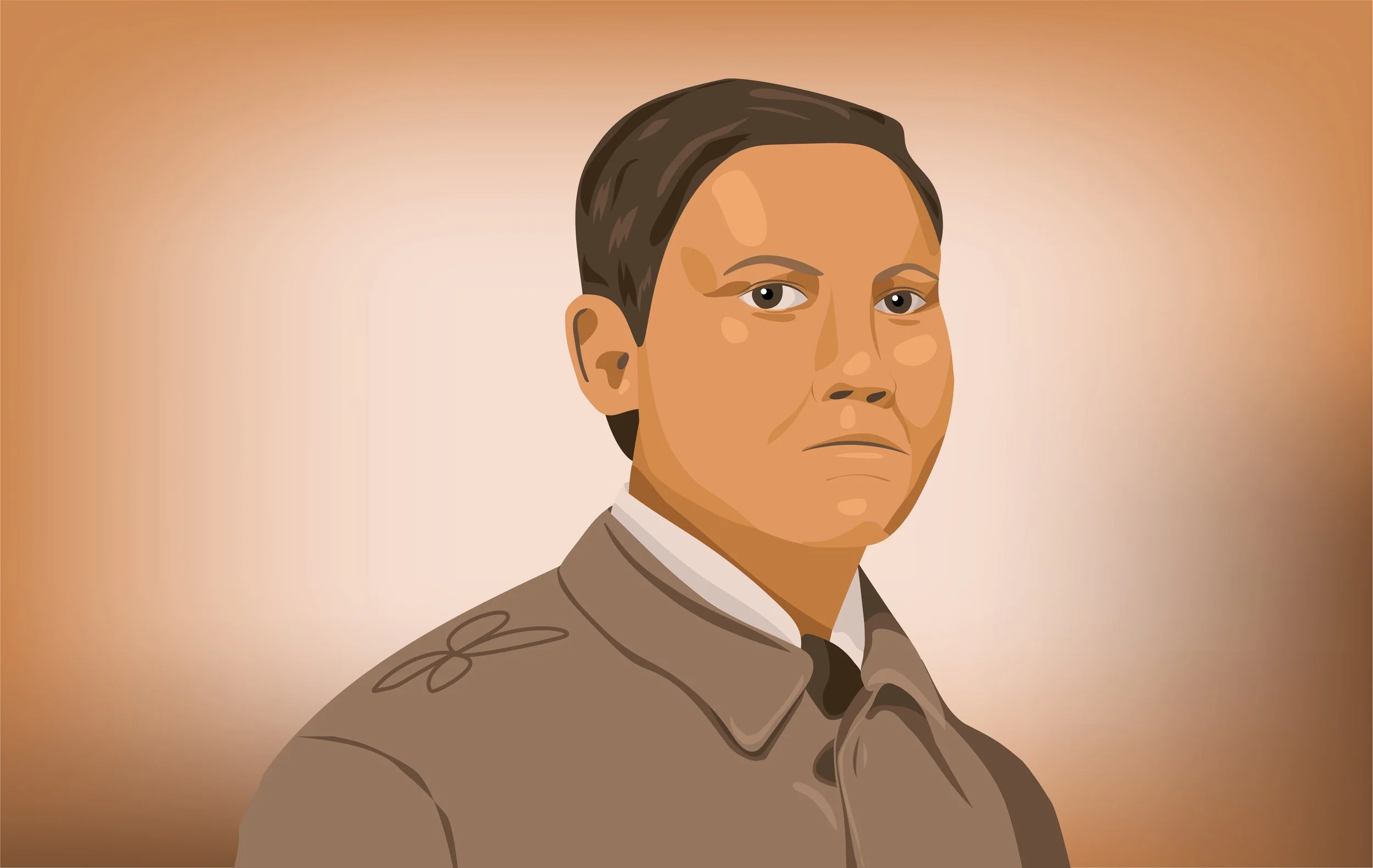
Carlisle
Deer Foot was 18 when he was sent to Carlise Indian School, far from his home in South Dakota.
Written by Charlotte Easterling and Eric Shipley
Pine Ridge Indian Reservation: September 1886
“You are eighteen winters, now,” Deer Foot’s Até said, sizing up his son (who wasn’t especially tall but carried strength on his lean frame and intelligence in his dark eyes). “You are a man, so I will speak to you as a man. You will have to go east to the school of the wasichu.”
Deer Foot knew Até was referring to the Carlisle Indian Industrial School in the state called Pennsylvania. Many children from the reservation had been sent there already, including his older sister, Crane Woman, who had gone four years ago when she was his age. So he wasn’t entirely surprised, but it was still distressing. It was the end of any hope that he might be a warrior.
“The wasichu have said we will lose our pay and food if you don’t go,” Até continued. “There is barely enough to live on as it is.”
Deer Foot was stoic, as was expected of an Oglala man. “I understand.”
Até nodded and clapped him on the shoulder, then walked away to leave Deer Foot to his thoughts.
The name the white men at Carlisle had given Crane Woman was Emma He Bear.They’d received reports that she was doing well and was learning, but all the news came through letters the Black Robes translated. It left him feeling apprehensive about what to expect so far from home.
Pine Ridge Indian Reservation: October 5th, 1886
Deer Foot’s Iná gave him the new shirt and moccasins she’d been beading so he would look his best for his journey, then his younger sisters gave him small gifts that he tucked into his bag along with the food he was taking.
Até handed him a knife. “Let your strength carry you where you need to go.”
Deer Foot took courage from those words and squeezed the medicine bag that hung under his shirt. He was determined to make his family proud.
Carlisle, Pennsylvania: October 10th, 1886
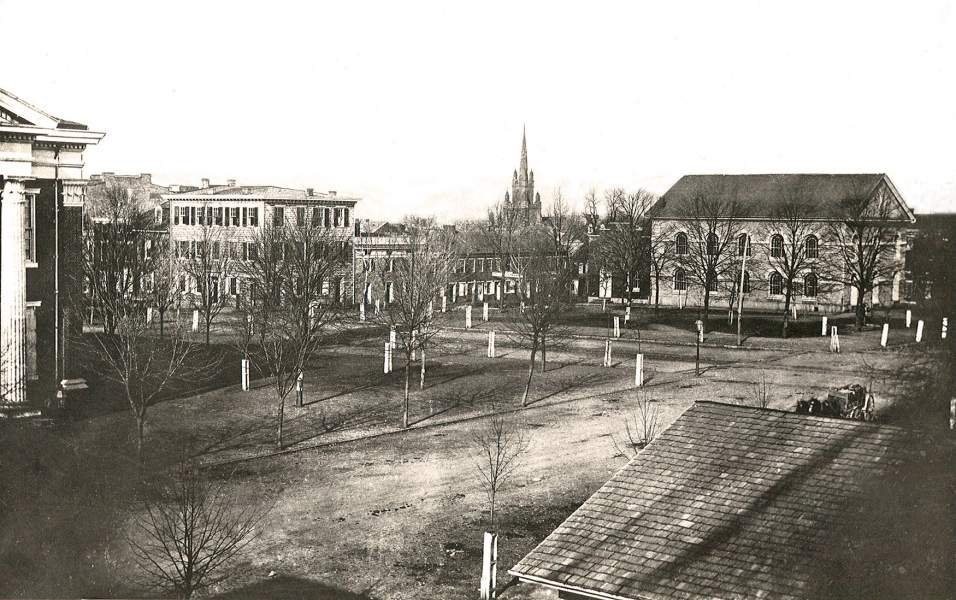
The trip on the wasichu train had been hard, especially for the little ones. Deer Foot had done his best to comfort them, by telling stories and pointing to things outside the windows. He was afraid he hadn't helped much, but it was all he could think to do. And as they pulled into Carlisle and saw the crowds of white people, he had a sinking feeling that things were soon going to get worse.
He and the other students were led through town as they walked to the school. The white families who lived in Carlisle had gathered to watch as if it were some kind of bizarre parade. Adults and children waved and called to them as they walked by. The youngest child from the train, a boy they called Mouse, grabbed Deer Foot’s hand and clung to him until Deer Foot picked him up and carried him.
“Don’t pay attention to the wasichu,” he whispered, as much for himself as for Mouse.
***
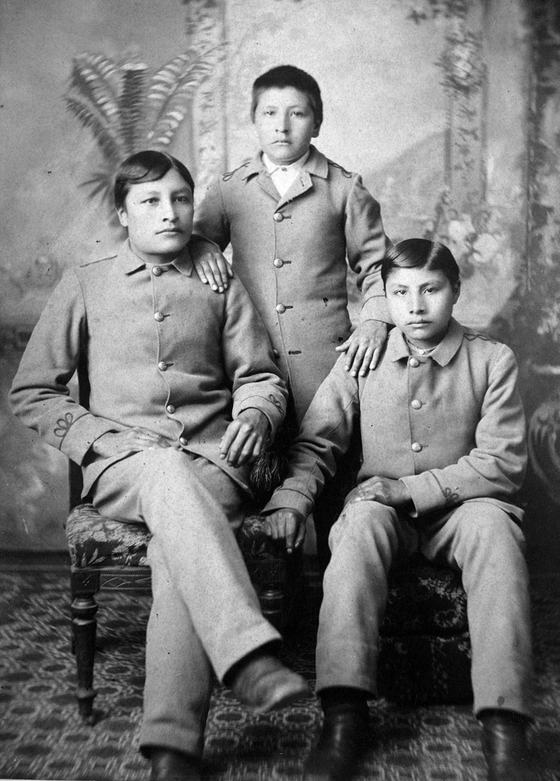
Carlisle uniforms; photo: Smithsonian Institution, National Anthropological Archives
Once they arrived at the school, the boys and girls were quickly separated from each other and led away. Deer Foot spoke a bit of English, but not enough to understand everything he was being told. Some of the children who spoke more English interpreted, but the whole process was rushed and confusing.
One of the white men handed Deer Foot a stack of clothing (that he would come to know as the Carlisle uniform) and gestured for him to put them on. He did, and the clothes he’d been wearing, including his fine new shirt and moccasins, were taken away. He tried to keep his medicine bag tucked inside his new clothes, but the man who was watching him yanked it off his neck and threw it onto the pile with the other possessions he’d taken. Deer Foot never saw any of his belongings again—not the presents from Iná and his sisters, and not the knife Até had given him.
His new clothes were horribly uncomfortable, tight, itchy, and stiff. The underclothes were made of flannel and were a misery. Even worse were the boots. They pinched and rubbed his feet painfully and made it hard to walk.
One of the other boys leaned toward Deer Foot.
“These boots were made for dainty white feet,” he whispered.
Deer Foot snickered and whispered back, “But they make those dainty wasichu feet so noisy when they walk. They couldn’t sneak up on anything.”
The wasichu watching them overheard and ran over. He hit them with a stick he was carrying and barked: “Be quiet! There’ll be no more of that heathen savage talk!”
Deer Foot was stunned; no one had ever spoken to him or treated him that way. He and the other boy exchanged a look of shock then stood quietly, faces to the front.
***
After changing clothes, they were taken into a room and seated in chairs, where they had their hair cut off. The younger boys cried, believing that someone in their family had died since that was the only reason they knew of to cut off a person’s hair. Deer Foot was again stunned, seeing his braids falling away.
Now I look like I have wasichu hair, he thought mournfully but said nothing.
Finally, they were told through the interpreters to choose English names. Deer Foot didn’t understand, so the interpreter told him that they just wanted him to point at a name. He did so, and after a brief back-and-forth, he was given a sign to hang around his neck. The interpreter told him it was his new name: Matthew He Bear.
Summer 1887
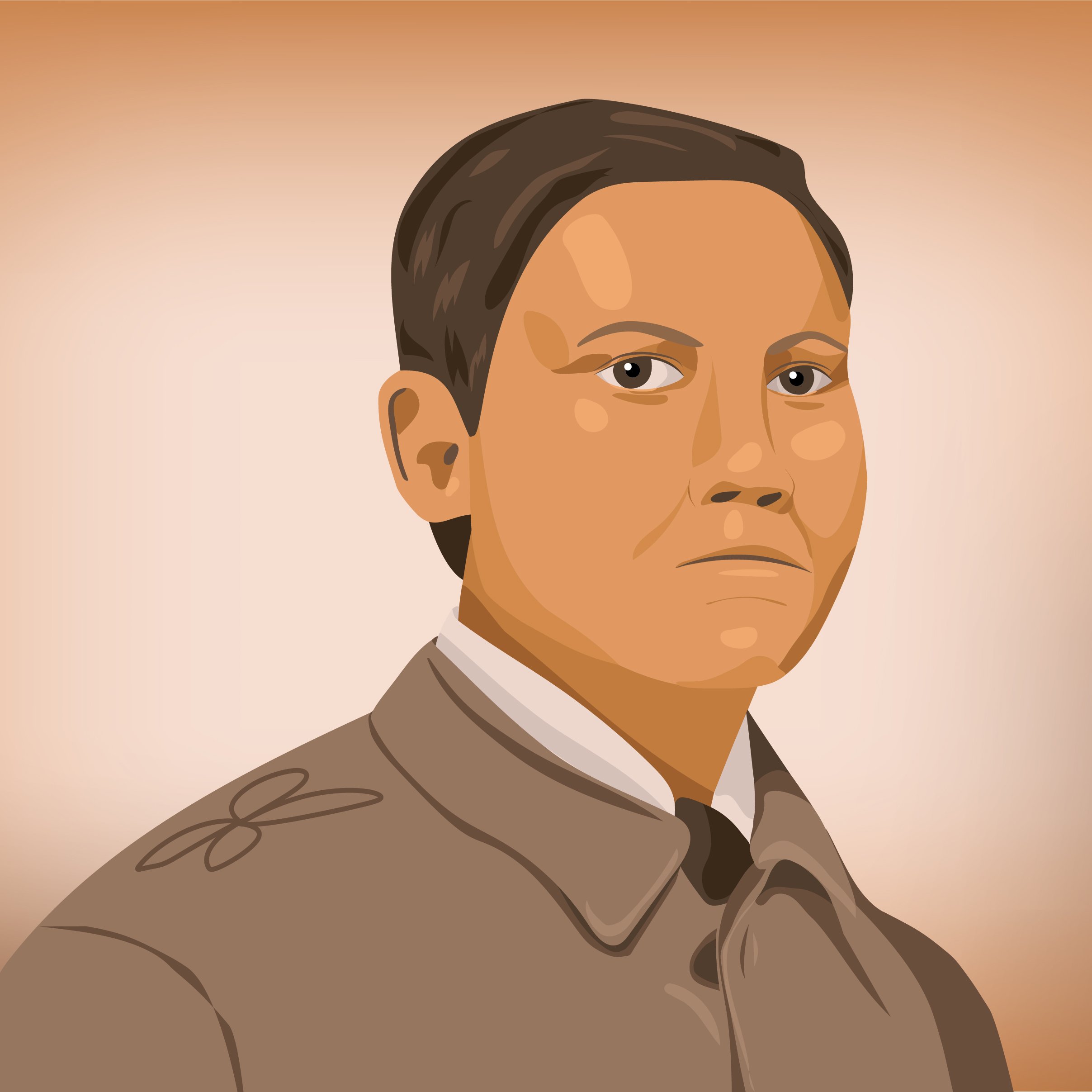
Illustration by Charlotte Easterling
Life at Carlisle didn’t get easier in the ensuing months. Matthew accepted his new name, recognizing that he wasn’t the same person he’d been when he arrived. He learned to speak and write English well enough to get by, and he figured out how to stay out of trouble, mostly, in order to avoid beatings and other punishments like having to spend the night alone in the guardhouse or not getting a meal. (Which might not be such a bad thing; wasichu food didn’t taste good and often upset his stomach—too much bread, not enough meat. Not enough of what Iná had made.)
It was all horrific, but being disciplined with a cane or fist or whip was still especially shocking. It was utterly foreign to the way Oglala parents reared their children. Even more shocking was seeing those beatings inflicted on small children, like Mouse. Matthew had tried to intervene once but had been so viciously whipped he’d collapsed. The bruises had taken weeks to fade, and he still had at least one scar. Afterwards, the wasichu policy of forbidding students from comforting anyone who’d been punished was even more strictly enforced, as was making older students dole out punishments. And they quickly learned that they couldn’t let the teachers see any signs of mercy. If they did, the student who was supposed to inflict the beating would get one as well.
The harshness was traumatizing, so not surprisingly, students ran away frequently. They were usually caught and brought back, but it became a badge of honor to have run, even if they didn’t get far. Some who ran never came back.
Because they made it home? Matthew wondered. Or because they died?
When he thought about that, he was especially aware of the idea of running away that lingered at the back of his mind.
Spring 1888
The weather was starting to turn warmer when Matthew was sent on his first outing. Percy Swinnerton had a large farm near the tiny community of Edgewood, Pennsylvania. Matthew was told he would spend the next seven months on that farm, learning a trade and living in a white household. None of that interested him in the slightest, but he supposed it would be bearable.
“You won’t be sleeping in the house,” said Mr. Swinnerton when Matthew arrived. “I made you a place in the barn. I have daughters, so you understand.”
But Matthew didn’t understand at all. He’d been raised to treat women and girls with respect. He saw, however, that it would be perilous to protest, so all he said was, “Yes, sir.”
***
It wasn’t long before he discovered that his teachers had lied about what his outing would be. It had little to do with learning and assimilating but very much to do with chores: plowing, feeding the animals, exercising the horses, and anything else Mr. Swinnerton told him to do. And in reality, Matthew liked moving around and being outside much better than sitting in the stuffy classrooms at Carlisle. But if he didn’t do the work to Swinnerton’s satisfaction, it would lead to a slap on the head or sometimes a whipping. If he was really displeased, Matthew would get little food for one or more meals.
Sunday was the only time he was allowed to be around the family (most notably the three Swinnerton sisters whom Matthew found neither interesting nor attractive). They would go to church, all dressed in their finest (which for Matthew was his Carlisle uniform), and Mr. Swinnerton would proudly show him off to the other white folk at the church. Inevitably, he’d be asked (or more accurately told) to recite a bible passage, and he would reluctantly oblige. This earned him a condescending pat on the shoulder and a “Good lad!” from Swinnerton. He was also allowed to have dinner with the family on Sundays. The food was better than any he’d had at Carlisle, but he still didn’t like it.
I’d give anything to taste one of Iná’s stews, he often thought.
Each Sunday still ended just like every other day, with him going back to his bedroll in the barn. He’d lie awake in the darkness until exhaustion overcame him. More and more he’d dream of home and his family, and Até’s parting words.
Let your strength carry you where you need to go.
The Swinnerton farm: October 3rd, 1888
Matthew was running barefoot across the plains when a herd of antelope began to overtake him. They surrounded him, pressing so close that he was lifted off the ground and carried along. He was terrified that he’d be trampled, but the antelope whispered to him.
Run with us.
So he did. Even though his feet didn’t touch the ground, he felt his legs become as powerful as those of the animals around him…
He woke up, sprawled on his bedroll, then stumbled to his feet and realized that his dream meant it was time to run. Away. Back home. Before they could send him back to Carlisle.
It was still dark outside, so Matthew quietly gathered his blanket and canteen and the bit of food left from dinner. Then he went to the rack of tools and selected an axe and a blade. It wasn’t as good as the knife Até had given him, but it would do. Last, he went to the horse stalls. He knew each animal, and they liked him as much as he liked them. But he was especially fond of Admiral, a roan stallion. He stroked the horse’s neck affectionately. (The thought of Swinnerton’s outrage at finding Admiral gone made him smile.) “Come on, my friend.”
They made their way to the barn door. Matthew opened it and they walked through. No hesitation, no regret, and no looking back.
My strength will carry me home, he thought.
And it did.
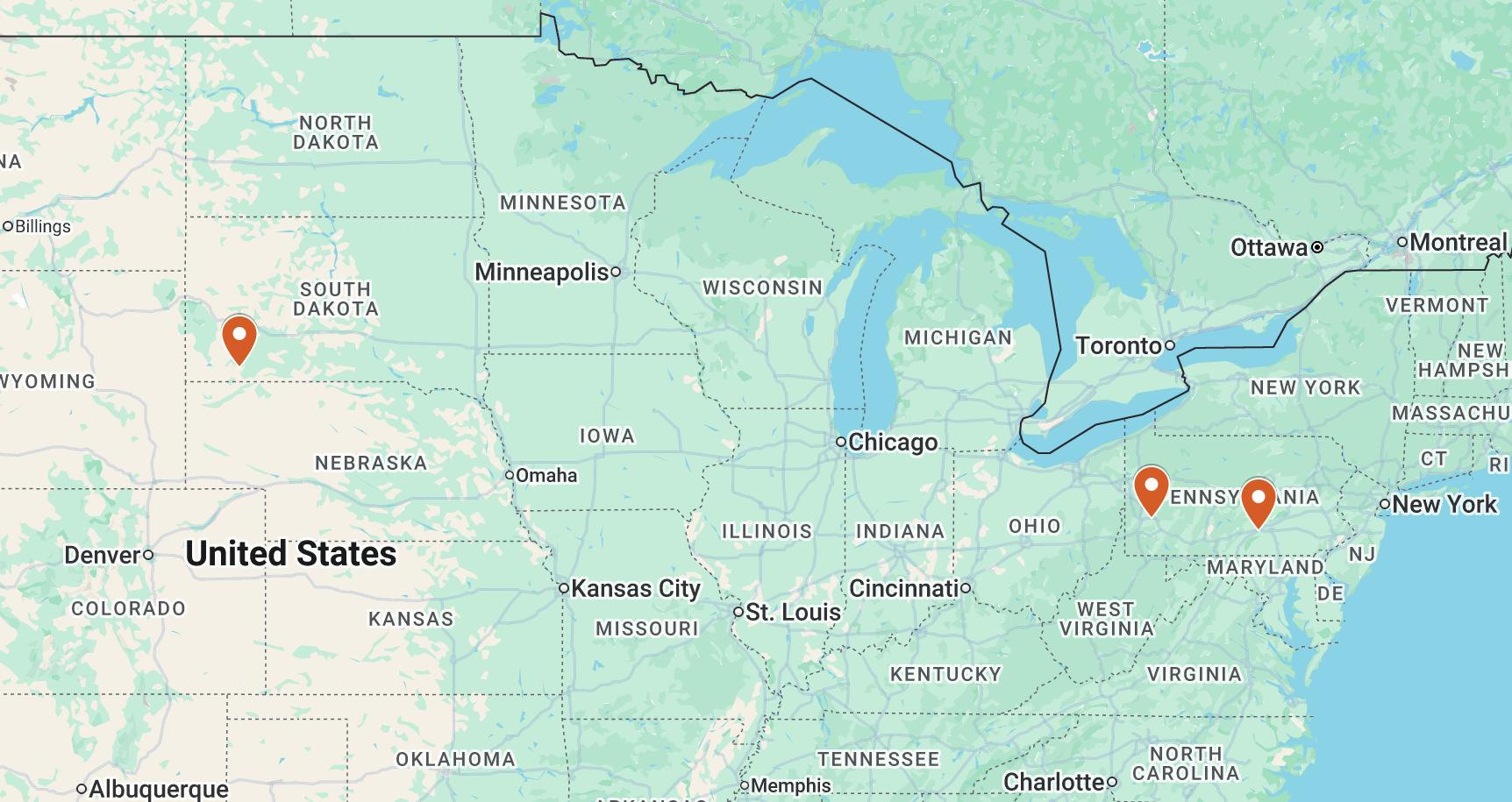
From left to right: Pine Ridge, South Dakota; Edgewood, Pennsylvania; and Carlisle, Pennsylvania. Map: Google Maps
Subscribe to learn more about the real people
and historic events behind this story.
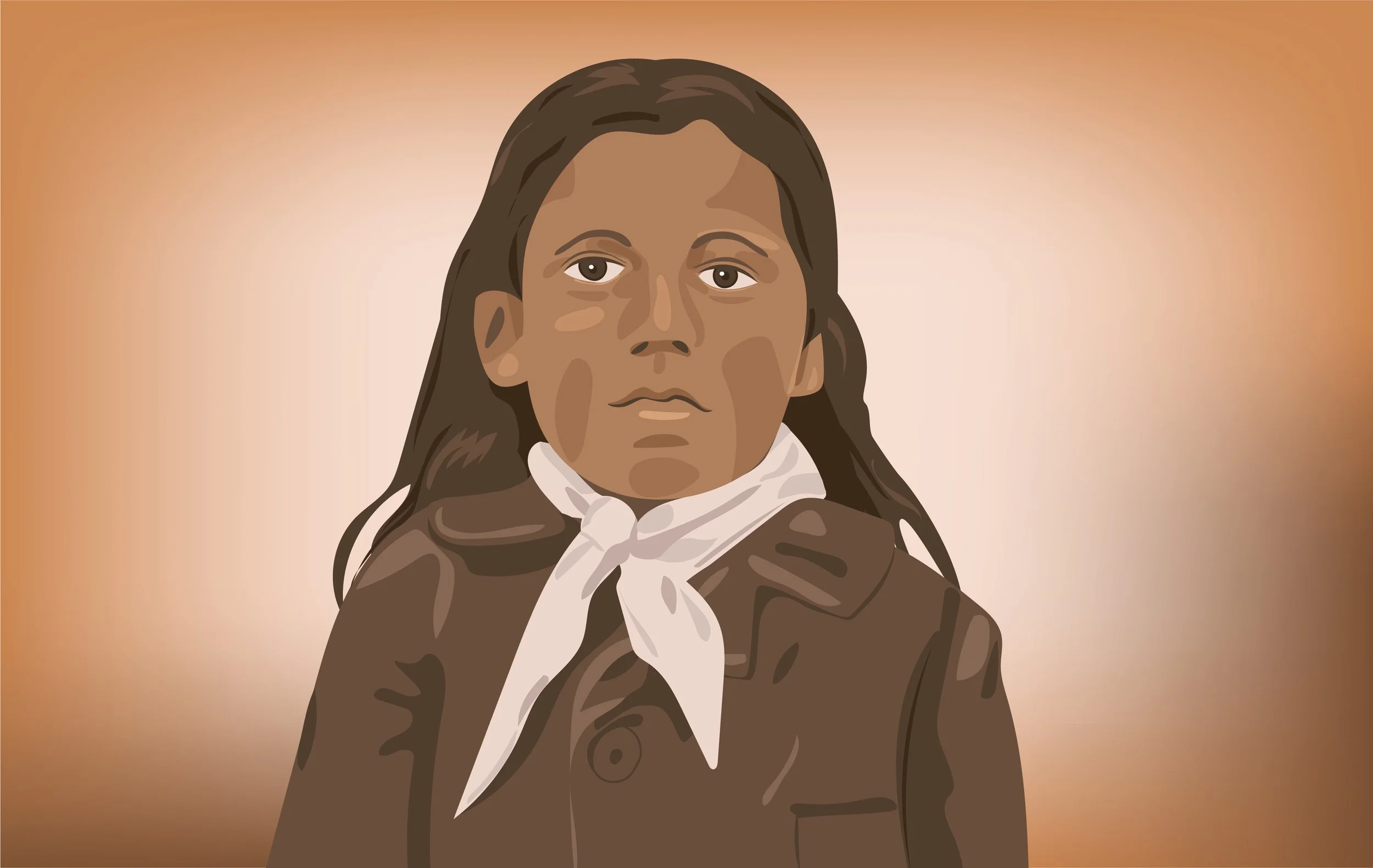
Little Bee Lost
A day spent playing and exploring turned into a life-altering moment for a young Lakota boy. This is a subscriber bonus story.
Little Bee sat in the shade of a small, scrubby tree. He had been playing with his bow and arrow, but the late summer heat had tired him. He spied a grasshopper on the tree’s trunk and gently coaxed it into his cupped hands. He shivered when the strange, prickly feet touched his palm. He loved all things small and crawly.
He was approaching his fifth winter and knew that he would need to start learning about being a warrior. He wasn’t afraid, but he would miss the time he was able to spend studying beetles and ants and all the jumping, flying, scurrying things that the adults didn’t seem to notice.
He glanced over to where his mother and three aunties were picking chokecherries. He had gotten far away from them while he was playing, but he could still see them, and he could hear their voices as they sang, talked, and laughed. Reassured, he slowly opened his hands so he could look at the grasshopper.
He was so focused on his find that he didn’t notice the white people until they were coming very close to him. Little Bee gasped, and the grasshopper jumped away, disappearing into the tall grass.
Subscribe to see the rest of this post and
other bonus content from The Relatives.
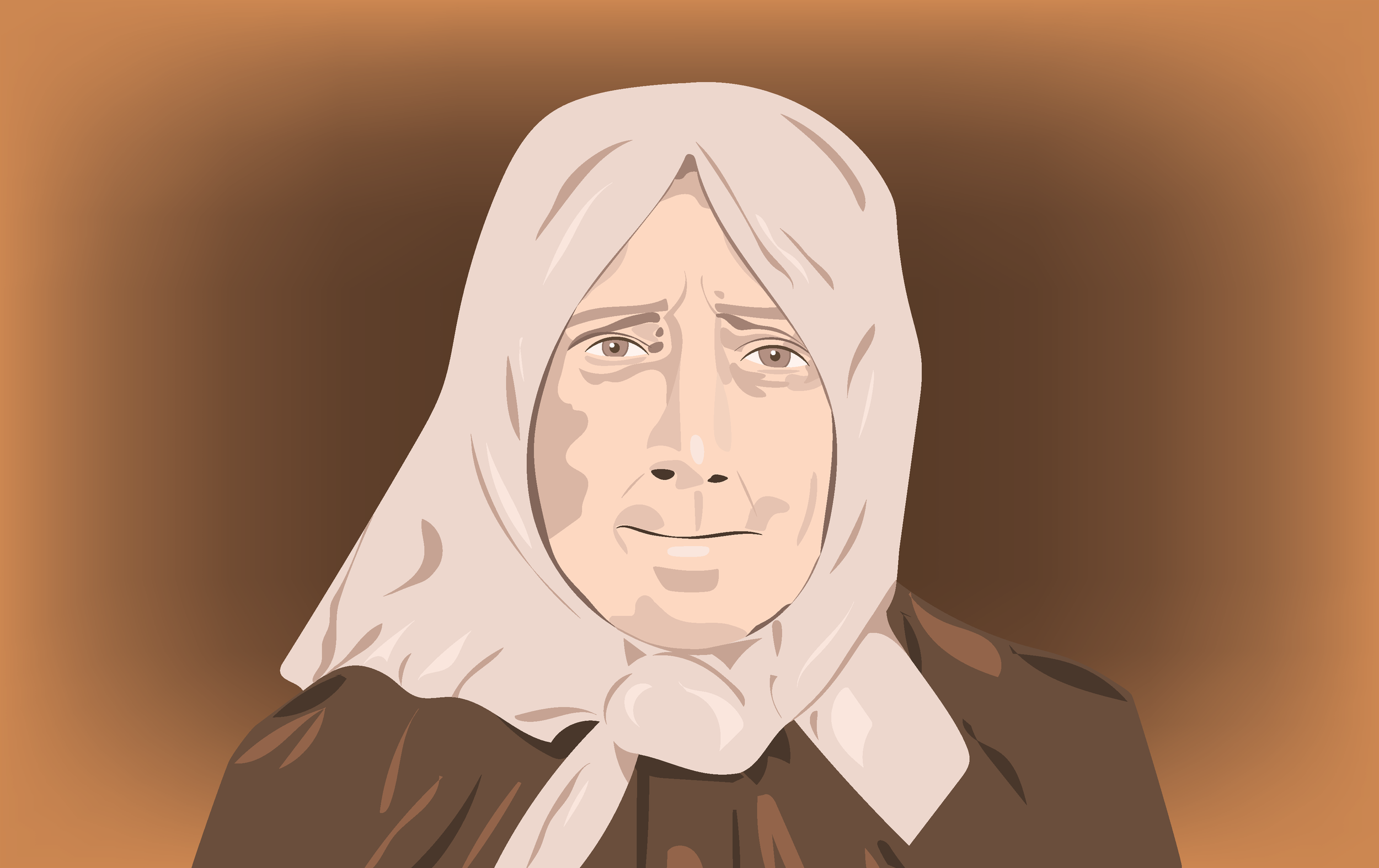
An Acadian Tragedy
Elyse Hilaire and her family were among the thousands of Acadians who were deported from Canada. Their story had a uniquely tragic end.
Written by Eric Shipley and Charlotte Easterling
The Minas Basin headed north: January 1764
“What’s wrong, Mamie?” Yves asked when he saw his grandmother, Elyse Hilaire, with a strange look.
She stood at the ship’s stern and didn’t reply immediately. Then she looked down at him fondly and put a hand on his head.
“Just thinking some long thoughts, mon cher.”

Grand-Pré today, photo: novascotia.ca
Grand-Pre was fading into the distance. Soon, it wouldn’t be visible. Robert, her oldest son, appeared beside her. (He and Marie, his wife, had come aft to see how she was doing.) He put an arm around her thin shoulders, at which she patted his hand.
“We’re going to be all right, Maman,” he murmured, laying his head against her white hair. “Thinking about Papa?”
“Oui.”
Robert saw how tightly her lips were pressed together and how her face was even more deeply lined than just a few months ago.
Such heartbreak, he thought. Such anger… but she’s earned it.
“I’ll never visit his grave again,” Elyse went on. “All thanks to the damned British!”
Being expelled had reopened some very old wounds. Henri, her husband, had died almost thirty years ago. He had joined a group of other Acadian farmers and a handful of warriors from the local Mi’kmaq tribe whom she’d distrusted at first. Now. though…
Good people, she thought. Staunch allies and friends.
Henri’s group had been guarding a parcel of farmland when the British raiders attacked. Henri had been killed along with one of the Mi’kmaq. For Elyse, the memory was vivid. The Mi’kmaq leader, Jean Baptiste (the French name he’d taken), had given her the news:
Many British struck with no warning. Henri fought bravely. I saw him kill one of their soldiers, but then he was cut down. You can be proud; I was honored to do battle alongside him.
She’d appreciated the words, but they’d done nothing to lessen her terrible loss and grief. Over time, but not quickly, her grief had retreated only to be replaced by deep resentment and rage.
She pounded her fist against the gunwale. She was proud that she and her family had refused to bend knee and swear allegiance to the English king, but they’d paid dearly for their defiance. After Great Britain had taken over Acadia, the damned British troops had continued their attacks and had tried to starve out the Acadians by burning their crops. (They’d nearly succeeded.) And then the deportations.
Kicking us out of our own homes and giving them to British colonists!
They had fought and resisted to no avail, which renewed thoughts of her daughter Justine. Her husband Louis had been captured and taken to England. They’d never learned of his ultimate fate, but there was little doubt he’d died. So, in the first wave of deportations, Justine and her children had left Acadia, bound for Louisiana. But they never got there. A sickness had swept through their ship, taking away Justine and many others. Then, when the ship was turned away from New Orleans, it had gone to England instead. Elyse didn’t know what had become of Justine’s children. It was still a deep ache.
The eastern Atlantic Ocean headed south: February 1764
She found a measure of happiness watching her middle son, Sebastien, as he fussed over his wife, Claudine. They had been married four years, and at long last she was expecting their first child. Despite the warmth now that they had reached the Caribbean, he kept wanting her to wear a shawl or sit under a blanket. Elyse finally stepped in.
“Sebastien, you leave her be! She’s thirty years younger than you. If anyone needs that blanket, you do.”
“Maman!” Sebastien exclaimed. Claudine hid a smile.
Elyse waved him off. “Come on, come tell me about the colony at Saint Domingue. Captain says we’ll be there day after tomorrow. I’m ready to see our new paradise.”
Sebastien scowled but relented and sat beside her. He was proud of himself for securing a place for all of them on the vessel going to Môle-Saint-Nicolas.
“It’s like Grand Pre, on the coast,” he said. “The river makes for rich farmland. We’ll have to build everything, but in no time we’ll be prosperous again.”
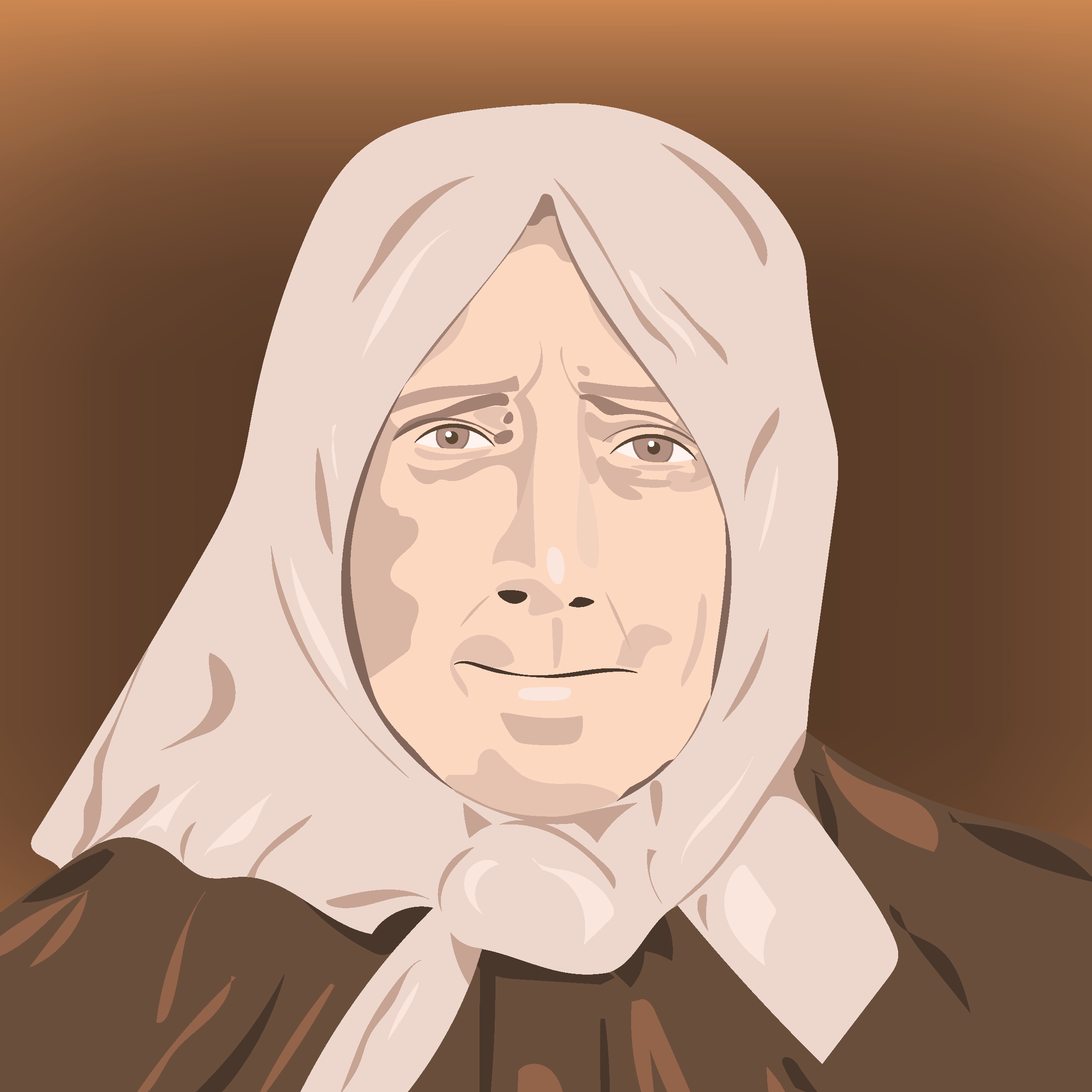
Illustration of Elyse Hilaire by Charlotte Easterling
He cast a glance at his wife who was talking with some of the other young wives, so Elyse shooed him in Claudine’s direction. Left by herself, she brooded about the very likely prospect that she’d never get over being forced out of Grand-Pre, but the promise of a fresh start in Saint Domingue became more alluring with each day. And she felt incredibly blessed—she and her three sons, their wives, and her grandsons were all alive and together.
Maybe there is hope, she thought, trying to boost her own spirits.
She stood and stretched gingerly. She would be seventy-eight next month, old to be starting over, but there was no point in feeling sorry for herself. The worst was behind them. Or so she thought.
Saint Domingue: Early February 1764
“Mamie! Tell us about Grand Pre!” shouted Elyse’s grandsons.
It was a familiar refrain. One that made her wistful. When she was young, she’d discovered a talent for telling stories, and in her youthful, more hopeful life, she’d started writing them down, but they’d been lost when the British burned her house. She wondered whether she could have published her stories if she hadn’t had to struggle to feed and support her family through the British oppression.
More possibilities stolen, she thought resentfully.
Her grandsons looked at her doubtfully, which made her put on a strained smile. She was determined not to visit her regrets on this younger generation.
“Once there was a beautiful land called Acadia…” she began.
Saint Domingue: Late February 1764

Môle-Saint-Nicolas River. Photo: Boukan Guinguette
When Elyse and her family arrived in Saint Domingue, Bertrand de Saltoris, the overseer of the new colony, greeted them enthusiastically. He was eager for them to get established. She watched the children freshly off the ship racing along the beach, laughing and enjoying finally having room to run. She and the other women were clustered together, looking at the white sand beach, blue water, and dense foliage.
“I thought there was a colony here,” one of the women said worriedly.
“There is,” Elyse assured her. “My son told me there’s still work to be done, but we’ll be living comfortably soon.”
The woman nodded, looking doubtful. Privately, Elyse shared those doubts. She looked at the group of men gathered around Monsieur Saltoris, deep in conversation. There had been more than 500 people on the ship, but that included women, children, and old men. Were there enough young men to do the work needed here? She could see Edmé, Sebastien, and Robert looking at the river running into the dense trees. The looks of concern they wore left her feeling discouraged.
Claudine, standing by her side, noticed too. Elyse gave her hand a reassuring squeeze.
Saint Domingue: July 1764
“We were lied to, Maman,” said Edmé, her youngest son, with desperation in his voice. Anne, his wife, put a hand on his shoulder.
The whole family had pooled all their funds to pay for passage. They’d been promised farmland in exchange for working to build roads and clear land. Yes, it would be hard work, but they were farmers. They were prepared. However, the colony that was supposed to be waiting for them turned out to be non-existent. And the farmland had flooded, sweeping away the good soil. They were living in tents, barely surviving on meager rations.
Elyse looked around at her sons, dirty and sweaty from the day’s labors. Her daughters-in-law, (Claudine now heavy with child), and her grandsons were all thin and pale, their clothes faded by the sun.
“There’s a group going inland to Le Mirebalais,” said Sebastian. “The land there is better, and it’s already settled. We’d have better living conditions while we get established. I think we should join them.”
Elyse nodded. Anything, she thought, is better than this.
Saint Domingue: August 1764

Mirebalais, Haiti today. Photo: Centre Culturel Spirituel & Traditionel
A month later, Elyse and her family were among the almost 200 Acadians who arrived in Le Mirebalais. Their hopes of receiving land were quickly dashed-–the plantation owners wanted workers, not landowners. They did at least have small houses that provided better comfort than the tents at Môle-Saint-Nicolas. Elyse settled in with Sebastien and Claudine so she could help with the baby.
Her new grandson arrived later that month, but he was small and weak. Sebastian, despite his exhaustion, beamed as he held his son. Fifty-six might be old to be a first-time father, but he didn’t care.
Robert congratulated him and Edmé clapped him on the back and winked. “Good job, old man! Glad you finally figured out how it all works.”
Yves studied the baby intently, then looked up at his father, Robert, and grinned.
“He looks like an old man, Papa!” he said, which got a laugh out of everyone.
Elyse had hoped for a granddaughter, but she couldn’t complain. A new grandchild was something to celebrate. Still, she was worried; everyone was exhausted and far too thin. They were all working on the sugar plantation, which was grueling, dangerous labor. Claudine and Elyse were the only two who weren’t expected to be in the fields, but the rest (including her 10- and 13-year-old grandsons) were out from sunup to sundown.
Edmé kissed Elyse, then collected his wife and sons so they could go back to their little house. Robert followed suit. Sebastien handed the baby back to Claudine and kissed her on the top of her head. Elyse could see the concern in his face. The baby was very small and Claudine was having trouble feeding him.
“I’m going to bed, ma chere,” he said quietly.
Elyse got up and took her grandson. “You go too, Claudine. I’ll put the little one to bed.”
Claudine nodded and gave her a wan smile before following her husband to their pallet.
Saint Domingue: September–November 1764
Elyse would remember that August night as the beginning of the very bad times. Early in September, Edmé suffered a bad cut while working in the cane fields. It became infected, and despite the doctor’s best efforts, Edmé died later in the month, burning with fever.
And the family was granted no reprieve to mourn and recover: Claudine and Sebastien’s son died in early October. The sickliness he’d shown since birth never improved. They buried him in a small grave next to Edmé’s.
The weeks after that went from heartbreak to nightmare. A yellow fever epidemic broke out, and in quick succession, Sebastien, Marie, and Elyse’s last two grandsons all succumbed. Anne (now Edmé’s widow) lingered a bit longer, but died in early November.
So all too quickly, Robert, Claudine, and Elyse were the last of their family. Robert moved into the little house that Claudine and Elyse shared. Their grief was overwhelming, but at least they weren’t alone. Robert worked in the cane fields and Claudine cooked for the family who owned the plantation. Robert was grimly determined to survive but came home every night angry and exhausted. Elyse wearily tended their house and cooked meals that were eaten in silence.
Saint Domingue: December 3rd, 1764
Robert woke to a quiet house and sat up, concerned. Maman was usually awake before him, making breakfast. He went to her curtained pallet and tapped on the frame.
“Maman?” he whispered.
No answer.
Fearing the worst, he slid back the curtain. Elyse was gray and cold. He bent down and kissed her forehead.
“I’m sorry you were so troubled, Maman. Be at peace,” he said through stifled tears.
He sat with her a few moments, then got up, slid the curtain back in place, and went to tell Claudine

1: Grand-Pre, Nova Scotia. 2: Môle-Saint-Nicolas, Haiti. 3: Mirebalais, Haiti.
Subscribe to learn more about the real people
and historic events behind this story.
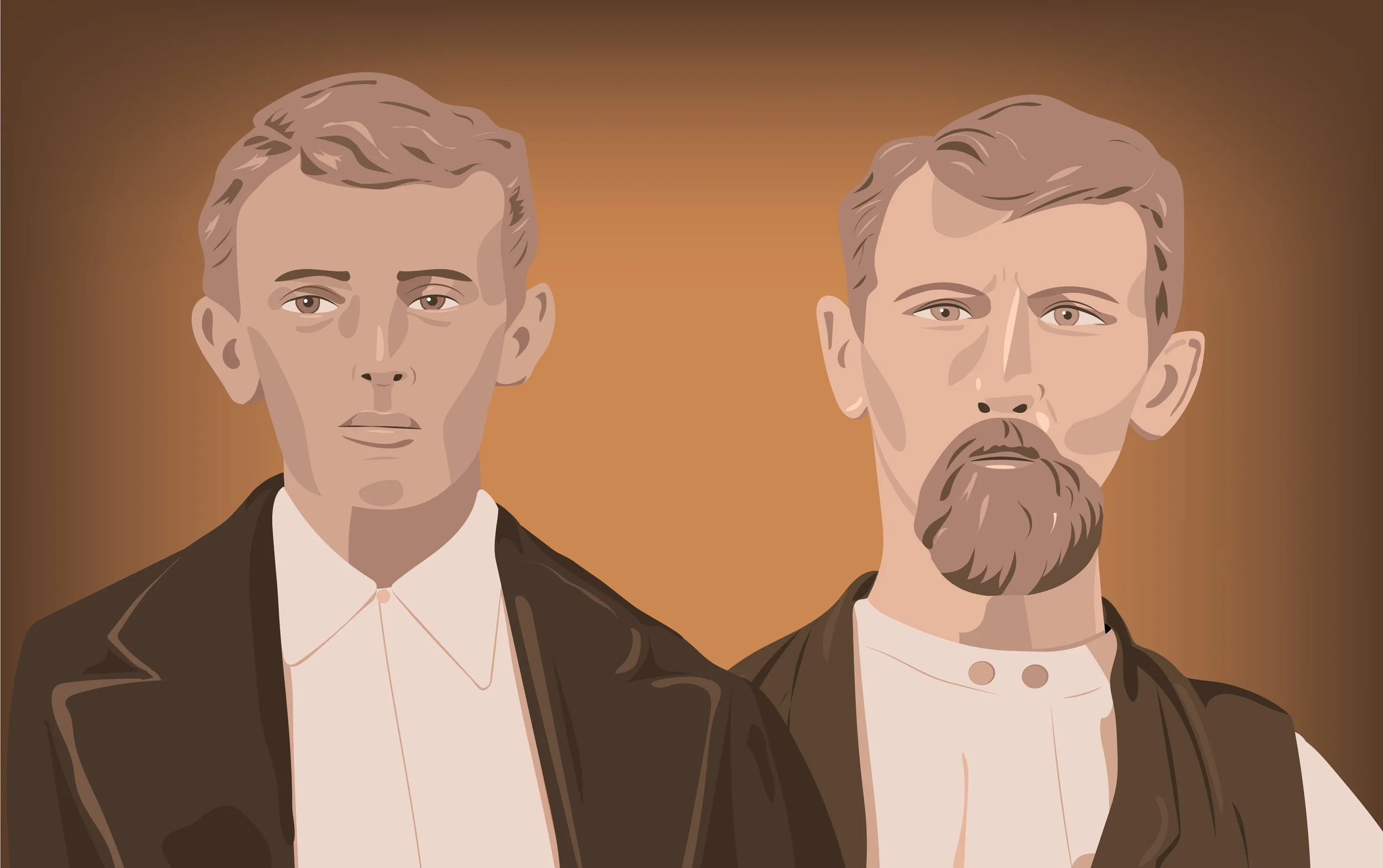
Lost in the Desert
Two brothers set out to stake their claim in the California gold rush. Things went terribly wrong before taking a mysterious turn.
Things had not gone to plan for the Waite brothers, Devlin and Liam. Of course, this was significantly worsened by the fact that they hadn’t planned well in the first place. It was largely due to a pair of factors, namely a lack of relevant experience and a perceived time imperative. When word had reached Marion, Illinois that gold had been discovered at Sutter’s Mill in California, the brothers had decided to set out to seek their fortunes. But time was of the essence, or so they thought. And given this urgency, they looked at a map and concluded that the fastest, most direct way was through the Chihuahuan Desert.
Subscribe to see the rest of this post and
other bonus content from The Relatives.
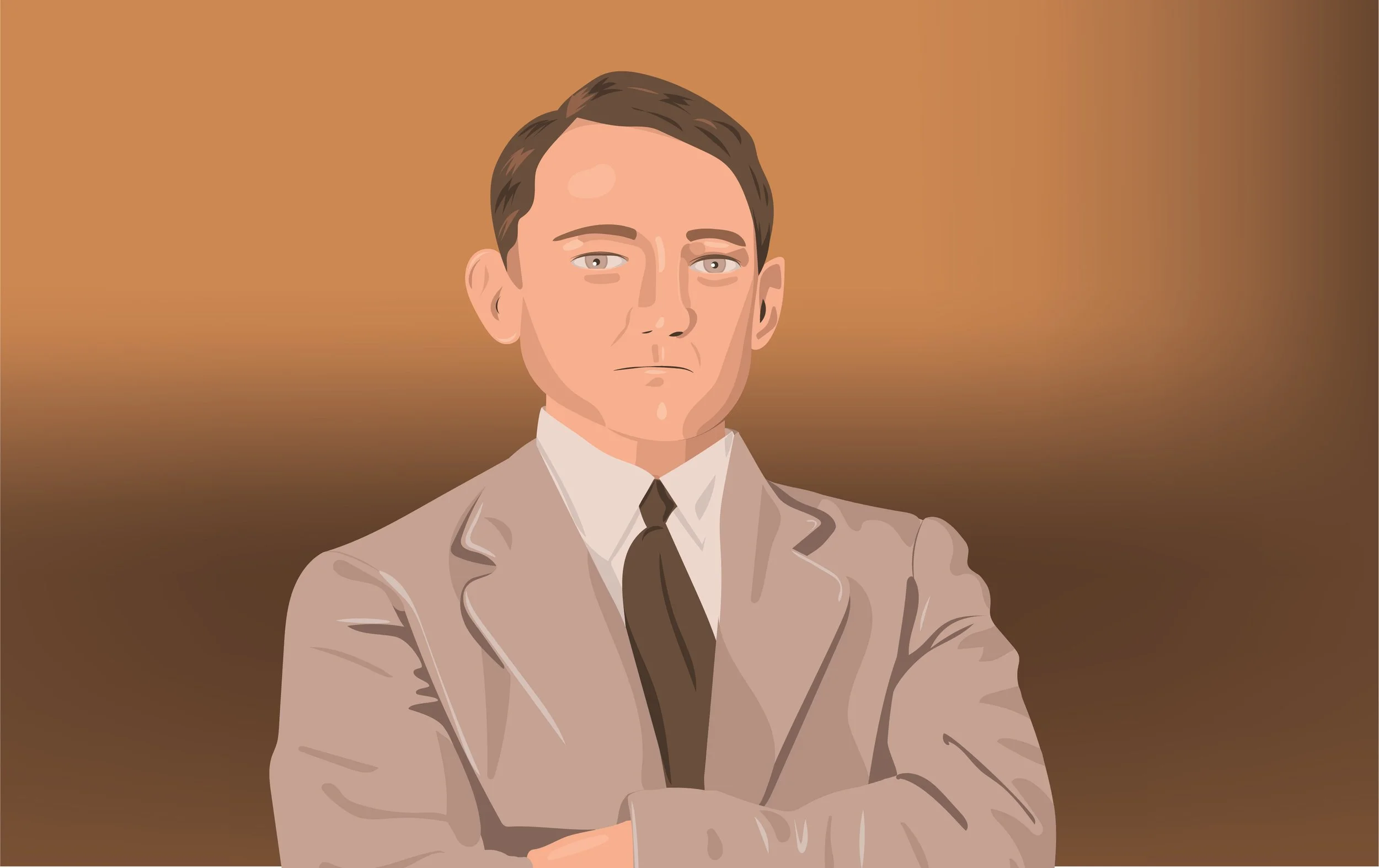
Union Brother
Alan Ellis was a coal miner and union organizer who had uninvited guests one night.
Written by Eric Shipley and Charlotte Easterling
Fulton County, IL: May 1921
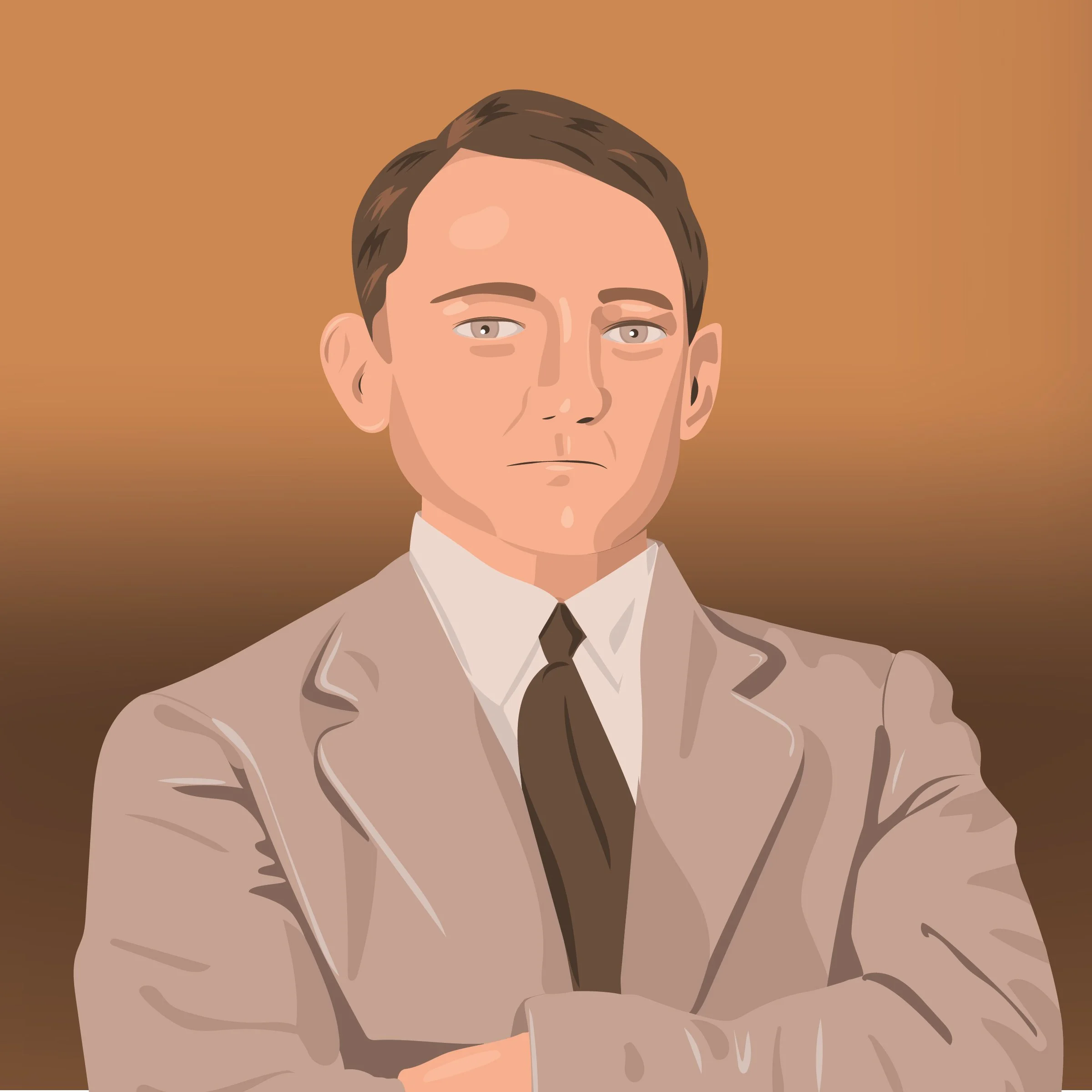
Illustration of Alan Ellis by Charlotte Easterling
Alan Ellis was angry. And when he thought about it, he had been for a long time, most of his life, in fact. Perhaps it was because he’d had to start working in the coal mines of southern Illinois when he was just a boy. Perhaps his dad, a lifelong coal miner from Wales, had passed down the anger he’d built up living and working under the poverty and inhumanity imposed by mine owners. It probably was both.
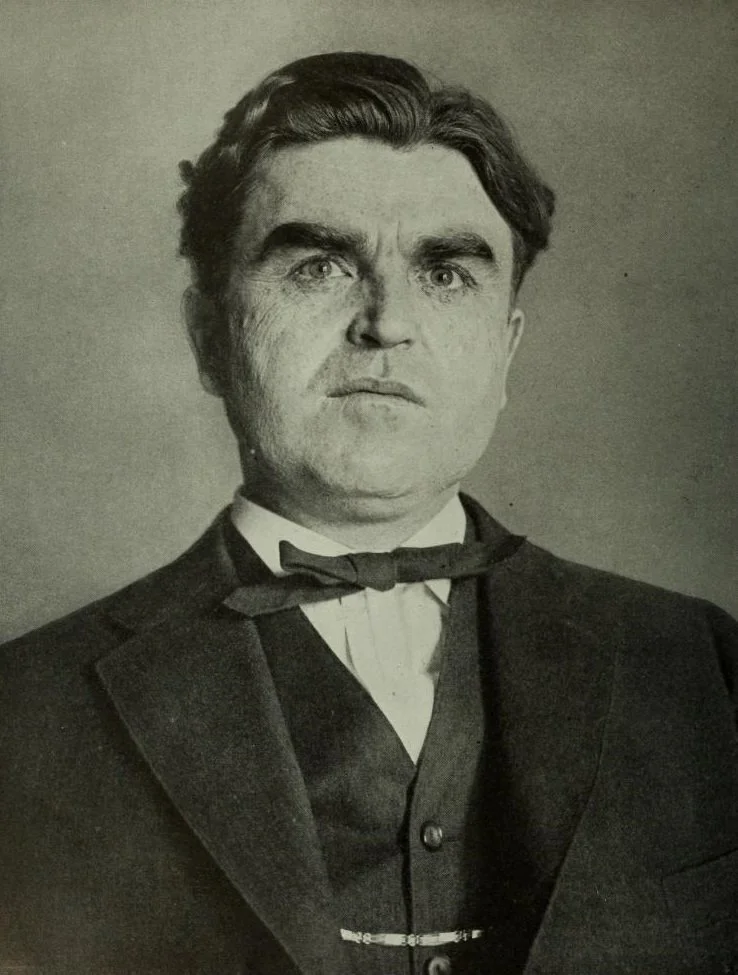
Portrait of John L. Lewis. By Paul Thompson - The World's Work: https://archive.org/stream/worldswork43gard#page/454/mode/2up, Public Domain, https://commons.wikimedia.org/w/index.php?curid=30896504
But anger wasn’t all he’d inherited from his dad. He’d also gotten the broad shoulders, stocky frame, and short stature. (In fact, another miner had said he was “short on one end” once… but only once!) His ruddy complexion and short temper were most likely inherited as well, and both traits were plainly evident.
In any case, he was now using his anger to rally the other coal miners to join and fight for the United Mine Workers. It was something he’d learned from John L. Lewis, the UMW President. (Upon meeting Lewis, the first thing Alan noticed was that the rumors about his imposing eyebrows were true.)
There had been strikes and violence in the recent past, and he knew in the pit of his stomach that more was coming, most likely soon.
But how soon? he asked himself as he pulled into the gravel driveway of his small, semi-rural house.
And as that question echoed in his head, he allowed himself a sigh and a moment to rest his forehead against the steering wheel.
So tired, he thought, then got angry all over again, this time at himself. He was only thirty—he had no right to be tired!
Alan made an honest attempt to quell his anger. He knew he was a hard man, but that was necessary to do what he had to do. The way the miners were treated was more than unjust, it was immoral. It might not technically be slavery, but with the pitiful pay and dangerous conditions, and that damned company store, it wasn’t far off. Still, he tried not to let that affect how he treated his very pregnant wife, Betty, or their kids, so he took a deep breath before going inside.
***
“Dada!” exclaimed Violet, just over a year old, as she threw open her arms. Betty was holding her but gave her to Alan when she squirmed.
“Hi, pretty girl,” he said, taking her and giving her a kiss. Then he gave Betty one as well. Her blue eyes captivated him just as much as when they’d met.
Just like a robin’s egg, he thought.
He greeted his stepsons, Marty (who was eleven) and Del (who was six), then went to get a bottle of beer from the icebox.
“Come sit down, and have a bite to eat,” said Betty and gestured to the table where something in a pot smelled good.
***
Dinner passed normally, with no more than mundane talk about how school and work had gone. And within a short time after finishing, Alan was overcome with exhaustion and settled in his chair by the fireplace for another beer and a nap. Not long after (or it seemed that way), Betty gently shook his shoulder.
“Time for bed,” she said.
She’d kept the boys and Violet reasonably quiet, although Alan didn’t fully appreciate how monumental a task that was. And she’d cleaned up too, also a monumental task given her swollen abdomen and very sore feet.
He shook himself nominally awake, then said, “Time for bed boys.” They groused, so he went on. “No backtalk. Wash your faces and tuck in.” They obeyed, albeit with token objections that annoyed Alan. He considered a more harsh follow-up, but decided against it. Betty already had Violet ready for bed, so he went to get himself ready.
***
The next thing he remembered was being shaken awake.
“Alan, wake up,” Betty whispered urgently. “Something’s going on outside.”
After hurriedly pulling on pants and a shirt, he went to the closet and took out his double-barrel shotgun and a box of shells.
Betty was standing too, holding Violet who was crying. “Alan, don’t–”
“Quiet,” he snapped, then softened a bit. “Stay in here and look after the kids.”
She just nodded and looked worried and frightened. By this time, Marty and Del were also up and came to the bedroom door. They were confused.
“Dad, what…” Marty began.
“You just stay in here and help your mother!”
“But–”
“You mind me! Get in here!”
They did as they were told, and Alan approached the front door. Something was flickering brightly outside, and he had a feeling he knew what it was. He pulled aside the curtain on the front door window.

Photo: Adirondack Almanack
Yes indeed, he thought angrily. A burning cross stood in front of his house, and not far beyond, there was a truck full of Klansmen in their white robes and pointed white hats. He could see through the window that they had rifles that they started firing in the air, and he could hear their shouted taunts through the door.
“Damn Welsh taff! You’d best knock off that union shit or someone’s gonna get hurt!”
Alan saw red and cocked the shotgun. He wanted to kill them all. Those bastards—threatening him, and then much worse, his family! He started to throw the door open but stopped when he heard a gasp from behind. He turned and saw Betty imploring him with her eyes. Please don’t.
It gave him a moment of pause.
Just like a robin’s egg, he thought again and glanced back out the window. There must be at least a half dozen of them. He knew he’d be lucky to hit one or two before they got him.
Then what?
It took him only a second to decide—he had to keep his family safe. He got a grip on his rage, and presently, the truck drove off with more gunshots and shouting.
When they were out of sight, he uncocked the gun, then opened it and took out the shells. Violet was crying loudly, and he could see tears streaming down Betty’s face. Marty was clearly holding back, but Del was not. He set the gun on the table and went to them.
“It’s all right,” he comforted. “They’re gone.”
As he held them, he remembered something John Lewis had said:
If the KKK is mad at you, you’re doing something right!
True enough. But it didn’t mollify him. Crossing picket lines was bad enough, but tonight those bastards had crossed a different line they should not have crossed. He was angry before; now he was enraged. And his union brothers would be too.

Map showing the location of Fulton County, Illinois. Map: Google Maps
Subscribe to learn more about the real people
and historic events behind this story.

From Strongman to Strong Man
Dominicus Klimas was a Lithuanian immigrant working to find his place in the world. He found his strength in the circus.
Written by Eric Shipley and Charlotte Easterling
Orange, Massachusetts, 1928
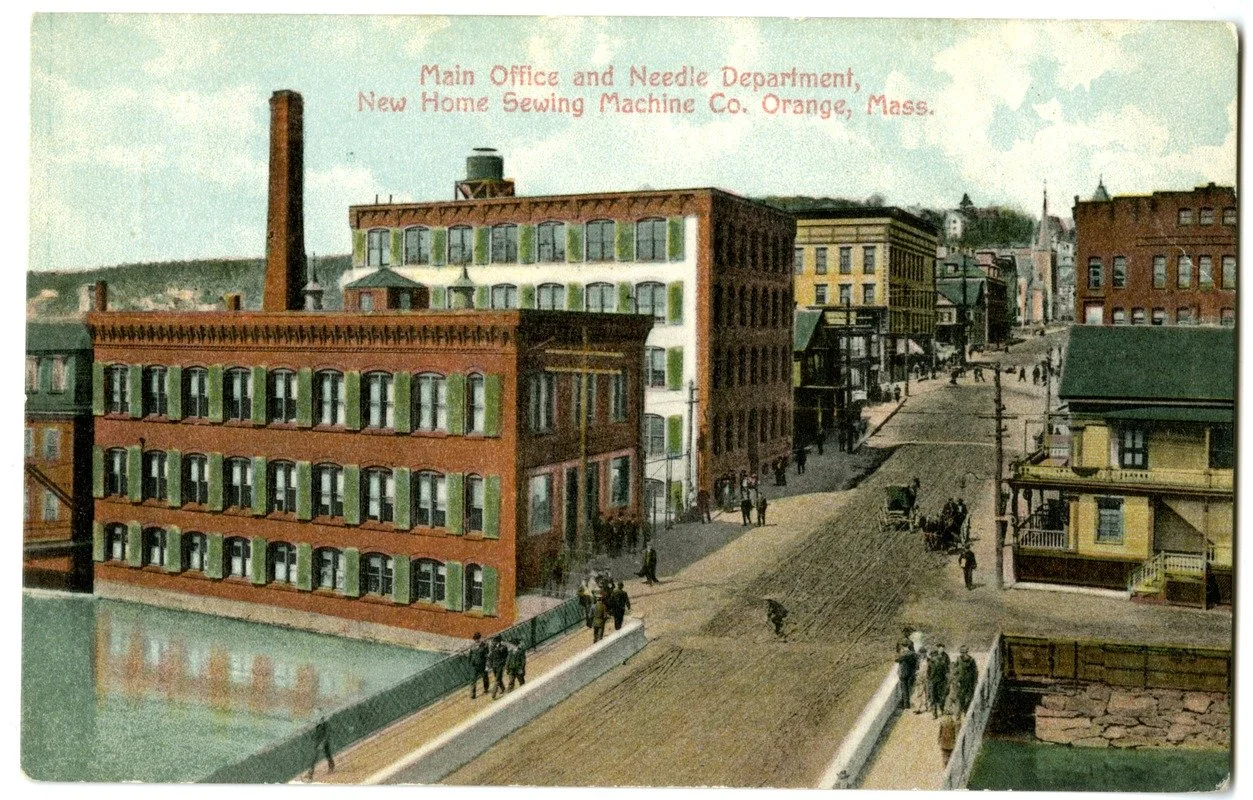
Orange, Massachusetts; View from the South Main St. bridge looking north. Image: digitalcommonwealth.org
Joe pulled his car into the field where the circus was starting to tear down. Seated next to him was his brother-in-law, Dominicus, a bear of a man with wavy red hair.
“Sure about this?” Joe asked.
The second-guessing was irritating, especially now that it was down to the last minute.
“Yes,” Dominicus replied with exasperation. “We talked about this. My mind is made up.”
Joe rubbed his forehead. “Okay, okay. I still have a hard time believing you’re running away to join the circus, of all things… But you’re twenty. Do as you please.”
Dominicus looked away. “I have to. You know why.”
The whole family had been excited about going to the circus, but his youngest sister, Flora (just five years old) and little brother, Freddie (who, at twelve years old, hated being called “little”) had been especially thrilled. Dominicus hoped they hadn’t noticed how making plans to go had reignited some long-standing feuds.
Papa was partly to blame. Freddie was actually his bastard son, and Mother had never forgiven his infidelity. Thereby, Myra, his not-so-sweet sixteen sister, hated Papa. Then there was Karolina, his older sister (by two years) who, according to Mother, had had the unforgivable nerve to elope with James, a man she didn’t approve of.
Thankfully, there was no trouble surrounding his sister Audra. She was only a year younger than Dominicus and was married to Joe (who Mother did approve of). This kept the outing from being a complete disaster, but without Papa and Karolina, it felt like the family was hopelessly fractured.
He had been captivated by the circus, though. The bright lights and shows and the cheerful hustle and bustle felt like something he had to be part of. But was he running away? Maybe, but it felt right.
He turned back to Joe. “Take care of yourself and Audra, yes?”
“Of course.”
They hugged briefly, then Dominicus grabbed the small bag that held his few belongings and got out of the car. He gave a quick wave goodbye, then turned and ran across the field towards the circus lights.
***
“You’re a big one,” said the manager, a wiry, dark-haired man who introduced himself as Bruno. “I’ll wager you’re strong too?”
Dominicus nodded eagerly. “Yes, sir! I am!” he said and hefted a nearby crate.
Bruno was impressed. “What’s your name?”
“Dominicus Klimas.”
“Russian?”
“No, sir! Lithuanian!” Dominicus hated being called Russian.
This time, Bruno was unimpressed. “Whatever. You’re hired.” They shook hands, and with that, Dominicus had joined the circus.
***
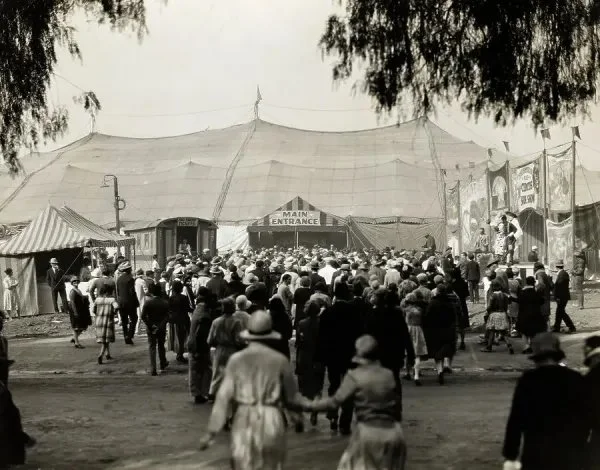
Photo shows a crowd of people at the entrance to a circus tent. On the right, sideshow attractions can be seen. Ca. late 1920s-early 1903s. Photo: fineartstorehouse.com
He never regretted his choice. Every day, he felt useful: setting up and tearing down, driving trucks, making repairs, tending to the animals (which he enjoyed greatly, even though it could be both dangerous and disgusting—especially the elephants).
When he got an hour or two off, he would sometimes visit a nearby town. The pay wasn’t great, but room and board was free, and beer (sometimes whiskey or vodka) was plentiful. There were other benefits he hadn’t expected, like the women in the troupe who would congregate and watch when he was working with his shirt off. They often wanted to do more than watch.
June, 1929
The noon sun was hot, and Dominicus was getting a drink of water when Bruno walked up.
“Sergei is leaving,” he said without preamble.
Sergei was the strongman, one of their most popular acts. He’d been with the circus for a few years and had decided to break into acting in the movies. Dominicus was sorry to hear this. He liked and respected Sergei. With the man’s tremendous strength, he could’ve easily been a bully, but he wasn’t.
“We need a new strongman,” Bruno continued. “Sergei won’t leave for a few more weeks, so he’ll train you.”
It took a moment, then Dominicus realized what Bruno was saying.
“You want me to be the new strongman?”
Bruno laughed. “Sure! A big Russian redhead will be a crowd pleaser.”
Dominicus bristled. “I said before, I’m not Russian! I’m Lithuanian!”
Bruno was still unimpressed. “Okay, fine. You’ll need to grow a mustache and you should exaggerate your accent. Doesn’t matter what it is—audiences love an accent.”
“So you want me to talk too?!” Dominicus could feel his heart racing. “I’d rather shovel elephant shit!”
“What is it with you big guys? Sergei was the same way when he started.” Bruno shrugged and put his hands up. “It doesn’t matter. He got good at his act, and so will you. He’ll teach you what you need to know. Congratulations!”
Bruno offered a handshake that Dominicus took, dazed and confused. What just happened? He thought.
August, 1929
“You’ll do great, kid!”
Dominicus jumped, startled by the clown on stilts who called down to him on the way to the stage.
“Thanks,” he called back, then returned to squirming in his very snug singlet. He felt like he hadn’t had a choice in being the new strongman, and the lights and crowds that had been so enticing now unnerved him. He did his best to put his trepidation aside and focus on the act Sergei had helped him create. The demonstrations of strength and showmanship still made Dominicus uncomfortable—they were all designed to make things seem more dramatic and dangerous than they actually were.
Bruno, theatrical in his red tailcoat and black top hat, introduced him. “And now, be amazed by the prodigious strength of our Russian giant! Introducing the Mighty Dominicus!”
Being called Russian yet again made Dominicus angry, but Bruno clearly didn’t care. And he wasn’t the first one Bruno had rebranded, which brought to mind a certain conversation with Sergei:
“No, brother, I’m Irish. My name is really Sean.”
Dominicus did a double-take. “So your Russian accent is a put on.”
“Aye lad. I protested, but Bruno wouldn’t budge,” said Segei/Sean with a laugh and wink.
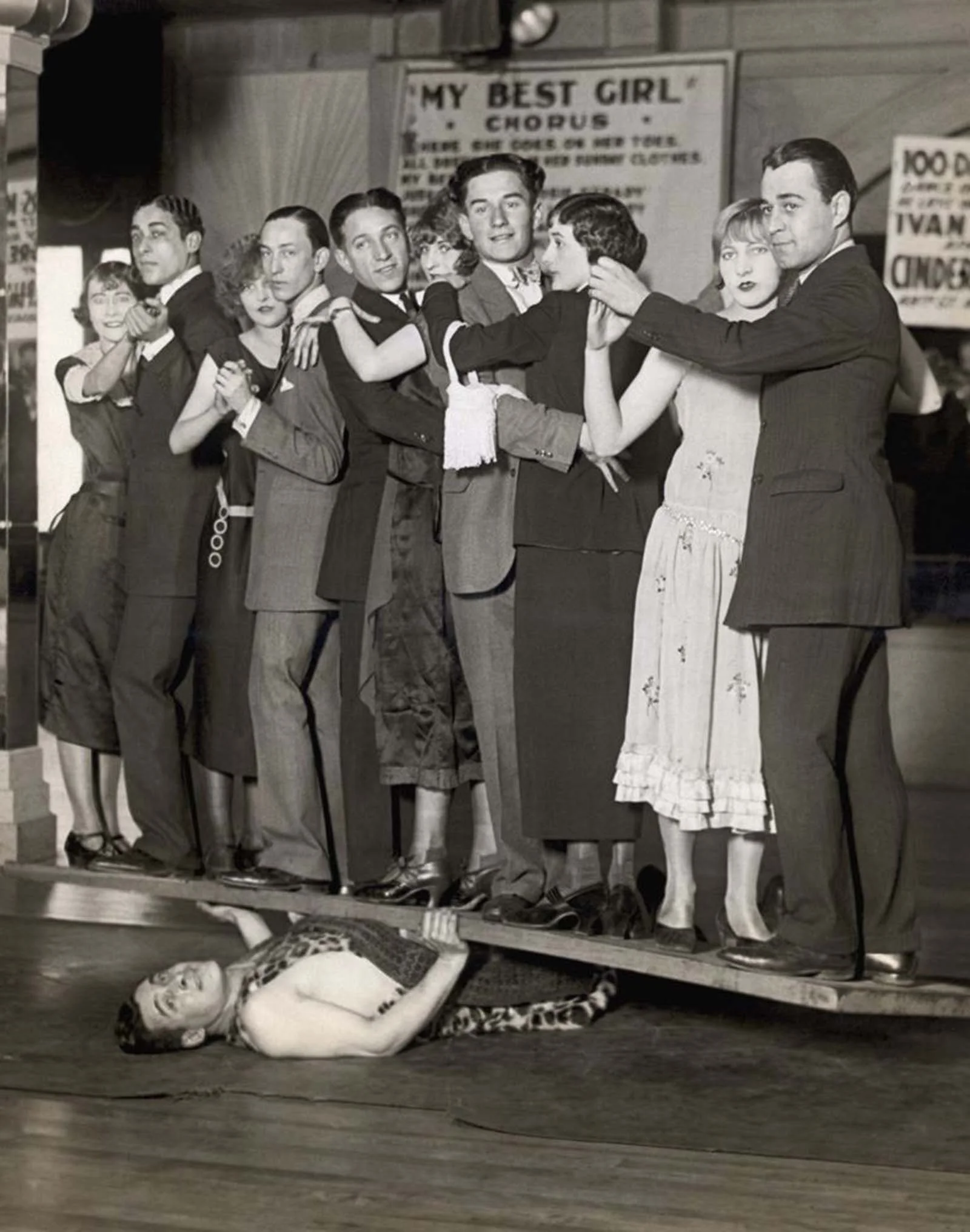
An example of a strongman act: Ivan “The Great” demonstrates his strength by holding a plank with five dancing couples on it. 1924. Photo: rarehistoricalphotos.com
Dominicus scowled as uncharitable thoughts about Bruno occurred to him, but he decided to keep the scowl; it worked well for his performance. So he strode onto the stage and began. He flexed his muscles and strutted about, lifting a series of heavy objects and playing up the difficulty with some of them. To his delight, there was soon applause and cheering from the audience.
After that first show, he got over his nervousness and started inviting audience members to sit on a platform he would lift, pick weights for him, and choose bars for him to bend. After his performances, he would circulate in the crowd and revel in the delight people showed when he lifted them. And if it got him a kiss from a pretty girl, so much the better.
October, 1929
Dominicus sent postcards and letters to his family, but they didn’t write back. Until one day when a letter from Audra arrived. He was thrilled until he read the bad news: Mother had died.
He was shocked and saddened and felt a deep sense of loss. She’d been just forty-five! Audra wrote that they’d been to visit her just a few days before her death, and she’d seemed fine. The doctors said it was a stroke, so there was nothing that could’ve been done. Even so, Dominicus was crushed. And to make things worse (if that was possible), Audra’s letter was delivered after Mother’s funeral, so he didn’t get a chance to attend it.
November, 1929
Another letter came from Myra not long after Audra’s. It was a terse note telling him that Joe had died of a ruptured appendix not long after Mother’s death. Dominicus was again shocked and saddened. He’d always expected to see Joe again. And as with Mother, by the time he got Myra’s note, Joe’s funeral had already happened. It brought tears to his eyes.
Finally, at the end, Myra wrote that Papa was coming to get all of them and move them to New York where he was living and working.
He’s finally taking care of the family, dominicus thought, glad for a bit of good news.
He wrote back the same day, sharing good memories and offering what comfort he could.
August, 1930

Illustration of Dominicus Klimas by Charlotte Easterling
It was months later when Bruno announced that they’d be stopping in Nashua, where Karolina lived. Dominicus wrote to her and asked her to come visit. She promptly wrote back (which surprised and elated him) and accepted his invitation. So shortly after the circus was set up just outside Nashua, she arrived with her two oldest children in tow. She was taken aback to see him in his costume with his red handlebar mustache.
It didn’t take long for her to get over her surprise, then she introduced him to Adrian, who was seven, and Helen, who was five. They were wide-eyed, and Dominicus was concerned it might, at least partly, be fear. So he got down on one knee.
“Hello there,” he said to them.
They continued to stare but seemed a bit less shy, so he put a hand on each of their heads, then gently scooped them up, one after the other, and set them on his broad shoulders. Karolina laughed and clapped. After a minute, however, they started looking anxious. She helped get them back down, and then held on to their hands. Dominicus said that he’d made arrangements for them to do and see anything they wanted for free.
“Oh, thank you,” she said, smiling gratefully. She would’ve given him a hug, but upon hearing that everything was free, the two children started to tug at her.
“Slow down and stay with me!” Karolina shouted to be heard over the roar of the crowd. The kids relented, but only just. She knew impatient whines weren’t far off and gave Dominicus a small, wan smile.
“How are you? You look tired,” he said.
She dismissed it with a shake of her head. “I have four children, Dominicus. How else should I look?”
“Mama!” the children chorused.
Dominicus turned to them. “What would you like to do?”
After a short debate, they settled on going to see the elephants.
“Then that’s where we’ll start,” he said and mimed an elephant trunk with his forearm. They all laughed, then he guided them to the main tent. Nobody got in their way.
***
Later, when they were eating and the kids were distracted, Karolina confided that James had lost his job. He was looking for work but hadn’t found anything yet.
“I’m sorry. I wish I could help. This damn–” Karolina cut him off with a finger to her lips.
“Sorry,” Dominicus apologized. “This Depression has everyone hurting.”
Karolina agreed and continued eating without saying anything more. Dominicus realized the conversation was over and went on eating as well. Afterwards, the children were getting sleepy, so they said their goodbyes. Before they left, though, Dominicus slipped some money into her hand. She started to protest, but this time he cut her off.
“Just some traveling money.”
May, 1931
Dominicus was still with the circus when he heard from Myra again. More bad news—Papa had died. Myra was eighteen now and wrote that she’d taken Freddie and Flora back to Massachusetts. Audra, however, was staying in New York and wouldn’t say what she was going to do on her own.
Dominicus read this, thought for a moment, then went to find Bruno.
June, 1931
The circus was in Orange again.
Where it all started, Dominicus thought with a sigh. Except Mother and Papa and Joe aren’t here.
This would be his last stop. After his final performance, he said his farewells, which concluded by exchanging thanks and a handshake with Bruno. Afterwards, he lingered for a minute and looked around, then got into a truck waiting in the surrounding field. The youngster in the driver’s seat wisely stayed quiet as they pulled out and headed into town. Dominicus clutched his small bag of belongings. It was the same one he had when he started out, except it was now stuffed with souvenirs. And the field they’d just left could easily be the same one where Joe had dropped him off three years ago.
He wasn’t sure how to feel. The happiest time he’d known was ending, and it was daunting to think about what might come next. But at the same time, he felt strangely good. When he left before, he was running away. Now, he was going back to take up his responsibilities. He smirked at the irony. It seemed like being the strongman was what had taught him to actually be a strong man.
He looked in the rearview mirror. He couldn’t see the circus anymore.

Map of the locations in the story, left to right: Nassau, New York (where Dominicus’s father lived); Orange, MA; Athol, MA (where Dominicus’s mother lived); and Nashua, NH. Map: Google Maps.
Subscribe to learn more about the real people
and historic events behind this story.
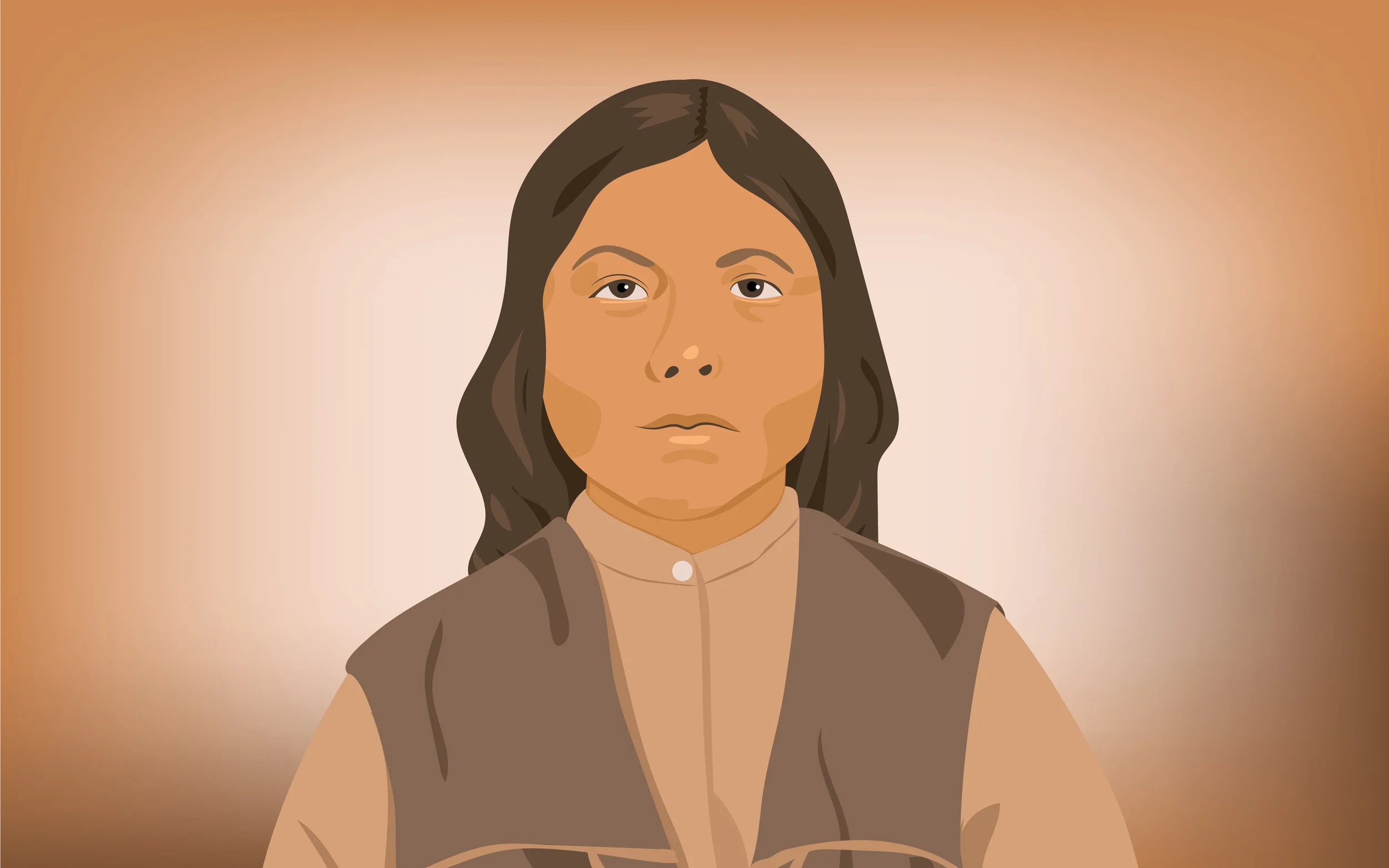
The Buffalo Hunt
It’s 1877, and 10-year-old Deer Foot is going on his first buffalo hunt with his father.
When Matthew He Bear was just a boy, his mother named him Deer Foot because he was a fast runner, and he ran whenever he could. But on a particular morning in early summer–the Moon of the June Berries–it was too early to run, so Deer Foot (who was 10 years old) lay looking up through the smoke hole in his family’s tipi. The sky slowly turned purple, and the stars began to fade, but he didn’t really notice. Today would be his first buffalo hunt, and it was all he could think about.
Subscribe to see the rest of this post and
other bonus content from The Relatives.
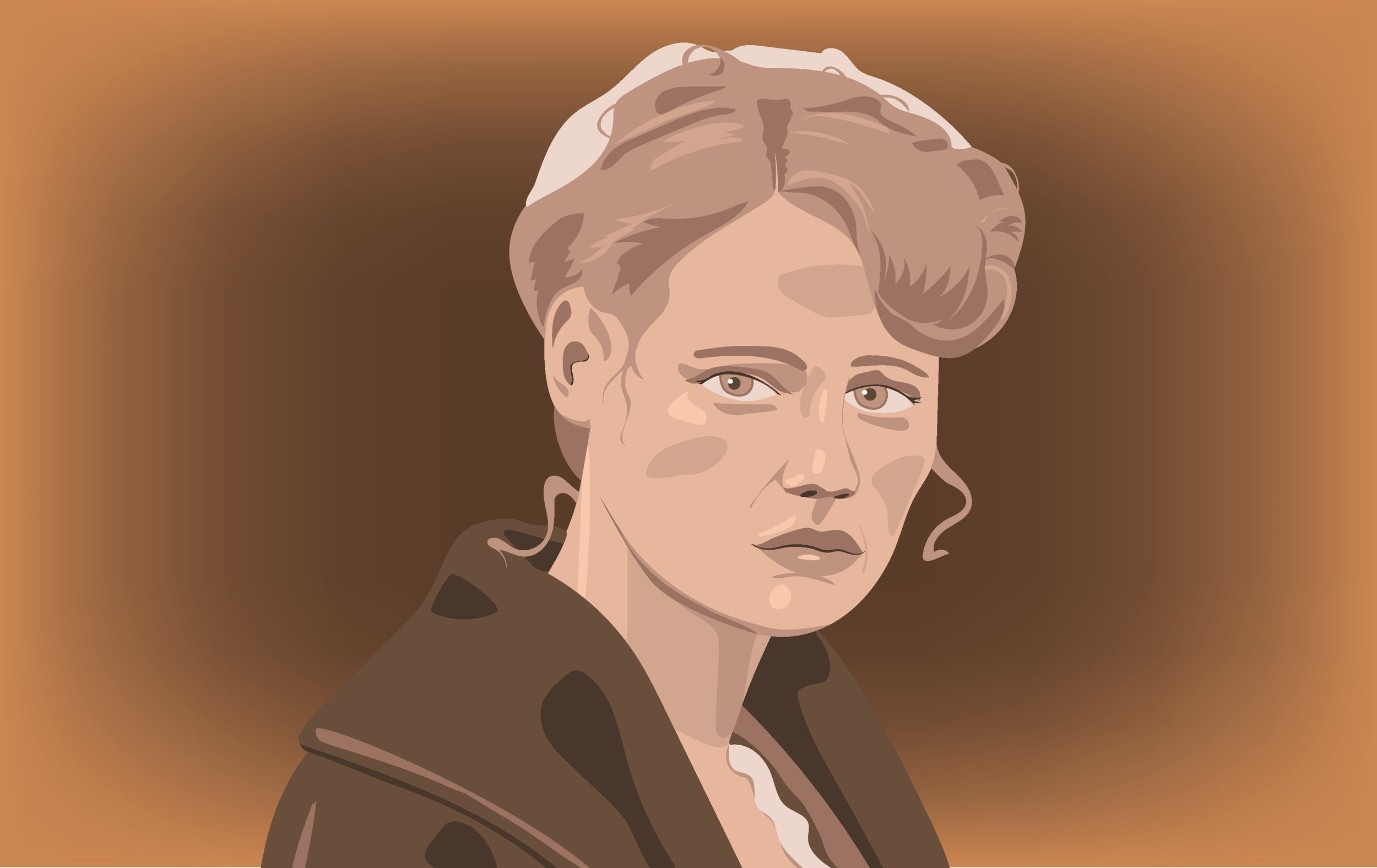
The King’s Daughter
Josephine was a young woman who was sent to the new world to help secure France’s place in North America.
Jean Soulier carried his infant daughter up the steps of the convent. She was a few months old now. He could feel her fist clutching his vest, and when he glanced down, he saw her gazing up at him.
He lay her in the turning cradle and wrapped her thin blanket around her more tightly. He ran the back of his finger across her soft, chubby cheek, then placed a piece of paper on her chest, weighted with his dead wife’s rosary. He rotated the cradle until she was safely inside, rang the bell by the door, and hurried down the steps. He knew the holy sisters would be able to care for her far better than he could.
Sister Anne came to the door and looked around after picking up the baby, hoping to see someone watching, but knowing she wouldn’t. This was a common occurrence. Babies were left in their care all the time. She looked at the piece of paper that Jean’s priest had provided for him. It read, “This child is Josephine Soulier, born in Paris, 1649. Her parents are Jean Soulier and Armandine Vaux. Her mother died of plague.”
1669
Josephine quickly tucked her hair under her coif, then hurried after Louise. Morning devotions were at 5:00, and the sisters would punish them if they were late. Josephine paused to tie her apron, and Louise looked back at her impatiently.
“Come on, girl! Sister Phillippe will have us cleaning up shit all day if you don’t hurry up!”
They ran to the chapel and then slowed to a respectable pace once they were almost outside the door. Running would also spark Sister Phillippe’s outrage. They stepped into the candlelit chapel, and Josephine sighed contentedly. The smell of candles and incense filled the room, and the silence was broken only by the quiet rustling and shuffling of women getting settled. She had never told anyone, not even Louise, but she wanted to join the holy sisters now that she was old enough. She settled onto her knees, clasped her hands, and lowered her head.
This is where I belong, she thought, as the morning liturgy began.
After devotions, Josephine and Louise sat together for breakfast. Josephine looked up after saying grace to see Louise smirking at her.
“You’re thanking God for watery gruel and stale bread?”
Josephine frowned at her friend. “We should be grateful for what we have. Let’s eat.”
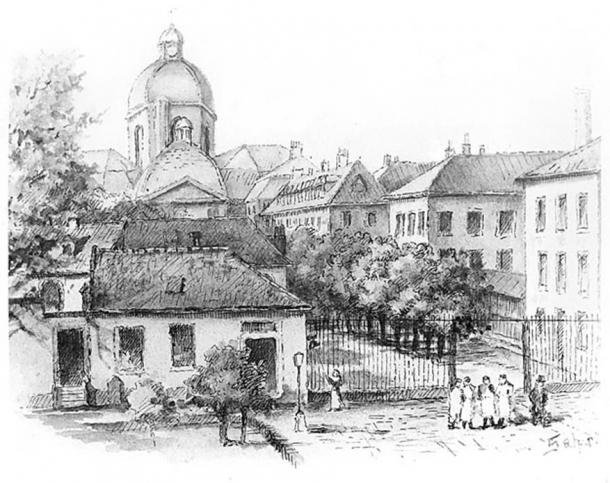
The Salpêtrière in Paris, circa 1670. Image: Wellcome Images
She tucked into her meager meal, hoping it would end the conversation. Louise had come to the Salpêtrière orphanage when she was 10. She was from a family with nine sons and two daughters, and her parents couldn’t afford to care for all of them. Louise reminisced about life outside the orphanage often, telling Josephine about the fine clothing people wore, the delicious foods they ate, and how they walked around freely.
“You don’t know what you’re missing because you’ve never been outside these walls,” Louise told her. “You think it’s not so bad because it’s all you’ve ever known.”
Josephine had wanted to respond angrily and point out that a family so poor they had to give away their daughter probably didn’t wear fine clothes or eat delicious food, but she held her tongue. They finished their meal in silence and then continued their day.
The rest of their morning was taken up by tending to the young children at the orphanage and by bible study until midday devotions. Their afternoon was spent spinning and sewing. Some of the girls learned how to make lace, but Josephine’s hands had never been clever enough for that. Louise tipped her head toward the lace-makers.
“Those scobberlotchers will end up at the king’s court, making fancies for all the ladies while we’re still here picking nits out of our hair.”
Josephine took a deep breath and was about to confess to Louise about her wish to become a nun, when Sister Martine appeared by her side and gestured for her to follow. Louise raised her eyebrows, then quickly returned to her work.
Josephine followed Sister Martine across the courtyard and into a small room. She was surprised to see two women she’d noticed the nuns talking with over the last few days. They were well-dressed, and suddenly Josephine understood who they were. She had heard other girls talking about them. Then her heart dropped as she realized her hopes of becoming a nun would never be fulfilled.
“Josephine, we’re recruiting young women to go to New France so the men there will be able to marry. The king will pay your way and provide you with a trousseau and a small dowry. We know you’ll be proud to serve your king and country this way. We’ll be back in two days to collect you and the other girls for the journey.”
Sister Martine nudged her out of the room. As they crossed the courtyard, Josephine saw another nun escorting a girl to meet the women.
I’m a fille du roi, she thought, stunned.
Two days later
Josephine was among a cluster of young women gathered in the courtyard, waiting for the coaches that would take them away. She was bleary-eyed after a fitful night’s sleep. Louise and the other two girls who shared their bed had complained at her because she was tossing and turning so much. She’d finally fallen asleep in the wee hours, only to be shaken awake soon after for devotions and then a hurried breakfast.
Now she stood with her stomach churning and her head throbbing. All the women in the group had new dresses, coifs, and shoes, and each had a small trunk next to her that held their modest trousseau of sewing supplies. The night before, Josephine had tucked her dowry money of 2 livres at the bottom of her trunk alongside her rosary and Bible (which contained the worn piece of paper with her parents’ names on it). She fidgeted and sighed, and Louise nudged her and pointed at the approaching coaches. “There they are!” Josephine nodded, but couldn’t speak.
The two women who had recruited Josephine and the other filles du roi stepped out of the first coach, setting off a flurry of activity. Men began loading the trunks while the nuns directed the young women. Josephine grabbed Louise’s hand so they wouldn’t get separated. Sister Phillippe hustled them into a coach with six other women where they sat, hip-to-hip, knees almost touching across the narrow aisle between their seats. They looked at each other silently. Josephine saw a mix of terror and excitement in their faces. There was a sudden jerk that made them all cry out, and then the coach was moving. Josephine turned as much as she could to look out the back window. She’d never seen the Salpêtrière from the outside. The heavy gate closed, and she watched as the walls grew smaller and smaller, and then were gone when they turned a corner.
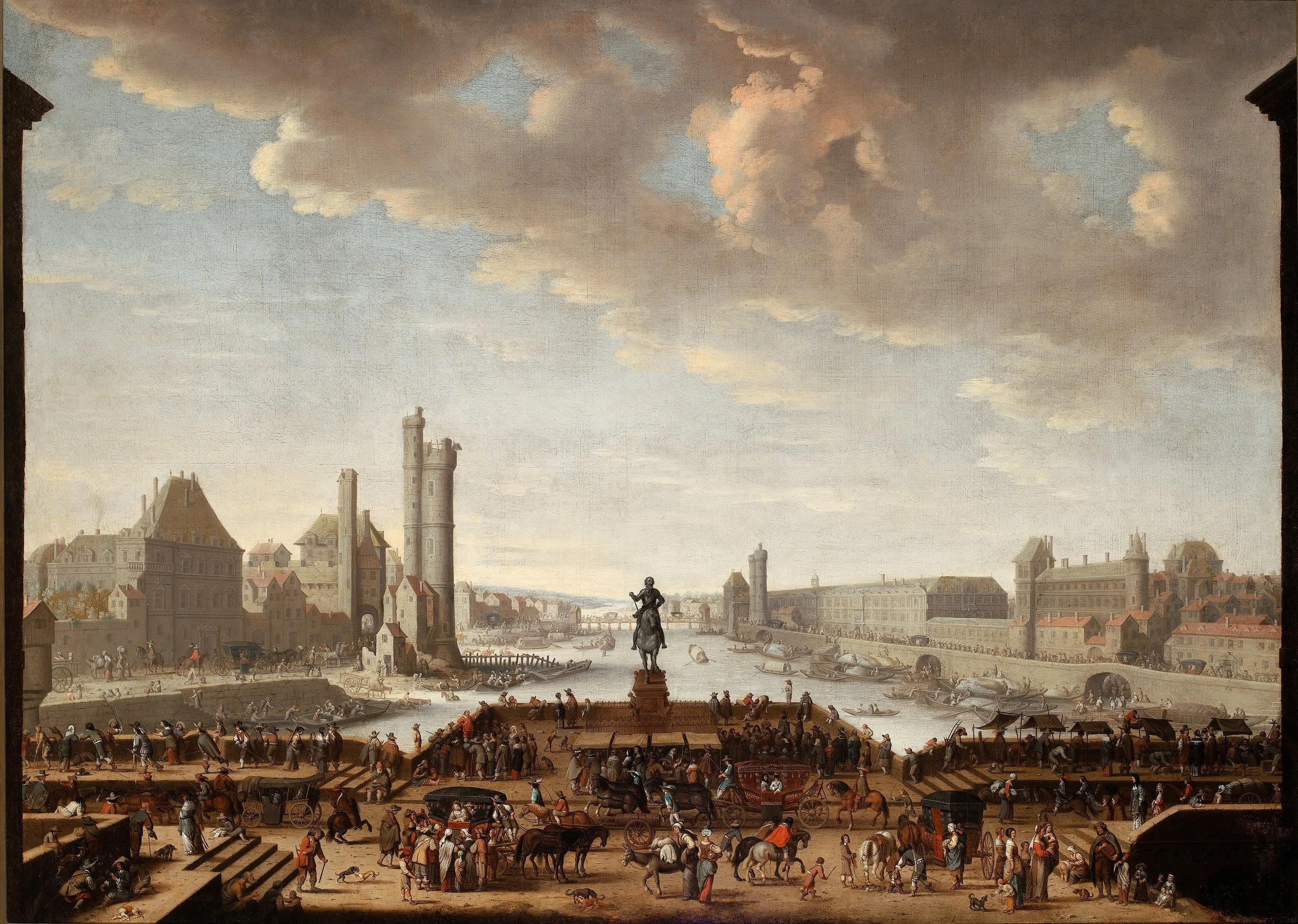
The Pont Neuf in the 1660s. By Unknown author,Jean Petit (d. 1651) (?) - www.wilanow-palac.pl, Public Domain, https://commons.wikimedia.org/w/index.php?curid=20154921
As she looked out a side window, Josephine was shocked by how many people filled the street. Louise had told her Paris was a big city teeming with people, but she’d never imagined what that looked like. Some of the people stopped and stared at their coaches as they left the orphanage, and she heard some of the men jeering at them. One of them shouted, “Whores!” as they rolled past. Josephine gasped in outrage and pulled away from the window. But the sights soon drew her back, and she gazed out at the city, fascinated by everything that had been just outside the walls of her home for all of her life.
Louise leaned close and whispered, “See, I told you,” before resting her head against Josephine’s shoulder and dozing. Josephine felt her own eyelids getting heavy, and drifted off as well.
She woke up when the coaches stopped. She couldn’t tell how long they’d been traveling but was surprised to see that they’d left Paris behind.
The door to the coach opened and a man’s voice said, “You can step out, but stay close to the coach.”
They climbed out awkwardly, navigating the small steps down to the ground with a bit of help from the soldier who had opened the door for them. Josephine stared at the surroundings. It was quiet, other than the voices of the men who were tending to the horses. She heard birds and the wind in the trees.
Their chaperones, the two women who had recruited them, finally introduced themselves as Madame Lavigne and Madame Blanchet. They were handing out bread, cheese, and wine, which most of the girls gobbled up eagerly. Josephine, however, studied her cheese before nibbling at it. She’d tasted it just a couple of times before when the orphanage had received some as a gift at Christmas. The soldier who had helped them out of the coach came back and started hurrying them inside again.
Louise groaned a bit. “I’m not used to sitting so much. I’ll have to practice for this life of leisure, though, once I have a rich husband in the colonies.”
Josephine laughed. “Rich?! I heard they all went to the colonies because they were poor.”
Sylvie, who was sitting across from them, spoke up. “I heard some of them are prisoners who were exiled from France.” She sounded scandalized, but Josephine noticed that her eyes were sparkling with excitement.
The coach lurched forward, and Louise had the final word on the subject.
“Someone owns the land and runs things in New France. I plan on finding one of them who does and marrying him.”
Same day, a few hours later
After a tolerable (at least to Josephine) continuation of the trip, they reached the convent where they would spend the night, and they arrived in time for evening devotions. Josephine wished she had kept her rosary in her pocket instead of packing it away–she felt naked without it as she knelt in the chapel.
Their evening meal was richer than any she had ever eaten. Rather than the thin broth she was used to, they were given a thick stew full of meat and vegetables. There was butter for the bread, and they were given cider to drink. After the meal, the nuns brought out something Josephine had never seen before. It was dark and sticky and smelled delicious. She glanced around to see how others were eating it, then picked up her spoon and cut off a soft bite. It was smooth on the inside and tasted unlike anything she’d had before. The exclamations from around the table told her the other women were just as delighted.
They slept at the convent that night, two per bed, two beds to a room. Josephine curled up next to Louise. Her stomach was gurgling a bit–she wasn’t used to such food as she’d eaten that day! She drifted off to sleep, hearing Sylvie’s soft snores from the other bed. What was a rare experience for all of them became routine as they worked their way to Dieppe. The farther they got from Paris, the more excited they were to reach the new world.
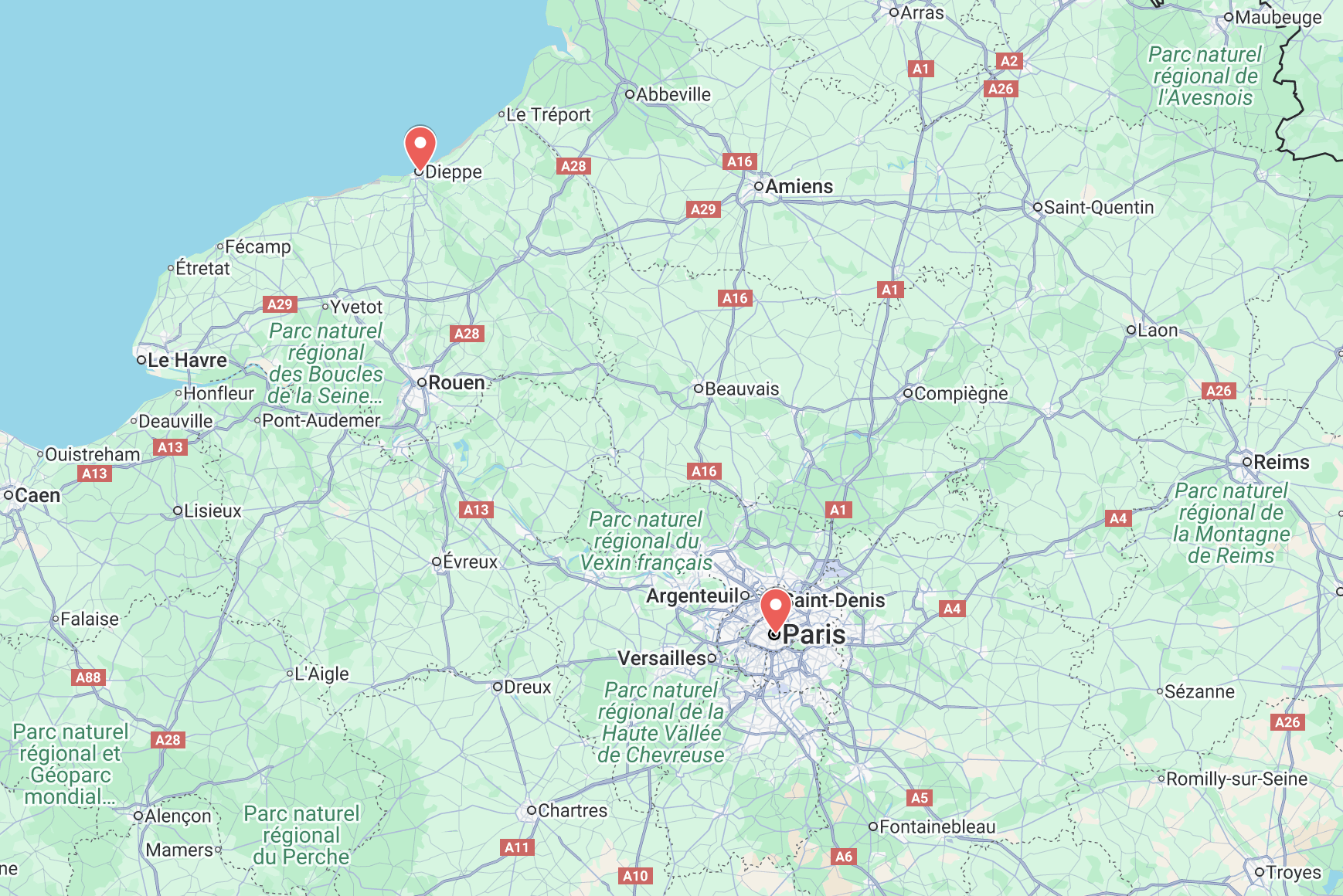
The journey from Paris to Dieppe would have taken 3-4 days. Map: Google Maps.
May, 1669
Louise worked her way down to the lower deck of the ship taking them to New France, and then quickly covered her nose and mouth with her handkerchief. Josephine had adjusted to the smell enough to breathe openly, but she still noticed the foulness. It had been bad from the beginning. Now, a month into the journey, it was almost unbearable.
Louise came and sat beside her. “How is she?”
“I don’t think she’ll last the night.”.
Sylvie had gotten the bloody flux about a week ago. Others on the ship were sick as well, but most of them seemed to be recovering, or at least not getting any worse. Sylvie, though, was one who kept getting sicker, and she had refused food for the last two or three days. Now she was sleeping fitfully, occasionally groaning with pain. Josephine was holding her hand, and Louise took her other one.
They sat with her, praying, reading Bible passages to her, and trying to soothe her when a bad stomach cramp made her groan or cry out. As the night passed, she grew still and quiet, and slowly stopped breathing. Louise and Josephine did their best to clean her up before two men from the crew came to collect her early the next morning.
They followed the men to the upper deck, and Josephine took deep breaths of the fresh, salty air. The chaperones and the rest of the women who were well enough gathered on the deck. Captain Boche offered a brief prayer before Sylvie’s body was dropped overboard. The splash it made was pathetically small. Josephine was suddenly overwhelmed by everything that had happened since leaving Salpêtrière. She rushed to lean over the railing of the ship and vomited. A sailor who saw her laughed.
“Looks like someone’s smuggling a stowaway in her belly!”
Louise glared at him and put an arm around Josephine. They found a place to sit, and Josephine pulled a smooth stone out of her pocket. Sylvie had collected a handful of pebbles from the beach at Dieppe before they boarded the ship. As they sailed away, watching the tall tower and the white brick houses grow smaller, Sylvie had handed out the stones. “This is so we can take a piece of France with us to the New World.” Josephine clutched the stone tightly as tears rolled down her cheeks.
“Josephine, look!” Louise said, pointing to the water where a pod of dolphins was racing alongside the ship. Josephine gasped and laughed despite her tears.
“It’s Sylvie!” Louise said. “It’s Sylvie going to heaven!” They held hands while they watched the dolphins leap and splash.
July, 1669
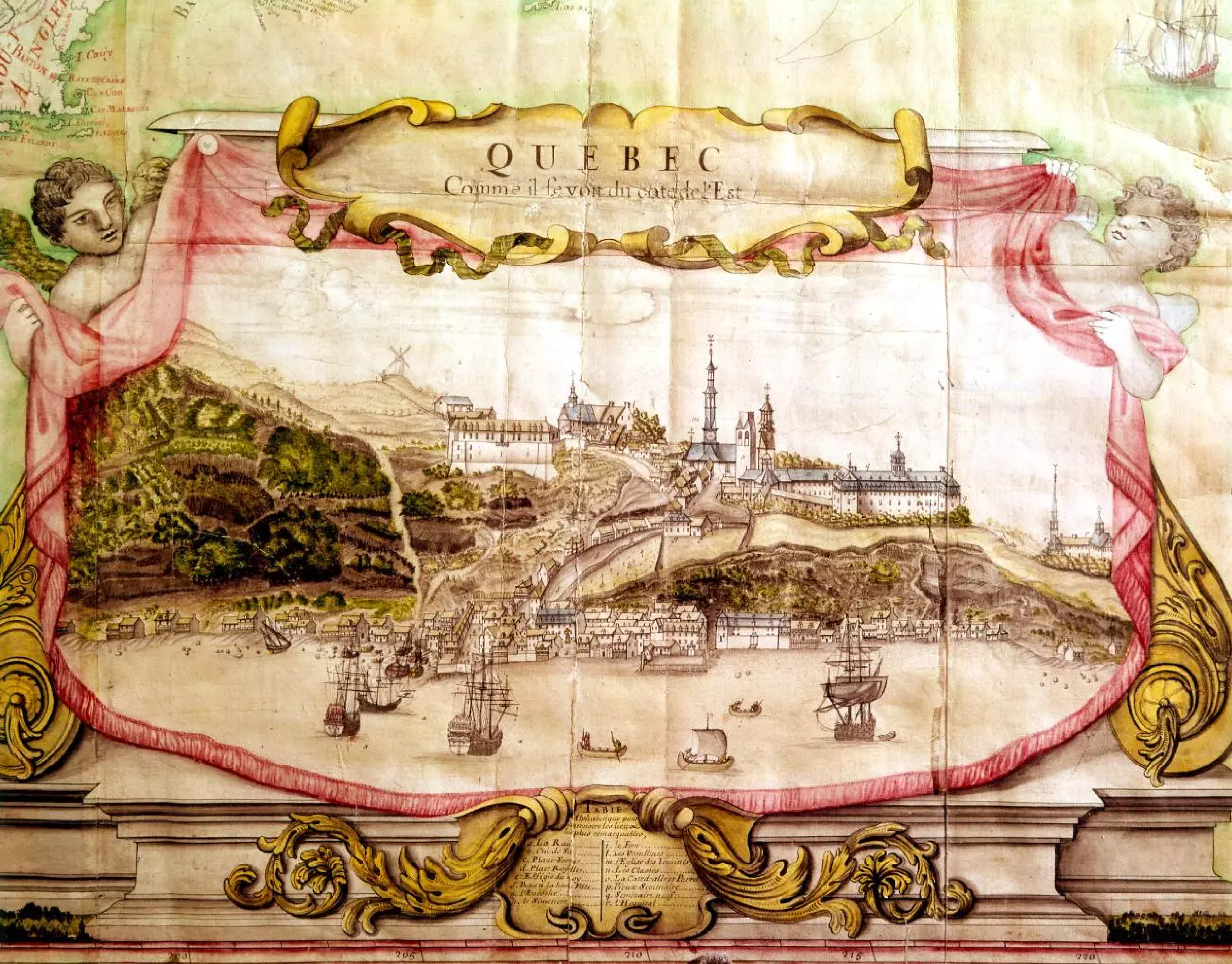
Quebec City c1688; image: quebec-cite.com
As their ship finally arrived in the Quebec harbor, Josephine reflected on the three other women who had died after Sylvie. She watched with a pang of sadness as their small trunks were unloaded from the ship. She stumbled once they were back on land. A rough hand steadied her. It was one of the sailors who was unloading their trunks.
He guffawed crudely. “You’ll get your land legs back soon. Just in time to stick ‘em in the air!”
Madame Blanchet took her arm and hurried her along the dock while Josephine blushed angrily at the loud laughter behind her. While they waited to board the wagons that would take them to the convent, she looked around at her new home: steeples jutting up over city walls, miles of green, rolling hills, and the wide river. She fanned herself a bit. The sun was hot overhead, and the air was muggy and still.
She took a deep breath of this new air and then climbed into the waiting wagon. The journey was almost done.
May, 1670
“Josephine, come look!”
Louise and Marie-Claude were peering into the wigmaker’s shop. She joined them and admired the elaborate styles even though she thought them terribly impractical. Sister Agnes gave them a few minutes, then prompted them to move on.
“You have suitors coming to the social tonight. Let’s go back so you can be rested and cleaned up before evening devotions.”
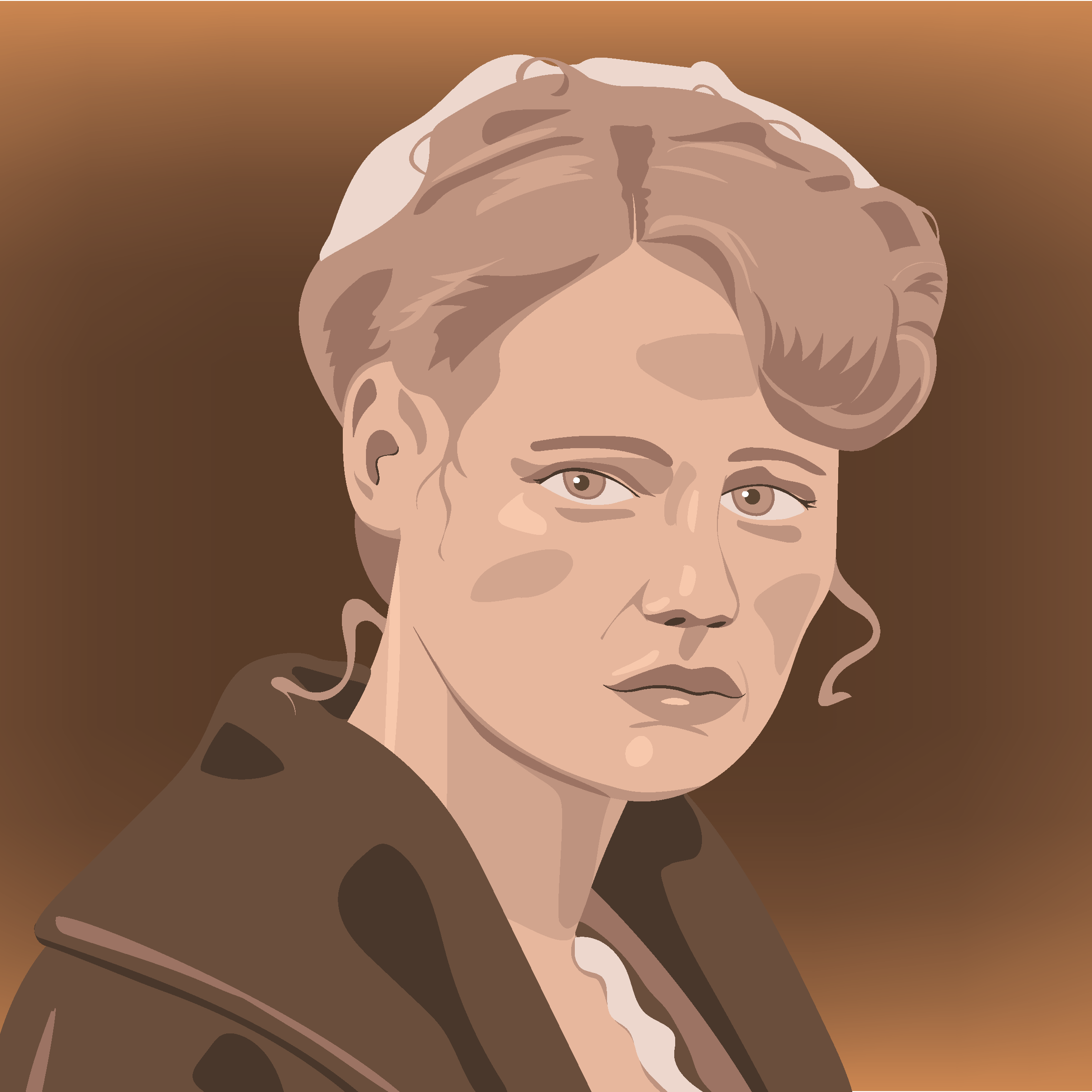
Illustration of Josephine Soulier by Charlotte Easterling
Louise and Marie-Claude walked ahead, talking excitedly. Josephine felt an ache watching them. Plump, rosy-cheeked Louise had decided quickly whose proposal she was going to accept. Jean Renaud and his older brother were traders who imported goods from France and exported furs in exchange. They were wealthy and well-connected, and Jean had been quite taken with Louise since their first meeting. Josephine was happy for her but a bit jealous too. She would be needing some fancy wigs for her new life as Madame Renaud. Josephine’s prospects were more modest.
Despite Sister Agnes’s insistence that they rest, no one did. Having a day off from their seemingly endless lessons in reading, writing, math, and homemaking, combined with the prospect of meeting new suitors left them all too excited. They washed their faces and hands before changing into their nicest dresses–provided by the king’s purse to help them look their best. Marie-Claude helped Josephine with her hair.
“If we plait it like this, it might make your face look rounder,” she said.
Helene, who was standing nearby, snorted. “Nothing will make her look plump, Marie-Claude. The best we can do is help her not look like she’ll blow away in the first blizzard.”
Louise glared at Helene. “Ignore her. She’s just jealous that you look better in green than she does.”
Josephine smiled wanly at her friend. Helene was right, though. When they first arrived in Quebec, Sister Agnes had fussed over her for being too thin, and fretted that it would make it harder for her to find a husband. And some suitors had indeed passed her over, saying they wanted a wife who wouldn’t waste away during the winter. But there were currently three men who were still courting her–two who had just finished their periods of servitude and were ready to start their own farms, and one who was a trapper.
Sister Agnes came to fetch them for evening devotions. They followed her into the chapel to pray and receive blessings. Josephine’s prayer was always the same: “Please guide me to choose the right man to be my husband and father of my children.”
At the social, a man she hadn’t met before introduced himself as Jacques Levesque. He wasn’t handsome, but he was quiet and kind.
“I have a small farm on Île d'Orléans,” he told her. “I built a house there, so it’s ready for a family. I was a soldier, and now I’m a farmer.” He wasn’t boastful, which Josephine liked. She smiled at him.
I believe I would like to see his little farm, she thought.
October, 1676
“Don’t drop that pumpkin, Antoinette!” Josephine called to her daughter as she carried it awkwardly to the root cellar.
“I won’t, Maman!” she called back, then scolded her younger brother when he tried to follow. “Paul, you stay there. You’re too young to help,”

The interior of Maison Drouin at Ste Famille, built 1730, shows what Josephine and Jacques’s home may have looked like. Photo: S. Girard, bonjourquebec.com
Josephine sighed as Paul began to cry. She was kneading bread dough and didn’t want to leave it, so she sang “By the Clear Fountain” to him until he quieted down. Jacques came home while she was singing and laughed with delight. “We’re singing!” he cried and launched into a bawdy drinking song. When he was done, he dropped into a chair in front of the fire and was quickly snoring away.
Josephine sighed again as she shaped her loaves and covered them. Antoinette was fetching another pumpkin, and giggling at Jacques’s snores and snorts. Josephine groaned a bit and pressed her hands against her low back. She was only three months along, but already her body felt heavy and tired. She was relieved that Manette, their youngest, was still sleeping–it gave her a chance to rest for a few minutes. Paul, his tears forgotten, had gone back to playing with his wooden soldiers.
As she settled into a chair, Josephine studied her sleeping husband. The work on the farm had been hard for both of them, and she had tried not to be angry when he went out drinking with ex-soldier friends. Their little house sat on an island in the Saint Lawrence river, giving them stunning views of the water and the thick forest on the other side. Rather than content, though, she felt trapped. Jacques was gone frequently, and life on the island was isolating. Still, she felt safe here. The woods scared her–she had heard tales of wild animals, Indian attacks, and strange creatures ever since she arrived in Quebec. The sounds that carried over the water at night convinced her to stay close to home.
Antoinette came back and leaned against her mother. Josephine put an arm around her. Despite his faults, Jacques had done as he’d promised. He’d given her a home and a family and kept them all safe. They weren’t wealthy, but he managed to provide for them. With a pang of guilt, she thought of the ham that was smoking in their chimney, and the sugar that he had brought home so she could make fruit preserves.
Yes, he’s been good to us, she thought, then got up to check on the bread.
October 10, 1679
“Hold the basket level, Paul, or the potatoes will spill out!”
Josephine was trying to keep an eye on him while she tugged carrots out of the garden. Antoinette was watching Manette and Georges, who was not yet two, but Paul had insisted on coming to help in the garden. He’d been prattling on in great detail about the mighty battles his wooden soldiers had been fighting, and in his enthusiasm, he’d almost lost the produce she’d dug up.
“Like this, Maman?” he asked, concentrating intensely while he held the basket almost level.
“Yes, mon cher, very good,” Josephine mumbled. She was distracted by the weather. Dark, threatening clouds had been gathering since morning, and the temperature had been dropping. The wind was picking up and heavy drops began plopping against the leaves of the pumpkin plants. Josephine quickly gathered a few more carrots, moved the thick cover of straw back over the ones she left in the ground, and then took the basket from Paul.
“Run on ahead and go inside with your brother and sisters,” she ordered.
Josephine watched Antoinette herd her younger siblings inside. She paused to watch the trees across the river shiver and shudder in the wind.
All the leaves will be gone after this storm, she thought, already dreading the view of bare trees she’d have until spring. She wrapped her shawl tighter around herself and whispered a brief prayer for Jacques to get home safely, then hurried inside.
The storm grew stronger as afternoon passed into evening. Although she tried to focus on her cooking, Josephine kept finding reasons to peek out the window to see if Jacques was coming to the door. An especially hard gust of wind blew something against the house, scaring Georges and making him cry. Manette hesitated for just a moment before joining in.
“Paul, sit with them by the fire, let them play with your wooden horses,” Josephine said.
She took the bowl of peeled carrots from Antoinette and began chopping them. She peeked out the window again.
Where is he? She was acutely aware of the worry gnawing in her stomach.
Jacques didn’t come home in time for supper, so Josephine and the children ate without him. She, Antoinette, and Paul took turns reading from the Bible, and then they worked on writing and arithmetic while Josephine put Manette and Georges to bed. Even as she sang to them and tucked them in, she was listening for Jacques.
It was hours later, after Antoinette and Paul had also gone to bed, that there was a knock at the door. Josephine answered, dread washing over her. It was Louis, one of their neighbors on the island. He had his hat in his hands, and he was soaking wet. She hurried him inside to sit by the fire.
“Josephine, I’m so sorry to tell you–the ferry capsized in the storm and Jacques was lost in the river. We searched the shores as long as we could, and we’ll go out again tomorrow, but I’m afraid he’s gone.”
She sunk into the other chair by the fire–Jacques’s chair.
I’m a widow, she thought. Not even 30 years old, and I’m a widow.
Louis put a hand on her arm. “I’m going to go home. I’ll have Sophie come tomorrow to sit with you,” he said.
She nodded numbly. She didn’t look up as he opened the door on the raging storm that had taken her husband away.
October, 1684
Josephine fidgeted, trying to get comfortable so she could sleep. She lay on her side, Etienne next to her with his arm thrown loosely across the expanse of her belly. He mumbled something about dogs dancing in the river, and she poked him lightly in the ribs to make him turn over. He flopped onto his back and slept quietly.
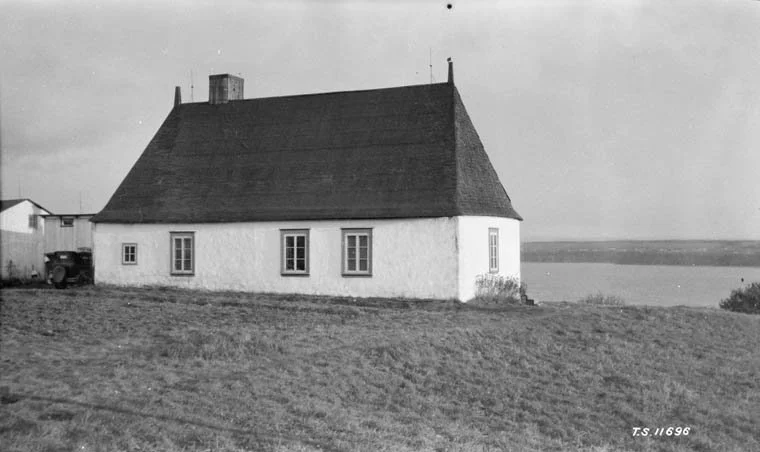
A classic rural New France home; photo: Wikimedia (public domain)
She smiled a bit, looking at him. She’d been reluctant to remarry quickly, despite the reminders she received from Father Aucoin and Sister Agnes that God had sent her here to marry and raise children. She was still young, they told her, and her suitors were eager to start their own families.
Etienne Beaudet hadn’t been in Quebec long when Josephine met him. He was a stonemason from Rouen, just a year older than her. He talked little about his life in France, but then, she also didn’t talk much about her old life. Josephine closed her eyes, listening to his slow breathing. This marriage was not what she had expected. She and Jacques had cared for each other and worked hard together on their little farm. She’d been content. She and Etienne, though–they loved each other almost from the start. And the past had weighed heavily over her and Jacques–his memories of being a soldier, and her experiences as an orphan in Paris. With Etienne, all that seemed far away and nearly inconsequential.
She thought about the conversation she, Etienne, and Paul had had at dinner earlier that evening:
“Please, Maman! I want to be a mason like Papa!” he’d pleaded. “I promise I’ll still work on my lessons too!”
She didn’t respond to Paul and instead addressed Etienne. “Isn’t he too young?” The boy was small and bony, despite the fact that he seemed to eat whenever he wasn’t sleeping.
“He’s a bit young for an apprenticeship,” Etienne had replied. “But I’d keep a close eye on him.” Etienne had looked at Paul appreciatively. “It’d put some muscle on him, too.”
The wind had blown a flurry of leaves against the window just then, reminding Josephine of the October storm that had killed Jacques.
“Not yet,” she’d said decisively. “He’ll be 12 in April, and he can start then.”
“But Maman!”
“Paul, your mother has made her decision,” Etienne had said, then he’d given the boy’s arm a squeeze. “Keep working on your math. It’ll be important when your apprenticeship starts in six months .”
Josephine turned over laboriously, smiling ruefully at the memory. She knew where Paul had gotten his physique. She remembered the skinny little thing she’d been when she arrived in Quebec. Since then, it seemed she lived in a perpetual state of roundness–belly full of baby and breasts full of milk. This one would be her fourth with Etienne. She closed her eyes again, on the edge of sleep, when a low, deep cramp settled into her belly. She sighed, and worked her way up to sitting on the edge of the bed. She would send Etienne to fetch the midwife in the morning–there was time. But her attempts at sleep tonight wouldn’t be successful. She got up to stoke the fire and get everything ready for what would be a long day ahead.
May, 1688
Josephine thought back to that day, when Marie-Madeleine had arrived. She was born with a full head of curly light brown hair like her father’s. Then Gabrielle, less than two years later, had been bald and pink at birth, then full of curiosity when she began to toddle around. The comfortable stone house had been full to bursting with nine children, much to Etienne’s delight. He’d always loved children and had gladly become a father to her first four when they got married.
The memory rushed back to her, and brought with it tears, as she placed a small bundle of flowers on the shared grave where Etienne and their two youngest daughters rested. The measles epidemic had burned itself out by the time the spring flowers had begun to bloom, but it seemed to have taken someone from every family in Rivière-Ouelle.
“I have something to tell you, mon cher,” she whispered to Etienne. “You would have been so happy to hear this.” She placed her hand against her belly, which was just beginning to swell. “One last child for you and me.”
Paul was walking across the cemetery toward her. Antoinette and Manette hung back, watching their younger siblings.
“Are you ready to go back, Maman?” he asked when he got close. She smiled at him. He was the very image of Jacques. He had stepped into Etienne’s role as the head of the family without hesitation. He was only 15, and hadn’t completed his apprenticeship as a stonemason, but he was already taking care of her and his siblings.
Paul held out a hand to help her get up from where she was kneeling. She cast one last look behind her as they walked to the wagon together.
November, 1692
The coach rolled to a stop outside the manor house, and one of Pierre-Henri’s indentured men hurried forward to open the door. He put out his hand and helped Josephine down and then lifted Jean-Etienne out. Josephine took her youngest son’s hand. He was anxious in new situations and stuck his thumb in his mouth. He had just turned four, far too old for that behavior, but she let it go for now. Pierre-Henri strode out to the carriage and greeted her with a kiss.
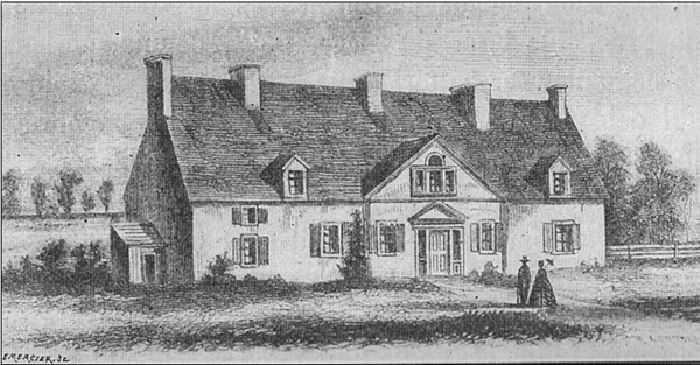
A seigneur’s manor, mid 1700’s; image: societies.learnquebec.ca
“Welcome home, ma chere!” he boomed, then looked behind her slightly wide-eyed as her children poured out of the coaches and his servants unloaded trunks.
“Six of yours plus seven of mine,” he said. “Luckily, we have plenty of room here.” He swept his hand back proudly toward the house.
Pierre-Henri Martin had a relatively small seigneurie in Rivière-Ouelle, but he was still quite comfortably wealthy. He’d lost his wife and youngest son to the same measles outbreak that had claimed Etienne and their youngest pair of daughters. Also like Josephine, he hadn’t been in a hurry to remarry. It had been Louise, who also lived in Rivière-Ouelle with her husband and nine children, who had introduced Josephine to Pierre-Henri.
“You’re too young to live out your days alone,” she’d told Josephine. “Besides, he’s 15 years your senior. Half of his children have already been married off, so he needs to fill up that big house of his.”
Isabelle, the nanny, came out to fetch the younger children. Manette and Georges glanced over at Josephine, and she waved at them to follow. This would be an adjustment for everyone. Jean-Etienne began to wail when Isabelle picked him up to take him inside.
“He’ll be fine,” Pierre-Henri said. “The little ones will adapt the fastest.” He took her hand and tucked it into his arm. “Now, Madame Martin, let me welcome you home properly and introduce you to everyone. You’ll want to spend time with the cook so you can plan the feast for our party next week.”
Josephine’s head spun a bit. It wasn’t just the children who would need time to adjust. She felt a bit embarrassed–at 43, managing a household shouldn’t seem like a daunting task. But it did.
Louise would be coming to call tomorrow, and Josephine planned to ask her advice. Just like at Salpetriere, she thought. Louise has always looked out for me. She walked into her new home, feeling proud and nervous as she looked around at the large rooms that she would never have to clean. She heard voices coming from upstairs–her children meeting their new siblings. She smiled up at her husband. She wanted to make him proud of her. She gave his hand a squeeze and then turned to meet her household staff.
February, 1694
“Are you awake, Madame?” Isabelle asked as she poked her head in.
“Yes, please bring her in,” Josephine said. She wrapped her shawl more tightly around herself, then held out her hands for the little bundle. Isabelle settled baby Armandine in her mother’s arms, and then turned to put another log in the fireplace. The winter had been bitterly cold, but it was cozy by the fire.
“Also, Madame, you have a letter from your daughter.” Isabelle handed her the envelope, then quietly slipped out of the room. Josephine read the letter, which included the news that she would be a grandmother for the third time later this year. She laughed and bounced Armandine when she began to fuss.
“You’re going to be an aunt again, little one, and you’re only two weeks old.” Armandine gurgled in response and stuck out her tongue. Having another child when she was 45 and already a grandmother had hardly been something Josephine expected. Pierre-Henri was delighted, of course, and maybe just a bit boastful about still fathering children at the age of 59.
Josephine picked up her mother’s rosary from the night table and showed it to her daughter.
“This belonged to my maman, chere’” she said softly. “I got it when I was just a baby, and now it’s yours.”
Armandine’s face was solemn and uncomprehending as she gazed at the cross. Presently, tiny eyelids fell. Josephine smiled and gently stroked her daughter’s cheek, certain Maman was pleased her name and rosary had been handed down to a new generation.
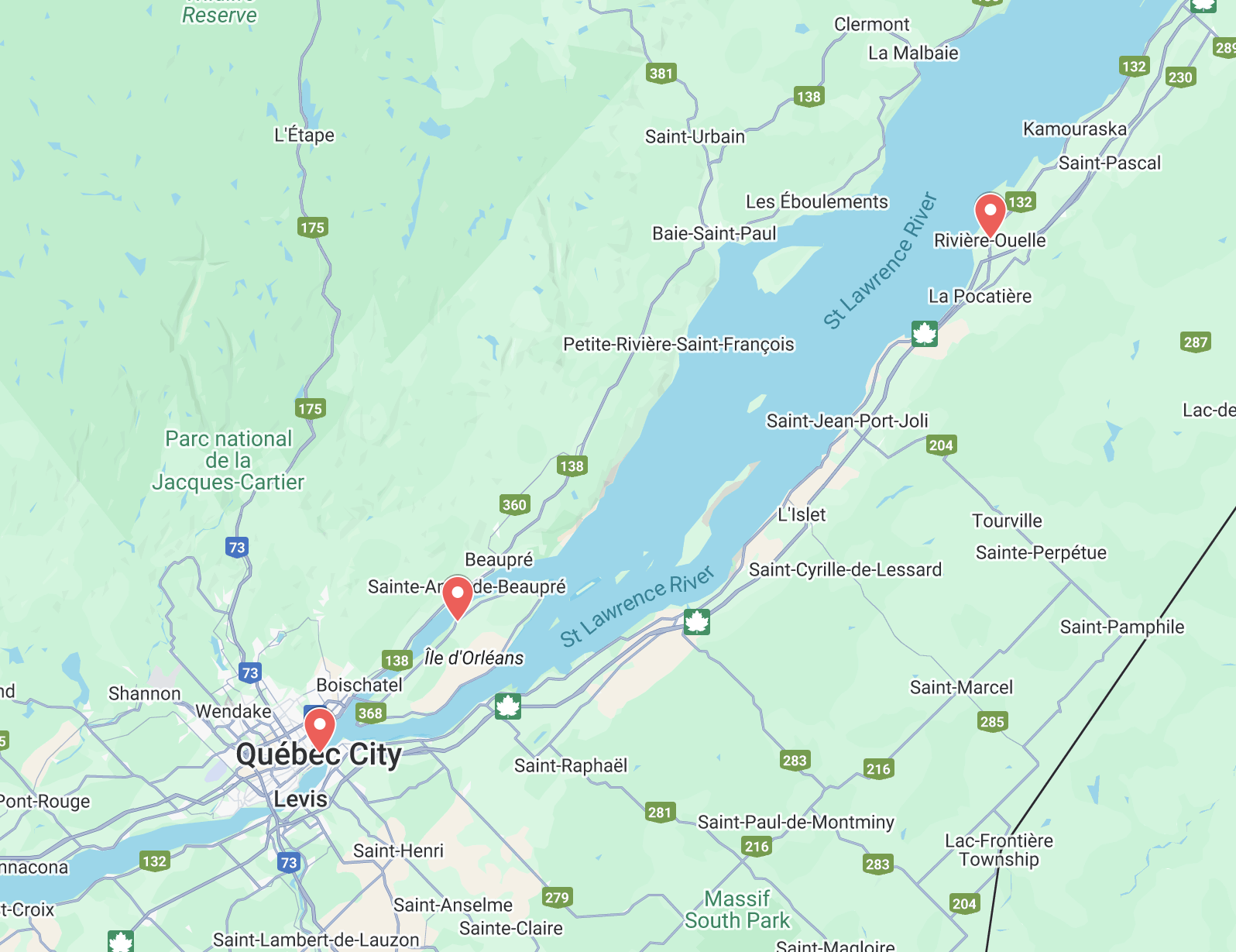
The filles du roi disembarked at Quebec City (left) and stayed there until they married. Josephine’s first two husbands lived at Ste Famille, on Île d'Orléans (center). When Josephine married Pierre-Henri, they lived in Rivière-Ouelle (right). Map: Google Maps.
Subscribe to learn more about the real people
and historic events behind this story.
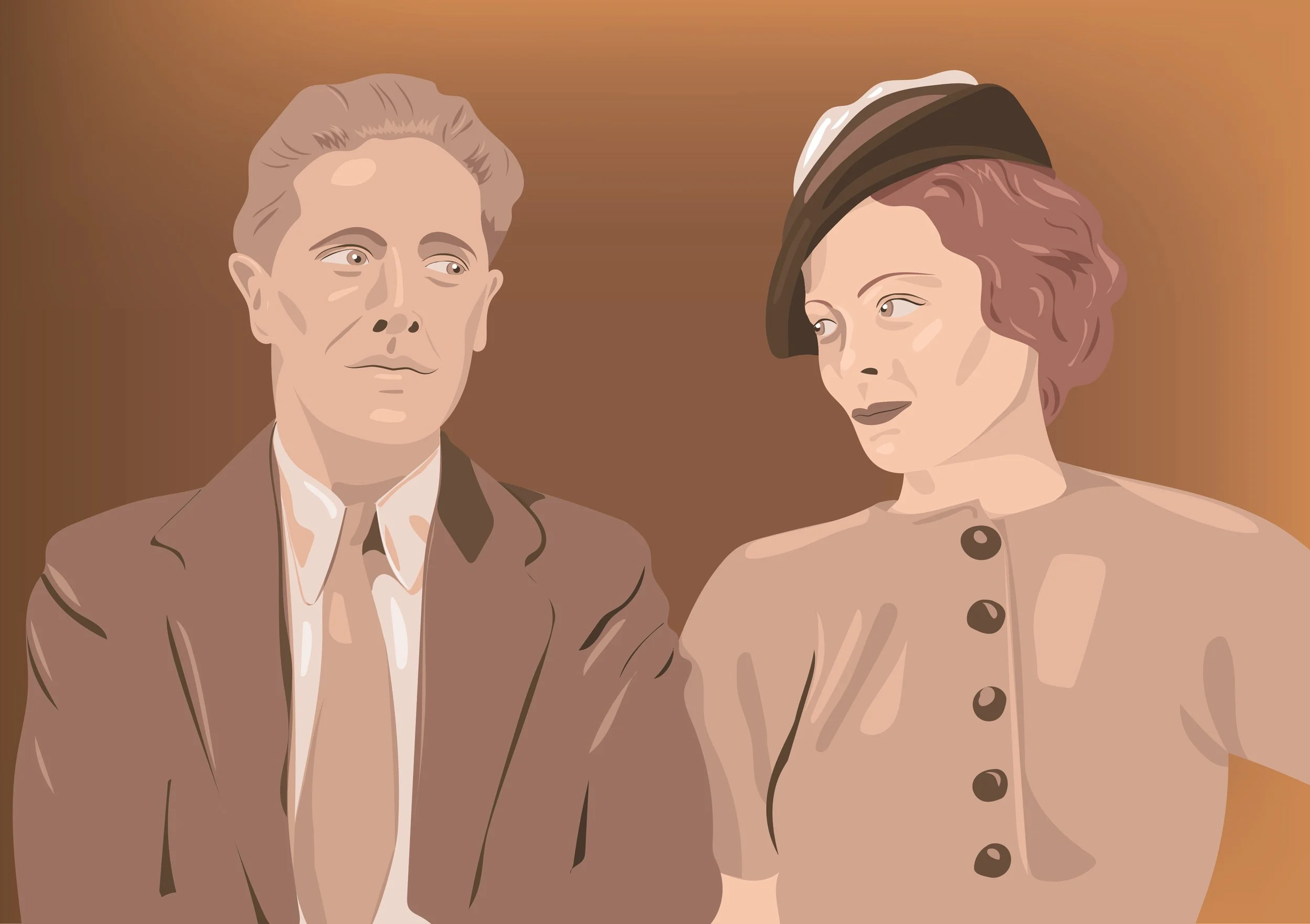
The Arrangement
Joe and Harriett weren’t a typical couple. This is a bonus post for paid subscribers. Join today to read on!
Joe Croft walked into the diner and scanned the few occupied seats. He quickly spotted the nervous-looking redhead sitting in a booth toward the back. He removed his hat as he approached and stopped at her table.
“Are you Harriett?”
She leaned away from him and eyed him suspiciously, then nodded and pointed her cigarette toward the seat across from her. Joe slid into the booth and placed his hat and shopping bag next to him. Harriett studied him through the veil of cigarette smoke. Her eyes were intensely blue.
Subscribe to see the rest of this post and
other bonus content from The Relatives.
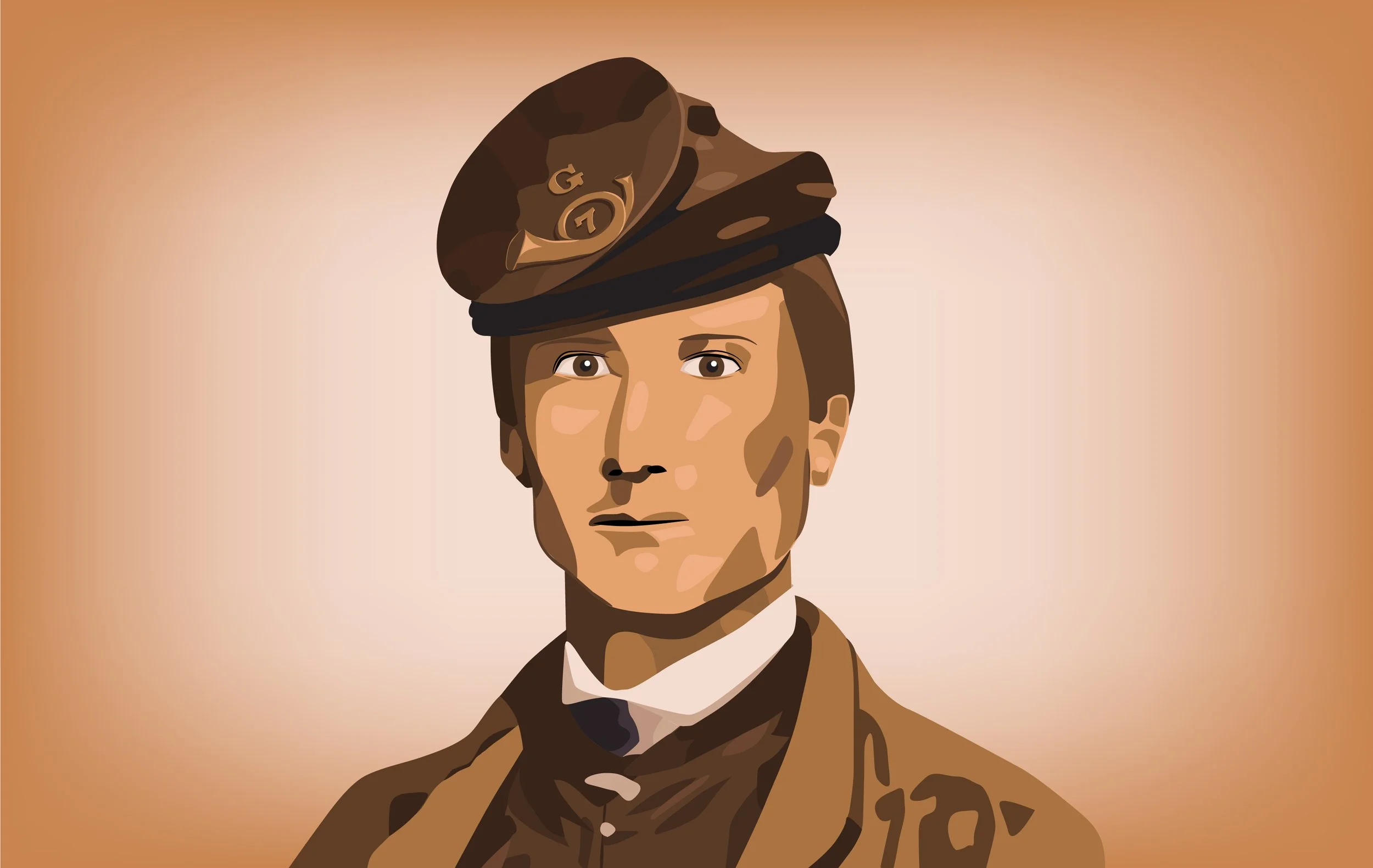
A Soldier’s Path
A young soldier discovers the grim realities of war and becomes a witness to history.
Written by Eric Shipley & Charlotte Easterling
August 22nd, 1862
Landon fidgeted under the late summer sun of Athens County, Ohio as he stood in a line of men waiting to enlist in the Union army. His older brothers, George and Liam, had signed up a year ago. Landon had wanted to lie about his age and join up with them, but they had insisted that he wait so he could help out on the family farm for another year. Landon had agreed but only grudgingly so.
He wiped sweat from his shock of dark, curly hair and fanned himself with his hat. He wasn’t especially tall, but his frame was lean and wiry strong from having done farm work his whole life.
The man behind him, a neighbor named Curt Blasedell, muttered, “Reckon we oughta get used to being uncomfortable. Being in the army’s a far sight worse from what I hear.”
“Yep,” Landon agreed. “I believe you’re right.”
There were many other familiar faces, almost all from farms in the county. They were mostly 18, like Landon, or maybe 19. (A few were a little older, but not by much.) Landon had talked with some of them and found that they shared many of the same reasons for enlisting: wanting to defend the Union, needing steady pay, and some were simply looking for adventure. Many admired President Lincoln, just as Landon did, and didn’t believe any state had the right to secede. And there was the slavery question. Ohio wasn’t a slave state, and his family had never owned slaves. They weren’t reformers or radicals, like those abolitionists, but his folks had always taught him slavery was wrong. That was one reason he respected the President so much.
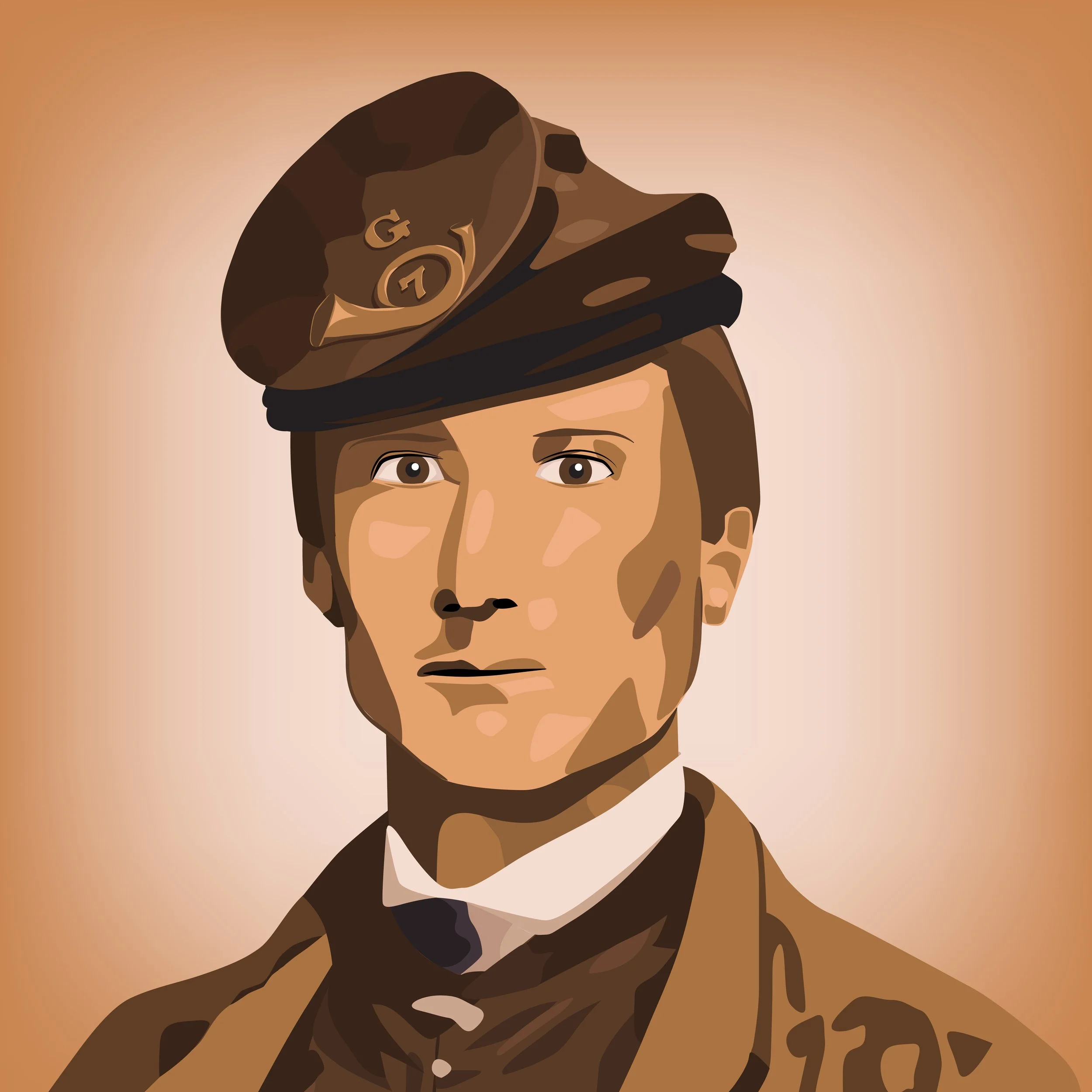
Portrait of Landon Baird. Illustration by Charlotte Easterling.
The newspaper had often published stories about Lincoln and his speeches and such, so there was no doubt he hated slavery and loved his country. He was clearly determined to keep it united. Or see it reunited, as that was now what was needed.
Landon had talked with his family about all of this, and they accepted it. What he hadn’t talked about was the fact that he wanted to get away from the farm and experience life. He’d been born smack dab in the middle of a passle of brothers and sisters and often felt lost in the shuffle.
The line moved forward and he was at last at the table where he would sign his enlistment paper. A tired-looking Union soldier asked some questions and filled in the open spaces, then pushed the paper at him and handed off a pen.
“Sign your name or make your mark there,” the soldier said curtly and pointed at the line for his signature.
He was proud that he could read and write, and took a moment to look over the terms of enlistment. The soldier cleared his throat impatiently and looked exasperated, so he dipped the pen in the ink bottle and, with a flourish, signed his name: Landon K. Baird.
September 9th, 1862
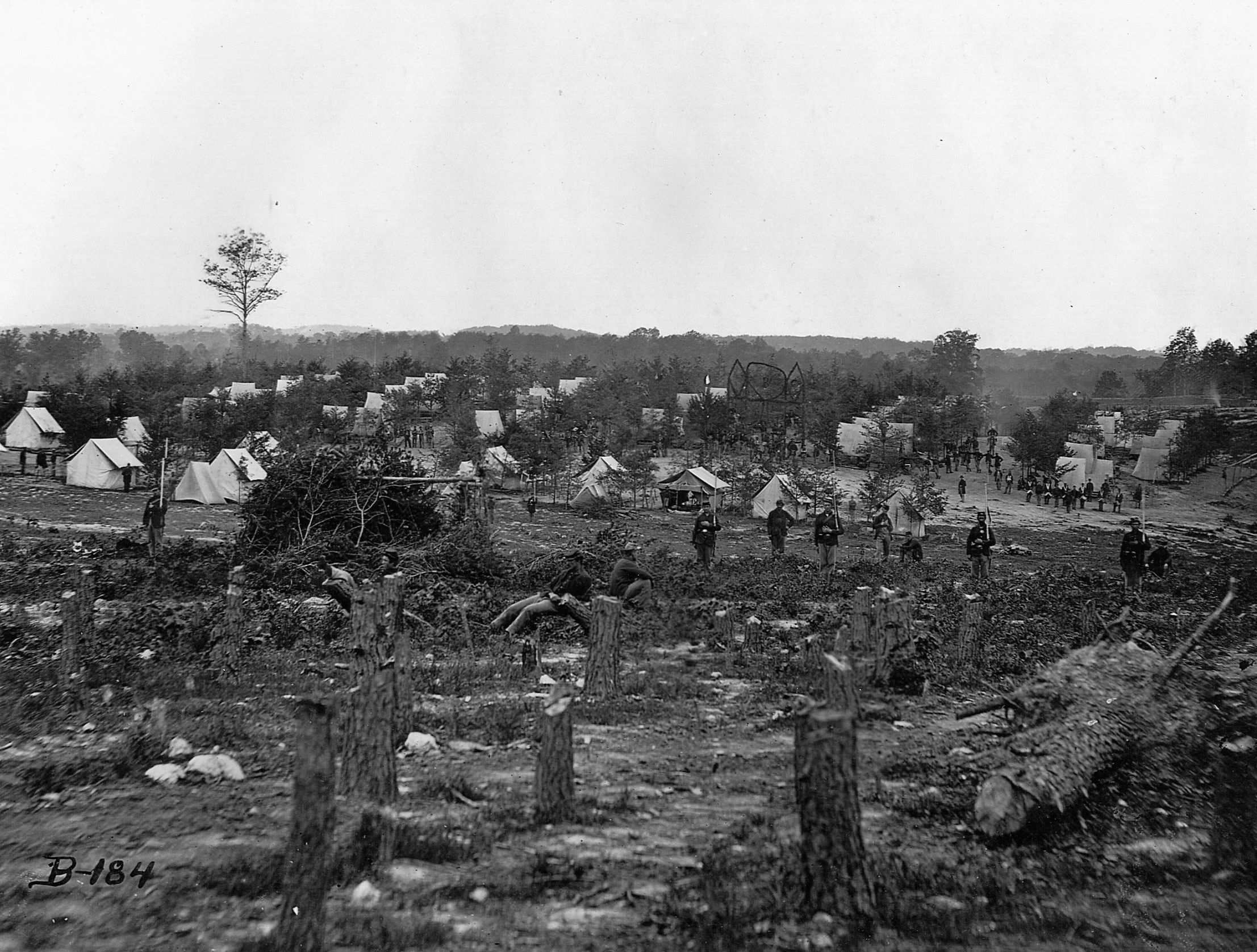
Photo of a Union camp during the Civil War. Photo: warfarehistorynetwork.com
Camp Marietta, where the 92nd Ohio Infantry Regiment was stationed, was pretty much what Landon had expected–muddy and dank with lots of tents and rough shacks, but it was actually no worse than the camp where he’d done his basic training.
He took out his orders and showed them to the guard standing duty at the entrance.
“You’ll be wantin’ to check in with Colonel Putnam,” the guard said and pointed out a shack in the distance. Landon thanked him and trudged off with his small pack. He hadn’t gotten very far when he heard…“Well now, boys, I do believe we got us some fresh fish!”
This from a grizzled soldier of indeterminate age (in a tattered uniform and kepi) who sniffed the air dramatically. This brought chuckles from other similarly grizzled soldiers of indeterminate age (in similarly tattered uniforms and kepis) who stood with him outside what looked to be a mess hall.
Landon felt his face redden. George and Liam had warned him that “fresh fish” is what the older soldiers would call him as a new recruit, but it still made his self-consciousness about being so fresh-faced that much worse. He briefly considered a biting response but decided, wisely, to stay on the way to report to his commanding officer, one Colonel W.R. Putnam who was a lean, older man with graying hair and beard and a stern demeanor.
“Welcome to the 92nd, Private. Go get your uniform, and kit, and ordnance,” he said brusquely. “Get a bunk too. Dinner’s in an hour in the mess you must’ve passed getting here. Better get a move on.”
“Yes, sir!” Landon replied with a salute. He got a perfunctory handshake and was dismissed.
He was glad the meeting had been so mercifully short, and actually, it ended on a good note. He was on his way to get his uniform! It was something he had been looking forward to… until he tried it on. It was hot and itchy, and it didn’t fit well.
This was when he truly came to appreciate his “housewife.” Not a real woman (although he sometimes wished it was), no, “housewife” was what soldiers called their sewing kit. Liam and George had told him to take it when Ma offered and to thank her for it. He had done so but now resolved to thank her again in his next letter. Without those needles and buttons and thread, there was no way he’d make his uniform fit and keep in good repair. So he’d done his tailoring, and then he sat for his first photo (a Daguerreotype) in his uniform, looking proud but a little apprehensive too. In years to come he would look at that photo and reflect on how the apprehension was altogether reasonable.
September 17th, 1863
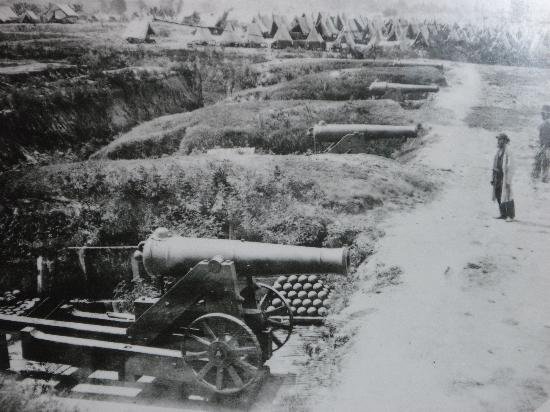
Photo from the Chickamauga Battlefield. Photo: tripadvisor.com
The 92nd was stationed at Chickamauga, Georgia, about 12 miles southeast of Chattanooga, Tennessee. They’d be moving out first thing tomorrow morning with three other Union regiments, marching to battle with the damned graybacks at Chickamauga Creek. It wouldn’t be Landon’s first real fight, so he knew what to expect, or at least he thought he did. He couldn’t figure out why, but he felt the same strange mixture of excitement and terror at the prospect of another battle.
At least it’ll break up the boredom, Landon thought, then remembered what he’d seen in the field hospitals when he’d helped carry wounded. How could he be excited about an engagement that could leave him dead or with some gruesome wound like he’d seen? The prospect of being in the hands of the sawbones (army surgeons) made his stomach churn. They got the “sawbones” nickname because their favored tool was the bone saw. For amputations. And the agonized screams that came with those amputations always lurked at the back of his mind.
He shook his head, trying to clear it, and looked down. There were his muddy, damp boots, which brought another remembrance–early on, his brothers had given him emphatic orders to take care of his feet! And Landon had learned the wisdom of those orders. So, instead of just sacking out on his bedroll with his boots on, he took them off, along with his damp socks, and set them inside his tent to dry.
A sergeant from one of the other regiments noticed this as he was passing by.
“You got good training, Private,” he said, coming over and sitting down with a grunt. (He sported a bit of a paunch and stubble that may have been gray.) “The last thing you need is your feet rotting out from under you.” He rolled a cigarette and looked over at Landon. “First battle?” he asked gruffly.
“Nope.”
“Still nervous though, eh?”
Landon nodded ruefully.
“I am too,” the sergeant said then snorted. “And I’m one o’ them battle-hardened soldiers, or so they say. No shame in being nervous, son. Just remember your training and keep your head about ya.”
Landon found he could only nod again.
The sergeant offered him the cigarette he had just rolled, and Landon took it, even though he didn’t smoke much. The older man rolled another one for himself and they smoked quietly (except for Landon’s occasional coughing) for a few minutes. At last the Sergeant flicked his cigarette stub into the mud and stood up with another grunt.
“Take care of yourself,” he said and they shook hands.
“You too, Sarge.”
It was the older man’s turn to nod. He gave a tight smile, then turned and headed back to his regiment. Landon never saw him again or found out what his fate was. He hadn’t even learned his name.
September 18th, 1863
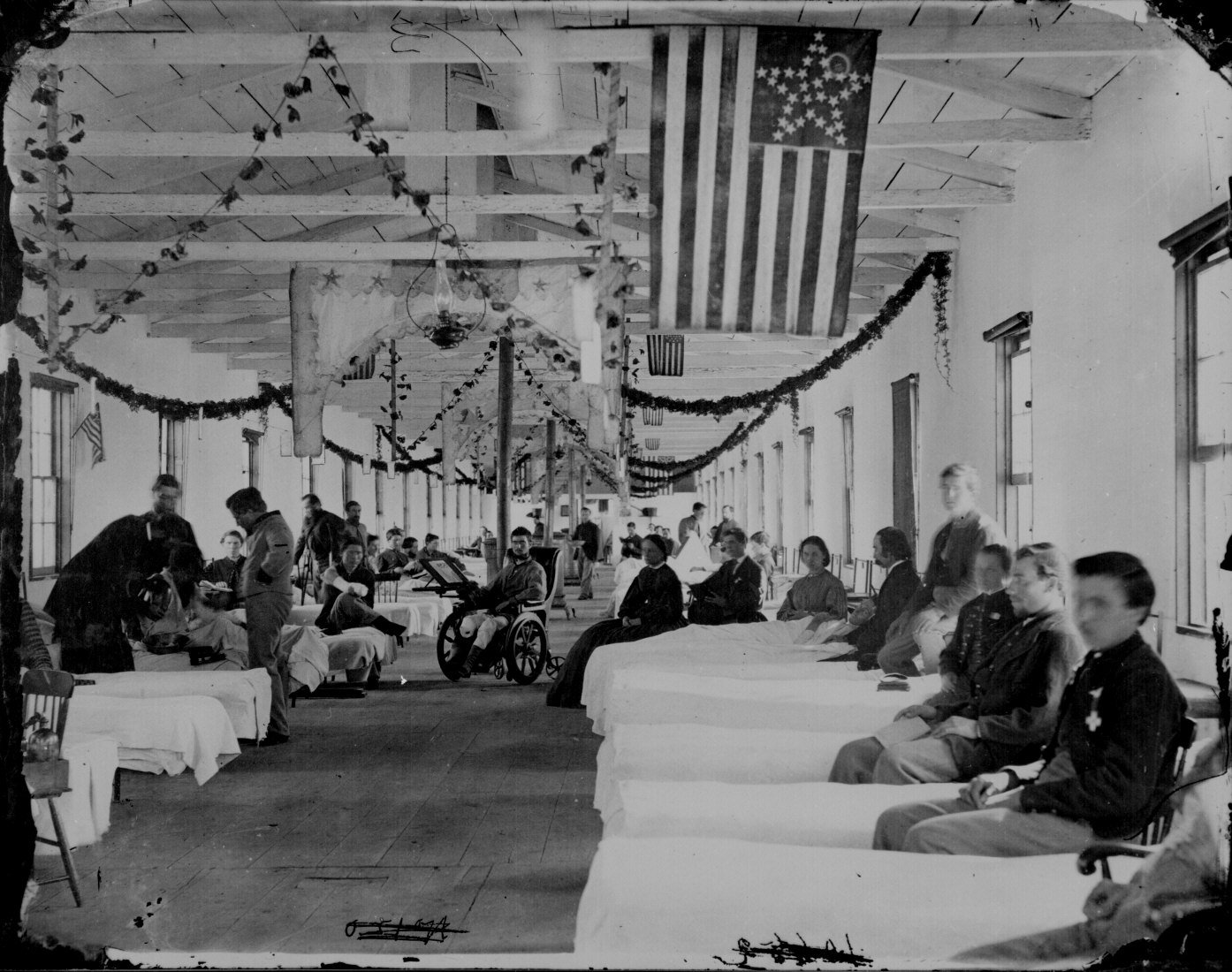
Ward in the Carver General Hospital, Washington, D.C. Photo: National Archives
The battle was worse than anything Landon had ever seen. They were fighting in dense woods, and there was more of everything: smoke, screams, blood, gunfire… and a cacophony of noise. The only thing Landon could hear over it was the sound of his own heart pounding. But he remembered his training, like the sergeant had said, and threw himself into the battle. He stayed focused, even when bullets whistled past.
He fired again and again, and part of his mind recoiled when he saw bodies falling, knowing that he probably had shot at least one of them.
Landon ran forward, and then was stopped by a burning, blinding pain in his right foot. It felt like it was on fire. He looked down, horrified, and saw a mess of blood and shredded boot leather at the end of his right leg. He screamed and dropped to his knees, and the last thing he remembered was being dragged from the battledfield.
May 26th, 1864
Landon wouldn’t see combat again. His foot was too badly injured to be in the infantry, but it was still there, for which he was thankful. It was dreadfully sore most of the time, but when he saw all the veterans with missing limbs, he felt it wouldn’t be right to complain.
After being released from the hospital, Landon had been transferred to the Veteran’s Corps and was now stationed in Washington D.C. He could still handle a rifle and stand and march (although haltingly and with a limp), so he was allowed duties like standing guard. And that was what he was doing this particular day, at none other than the White House!
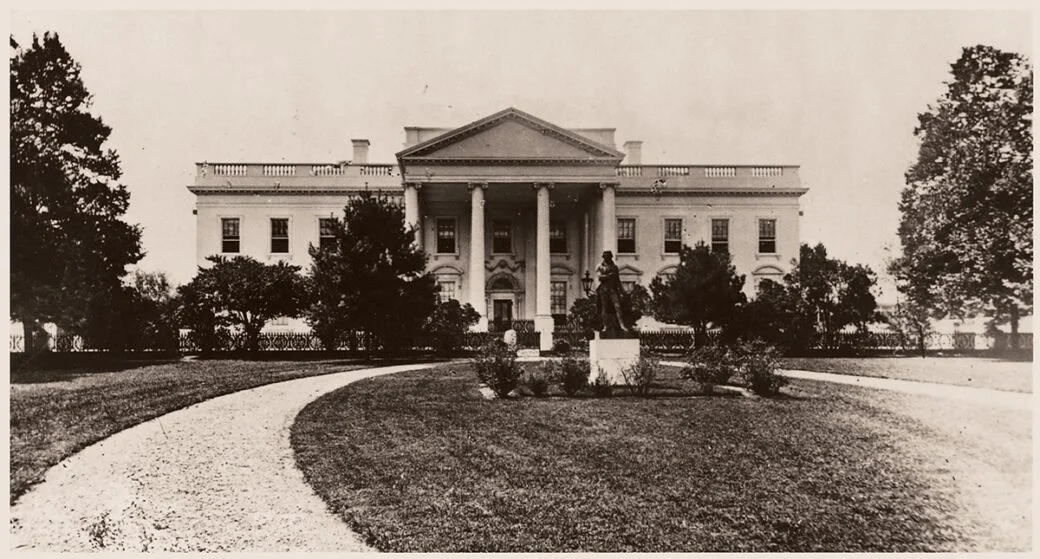
North Front of the White House at the time of Lincoln's inauguration. Photo: Library of Congress
It was humid and the sky looked like a storm was on the way, and sure enough, it wasn’t long before a mighty cloudburst came and drenched everything. He tried not to let the awful pain in his foot distract him–he was determined to stand his watch faithfully, so he kept an eye out for anything amiss, which was hard to do through the sheet of heavy rain. He did see, however, that someone had come onto the porch and was waving him over urgently. He was loathe to leave his post but also worried that something might be seriously wrong. Given that this was the White House, he decided it was better to find out what was going on and hurried over, trying not to limp. It didn’t take long for him to see it was President Lincoln beckoning him.
He got to the porch as quickly as he could and saluted.
“Come stand on the porch until the rain lets up,” Lincoln told him. His voice had a noticeable southern twang. Kentucky maybe?
“Sorry, sir, I have orders to stay at my post,” Landon replied.
“Lincoln’s giving the orders here,” came the sharp reply.
Landon saluted again and said “yes sir!”
He stepped onto the porch and appreciated the relief from being pelted by the driving rain. The President came to stand beside him, and Landon saw that the descriptions of his great height were not exaggerated. Lincoln asked his name and unit and where he’d gotten the limp. Landon told him his story, and Lincoln listened carefully, hands crossed behind his back and head bowed. Landon finished and the president simply stood solemnly, not saying a word.
Presently, he looked up into the distance. When he spoke, his voice was what Landon thought of as reverent.
“Thank you for your brave service,” he said and offered a handshake.
It was something Landon hadn’t dared to hope for. He was dazed, and there was a roaring in his ears, but he didn’t hesitate to accept the handshake.
Then he wasn’t sure what to do or say. But Lincoln soon brightened and asked, “By chance are you partial to jokes?”
“Why, yessiree! I sure do,” Landon replied, whereupon Lincoln shared one about a man and his pet donkey in a bar. Landon laughed and slapped his thigh then told one of his own. Lincoln laughed too, so for the next several minutes, they swapped jokes on the porch of the White House.
Soon the rain started to let up, and Lincoln excused himself, saying that he had business to attend to.
“It was a pleasure to meet you, Private Baird,” he said and once again offered an eagerly taken handshake.
“It was my honor, sir!”
Lincoln patted his shoulder and went back inside the White House.
This was Landon’s most cherished memory, one he was extremely proud of. He vowed then and there that he’d take every opportunity to tell the story. And he did.
April 14th-15th, 1865
Landon was off duty when his friend, Jack Miles, burst into the barracks and told everyone the president had been shot. There was a manhunt underway to catch the assassin, but everything was in confusion. Rumors were swirling about a conspiracy to murder not only the president but also other government leaders.
As fate would have it, though, the only success the conspirators had was with President Lincoln, who died early the next morning, April 15th, 1865.
The outpouring of shock and grief and anger was palpable everywhere. And Landon was in the thick of it. He both fed it and was swept along by it. Somewhere, in all the turmoil, though, he remembered that it wasn’t even a year ago that he’d met Lincoln.
This damned war is all but over! He deserved so much better! Landon thought, his rage subsiding, replaced by a profound sense of loss.
April 15th-21st, 1865

VRC regulation sky blue uniforms (Sergeant Robert Black and Private Herman Beckman of Company F, 8th Veteran Reserve Corps); photo: The Library of Congress, No restrictions, via Wikimedia Commons
Landon, as part of the Veterans Corps, joined Lincoln’s funeral procession in Washington D.C., following the president to where he would lay in state in the Capitol Rotunda until April 21st.
Bells were tolling, minute-guns were firing, and all around were faces that expressed the same anguish Landon felt. When the procession reached its destination, he felt an emotional stab that brought tears to his eyes–he had been here just last month to watch the president’s second inauguration.
What happens now? he wondered. He had heard people say that Andrew Johnson, who was now president, was a drunkard. Could he hold the country together? Had everything they fought for been pointless?
That night, Landon wrote home, finally able to tell about what he’d experienced in the last few days. He encouraged his family to make the trip to Columbus, where the funeral train would be stopping on its way to Illinois. He finished the letter and, with a sigh, set it aside to mail the next day.
June 26th, 1865
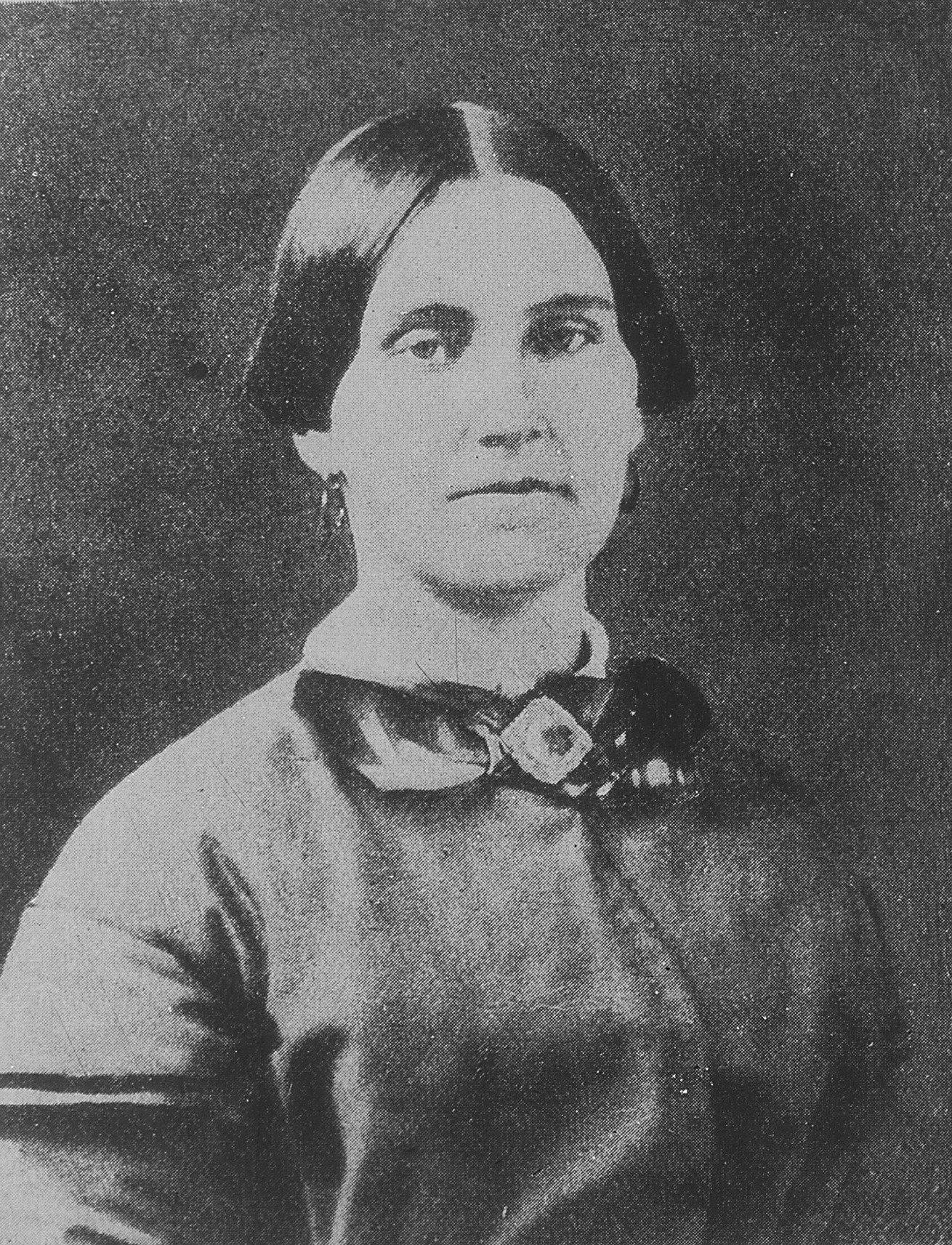
Mary Surrat. Photo: Mathew Benjamin Brady - U.S. National Archives and Records Administration, Public Domain, https://commons.wikimedia.org/w/index.php?curid=18731589
Landon’s friend Jack was also one of Mary Surratt’s guards. Not that any guards were needed. She was in a poorly way, so much so that she’d been excused from attending the last few days of her trial.
Jack came to the entrance of the hall where Surratt’s cell was and waved Landon over. It was time for him to take the next shift of guard duty, but there was clearly something urgent, and Landon guessed what it was.
“The verdict’s back?” he asked quietly.
Jack nodded and whispered as well. “Guilty. They’re gonna hang her. But it’s not public yet, so keep it under your hat.”
“Mum’s the word,” Landon acknowledged and looked back at Suratt’s cell. He couldn’t help but pity her, she was so wretched. At the same time, if she was part of the conspiracy to assassinate President Lincoln, she deserved what she got.
He sighed. “You gonna tell her?”
Jack shook his head emphatically but continued whispering. “Good God, no. There are orders that she can’t be told until the day before.”
I guess that makes sense, Landon thought.
July 7, 1865
Landon had gotten his honorable discharge a little over a week ago but still was given a ticket to attend the executions. (He wasn’t sure why–maybe because he’d been one of Mary Surratt’s guards.) He was told, however, that fewer than 200 such tickets were issued, so he should feel honored. Privately, he considered it more of a duty than an honor, but he kept that to himself and was there with his ticket right on time.
He was sweating copiously. It was hot and felt like it was getting hotter by the minute, but he strongly suspected that wasn’t the main reason for his sweat as he watched the four prisoners being led out: Lewis Powell, David Herold, George Atzerodt, and of course, Mary Surratt. It was only afterwards that he found out how profusely she’d wept and wailed when she was told she would be hanged. He was glad his discharge came through in time so that hadn’t been there.
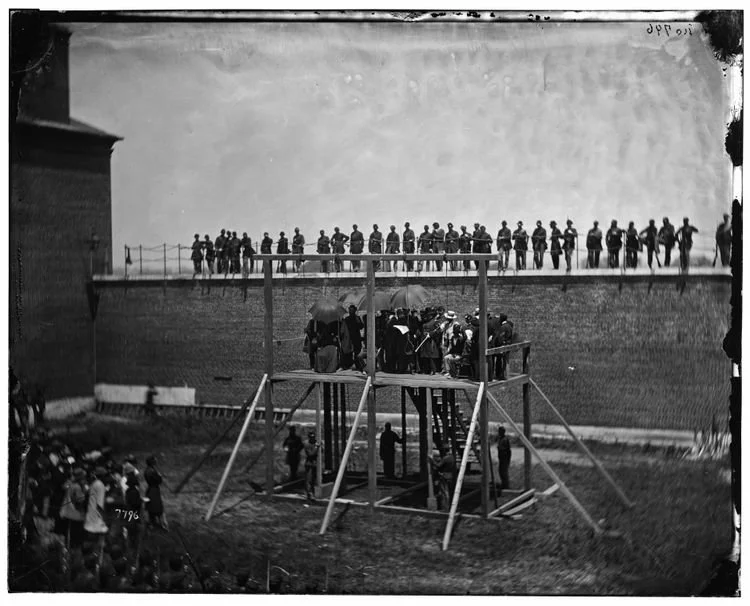
Gen. John F. Hartranft Reads Warrant Reading the Death Warrant, July 7, 1865. Courtesy Library of Congress
It was no surprise that Mary had to be helped across the courtyard then up the steps of the scaffold. When all the prisoners were there, they were forced into chairs. Mary was on the far right.
A nearby soldier nudged him and said, “Hey, Surratt’s got the seat of honor!”
Landon’s eyebrows shot up in disgust, but he didn’t respond. He hadn’t known the far right chair was the “seat of honor” in a group execution. It was still crude, he thought.
For Pete’s sake, they’re gonna be hanged. Show a little decency.
The four were attended by clergy, then had their arms and legs bound with white cloth. The execution order was read, the nooses were tightened around their necks, and white bags were put over their heads. They were helped to stand, and about ten seconds later, dropped to their deaths. It looked to Landon like Surratt died immediately. He supposed he was glad for that and was satisfied justice had been done.
July11, 1865
After the executions, Landon wanted to get out of Washington as soon as he could. He sat on a bench on the bank of the Potomac and brushed his fingers over his train ticket. This is probably the last time I’ll see this place, he thought and wondered whether he regretted that.
He was still in his uniform. He hadn’t had enough money for both the ticket home and civilian clothes, so he’d taken out his housewife (maybe for the last time), stitched up his uniform, and washed it as best he could. He guessed Liam and George were doing the same. They would soon get their own honorable discharges, and then they’d all be reunited back at the family farm in Ohio. He marveled at their extraordinary luck. Liam had been wounded, but not maimed, and George had gotten away with only minor injuries. The main thing was that all three had survived and were in one piece! If Landon believed in miracles (and he wasn’t sure he did) that’s what he’d call it.
He was anxious to see his whole family, but especially those two. He wasn’t the same man he’d been when he’d enlisted three years ago. He’d seen too much. Done too much. Surely it was the same with them? He wondered if they asked themselves the same question that kept nagging at him: Can I put all this behind me?
I just don’t know, he admitted to himself. But come hell or high water, I’m sure gonna try!
And the first part of that was going home. His small bag was beside him, packed with his few belongings. He’d written to his family to let them know when his train would get in, so they’d be there to meet him. (Ma and Pa were beside themselves with delighted relief.) He wasn’t going to stay too long, though. He was just 21–there was too much to see and do…
The End (for now)

Map showing Athens, OH (top, center), Landon’s home; Chickamauga, GA (bottom), where he was wounded at the Battle of Chickamauga in 1863; and Washington DC (right), where he finished out his service.
Subscribe to learn more about the real people
and historic events behind this story.
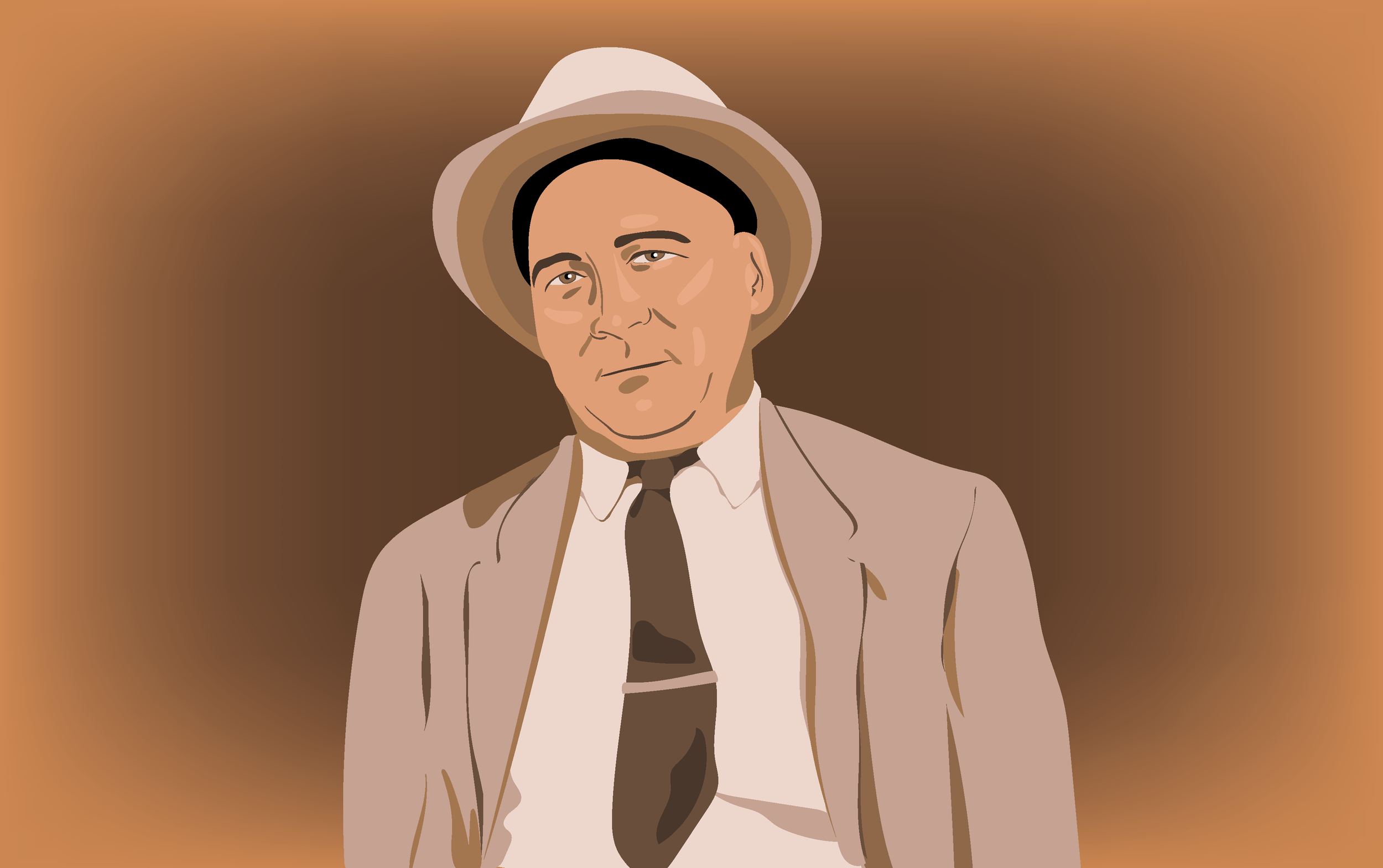
The Restless Soul
Bookkeeper, detective, soldier…stowaway? Walter DuBois’s life took some surprising turns.
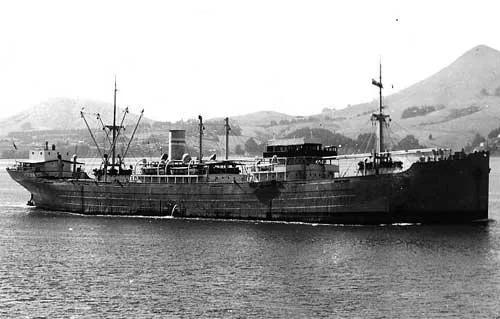
MS Gausdal; photo: warsailors.com
Walter Dubois never knew Nils Nilsen, captain of the MS Gausdal, a Norwegian freighter en route from Venezuela to Cuba. The two did cross paths, however. It was on the morning of June 26th, 1949. The weather was clear with a warm breeze, so Captain Nilsen ordered the hatch coamings to be opened to air out the lower decks. His mood mirrored the weather right up until an agitated crewman informed him he was urgently needed in the hold. He went immediately, of course, and that was when he encountered Walter, or rather, Walter’s body.
Oddly, the only thing found on him was his identification certificate--no money or any other belongings. And after a brief examination, Captain Nilsen concluded that Walter had died from a fractured skull, which raised some questions: Was he robbed and murdered? Or did he fall while trying to stow away? These questions were never answered. After a cursory investigation, Walter was buried at sea. But as you’ll learn, there was much more to Walter’s life than his mysterious, and rather tragic, end.
***
We begin with an ad in the May 8th, 1920 edition of The Caller, the local newspaper of Corpus Christi, Texas: It read:
When you need a cold drink come to the
Uneeda Cold Drink Stand
417 Mesquite St.
(Walter M. DuBois, proprietor)
Now you have to understand just how proud of this ad Walter was. First of all, there was the spelling: You Need A as one word, U-N-E-E-D-A. His mother, Liliana, had objected at first, but he’d talked her into it. Which made him quite pleased with himself, although he hadn’t considered that she was just humoring him as doting mothers sometimes do (especially with their only child). The other thing he was proud of was how impressive it was to be the proprietor of anything at nine years old–okay, almost ten, which Walter was quick to tell anyone who asked his age.
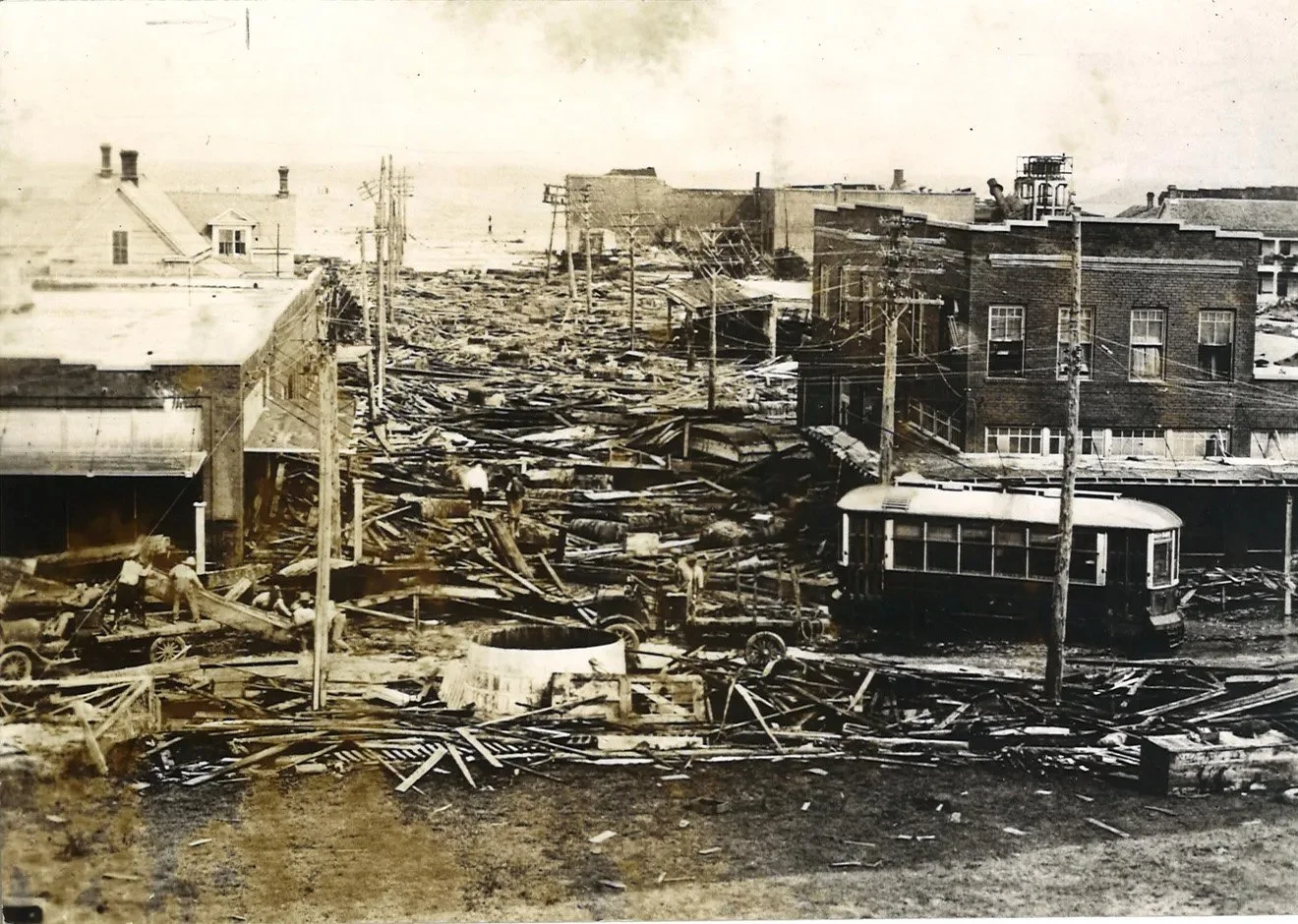
Mesquite Street on September 14, 1919, following the hurricane; photo: Corpus Christi Caller Times
He was sitting in his stand, when he heard a car coming down the road. It was Uncle Al’s Model T. He and Walter’s father, Aaron, were helping out with the rebuilding after a hurricane had hit Corpus Christi the previous fall. They were taking a dinner break, and Walter waved as they pulled into the driveway.
“Hola, Papi, Tio Al!”
Practicing Spanish with Mother was one of the three good things (as far as he was concerned) that had come out of having to stay at home during the flu outbreak. (The papers had called it a pandemic, but Walter didn’t really care. He was just glad it was pretty much over.) Mother said that being able to speak Spanish honored her father, his Grandad Ramon, who’d emigrated from Spain almost fifty years ago.
“Your booth looks really nice,” said Uncle Al.
Walter grinned. “Daddy helped me build it.”
The second good thing about the pandemic was that he’d gotten to help out in Daddy’s workshop.
The front door opened and Mother came out. She gave Daddy a kiss, hugged her brother, and then turned to Walter. “Don’t you have something you want to ask your uncle?”
Walter hesitated. The third good thing about the flu outbreak was that Mother had taught him all about writing. She was delighted that he was good at it, which delighted him, but it also made him desperate not to disappoint her.
Walter saw Mother give Daddy a look.
“Well, go on,” Daddy said and gave him a nudge. “Dinner’s on the table.”
Walter was a bit indignant at being prompted, but knew better than to show it, so he spoke up. “The paper’s having an essay contest for this Liberty Loan thing in July...”
Uncle Al nodded.
“And I was thinkin’ I might write something about the army, but I don’t know much about it. Could I interview you?” Mother had told him to put it just like that, an interview.
A troubled look flashed across Alvaro’s face. He’d gotten back from the Great War more than a year ago, but memories of the trenches and the fighting still haunted him. Walter started to worry the answer would be no, then Uncle Al’s troubled look faded.
“Sure,” he said. “I’d be happy to do that.”
Walter was relieved and elated, but that soon ended as he realized everything he’d have to do over the next few weeks.
His father nudged him again. “Well, what do you say? Go on, time’s a wastin’ young ‘un.”
Walter was sheepish. “Oh, sorry. Gracias, Tio Al!”
***
Walter never thought his essay, “The Benefits of Enlistment in the Army,” would win any prizes. But it did–first prize, in fact, which still amazed him. The best part, though, was that Mother and Daddy (and Uncle Al and Aunt Minnie) were proud of him. Although he had to admit, the $75 prize money was pretty nice too. (By the way, $75 dollars in 1920, would be more than $1,400 in 2025.)
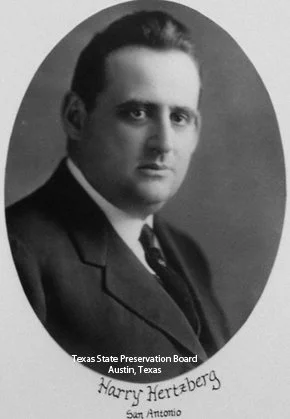
State Senator Harry Hertzberg. Image: By Texas Legislators - http://www.lrl.state.tx.us/mobile/memberDisplay.cfm?memberID=2433, Public Domain, https://commons.wikimedia.org/w/index.php?curid=65345190
And now, he was about to read his essay in San Antonio. It was exciting, but nerve wracking too. And the auditorium was hot and stuffy, so he was sweaty on top of everything else. Before he knew it, though, Senator Hertzberg, who’d recruited him to do the presentation, finished his speech with: “So y’all remember to sign up for a Liberty Loan to keep our great country free!”
Then he turned to Walter and beckoned. “And now, let’s give a warm San Antone welcome to the youngest orator in America, Walter DuBois!”
Walter was nervous as he made his way to the podium. Senator Hertzberg lowered the mic, and Walter stepped up. He found, however, to his utter terror, that he couldn’t remember a single word of his speech. He breathed a sigh of relief, though, when he patted the nifty pocket inside his suit coat and felt the copy he’d put there. (He’d been a bit miffed when Mother had insisted he do so, but now he was very glad she had.) He took it out, unfolded it, and looked out at the audience. There, in the front row, were his parents. Mother smiled and Daddy winked and gave him a thumbs up. And with that, he began speaking.
***
The next eight years flew by with Walter doing all of the normal growing up things, so let’s fast forward to his high school graduation party. He appreciated all the work Mother had done to throw the party, but early on, he whispered to Uncle Al that they needed to talk privately.
They snuck out to the front porch where Uncle Al lit a cigarette.
“Now do I understand correctly that you got a job offer from Gulf Oil, but you want to join the army instead?” He asked, taking a drag.
Walter, who’d started smoking not too long ago, borrowed the matches and lit up as well. “Yessir,” he replied, coughing and blowing smoke from the corner of his mouth.
Alvaro hesitated. He looked like he was fighting some internal battle but said at last: “Take the job with Gulf. It’s in Galveston?”
Walter nodded, surprised and dismayed. He’d thought his uncle would be pleased about him joining the army.
Uncle Al fought another brief internal battle, then went on. “Your dad is sick. He and your mother didn’t want you to know, but I think you should.”
A cold shiver went down Walter’s spine. “Dammit, I shoulda known,” he said clapping a hand on the porch railing. “He’s been havin’ trouble gettin’ around…”
Uncle Al put hand on his shoulder. “They hid it from me too. Don’t kick yourself.” He paused and took another drag. “Anyway, they don’t need to worry about you being in the army, and Galveston is likely closer than wherever the army would send you.”
His tone turned sharp. “And don’t you dare breathe a word of this. Lilly would have my head on a platter if she knew.”
Walter had to agree. Mother’s temper was not to be trifled with.
He paused to let things settle a bit. It was one of those situations where all sorts of feelings and thoughts jumbled against each other. “Do you know what’s wrong?” he asked at last.
Alvaro shook his head. “Not for sure. Sounds like it may be his heart.”
Worry and guilt were at the forefront of Walter’s mind: He still wanted to join the army, no two ways about that, but if the best way to help his folks was to take the job in Galveston, that’s what he’d do.
And so, in August of 1928, Walter started a job as bookkeeper in the Galveston, Texas office of Gulf Oil.
***
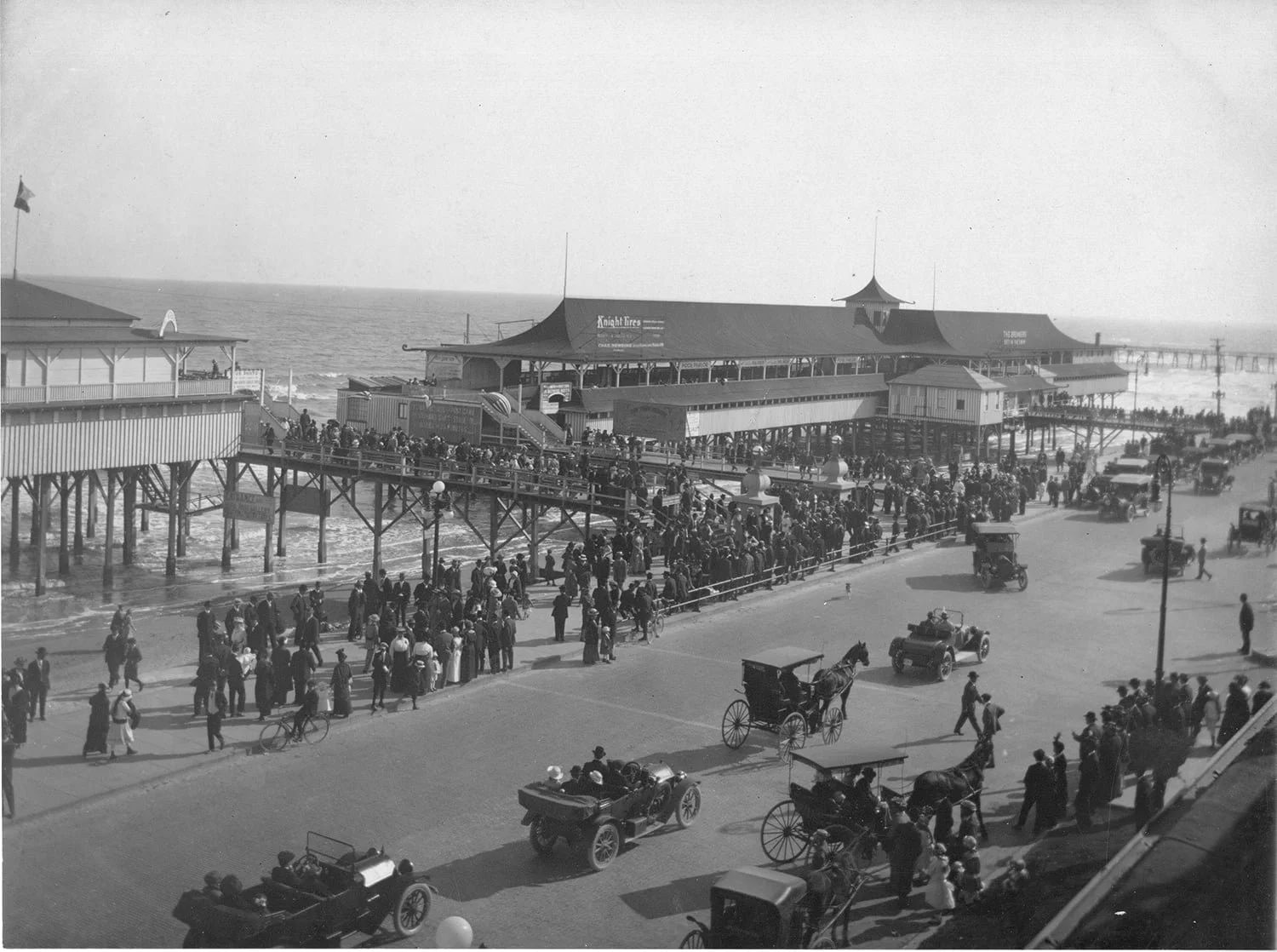
Galveston in the late 1920s; photo: Galveston Historical Society
Another thing you need to know is that Galveston’s nickname at that time was, “Sin City of the Gulf.” And Walter learned quickly that it hit the nail right on the head.
He took a swig of gin and leaned unsteadily against the makeshift bar of his favorite speakeasy. Dad and Uncle Al had warned him about what he’d find in Galveston, and sure enough, they were right. All of the not-so-wholesome opportunities had been a shock… at first. But in the year and a half he’d lived there, Walter’d taken a liking to gambling, even though it’d made for some troublesome debts. And in the same spirit, he’d sampled the offerings at various bordellos and found that they were also to his liking. But tonight, it was just him and a few pals getting drunk.
Afterwards, Walter staggered back to his room at the boarding house and dropped into bed. He was dead to the world until the telephone in the hall rang early the next morning. He winced and groaned and put his pillow over his head, but going back to sleep was not to be. Shortly, there was an equally wince-inducing knock. He got out of bed, noticing he was still in his clothes from last night, and lurched to the door. It was Jake, who rented the room across from him.
“You got a call.”
It was Uncle Al. Dad had died early that morning. The shock brought Walter fully awake. It was far worse than he’d imagined.
“How’s Mother?” he asked.
“About as good as can be expected.”
“Give her my love.” He struggled for words. It felt like he’d been kicked in the stomach, but took a deep breath. “Tell her I’ll be home just as soon as I can.”
“I will. Take care, sobrino.”
“You too. I’ll see y’all soon,” he said and hung up.
Back in his room, he sat on his bed, reeling with a profound sense of loss. He allowed himself some tears. And when they finally stopped, he got cleaned up and went to get a bus ticket home.
***
As you’re probably well aware, funerals are almost always sad, somber affairs, and so it was with the funeral for Aaron DuBois. It was hard for everyone, but I’m sure you also understand it was hardest on Walter’s mother. As a dutiful, loving son, Walter did his best to console her, but it was weeks before she started to get back to normal, and even then, Walter soon realized that “normal” would never be what it had been before Dad died.
He stayed on in Corpus Christi to help out, but that was only partly to support Mother. After the stock market crash last fall, he’d figured his job would be on the chopping block. And sure enough, the axe had fallen. He didn’t say anything about it to Mother, though–she didn’t need any more on her mind.
Little did he know, however, he wasn’t fooling anyone…
“How’s your class going?” Mother asked as they ate dinner after church one Sunday afternoon.
“Pretty good,” Walter said. “You know, I never thought of myself as a teacher, but there it is.” He smiled at her. “And it lets me use all the Spanish you taught me.”
She smiled in return, and they ate in companionable silence for a while.
“I appreciate your staying on to help out after Daddy died,” she said and put down her fork. “But if you’re not going back to Galveston, you need to find something steady here.”
He looked away, clearly ashamed, so she took his hand.
“Now don’t you go feelin’ guilty ‘bout losing your job. It’s nothing you did. This Depression is putting lots of people out of work.”
Walter wasn’t sure he agreed, but was definitely sure that he never should’ve tried to fool her.
“I get a feeling you have something in mind,” he said and was glad to see an old familiar glint in her eyes.
“Just so happens I do. There’s an open spot on the police force, and Mayor Shaffer owes you a favor for those speeches you wrote for his campaign.”
She gave him a sidelong glance. “I could maybe put in a good word too.”
Walter laughed and wondered, not for the first time, just how many connections Mother had in city hall.
“What’ve I always told you?” she asked.
“That it’s good to have friends in high places.”
She nodded. “Yes, indeed. Especially when they owe you favors.”
***
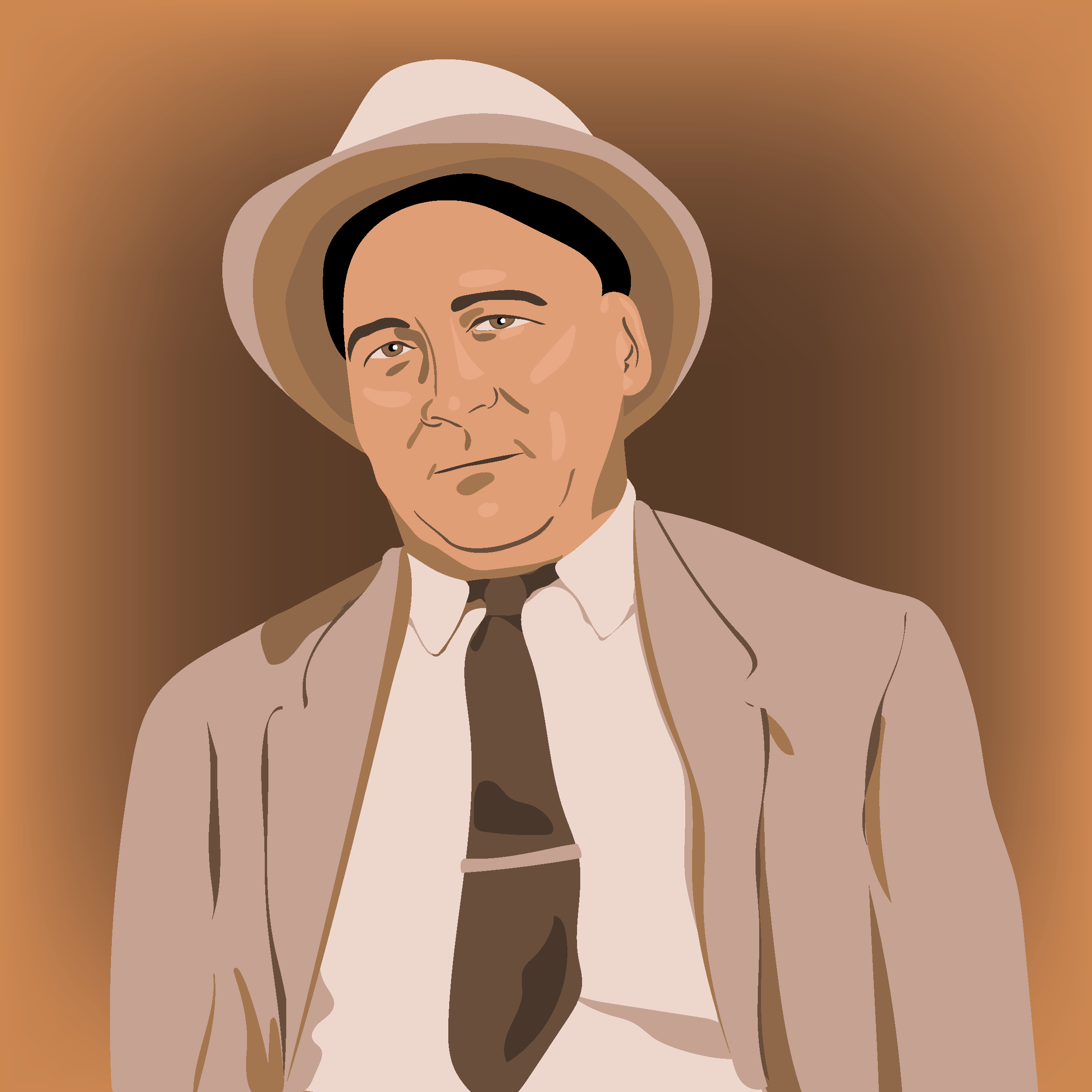
Illustration of Walter DuBois by Charlotte Easterling
Walter, as you might’ve guessed, got the job on the police force, and in less than a year was promoted to detective, which, as it turns out, may have been a bit hasty…
For the first few months, he’d mainly handled thefts and possession busts, but then came his first missing persons case, which ended grimly. He showed up at the scene, a train yard, and tossed his jacket in the back of his car. (Detectives were supposed to wear jackets and ties on duty, but given the sweltering heat of late summer, shirtsleeves would have to do.) He flashed his badge to a uniformed cop keeping a small crowd behind a cordon, and hurried over to another detective near a train car surrounded by firemen.
He recoiled at the strong smell of gasoline and covered his nose.
“Is it the kid, Murph?”
The other detective, older and more grizzled, replied with a grim nod. They watched as two firemen in gas masks lifted a small, still body through the hatch in the top of the tank car. It was a local boy named Billy Smith who’d been reported missing yesterday and had been found just an hour ago.
“Good god,” Walter whispered. “Are we sure it’s an accident?”
Murph nodded again. “Not a sign of anything suspicious.”
Even so, Walter dreaded the thought of writing the report. He tried to focus on the details he’d need to include, but couldn’t take his eyes off that kid’s body being taken away. Then, he realized the next thing he’d have to do would be to pay a visit to Billy’s folks. That thought made his dread even worse, although he hadn’t thought that was possible. The only thing that helped was knowing Murph would be with him.
He spoke to a reporter from The Caller, then looked at Murph and sighed. “I guess we’d better get going.”
Talking to the boy’s parents was just as bad as he’d feared. He felt for them, but there was nothing he could do but tell them Billy hadn’t suffered. (He suspected that was a lie, but it was one he could live with.) He and Murph offered condolences.
Yeah, Walter thought, Lotta good that’ll do…
Afterwards, they quite understandably needed to unwind and headed to a speakeasy typically dominated by cops. Walter immediately slugged back a gin and liked the way it burned going down. It took a bit of the edge off, but the image of that kid, and his folks, kept intruding.
Murph refilled his glass and put a hand on his shoulder. “Today was tough. They’re not usually that bad.”
Walter nodded. He liked being a cop, and he was good at it. But today had shaken him.
One more will smooth things out, he thought and knocked back another gin.
***
Next, we’ll jump ahead to a hot, muggy day in May of 1935. The courthouse where Walter was in a hearing might have had air conditioning. But even if it had, he still would’ve been sweating, as he sat in the witness chair being questioned by the DA.
“I did not hit Chief Mace over the head, as alleged,” Walter said indignantly. “I hit him between the eyes with my fist!”
His lawyer, B. D. Rappaport, one of the most celebrated (and expensive) lawyers in the county, cradled his forehead in his hand. He looked to be in great pain. On the other hand, the DA, Daniel Forsythe, looked immensely pleased.
“I have nothing more, your honor,” he said with a self-satisfied smile.
Judge Westervelt managed to keep a straight face.
“Do you have any questions, Mr. Rappaport?” he asked.
And Mr. Rappaport most certainly did. As he and Walter had discussed, he asked about the events the previous December, just a week after Prohibition ended, when Walter had fired his gun in a bar. Walter said he wasn’t there to cause trouble for anyone–he just needed to track down someone accused of assault.
“So, you were just doing your job. Is that correct?” Rappaport asked.
“Yes, sir,” Walter replied.
“Did you have anything to drink before you fired your gun?”
“Well… yes,” Walter said. “But I wasn’t drunk.”
Rappaport nodded. “And Chief Mace accused you of being drunk on duty? And that’s why you hit him?”
“Yes, sir! He’s always had some grudge against me, ever since I made detective!”
Rappaport gave him a subtle gesture to settle down. “And that’s why you got arrested and fired?”
“Yes, sir,” Walter said, doing his best not to sound resentful.
Rappaport proceeded to admit that Walter had a problem with alcohol, but that his record on the police force (before the bar incident and slugging the chief) was sterling. He followed up with Walter’s other good activities, such as teaching a Spanish class, participating in church fundraisers, and supporting his mother.
“And in conclusion, your honor, he has character references from Mayor William Shaffer and retired State Senator Harry Hertzberg.”
Judge Westervelt looked thoughtful. “Seems like we may have a situation where we can settle this matter without going any further. Do you gentlemen agree?”
Rappaport did. Forsythe, however, looked unhappy, but after a few seconds he nodded reluctantly.
“Looks like you may have a suggestion, Mr. Rappaport,” the judge said. “Care to share it with us?”
“Well, your honor,” Rappaport began. “It’s clear that Mr. DuBois getting fired from the police force has to stand.”
There was unanimous agreement on that point.
“But my suggestion is to drop the charges and send him to a sanitarium for rehabilitation from alcoholism. That way, he can get sober and continue to do good things for the community.”
Forsythe appeared to be weighing his options, but it didn’t take long for him to realize what would be best for his career. Still, he looked like he had a bad taste in his mouth when he said, “Agreed, your honor.”
Judge Westervelt banged his gavel. “So ordered. The charges in this case are dropped. Mr. DuBois, you will report to the Moody Sanitarium in San Antone as soon as arrangements can be made. And best of luck to you, young man.”
***

Ad for Moody Sanitarium; photo: Texas State Historical Association
Anyone who’s been in the hospital for an extended time can sympathize with Walter’s feelings about his time in the sanitarium. And although he was glad not to have to go to trial, and maybe jail, by the time he got out, he doubted whether he’d really gotten off so easy–aversion therapy had been hell. But it had worked. (Even a faint whiff of alcohol would make him sick to his stomach.) So he’d been grateful to get out of the sanitarium and back to Corpus Christi where he could start rebuilding his life.
Now let’s jump ahead to 1939, which also marked a little over 5 years of sobriety and holding down a job.
“Smells great!” he said as he walked into Mother’s kitchen. It wasn’t the one he remembered from childhood, but he’d gotten used to it. There was a glazed cinnamon cake on the counter and he opened the oven where a dish of enchiladas bubbled.
“Mmmm, my favorite.”
“Well, of course,” said Mother giving his arm a squeeze. “What else would I fix for my boy’s 29th?”
Walter patted her hand. Mother selling the old house had been hard, but getting to have the foods he’d grown up with softened the blow. Besides, he knew there was no question that she’d move into Robert’s house when they got married.
Walter realized that was three years ago and shook his head in wonder. He’d been ready to resent Robert, but found he just couldn’t bring himself to dislike the man. He was easy to get along with, and had a good sense of humor, but most importantly, he was good to Mother. She seemed happy again, and that was the main thing.
“Penny for your thoughts,” Mother said.
Walter looked up. “Oh, just thinkin’ ‘bout how time flies.”
“Sure does, but you’ve done a good job getting cleaned up and holding down a job.”
Walter’s smile was rueful. Memories of the sanitarium resurfaced, and yes, he was happy to have a steady job, but he was sick and tired of bookkeeping.
“Somethin’ eatin’ at you?” Mother asked.
Walter hesitated. He had an announcement but had intended to make it after supper. As usual, though, Mother was on to him.
“It’s the war, what with the Japanese, and that Hitler…,” he trailed off, then turned to her. “And I feel like grandad would’ve wanted me to go fight Franco.”
Mother shook her head firmly. “No. He left Spain to get the family away from that kind of trouble. He never would’ve wanted you to get involved.”
Walter was only a bit relieved. The larger problem remained.
“Well, I’m glad to hear that, but still, we’re in this war already; sooner or later it’s gonna be official. And I’ll be better off volunteering.”
Mother sighed. “I suppose you’ve talked this over with your uncle?”
“Yes, ma’am, and he agrees with me.”
“I figured that was the case.” She put her arms around him. “I know you wanted to join up a long time ago.”
That coaxed a small laugh from Walter as he thought: Of course you did.
“Have you signed the papers yet?”
“No, but I will soon.”
She didn’t reply, but hugged him tighter.
***
Walter was quite convinced that the Army was determined to keep him in bookkeeping assignments in hot, humid places for his entire enlistment. He’d done boot camp in Texas, which had gone about as well as boot camp can go. Then, thanks in part to knowing Spanish, he was assigned to an ordnance unit in San Juan, as a clerk–a bookkeeper.
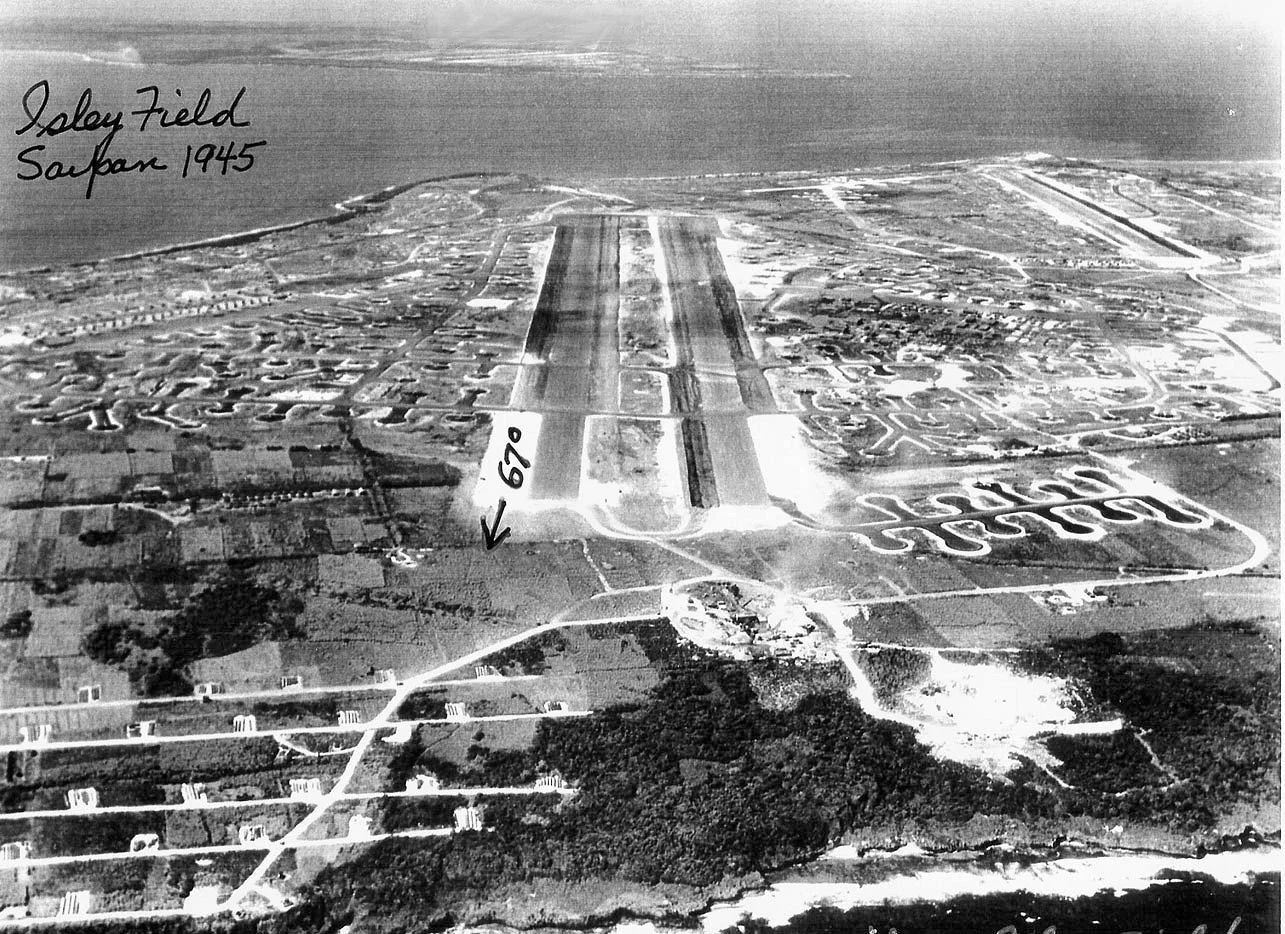
Isley Field, Saipan, 1945; photo: USAAF
This led to being stationed at the B-29 base on Saipan (the Mariana Islands… the tropics) in yet another ordnance unit, as–you guessed it–a clerk. Although by that time, he’d come to grips with the fact that the army was nothing if not ironic. Still, it wasn’t all bad. The transfer included a promotion to sergeant, and the General had given his unit a commendation for their support in the Tokyo bombing campaign called Operation Meetinghouse.
He’d just gotten off duty and was hoping no one else was in the barracks tent so he could take a nap in peace. No such luck. Kowalski, a corporal who bunked next to him, gestured at Walter’s cot.
“Ya got mail, sarge.”
“Yeah. Thanks, Ski. I might’ve missed it.”
Walter picked up the letter and saw it was from his cousin, Jimmy Ellington (a Seabee stationed in Hawaii). He finished reading it, and much to his annoyance, Kowalski (who wasn’t blessed with an overabundance of perceptivity) felt the need to follow up.
“Good news?”
Walter rolled his eyes and muttered something clearly uncharitable. Ski just shrugged and went back to his comic book.
Walter left the tent and stopped to take in all the activity. Meetinghouse had ended in March, but that was four months ago, and the bombing runs hadn’t slowed down much. Something big was up, especially since curiosity was being pointedly discouraged. There were rumors about plans to invade Japan, which worried him, but he didn’t think that’d require quite so much hush-hush.
“I guess we’ll find out eventually,” he said to himself and headed to the mess tent for some chow.
As it turned out, eventually was just a couple of weeks. And what was up was indeed big–very big: the A-Bomb. The news said two Japanese cities Walter hadn’t heard of were completely destroyed in enormous explosions of heat and radiation. He didn’t entirely understand, but he didn’t need to. The war was over! No invasion, just V-J Day and then he was headed home!
***
Walter was honorably discharged and by early 1946 found himself back in Corpus Christi. He was glad to have some time to unwind and reconnect with his family and friends, but as fate would have it, his stay didn’t last much more than a year. Job options were limited mostly to much-hated bookkeeping. And despite his protestations, Mother had launched a well-meaning (but ill-fated) attempt to find him a wife. So, when he’d heard that Gulf Oil had opened a supervisor job in Venezuela, he jumped at the chance.
Hot and humid, again, he thought. But at least it’s not bookkeeping!
And thanks to his army experience, a good record with the company, and fluency in Spanish, he got the job even faster than he’d expected. So it wasn’t long before he was waiting to board his plane. He first gave Aunt Minnie a kiss, then shook hands with Robert and Uncle Al.
“Take care,” said Robert. “Give ‘em hell!”
“Yes, sir, I will.”
Uncle Al pulled him into a hug. “Be careful. Don’t get mixed up in anything dangerous.” His voice broke, but he managed, “And be well, too, sobrino.”
A lump in Walter’s throat kept him from replying, so he simply nodded and smiled.
Then it came to Mother. She wept openly and gave him a kiss on the cheek when he embraced her.
“I sure hate to see you go.”
“I’ll be fine. Like I said, I just need a change of scenery.”
Mother nodded. There was nothing more to say. She’d tried to talk him out of it early on, but after several discussions, she’d finally made peace with his decision. “You take care now, hear?”
“Yes, ma’am. You do the same.”
He kept his arm around her until the boarding call came, then he released her and waved as he headed to his plane.
***
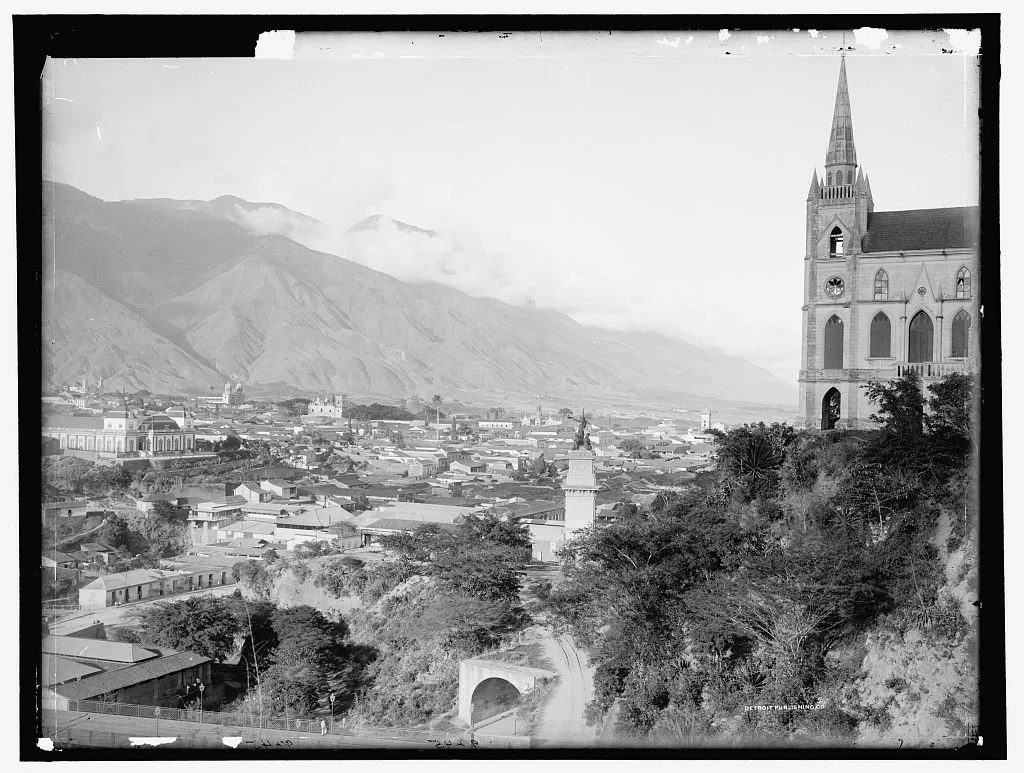
Caracas, c. 1949; photo: Library of Congress, Prints & Photographs Division, Detroit Publishing Company Collection
No one in Venezuela can make a decent glass of tea, Walter thought as he shook his head in disgust and poured sugar into the glass in front of him.
But it was a minor complaint. His job was a definite improvement over his other jobs. And the weather in Caracas wasn’t that different from San Juan and Saipan, so it didn’t bother him too much. What he really liked was the scenery–lots of very old and very new. And his favorite place to sit and watch the comings and goings was a cafe near the seaport. It’d occurred to him that he liked it so much because it reminded him of the port back home. Maybe this is a place I can make life for a while, he thought contentedly.
He sipped his tea, now properly amended, appreciating the coolness in the early evening heat. After a while, he went to wander the docks, avoiding the cargo crews and sailors–they tended to be a rowdy bunch.
Soon, the light was fading. About chow time, he thought and took a shortcut through an alley that led to a diner he liked, and thereby, his meeting with Captain Nilson.
***
Not long after, Robert came down the steps and joined Alvaro in the kitchen. A large cardboard box was open on the table.
“Is she ready?” Alvaro asked.
“Soon,” Robert said. “I’m sure grateful for Minnie’s help. I know Lily is too.”
Alvaro just nodded.
“I was just a friend of the family when Walter’s father died. This seems much harder for her. Stands to reason, I suppose.”
“It is,” Alvaro agreed. “With Aaron, she knew it was coming. She had some time to prepare…”
“And a body to bury,” Robert said.
Alvaro nodded again. “Yes. But it’ll help that there’s a gravestone.”
They continued looking through the box the company had sent. It contained Walter’s possessions: clothes, a few books, some newspapers and magazines and such.
“I wish we could get the police down there to investigate more. It just doesn’t make sense,” said Robert. “You knew him better than I did, but I can’t imagine he would stow away on a ship with just an ID. No money, not even a change of clothes or anything?”
Alvaro shook his head. “I know. Doesn’t make a lick of sense, but they closed the case. Nothing more we can do.”
Robert was hesitant. “Do you think he could’ve been robbed? Killed?”
“Maybe.” Alvaro looked troubled. “We’ll probably never know...” He trailed off when he found Walter’s unfinished letter to his mother. At first, he was unsure whether he should read it but shortly decided to do so. He finished and held his handkerchief to his eyes.
“She should have this,” he said at last, handing the letter to Robert.
“Yes, but after the service.”
They both turned as Lilliana started down the steps with Minnie supporting her. Alvaro went to open the front door, and Robert took her hand at the bottom of the steps.
“You look mighty pretty.”
She managed a wan smile in return and stopped after a few steps. “You know,” she said shakily, “I think he would’ve liked that he was buried at sea. He was always such a restless soul.”
Robert agreed and put his arm around her shoulders as he led her to the car. It was time to say goodbye.
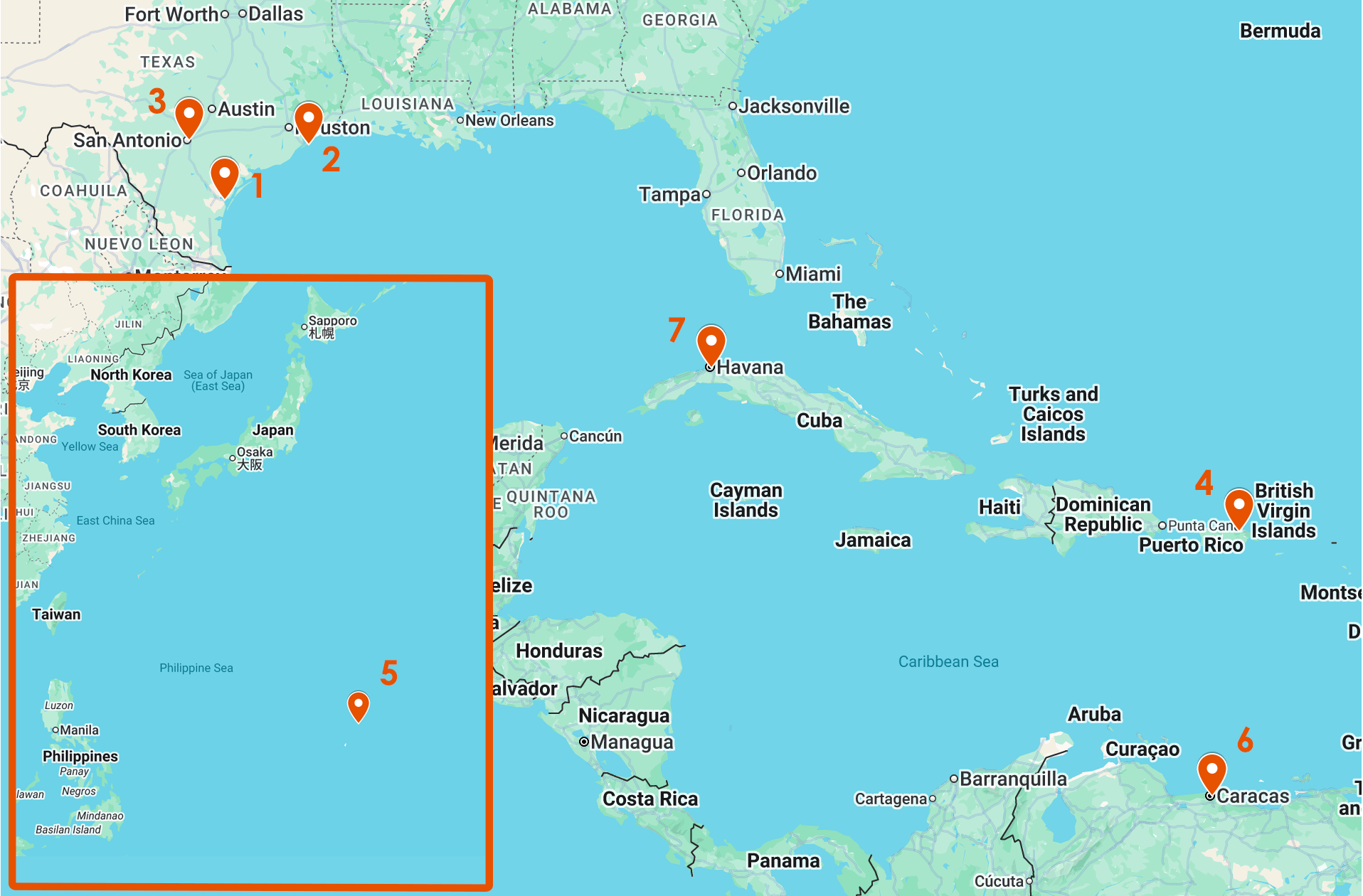
1: Corpus Christi, Texas. 2: Galveston, Texas. 3: San Antonio, Texas (location of the Moody Sanitarium). 4: San Juan, Puerto Rico. 5: Saipan, Mariana Islands. 6: Caracas, Venezuela. 7: Havana, Cuba. The Gausdal was bound for Havana when Walter’s body was disovered. His burial at sea was in the Caribbean.
Learn more about the people, places, and events in this story by subscribing on Patreon.
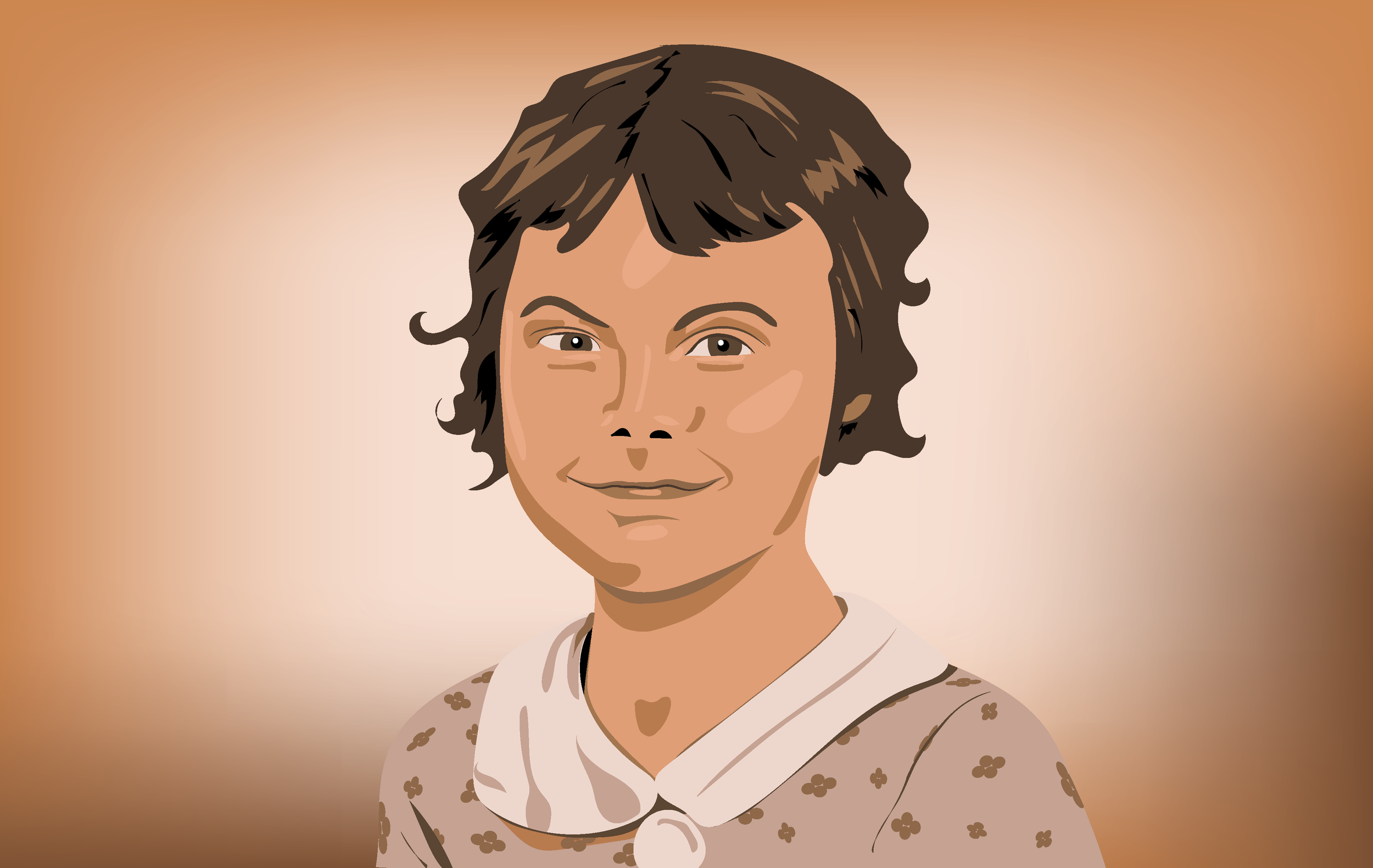
Baby Bootlegger
Meet five-year-old Helen, whose first job wasn’t quite legal. This post is a subscriber bonus.
Helen Mazunas hauled her ratty little wooden wagon along the rough sidewalk in Nashua, New Hampshire, intent on making her deliveries. The bottles clattered under their canvas as the wagon bounced, and she turned to make sure none had fallen out. She knew that the clear liquid in them was for grown-ups only. She was just five years old—the stinky stuff that Mr. John called his “namie” (home-made) didn’t interest her. But when she knocked on doors, the adults who answered were always happy to see her, but only after a few furtive glances up and down the street.
Subscribe to see the rest of this post and
other bonus content from The Relatives.
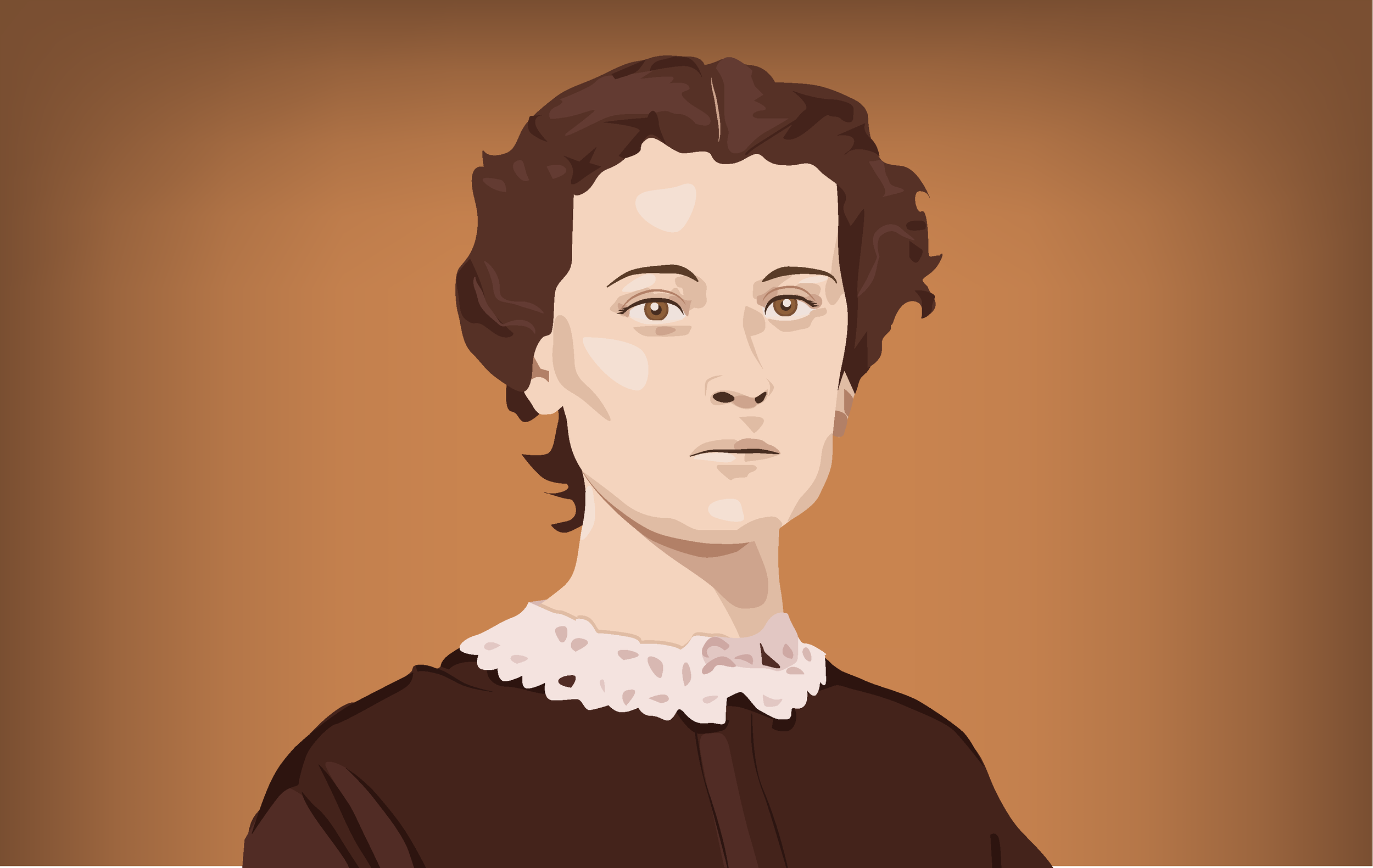
Mistress of the House
Evelyn Wallace knew exactly what she wanted from her life. Along the way, things didn’t go quite as planned.
If there’s one word that describes Evelyn Wallace, it’s persistent. Through hardship, betrayal, and being a single mother, she never gave up. Why, you may ask? It was love–unconditional and unwavering. And it lasted her entire life. But as you’ll see, the road she traveled was lengthy and twisted.
***
In the summer of 1847, when Evelyn was 17, she and her family attended what would become a fateful church revival meeting in central Tennessee, where they lived. At that time, it was very rural, with a sparse population and few churches. So church revival meetings were pretty much the only opportunity for settlers to attend church services. Like most people, Evelyn’s family had traveled to be there (although not as far as many attendees had), and they’d set up camp for the four days the meeting would be happening.
Let’s be clear, though, this was not the kind of revival meeting (or tent revival) that came into being in the 1900’s. There was still a religious aspect, to be sure, but these meetings were in equal part social events that included providing a way for people to look for things like marriage partners, especially young people…

Lincoln County, TN; photo: landwatch.com
***
Because they were camping, all of the cooking was done outside over open fires. This is where we find Evelyn after the morning service of the first day of the revival meeting. Her Ma was getting annoyed. Or Evelyn thought that was the case because she’d almost tipped a pot of beans into the cooking fire.
“Oh for heaven’s sake! Go talk to the boy!” Ma said, doing her best to hide her smile.
Evelyn, for her part, tried to deny (with no success) that she was distracted by James Waite, the handsome young man who’d introduced himself and his two brothers, Bennett and Roger, just before the morning service. (They’d sat in the chairs in front of Evelyn and her family.) The three brothers, now standing together a short way away, were also encamped nearby, but they’d come from their home in Illinois to settle some family business matters, not specifically to attend the revival meeting.
Ma shooed her away, and Evelyn, blushing furiously, didn’t argue. She started to sidle her way toward James but hesitated. Maybe he was just being polite when he’d introduced himself. Then again, she thought he might’ve been flirting too.
Over the last couple of years, the socializing that was part of the revival meetings had taken on a different tone. It was no longer just catching up with friends and family who lived far away. Now it was also meeting potential husbands and wives (although Evelyn didn’t quite recognize it as such).
James saw her and excused himself from his brothers. He came over to talk to her, which made her blush even harder. She wanted to flee in a cloud of embarrassment, but before she could, he was standing right there talking to her.
“We won’t be here too long,” he said. “We came to sell off some land our grandfather owned. He died a few months ago.”
“Oh, I’m sorry,” Evelyn said.
“Thanks,” James murmured and looked away.
“Miss Wallace,” he said looking back awkwardly. “I’d be mightily pleased if you’d let me sit with you at the evening service.”
Evelyn, despite never having been to the ocean, could swear she heard it roaring in her ears. So, unable to find her voice, she just nodded…and blushed… and returned a slightly self-conscious smile.
Bennett and Roger, for their part, exchanged a knowing look when James told them he wouldn’t be sitting with them at the evening service.
***
To no one’s surprise, it was just six months later Evelyn excitedly announced that James had proposed and she intended to accept. Her Ma and Pa, on the other hand, were not quite as joyful. They wanted Evelyn to wait until she was 18 to get married. One thing they couldn’t deny, however, was that James certainly appeared to be serious. When his brothers returned to Illinois, James had stayed on to court Evelyn properly.
Even so, to Evelyn’s rather pointed frustration, it seemed that her Ma and Pa were incapable of accepting why they couldn’t wait the few months until Evelyn’s 18th birthday. When they repeated their demand for information, she had to exert considerable control to keep from snapping at them.
“Once again,” she said after taking a deep breath, “because James and his brothers are going to enlist in the Army to fight in the Mexican War.” (Which had been raging for almost a year at that point.) “He’s staying on here long enough for the wedding,” she went on, “and he’ll get us to his homestead in Arkansas, but he’s anxious to enlist,” she said, thinking that would be the end of it. But it wasn’t.
Ma gave her a dubious look but didn’t articulate what she suspected. Pa’s mind, on the other hand, went to a different matter. He pointed out, again, that the land James had was at least two weeks away (going from central Tennessee to central Arkansas). They were worried about her moving so far away, and although she would never admit it to them, Evelyn agreed. The long journey, in addition to the thought of being so far from home, scared her. And to make her fears worse, the land was in territory that had recently been cleared of the Native tribes who’d lived there for ages. She’d heard stories about the attacks in Tennessee when the Cherokee had first been driven out (leading to what would later be known as the Trail of Tears).
What if there are Indian attacks in Arkansas? She wondered with a thrill of fear.
One comforting thought was that her sister in Texarkana and her brother in St. Louis would come help her settle into her new home. And there were Wallace cousins living not too far from the part of Arkansas she’d be moving to. So Evelyn did her best to quell Ma and Pa’s apprehension, as well as her own.
“It’s just as far away no matter how many months I wait. I love him and want to marry him before he goes to war,” she said emphatically. Concern remained etched in her parents' faces, so she gave them both a hug. “I’ll be fine,” she said. Ma and Pa didn’t look at all reassured but reluctantly agreed that they wouldn’t stop her.
***
The next two months brought the biggest changes in Evelyn’s young life, starting with her wedding. It was happy overall, but the knowledge that she would soon be leaving for a new, distant home lent an underlying air of melancholy that went unacknowledged even as her journey to Arkansas began the next morning.
It took a little more than two weeks to get to their farm, and on the way, Evelyn constantly marveled at how lush and green the scenery was. Once they arrived, it hadn’t taken long to set up housekeeping, but despite the captivating landscape, it didn’t really feel like home yet.
I suppose that will come with time, though, she thought as she stood at the door of their little house, watching the sunrise.
The hills that surrounded their property were brightening and shifting from black to green as the sun came up. This was usually calming, but not today. She couldn’t fight down a feeling of dread knowing that James would be leaving that morning for Alton, Illinois to enlist. He’d arranged to meet up with Bennett and Roger there, and after they signed up, they’d start three months of training. What really worried her, however, was that after basic training, they’d be sent to fight in Mexico.

Washington County, AR; photo: TripAdvisor
She was struggling to hold back tears when he came to the door with his pack. He kissed her and promised to come back, then gently pressed his hand against her belly. She had told him the day before that she was expecting, knowing he probably wouldn’t be there when the baby was born.
“Now don’t fret,” he said. “Your brother should be here tonight, and your sister won’t be far behind.”
She nodded, and unable to speak, watched and waved until she couldn’t see him any longer. She lingered in the doorway for a while after that, hoping against hope he’d turn around and come back. But she knew that was foolish. For the first time since they’d met, she felt much too young for everything that was happening. She reminded herself that Ma had taught her everything she needed to know to run a household, and in addition to her brother and sister, her cousin Levi had sent his oldest son, Levi Junior, to stay with her and help out with chores. So she wasn’t alone.
“But none of them are James,” she said to herself with a sigh.
The sun was fully up now, so she shook off her dreary thoughts, smoothed her skirt, and cast one more longing glance up the road James had taken.
***
Not long after he’d left, Evelyn started getting letters from James. The first one described getting to the induction and training camp in Alton, and letters continued to arrive every week or two (mail service being what it was back in the mid-19th century). They didn’t stop even when James had been in combat. He wanted to be supportive during her pregnancy even though he was fighting in the war. In all of this correspondence, they made decisions about things like what the baby’s name would be: Mason, if it was a boy, and Madeleine, if it was a girl. Evelyn treasured every letter, not just because she wanted him to be involved in these kinds of choices, but also, perhaps more importantly, because it was reassurance he was still alive. Even so, it wasn’t until Mason (yes, she gave birth to a boy) was six months old that she finally got the letter she’d been hoping for. She read it, then re-read it, and then, for good measure, read it a third time, partly to help the news to sink in and partly because Mason wouldn’t stop fussing and wiggling.
“Daddy’s coming home!” she said, grinning like a fool while bouncing him. Mason, for his part, was impressively unimpressed and determined to continue fussing.
As happy as Evelyn was, the letter also contained bad news: James and his brothers had all contracted malaria. And while James and Roger were doing better, Bennett was very sick. But Evelyn didn’t have long to consider this as Mason started wail, apparently offended that he wasn’t getting her undivided attention. When he finally allowed himself to be mollified, Evelyn put him in his crib and turned to preparations for James’ homecoming.
***
As it turned out, however, James was forced to delay his return. Bennett continued to weaken and died as quickly as James and Roger regained their strength. All three brothers had prepared to lose each other in the war, but that didn’t help when dealing with the shock of losing Bennet to an illness rather than a bullet. Roger and James took care of sending Bennett’s body back to his home for burial, then made their goodbyes to head back to their own homes.
So James returned to Arkansas through a combination of walking and getting the occasional wagon ride from infrequent passersby. And Evelyn constantly kept an eye out until one day he appeared as a distant speck far up the dirt road that ran by their homestead. Soon, he was at the doorstep dropping his pack on the porch.
This, Evelyn thought, makes up for all the waiting.
She exclaimed in delight and jumped into James’ arms. After an extended period of hugging and kissing, she lifted Mason out of his crib and introduced him to his father. James took the baby and held him out to take a good look.
“Why, you’re a fine lookin’ young ‘un!” he said, marveling at his son.
Soon he sat down with Mason in his lap and an arm around Evelyn’s waist. She leaned into him, thinking about the long, happy years they had ahead, now that the hardest days were over. Little did she know, her not-too-distant self would find this sentiment to be overly optimistic.
***
And just a few days later, Evelyn did indeed realize (with more than a little chagrin) how naive she’d been. Mason was teething, and nothing would quiet him. And much worse, soon after getting home, James had come down with a fever and rash that Evelyn feared might be smallpox instead of a malaria relapse. So she had her hands full tending to him and keeping a close eye on Mason for any sign he might be sick too. Thankfully, Levi Jr. had come to help out again, which Evelyn told him repeatedly was a life-saver.
He just smiled shyly and said. “Glad I can help out family.”
After a couple of weeks, Evelyn started to relax. Mason remained healthy, especially his lungs (which he constantly demonstrated by wailing loudly), and James looked to be on the mend too. Then one morning, she woke up with a fever and rash like James had had. For some reason, though, it hit her harder, which she didn’t understand until she realized she was expecting again. She decided to wait until she was well before telling James, just to be sure that everything was fine. But that didn’t take long.
“Mustn’t shirk. Got to get up and get back to work,” she told herself as soon as she could get on her feet and do chores.
Before long her strength returned and brought with it her characteristic optimism.
1849 will be a good year, she thought.
***
But once again, her optimism came into tragic conflict with reality. Her prediction for 1849 didn’t work out. Her second pregnancy ended with a stillborn son. After that she’d sworn off making rosy predictions about the future, and it was just as well–it wasn’t even halfway through 1850 now, and she’d miscarried her third pregnancy.
She lay on her side, sobbing quietly while Martha, the local midwife, stopped cleaning up and went to pat Evelyn’s hand.
“There, there, love,” she said in her thick Irish accent.
Evelyn tried to regain her composure, but despite Martha’s kindness, she felt guilty and completely alone. She and James both wanted a big family, but after two failed pregnancies, she was worried that she wouldn’t be able to give James more than their one child. This thought alone broke her heart, but when the very real possibility that Mason might end up being an only child occurred to her, her misery felt unbearable.
Martha pulled the blanket over her and said, “Now you get some rest, dearie.”
Evelyn could hear her sister, Isabel, cajoling Mason to eat, but he was upset by the sounds coming from the bedroom, and wanted to come see her to get comfort and reassurance. That wouldn’t be good for him, however, so she pulled herself into a ball and wished that James was there.
But he was far away. He’d had to rush off to Illinois when he got word that his stepmother had died suddenly, which left his father alone to take care of his farm and five children.
“I’m so sorry,”James had apologized, “but my Pa needs my help.”
So do I, Evelyn had thought, but kept that response in her head and instead said, ”I understand. He’s surely overwhelmed.”
At the time, it was easier not to feel resentful knowing that he planned on being back in time for the birth that now wouldn’t happen. But as usual, nothing had gone as expected.
***
Shortly after her miscarriage, Evelyn wrote to James to give him the sad news. She hoped the letter would reach Illinois after he’d left to come back home, but in James’ reply letter he wrote:
Pa’s already courting a new bride, and she’s just a little older than me.
Evelyn’s first reaction was shock, but then she realized it wasn’t all that surprising, maybe even a bit amusing.
James’ father was a small, unassuming man who’d been married three times at that point, and each time he remarried, his wives got progressively younger.
“He sure doesn’t let the grass grow under his feet… or on his wives’ graves,” she said out loud, but only Mason was there to hear her, and he just gave her a curious look.
Given the impending nuptials, Evelyn expected James to be reassured that his father would have someone to take care of his household and children. Consequently, she expected James to come home very soon. But oh those pesky expectations. Instead of James himself coming down the road, she got another letter where James told her he was staying in Illinois for the wedding.
She couldn’t decide whether she was more sad or furious. Without a doubt, she understood the importance of family, but she and Mason were his family too! How could James constantly put his father before them?
It was also hurtful that his letter was so brief and impersonal, but she didn’t have time to give it much thought. She wiped away angry tears and shoved the letter into her apron pocket. She’d answer it later–right now she had her own family to attend to.
***
In the following weeks, it was hard to overcome lingering resentment, but Evelyn managed to do so. And now, months later, all she could feel was joy as James slipped into the bedroom and sat down next to her on the bed. She handed him their daughter, and he ran a finger along her tiny cheek.
“Clementine?” he asked.
Evelyn nodded and let her grateful tears flow–she’d been terrified to even think about names, just in case, but James had convinced her to tell him what she’d chosen as the day got closer. She wiped her eyes, and marveled at her daughter ’s wrinkled little face as she yawned.
James caressed the tiny head and said, “Hello there,Clementine.”
*
Isabel hadn’t been able to come help with Evelyn’s fourth pregnancy, but cousin Levi seemed to have an endless supply of teenage children to share as helpers. His daughter Nancy was in the kitchen, washing Mason’s face and hands so he could meet his baby sister. James went out to join her and started on one of his long-winded jags, prattling on about the giant birds he saw one afternoon when he was in Illinois, and how they had tried to carry off one of their calves. Evelyn sighed and decided to rescue her from the story before it went on any longer. She called to Nancy and asked her to bring Mason in.

Recreation of the Piasa Thunderbird, first seen in the late 17th century by European explorers near Alton, IL; Photo: Burfalcy/Wiki Commons/CC BY SA 3.0
James had always been a fan of tall tales, and Evelyn had enjoyed listening to them. But it seemed that over the last few years, his stories had changed. He’d taken to telling her ominous stories about the Indians who had lived in the area, knowing that she was afraid of attacks and raids. And he’d become fixated on the skeleton of a giant human that one of their neighbors had claimed to find while digging a well. The skeleton got bigger every time James told the story, and he was convinced that they could sell it and become rich. She tried to dismiss the stories as just more of his tomfoolery, but they bothered her. It was almost as if he believed that his grandiose tales were true.
What bothered her the most, though, was that James’ behavior was a continuation (worsening, really) of strange patterns she’d observed over the past few years. He’d been making regular trips to Illinois to visit his family, and they were always months long.
They argued about those trips frequently, but it made no difference–James would be off on another visit to help his family, leaving Evelyn resentful and embarrassed. Her family and neighbors were ready to help while James was away. She gladly accepted the help, even though she noticed the looks that passed between people when she mentioned that James had gone again.
She was thankfully distracted from this line of thought when Nancy led Mason into the bedroom. The little boy’s eyes widened when he saw his new sister. Evelyn’s heart jumped at his reaction, and once again, any bitterness about James was swept away.
***
This routine on the part of James persisted, frustratingly for Evelyn, over the next few years, which she was pondering as she fanned herself trying to mitigate the Texas heat. It was March of 1865, and Evelyn was heavily pregnant again, the result of one of James’ infrequent trips home. It seemed to be going well, but for once, she wasn’t getting her hopes up.
Battle of Fayetteville marker; photo: J.J. Prats, 2023
Her sister came into the room and announced “The Yankees took Fayetteville.”
Evelyn groaned and struggled out of her chair. Isabel put a hand on her back to steady her, then showed her the newspaper.
She was disturbed–their farm was only 40 miles from Fayetteville, and there had been a steady stream of Union and Confederate soldiers through the area. James had come back from Illinois and talked about his younger brother Amos joining the Union army. He looked haunted as he described seeing him off, and Evelyn knew James was remembering Bennett, who was just 20 when he died.
At first, Evelyn was happy to have James home. His presence made her feel safe. By autumn, though, she noticed that his erratic behavior had returned. He was telling his rambling stories again, most of them spiraling off into nonsense. He was ill, with fever and frequent relapses of the rash she’d seen before. When she tried to take care of him, he called her “Margaret,” and he was calling the children by the wrong names as well. Evelyn tried to tell herself that it was just delirium from the fever, but she was ashamed when she saw the contemptuous looks Mason cast at his father.
Once he was sufficiently recovered from his fever, James said that he had to go back to Illinois. This time, Evelyn hadn’t pressed him for an explanation. She closed the door behind him and went to write to her sister in Texarkana, asking to stay with her for the duration of the war.
*
Not long after that, her son Ewell was born, while the family–minus James–was living in Texarkana with her sister and her family. Mason joked quietly that he was relieved to finally have another boy in the house so that he wasn’t outnumbered anymore.
“Your sisters appreciate your patience,” Isabel told him, and he blushed and mumbled “Thank you kindly, ma’am”.
Isabel took Ewell from Evelyn and put him in his crib.
“Number six for you,” she said, and looked at her pointedly. Evelyn plucked at her dressing gown. She’d told Isabel everything, and was relieved and horrified that Isabel had come to the same conclusion as Evelyn–James had a second family in Illinois.
Isabel shooed the children out of the room and then turned back to Evelyn.
“Your husband is a lunatic,” she said. “You should see the letters he wrote to us.”
Evelyn nodded. She knew all too well.
“You’re better off without him,” Isabel went on, and again, Evelyn nodded in response. She had gone over everything in her mind countless times, and had finally come to a decision. After the war, she would go home and divorce James. She wasn’t sure she’d be able to prove that he was a bigamist, but there were enough people who’d attest to his insanity. She sighed as she settled back against the pillows. The thought of what was ahead exhausted her. She closed her eyes, and was asleep before Isabel slipped out of the room.
***
True to her decision, when the Civil War had drawn to a close, Evelyn returned to their farm in Arkansas with the full intention of divorcing James.
“Oh Mason,” Evelyn whispered as he guided the wagon past the ruins of farmhouses.
Nothing but chimneys, she thought.
The unfairness of it overwhelmed her. The people in their part of Arkansas hadn’t even wanted to secede, and here they were with nothing left. She dreaded seeing the remains of their home. She didn’t have any idea how they’d start over, or, more to the point, if they could.
As they approached their house, Mason gasped. “Ma?”
She squeezed Mason’s arm. They both saw. James was working to clear away the debris that was everywhere. He saw the wagon roll in and stopped to wave to them. Evelyn’s heart did a slow somersault–seeing him there next to the camp he’d set up reminded her of meeting him all those years ago. And like that day at the camp meeting, James held his hand out to her.

Illustration of Evelyn Wallace Waite
“Welcome home, Mrs Waite,” he said.
He leaned in to kiss her, but she pulled back. She handed Ewell to Mason and asked him to keep an eye on the other children. It was time to have a serious, likely unpleasant, conversation with James, who watched intently while she climbed down from the wagon and led him away. When they were out of earshot of their kids, Evelyn started, uninterested in beating around the bush.
“I know about your other family,” she said matter-of-factly. “Your other wife is Margaret, yes?”
James looked stricken but took a deep breath and answered, “Yes.”
Evelyn nodded. “And how many children?”
Again, James looked greatly embarrassed and uncomfortable, which actually pleased Evelyn.
“Six,” he finally answered. “But we lost two of them while they were just babies.” He looked down at his feet. “And there’s another one on the way.”
Evelyn closed her eyes and sighed. She’d prepared what she would say to James if he came back. She’d run through it in her head so many times that she could recite it almost without thinking.
“James, I’m not going to make this decision for you. You have to choose which family you want to be with. If it’s this one, you can’t ever go back to your other family. If it’s your other family, you have to go now and stay gone forever.”
She felt like a monster for suggesting that he abandon his pregnant second wife, but then she considered the number of times James had done exactly that to her.
James was still looking at his feet but said, “I want to be with you, Evvie. I want to rebuild our home.” Then he looked her squarely in the eyes.
“And what will happen to your other family?” she asked.
“My brothers will help Margaret. That’s what they’ve done all the other times I’ve been away.”
Evelyn realized she hated James a little bit.
Maybe even a bit more than that, she thought.
Even so, she couldn’t help but be glad he was going to stay with her and their children. She shivered, and he motioned for her to come sit by the fire he’d started. He hurried to get her some coffee, glancing over at her the whole time. He handed her the cup and she gave him a tiny smile and let her fingers brush over his when she took it. The look of relief on his face softened her hurt, angry heart.
I guess we’ll try, she thought without a tremendous feeling of optimism.
***
Evelyn recalled that conversation, and her misgivings, as she stood on the train platform. She and James and the children had worked incredibly hard trying to rebuild their farm, but to no avail.
Transcontinental railroad; image: The History Channel
It made her so sad her chest ached. She closed her eyes and remembered the way the sun looked coming up over the hills and the smell of pine.
A porter walked up to her and pointed to Mason who was standing at the end of the platform.
“Excuse me, ma’am,” he said. “That’s your husband over there, isn’t it?”
Evelyn shook her head. “No, that’s my son. I’m a widow.”
She had decided it was a lie she could live with.
The porter looked abashed and mumbled an apology. Mason spotted them and hurried to help with the trunks. Clementine and Vera looked after the younger children while Evelyn looked for the conductor. She knew moving to Oregon was the right decision, but at the moment it all felt overwhelming.
Soon, they were settled, with the exception of Mason, onto the benches that would serve as their seats. When Mason made his way back to them, he looked rumpled and sweaty from getting their trunks situated. He scooped up four-year-old Annie and put her on his lap, where she leaned against his chest. Evelyn watched, grateful to Mason for being more of a father to his siblings than their actual father had ever been. James had left for the last time two months before Annie’s birth, whereupon Mason, just 18 when she was born, had stepped in to help raise her.
“Ma, you’re telling people you’re a widow?”
Evelyn sat up straighter. Her head was throbbing and she didn’t want to talk about any of this.
“It’s easier, Mason,” she snapped. “A widow is respectable.”
“It’s nothing to be ashamed of,” he told her. “He’s the one who left.”
Evelyn gave him a look, and Mason dropped the conversation. He was 22 now, and knew better than to push his mother when she was done talking.
***

Baker County, OR; photo: landwatch.com
Although Evelyn had never let on to Mason, she’d been filled with doubt about the decision to leave Arkansas. Selling the land their farm had been on hadn’t brought in a lot of money, but it was enough to put them on a train to Oregon and to buy them a few acres in Baker County.
She sat on the porch of their farmhouse, resting after showing Annie how to make flapjacks. She closed her eyes and allowed herself to mull the turn her life had taken.
Despite her trepidation, she had to admit that the move had been good for the family. They’d been living on their new farm five years now, and it was flourishing under Mason’s guidance. She also knew that the younger children had adapted quickly and were happy here–it was the only home they remembered. Her older daughters had eventually settled in well, even though they’d needed a little more time. Clementine had married last year and was expecting her first child in the spring.
Evelyn hoped she would live to see her first grandchild. For a while she’d been able to dismiss her headaches and clumsiness as exhaustion from moving the family and rebuilding their life. But when her vision began to fade and she developed a noticeable tremor in her hands, she’d resigned herself to seeing a doctor. He’d diagnosed her with syphilis and given her mercury pills, along with a stern warning to live virtuously to avoid spreading her disease to anyone else.
She was humiliated, and furious that James had managed to let her down one last time. It had, of course, come from him–she’d been faithful to him her entire life.
It’s a secret that’ll die with me, she thought before pushing past that memory. No use lingering on something she couldn’t change.
Isabel had written to Evelyn three years ago, in 1872, with news that both James and his other wife were dead. There had been an outbreak of typhoid fever that had carried them both off and left six of their children orphaned. Evelyn felt tears welling in her eyes, behind her closed eyelids. The unfairness of it all struck her once again. She and the children, and even his other wife, had all deserved better from him.
Mason clumped up the porch steps, Ewell running behind him to wash up for breakfast. Evelyn quickly wiped her eyes. Mason paused before going inside.
“You all right, Ma?”
She looked up at him. She couldn’t make out his features in the shadows of the porch, just his silhouette. So like James he was, at least on the outside. She took great comfort, though, in the fact that on the inside, he was nothing like his father in all the best possible ways. She had to fight to hold back tears once again when Mason held out his hand to help her up.
“Let’s go have us some breakfast,” she said. “We’ll see how well Annie did with those flapjacks.”
***
Mason paused outside the telegraph office and soaked in the warmth of the late afternoon sun. He hoped this weather would hold. It was Ma’s favorite, and he liked the idea of burying her on such a fine day. He had just sent word to Isabel, letting her know that Ma had passed.
He was glad that she had lived to meet Inez, her first granddaughter. She seemed about to burst with pride, but had declined the offer to hold the baby–Evelyn had grown so weak that she was afraid of dropping her. She wasn’t too weak, though, to fix Clementine’s husband Thomas with a fierce look.
“You be a good man and take care of my daughter and grandbabies!”
Thomas seemed startled by the emphatic command, but he had assured her that he would be a good husband and father.
Evelyn died the following year, in 1877. Her family had been close by, but only Mason was in the room with her when she opened her eyes one last time. She asked him to find her wedding band and help her put it on. Mason did, even though he couldn’t understand.
“He was a different man the day he gave that to me,” was the only explanation she offered. “I’m very proud of you,” she said. “You’re a good man.”
“Thanks, Ma,” Mason whispered, finding it hard to maneuver words around the lump that had suddenly appeared in his throat.
Nothing more was said or needed. Mason held her hand until she drew her last breath.

Location in the story. Top left: Baker County, Oregon; Center top: Washington County, Arkansas. Center bottom: Texarkana, Texas. Top right: Marion, Illinois. Bottom right: Lincoln County, Tennessee.
Learn more about the people, places, and events in this story by subscribing on Patreon.
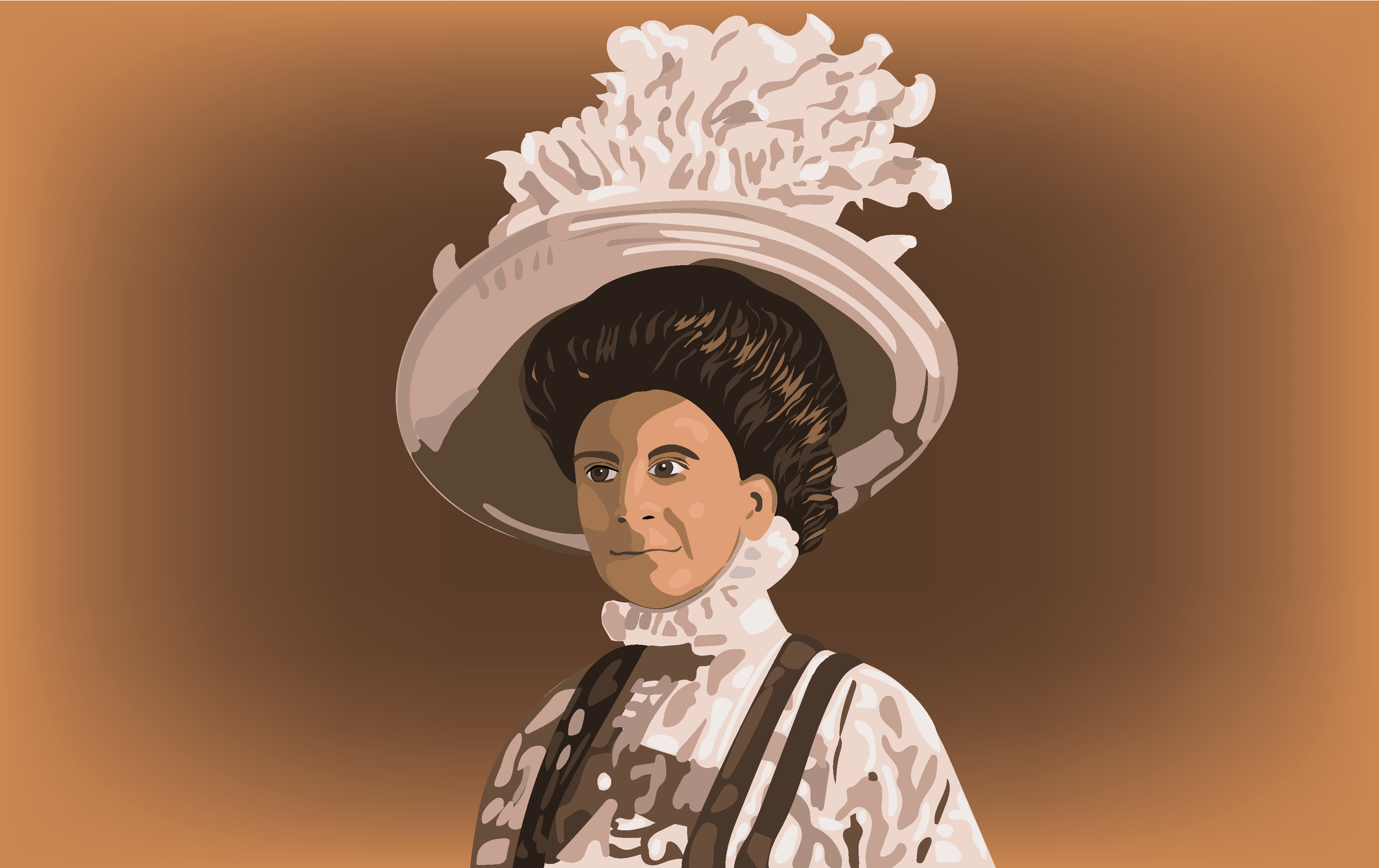
The Clothes Make the Woman
Meet Clara Madigan, a woman who was determined to succeed even when the odds were against her.
Clara Madigan loved to sew. That needs to be clear because it was the basis for the course of her life.
At a time (the late 1800s and early 1900s) when women weren’t considered competent to have minds of their own and conduct their lives as they saw fit, Clara was well-informed and politically active. She also started her own business and ran it successfully. And she accomplished this while juggling motherhood and the prejudices of being an Indigenous woman and a divorcee! A testament to her success is that to this day, the block in Brainerd, Minnesota where her shop stood is still referred to by her name. She was remarkable in many ways, but how did all of this come to be?
***
This story begins on a June day in 1851 when she was just 10 years old. Clara was carefully stitching a row of beads on a dress in the living room of her Auntie Jenny’s tiny house in Crow Wing, Minnesota. (Keep in mind that Minnesota was just a territory at that time.)
As mentioned, she loved to sew, and she also loved Auntie Jenny, an Ojibwe woman who had raised Clara’s mother, Camille. Auntie Jenny wore beautifully beaded moccasins and dresses she’d made herself, and she’s the one who taught Clara, and her sisters, how to sew.
She was watching Clara closely, and said in Ojibwe: “You have needles for fingers, little girl!”
Clara giggled and blushed.
An example of a girl’s clothing in the 1850s; photo: Pinterest
Her hair was in ringlets, and she wore a hoop skirt and half boots. By comparison, Auntie Jenny almost seemed to be from another world. And in some sense, she was–the Indigenous way of life was very different from that of the European immigrants. But it wasn’t something that Clara thought about much; she just knew her auntie was a kind and patient teacher. It was something that Rosemary, Clara’s five-year-old sister, didn’t appreciate (much to Clara’s annoyance).
“Can we leave now?” Rosemary whined for the third time. She wanted to go home and play. And as usual, Clara did the older-sister thing.
She sighed dramatically and put down her work. “Oh all right.”
Auntie Jenny chuckled and said, “Come on, I’ll walk you home.”
***
Clara was a little pouty herself on the walk home. She’d insisted that she was old enough to walk by herself, but both her parents and Auntie Jenny wouldn’t hear of it.
“I won’t get lost,” she’d told her mother in a conversation just a week before.
“Obey your mother!” her father Alec, had scolded.
Camille, knowing how headstrong Clara could be, took a different approach.
“You know your way around very well, but Crow Wing has so many visitors every day. Some of them aren’t very friendly, and we don’t want them to give you any trouble.”
Clara thought about that conversation as she watched the wagons rolling in from the Red River Trail. The squeal of the wooden wheels, along with the mix of voices speaking French, English, and Ojibwe, were the constant backdrop of Crow Wing. It was just a small town in 1851, but it was also an important crossing point on the Mississippi River. And even though the official population was just a few hundred, many more people were passing through on a daily basis. And this, combined with an abundance of cheap liquor and gambling, meant that crime and a certain harshness were an ever-present part of the local landscape.
As Jenny, Clara, and Rosemary approached the turn that would take them home, they heard people yelling in French near the river. Two men were arguing, then others joined in, and soon it was a brawl. A couple of Ojibwe men ran past and stepped in to try to break it up, to no avail. Clara was fascinated and tried to stop to watch, but Auntie Jenny hurried them along, and shortly, they arrived back home without further incident.
Clara was annoyed though. She was convinced her auntie, and parents too, were making a bother about nothing: a conviction that would continue to grow.
***
And so it was that Clara’s independent nature, and a certain willfulness, became more and more apparent in ensuing years – much to the dismay of her parents, especially her father. He wanted what was best for her, of course, but Clara was in rather pointed disagreement with him about what that entailed, which was brought into sharp relief as she read the local newspaper.
It was just a week before her sixteenth birthday, and over the last year or so, Papa had become increasingly strident about her finding a husband.
She had gotten absorbed in an article about the Minnesota Territory drafting a constitution for statehood, so she was startled when her father’s voice came from behind.
“I hope you’re reading the society pages,” he said.
Alec was a county commissioner and one of the founders of Crow Wing, so he was well-informed about what would soon be state politics. The problem was that he wouldn’t discuss any of this with Clara. It was an endless source of friction between them. More than once he’d told her: “Politics is no place for a woman. You need to learn to be a good wife and mother. Leave the governing to the men.”
But Clara stubbornly refused to do that–she covertly, but voraciously, read any newspaper she could lay her hands on.
She sighed, threw the newspaper onto the table, and started to argue with him but decided against it. As much as this ongoing fight angered her, she also wanted to keep the peace.
“Yes, Papa,” she said tersely as she brushed past him on the way to the room she shared with Rosemary and Libby, their youngest sister. She had a stack of sewing projects she was working on, mostly alterations for her siblings, but there were also some projects for people in town. She made a little bit of money doing that work and was secretly stashing it away. One day, she hoped to buy one of the new sewing machines. They were expensive, but she’d read they made sewing much faster and did a nice job.
She picked up a pale yellow dress that she had made for her sixteenth birthday party. Camille walked in and said, “It’s beautiful, Clara.” After an awkward pause, she went on. “Thank you for not fighting with your father. He means well.”
Clara managed a smile but couldn’t manage to make it convincing, so she simply nodded.
***
It was more than five years later that Clara came across her yellow birthday dress while digging in the depths of her wardrobe. The day was unusually warm for mid-September, and she thought, for the umpteenth time, about how corsets were never comfortable in hot weather, even when they were nicely fitted.
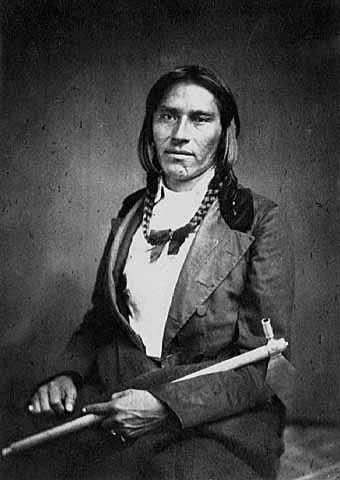
Chief Hole-in-the-Day (Bagone-giizhig); photo: Minnesota Historical Society
But what was uppermost in her mind was the reason she needed to find a dress: they were going to see Chief Hole-in-the-Day arrive in Crow Wing with his entourage of tribal officials. Almost everyone in town was going to be there, as if they were watching a parade. Mama and Auntie Jenny would be with her, along with her brother and sisters, but Papa would not. And for once, Clara agreed with his reasons wholeheartedly. Hole-in-the-Day was coming to Crow Wing to try to resolve a volatile dispute over government annuities that were stolen from the Ojibwe, and Alec was working with other town officials to support him.
This was offset when she recalled her father’s most recent reprimand: “You’re twenty-one! You should be married and having children by now!”
She took a breath and forced herself to remember how they were in uncharacteristic agreement over the annuities issue. It was partly principal and partly practicality. Papa got some of the annuities on behalf of the family, and they did help but weren’t vital. For some relatives, however–she thought of Auntie Jenny–the annuities were a matter of survival.
***
Three days later, Clara was horrified to hear how several white men from Crow Wing had burned down Hole-in-the-Day’s house just a few miles outside of town. Soon, she heard the front door open and went to the front hall.
“Are the Ojibwe going to war, Papa?” she asked
“Oh for heaven’s sake, girl,” Alec snapped. “Why don’t you go work on your dresses?”
“I will later. Can’t you at least tell me if there’s going to be a war?” she replied.
Alec glared at her, looking ready for a full-blown argument, then sighed. “No, there won’t be. They came to an agreement. The annuities will be paid.”
Clara was going to ask more questions, but Alec stomped off before she could. She went back to her room and sat down at her sewing machine. It wasn’t really new by now, but it was by far her most cherished possession. She brushed her fingertips over the wooden base where she had painted “Clara Madigan, 1862.” It had taken a while for her to learn to use it: loading the bobbin, working the treadle, feeding the cloth under the needle and coordinating it with the foot action that made everything work. It was mostly trial-and-error. (The instructions that came with it weren’t very good.) But she was a quick study. One of the biggest surprises was how noisy it was: the vibrating thump of the treadle and the clack of the needle. But she quickly got used to it and was delighted to find that the advertisements were true; it did make work go much faster. At first, Papa had objected, calling it a frivolous waste of money, but when faced with Mama’s enthusiastic approval, he’d relented. “I suppose it’ll help you put together your trousseau,” he’d grumbled.
She smiled, relishing the memory of the small victory, and went back to her sewing room to tidy up for the sewing circle she hosted. They’d be making bandages for the soldiers serving in the Civil War that was raging out east. She was thankful to be far away from the battles and that none of her family or close friends had gone off to fight, but it was still important to help, and the best way for her to do so was to make bandages and blankets and clothes for the soldiers. She finished by piling a bundle of cloth, and then went to get the tea set. Her guests would arrive soon.
***
Eight years later, when the Civil War was long over, Clara had, by her own choice, done as her father wished. She was married and had two daughters: Lolly, who was five, and Ellen, who was almost three.
As was often the case, the sound of running and giggling from down the hall compelled her to get up from her work and listen at the door of her sewing room. Lolly and Ellen loved to thunder around the house, but they had demonstrated, more than once, that playing could turn to fighting at the drop of a hat.
As soon as she was satisfied that open warfare wasn’t imminent, she went back to her new sewing machine, a recent gift from her husband Caspar. (She appreciated it but suspected that he now regretted giving it to her.) The first thing she’d done when she received the new machine was to paint “Clara Greninger, 1870” on the base. She’d decided that this would be a tradition with her sewing machines.
She was still getting used to the new house in St. Cloud. Moving from Crow Wing had made her uneasy, but she didn’t have a say in it–when Caspar became the St. Cloud Sheriff, the decision was made. The silver lining, however, was that the move had been good for her sewing business. St. Cloud was a larger town, and women in the community had taken notice of her skills. She was earning as much as $10 a week and still had time to take care of Caspar and the girls. Even so, it had become a point of contention in their marriage. Caspar wanted her to give it up entirely. Like her father, he had definite ideas about a woman’s place.
“I don’t want you doing all that work for everyone else, Clara,” he’d told her just the week before. “It tires you and it’s not proper for you to be working. I make enough to support us. You don’t need to earn any money.”
“I do this because I want to, Caspar, not because I think I need to!”
At that point, Caspar had unwisely switched to being patronizing. “I don’t want to upset you. I just want what’s best for you and our children.”
Clara was more than willing to keep arguing, but she knew from experience that it was pointless and didn’t want to waste her time and energy. She was still angry but managed a small smile and nod. Caspar mistakenly interpreted her smile as meek acquiescence and didn’t notice the hint of smugness that accompanied it. Clara thought, not for the first time, that being so profoundly obtuse probably wasn’t the best trait for a sheriff. Caspar, apparently determined to underscore that thought, gave her a condescending smile and pat on the shoulder, then left the room.
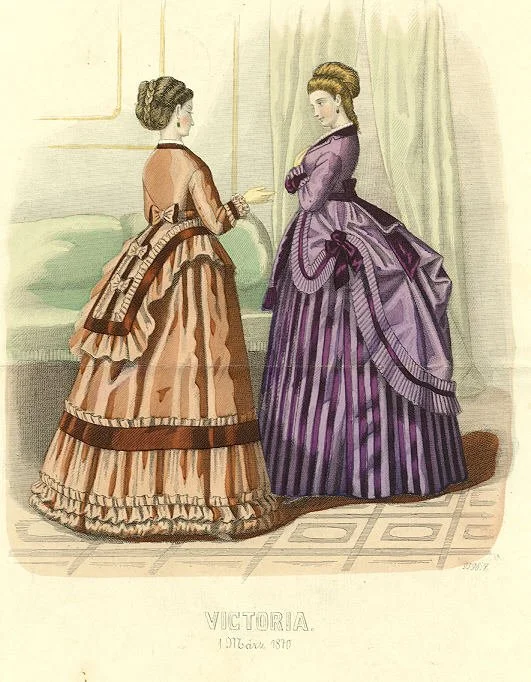
1870s fashion plate; image: Wikimedia Commons
Clara was seething in the wake of his exit but calmed herself with the thought of how being underestimated was often useful. She was sure that any notion that she would keep a secret had never crossed Caspar’s mind. And of course she did have a secret, namely that she wasn’t turning over all of her earnings to him. Yes, it was what she’d agreed to when they got married, and she’d abided by it for the first few months. But Caspar, instead of quieting down and letting her do her work, had become more and more strident and arrogant with his complaints. Given that there was no use trying to discuss it with him rationally, and that the constant quarreling was taking a toll on their relationship, stashing away money was a way for her to feel a sense of control.
She looked at the stack of dresses she was working on and felt more optimistic than overwhelmed. Dress styles were changing from hoop skirts to bustles, so business was actually increasing. But this was an example of how Caspar being unobservant worked in her favor: he didn’t pay attention to how much her business had increased, so he didn’t notice that the money she turned over to him also hadn’t increased.
Any hope of continued peace and quiet was shattered by an indignant squeal from somewhere down the hall. It sounded like Ellen. Clara sighed and went to tend to her daughters. She glanced out the window; it was chilly but sunny, so she thought she would bundle them up and take them to the park where they could play outside.
***
This strained situation between Clara and Caspar continued to deteriorate and was worsened when Camille died of tuberculosis (or consumption as it was called then) in 1873.
Clara was at her father’s house packing dishes into a crate but stopped and motioned for Rosie, who was looking and acting cross, to stop as well.
“You did a good job taking care of Mama this last year,” she said. “I’m sorry I wasn’t there to help.”
Rosemary squeezed her hand. “That’s all right. You were taking care of your own family. And you were there to say goodbye and help with her funeral…” She trailed off looking troubled.
Clara was puzzled. “I thought you were angry about me not being here when she was sick.”
Rosemary shook her head.
“Then what’s the matter?”
Rosemary was hesitant and looked around the room anxiously. Finally she leaned in close. “You mustn’t tell Papa.” She looked and sounded desperate.
“Of course, but–”
“I’m expecting,” Rosemary whispered.
Clara’s eyebrows looked as if they were climbing off her forehead. It took a few moments before she could give voice to the first question that came to mind. “You’re getting married then?”
Rosemary shook her head no.
“But…Harry. You said he was going to propose. What happened?”
Rosemary shrugged. “I thought he was. I was sure. Then…” her voice broke and tears followed.
Clara went and put an arm around Rosie’s shoulders. They stayed that way until Rosie could speak again. She took a deep breath. “He told me he didn’t want to see me any more and… just… left.” Tears threatened to flow again, but she fought them off with a shake of her head.
Clara held her at arm’s length and gave her a fierce smile. “Then good riddance. If the fool doesn’t appreciate what he had, he doesn’t deserve you!”
She paused and leaned in conspiratorially. “I have news too, and I’ll make you a deal: I won’t tell Papa yours, if you won’t tell him mine.”
Now it was Rosemary’s turn to be amazed. “What is it?” She stopped mopping her eyes with her handkerchief, distracted by curiosity.
“I’m divorcing Caspar,” Clara said. Rosemary started to respond, but Clara cut her off. “He just left. Like Harry. Except I got no explanation. I don’t even know where to send a letter.”
Rosemary considered this then gave her a familiar, sly smile. “He’s just as big a fool as Harry.” Clara laughed and gave her a hug. A few more tears fell, then they agreed to be done with it.
“There’s one more thing,” Rosemary said at last. Clara just nodded and thought, I’m sure I can’t be amazed by anything else today.
“I want to move to Brainerd with you.”
So I was wrong, Clara thought but said, “Well, of course, but what about Papa? He’s expecting you to move to White Earth.”
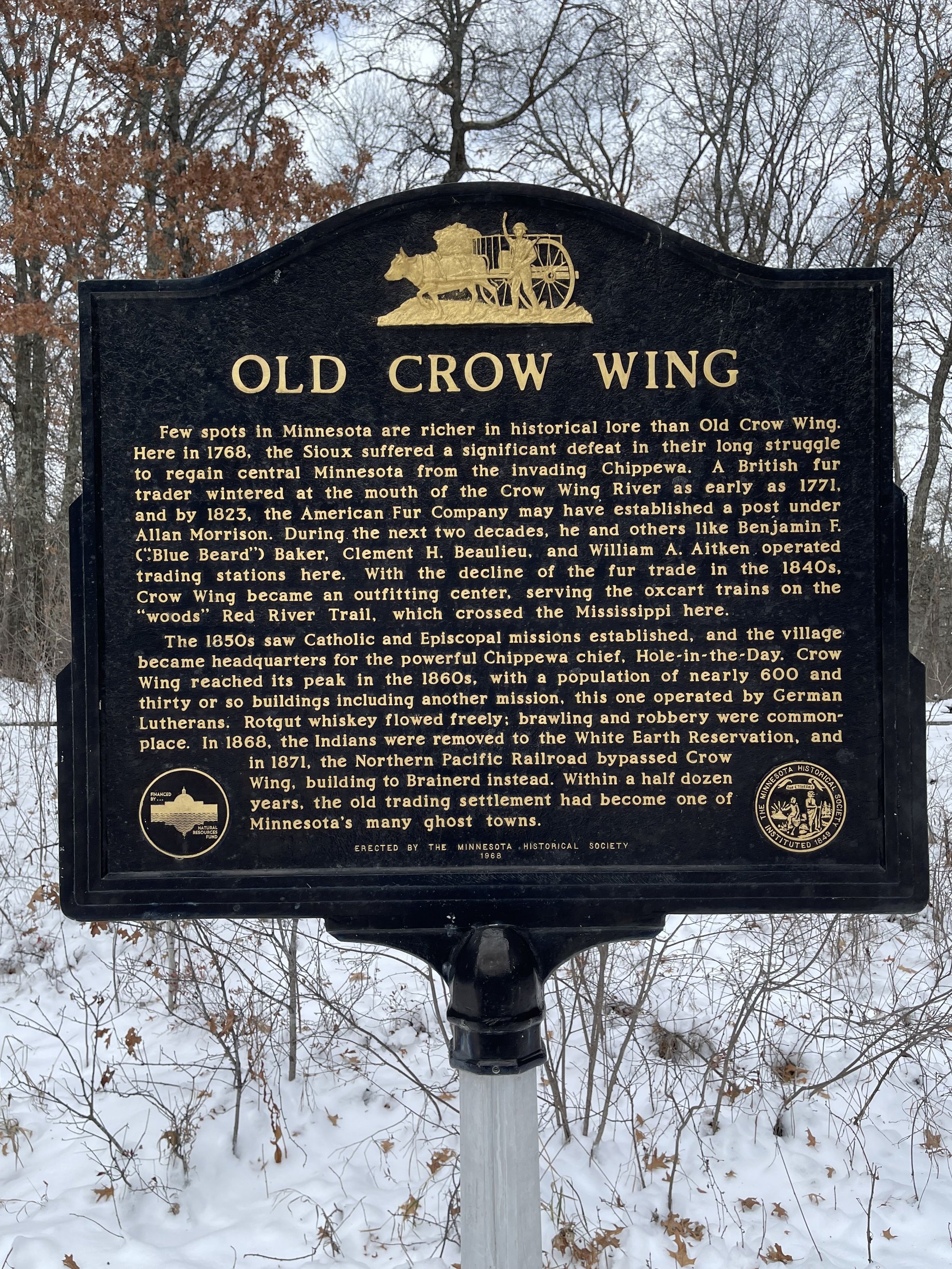
Crow Wing historical marker; photo: The Historical Marker Database/Liz Koele, 2021
Clara was proud that her father had stayed in Crow Wing as long as he had, but there was no point now. Six years ago (in 1868), the railroad had decided to put the new crossing in Brainerd (10 miles to the north) instead of Crow Wing, and she knew then that it was her hometown’s death knell. It was also, she recalled bitterly, the same year the government had required the Indigenous population to relocate to reservations. For the Ojibwe in Crow Wing, that was the White Earth reservation. To make it all so much worse, it was around that time that Mama had come down with consumption.
That was the main reason Papa had held out so long–Mama knew she was dying and wanted to spend her last years in Crow Wing. The family all respected that decision, but Mama was gone now, and her death seemed to mirror that of the town. Papa had taken that as a sign it was time to finally move to White Earth, and he expected Rosemary and their youngest brother and sister to go with him.
Clara and Rosie both jumped when Papa yelled at one of the men he’d hired to help with the move. It was the first time they’d heard him sound like his old self in a long time. Clara wasn’t sure she liked it but understood – it kept his mind off Mama.
*
Not long after their mother’s funeral, Clara and Rosemary got a letter from their father. Rosemary read it out loud, and when she finished they both were a bit stunned, but pleased too.
“I’d never have thought he would react this way,” Clara said, shaking her head.
“It’s nice to be surprised once in a while,” said Rosemary.
Alec, upon learning of their situations, wrote to tell them he was not angry with either of them, but he was disappointed in their men. He went on to offer to pay to move them to White Earth so he could look after them and his granddaughters.
“Do you want to?” Rosemary asked.
Clara considered this, but only for a moment. “No. Do you?”
Rosemary thought for a few seconds, then shook her head.
They looked at each other and shared a relieved laugh. “Well, we’ll have to find a way to break it to him gently,” Clara said at last.
Later that night they did exactly that. In their reply, they thanked him for his offer but declined, assuring him that they would be fine – they had each other, and he and Mama had taught them well.
***
It was only six months later (early in 1874) that the sisters were given reason to celebrate–Rosemary gave birth to her only child, a daughter. And even though Clara had seen many infants, including her own daughters, she still couldn’t stop looking into her newborn niece’s crib. The baby was sleeping, so she had to resist the urge to caress the fuzz of black hair.
She looked over to her sister who was pale and exhausted, which was to be expected, of course. “Did you decide on a name?” she asked
“Alice,” Rosemary said.
Clara stayed for a few more minutes until Rosie went to sleep, then retreated to her sewing room. She had intended to work on one of the many dresses stacked about, but found her eyes (and the rest of her) weren’t up to it. So she sat in her rocking chair and indulged in some reflection. The way she and Rosie had described their situation to their neighbors when they moved to Brainerd still gave her a pang of conscience, but she knew it was for the better. It was true that 1874 was showing the beginnings of many changes in society, but being divorced was still at best unseemly, and having a child out of wedlock was immensely scandalous. So, when asked, they both said simply that they were widowed: Caspar, so it went, had died many years ago doing his duty as sheriff, and Rosemary’s husband had recently been killed in a farming accident. So they had moved to Brainerd together to restart Clara’s dressmaking business with Rosemary handling the accounting. And the story had worked–it was also unseemly to pry very far into a widow’s circumstances.
They were still a bit of a novelty, given that no men were involved in the business or household (which made Clara quietly proud), but that was quickly outweighed by the fact that the local women greatly appreciated having a skilled dressmaker in town. And with that satisfied thought, she went to get ready for bed.
***
By 1885, Lolly was twenty and had added millinery (the term for hatmaking) to the offerings at Clara’s shop. She looked up from where she was sewing flowers and ribbons onto a hat. “What, Mama?”
“I said,” Clara repeated, “you have needles for fingers.” She’d hoped for a laugh but saw only polite dismissal. Lolly was apparently too old to be amused by such things. “It’s something your Great Auntie Jenny used to tell me,” she said with a sigh.
Lolly just nodded and went back to work while Alice, now ten, watched, completely captivated.
The room was filled with the thump and clack of Clara’s sewing machine. Strange that none of them will know the time before these things, Clara thought. Still, she was glad she’d insisted on both Lolly and Ellen learning to bead and sew in the Ojibwe tradition as Auntie Jenny had taught her–it was a good way for all of them to connect to that part of their heritage, and it had turned out to be key to Lolly’s interest in hatmaking. Clara approved wholeheartedly and was happy to see Alice taking an interest as well. It might just be that the little girl idolized her older cousin, but she also seemed to enjoy the small tasks Lolly let her do.
She turned her gaze to Ellen, who was sitting on the couch reading the paper. It was annoying that she didn’t appreciate how lucky she was to be able to pursue her interest in politics. It was even more annoying that the girl was so blatant (at times condescending) about her complete lack of interest in dressmaking. Perhaps it was because she had no talent for it, but whatever the reason, Clara had given up continuing to instruct her after she’d grudgingly (and with much whining) struggled through the basics.

Suffragists holding a sign; photo: Lake Agassiz Regional Library
“What’re you reading about?” Clara asked.
“There’s a new suffrage group,” Ellen murmured, nose still buried in the paper.
“Is that the one run by Susan B. Anthony?”
This got Ellen’s attention. “Yes,” she said, her surprise clearly evident.
Clara heard this and was piqued. The clack and whir of her sewing machine stopped, as did Lolly and Alice, their eyes fixed on Clara.
“Listen here, young lady.” Clara’s tone was sharp. “I was following politics long before you were born. And I had to battle your granddad to do it.”
Ellen was taken aback but soon recovered. “Maybe so, but dress reform just isn’t as vital as suffrage. Dress styles aren’t going to change the world. Getting women the vote will!”
‘It doesn’t have to be one or the other!” Clara argued. “How can we speak up for ourselves in clothes that make it hard to breathe?” She pointed to her corset. “Did you ever notice that I’ve always tried to make dresses as light and comfortable as I can?” Ellen was tight-lipped and didn’t reply. “Did you ever stop to think that if we can move about more freely, maybe we can think and act more freely?”
“That may be true–” Ellen began, but Rosemary, who’d entered in time to hear Clara’s outburst, intervened.
She took Clara’s hand and said: “How about we two go for a walk?”
Clara reluctantly allowed herself to be led from the room, and as soon as she and Rosemary were gone, Lolly quipped, “Time for Aunt Rosie to step in… again.” Ellen just raised an eyebrow and went on with her reading.
***
For several years, Clara and Ellen continued to periodically lock horns, but they always reconciled… albeit grudgingly… and with intervention by Rosie.
But despite these quarrels, the shop was quite successful, and in 1898, they bought a new store sign that said “Greninger’s Millinery and Dress Making” in fine gold lettering on a green background.
“What do you think?” Clara asked, turning to Lolly.
Lolly smiled and gave Clara a hug. It was a sweet gesture, but there wasn’t much strength behind it. She just keeps getting more and more frail, Clara thought, trying to keep her worry from her face.
“Let’s go inside, and I’ll fix us some tea,” she said. Lolly nodded and worked to catch her breath. Clara had been hopeful when Lolly recovered (more or less) from scarlet fever, but then she’d come down with rheumatic fever. They’d gone to several doctors and clinics, but the news was all the same: Lolly’s heart was failing and there was nothing that could be done.
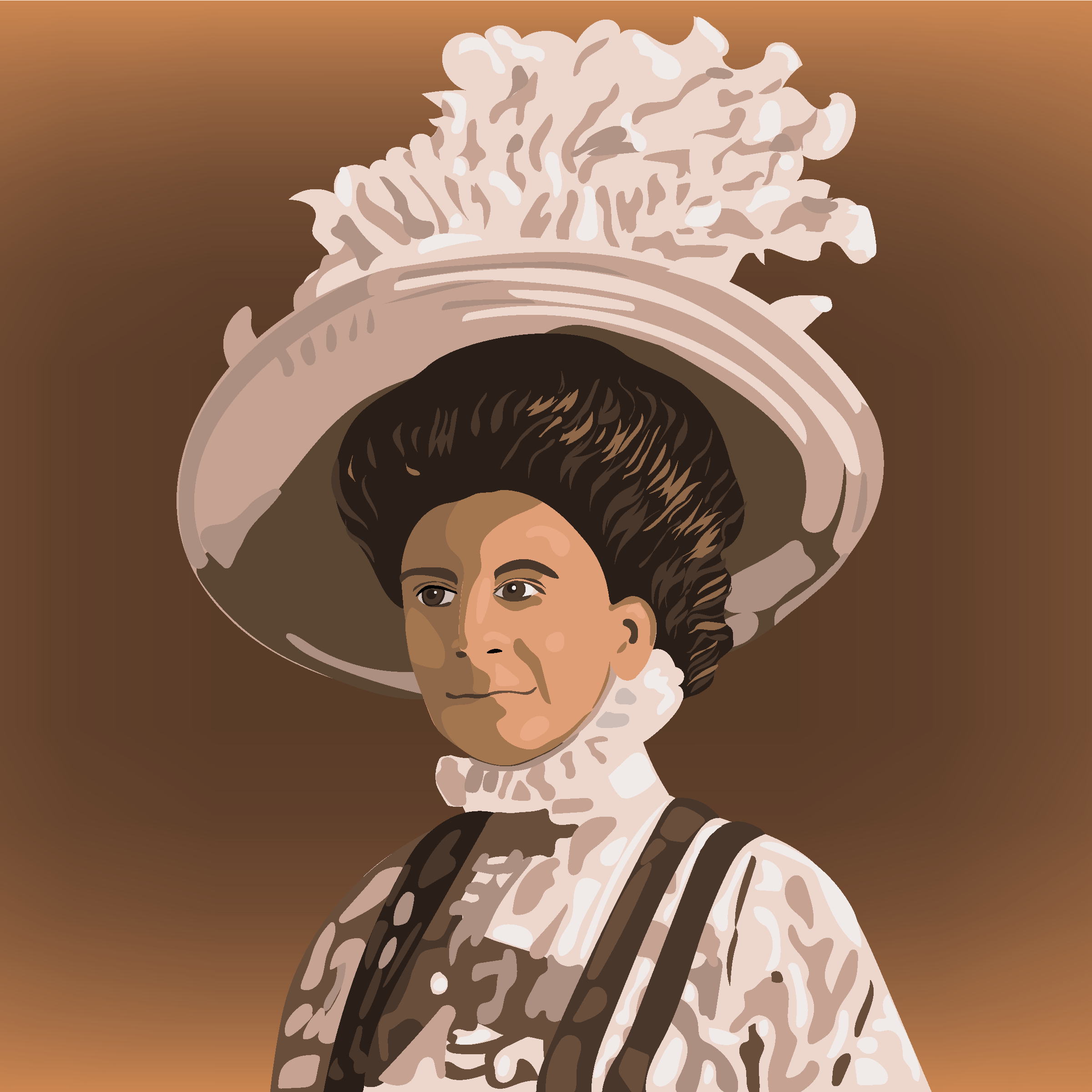
Illustration of Clara wearing one of the hats made in her shop
Clara had wanted to close the shop to concentrate on caring for her daughter, but Lolly had been adamant. “I want to keep working as long as I can, Mama!” she’d insisted. And Clara had gone along: it was true that the happiest times for the family were at the shop. Clara, Lolly, and Alice worked on dresses and hats while Rosie and Ellen tended to the business side of things. This division of labor helped everyone get along. And there was also an unspoken agreement that keeping the shop afloat had to take priority–for Lolly’s sake, if nothing else.
When Clara and Lolly got inside, Ellen hurried to help. They got Lolly seated in the office where Rosie already had a pot of tea brewing. Sitting in a chair with a steaming cup, Lolly was soon breathing more easily and waved Alice over. “Show me that hat, cousin! Those feathers are lovely!” Alice, who was 23 now, beamed and brought the hat over. She’d been learning from Lolly and Clara for most of her life and was proud of her work. She’d found, just as Lolly had, that Clara’s teaching had made all the difference.
It was hard for Clara and Rosemary to watch, though. They knew times like these were numbered. And as if to highlight that sad truth, Lolly soon signaled it was time to go home. Once they were there, Clara helped her settle into bed, propped up on pillows to help her breathe more easily. “I made some notes about what I’d like for my funeral, and the dress I’d like to wear,” she said at last. Clara just nodded, unable to speak. She took Lolly’s hand and gently kissed her swollen fingers. “It won’t be long now,” Lolly whispered.
And she was right. The next morning, Clara saw that Lolly was visibly weaker, and sent word for Rosemary, Ellen, and Alice to come right away. They sat with her, holding her hand, reading out loud, and telling stories from the shop. She was lucid but drifted in and out of sleep, and early the next morning, drifted into a deep sleep that didn’t end.
Lolly was buried in her favorite dress–one Clara had made for her–with the hat she’d admired just a few days before laying on her chest. Clara was the last to say her final goodbye. She carefully smoothed the lace on Lolly’s collar and kissed her one last time.
***
Lolly’s death affected everyone in the shop deeply, and it took months for them to get back to normal. But they did, although it was a new normal where the younger generation took on more responsibility in the shop. Which, unsurprisingly, resulted in occasional frustration…
“Mrs. Quinn just won’t quit fussing about the skirt hems,” Alice said, shaking her head in disgust. She and Ellen were in the middle of the shop amid stacks of dresses and hats in various stages of completion.
“I told you she would,” Ellen said. “When she signed the contract, she was adamant that the dresses for the play can’t show any ankle.”
Alice folded her arms and made it clear she would not back down. “But that’s not the way the styles are now!” She pointed to the hem of her own skirt that was clearly above her ankles.
Hazel, the hatmaking assistant, looked as if she wanted to comment. She sat at the work table across from Polly, who’d been at the shop longer and knew when to stay quiet. Which was fortunate for Hazel. Polly caught her eye and shook her head, then leaned forward and whispered, “Stay out of it, if you value your life.”
Clara watched and drew her shawl tighter. Not so long ago, she would’ve joined in the fray, but she’d caught the flu right after Christmas and was taking a long time to get back on her feet. Besides, she’d be celebrating her 75th birthday in April. Time to leave these arguments to the youngsters, she thought.
Her illness had prompted Rosie to finally have a conversation about stepping aside and handing the business over to Alice and Ellen. With Hazel and Polly (who Clara had taught until she’d gotten sick) the orders were covered, and, despite the occasional tiff, they all worked well together. Although, Rosemary observed, that couldn’t be proven by the scene unfolding in front of her.
“Alice,” she said firmly enough to give her daughter a start. “I think Hazel and Polly have some questions.”
Alice shot her a not-so-charitable look, then turned it on Ellen (who’d also quieted down), and then, with a dramatic flourish, moved to her assistants.
“Ellen–” Rosemary began but couldn’t finish before her niece strode into the office and not quite slammed the door.
“You know,” Rosemary said to Clara, “they remind me of you and Papa.”
“Oh?”
Rosemary laughed. “Of course. Both of you hard-headed, bound and determined to do things your own way.”
Clara gave this a moment of thought. “And you’re the peacemaker, just like Mama was.”
It wasn’t something Rosemary had considered, but now that Clara mentioned it…“Hmm, I guess so.”
They sat for a while longer, sipping tea in companionable silence. Or near silence: there was still the familiar clack, whirr, thump of the sewing machines that Clara found so comforting.
“You know, Rosie, “ she said at last. “I’m going to miss this so much.”
Rosemary nodded and dabbed at her eyes with a handkerchief, whereupon Clara produced her own handkerchief for the same purpose. Shortly, she patted Rosemary’s hand. “Let’s go home.”
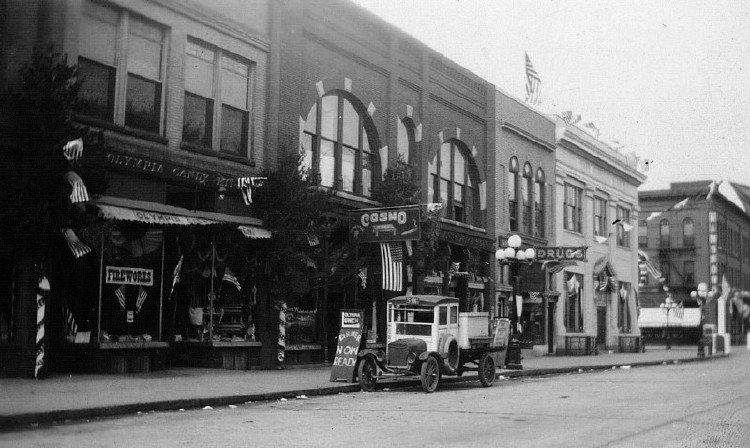
Front Street in Brainerd, MN. Clara’s shop was on this street; photo: Crow Wing County Historical Society
***
Rosemary, Ellen, and Alice stood in line outside the polling place for the 1920 presidential election. They were elated and proud, if a touch nervous. They knew, as did all of the women there, how monumental this vote was–nothing would ever be the same! It was a heady feeling, almost surreal. But just behind all of that was a sadness that made Rosemary suddenly quiet.
“What’s wrong?” asked Ellen.
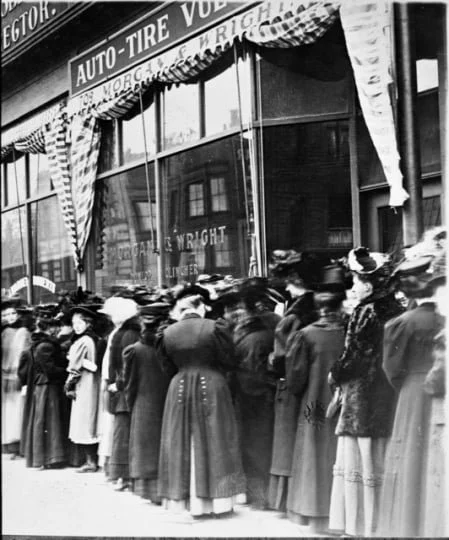
Women in line to vote in Minneapolis, c1908 (probably a local school board election); photo: Minnesota Historical Society
Rosemary sighed. “She’d be so proud.”
Alice and Ellen just nodded, remembering that Clara–who’d died just a year ago last January–had insisted, even at the end, on sewing, and she liked it best when they’d read the paper to her while doing so. She seemed to know she didn’t have long and wanted to make the most of the time left. The progress of the 19th amendment was especially important to her, but to everyone’s heartbreak, she passed away before it was ratified.
Rosemary fingered the lace cuff of her white dress and realized all three of them were wearing similar dresses that Clara had made in honor of the suffrage movement. Then she looked around and wondered how many other women were wearing dresses sewn by Clara. More than a few, she guessed. And with that, her spirits lifted–she could almost feel her sister standing with them.
Then Alice was tugging at her arm, beaming. “Come on. We’re next!”
And together, all four of them, went forward to make history.

Map showing Brainerd (top), Crow Wing (middle), and St Cloud (bottom); Google Maps
Subscribe to learn more about the real people
and historic events behind this story.
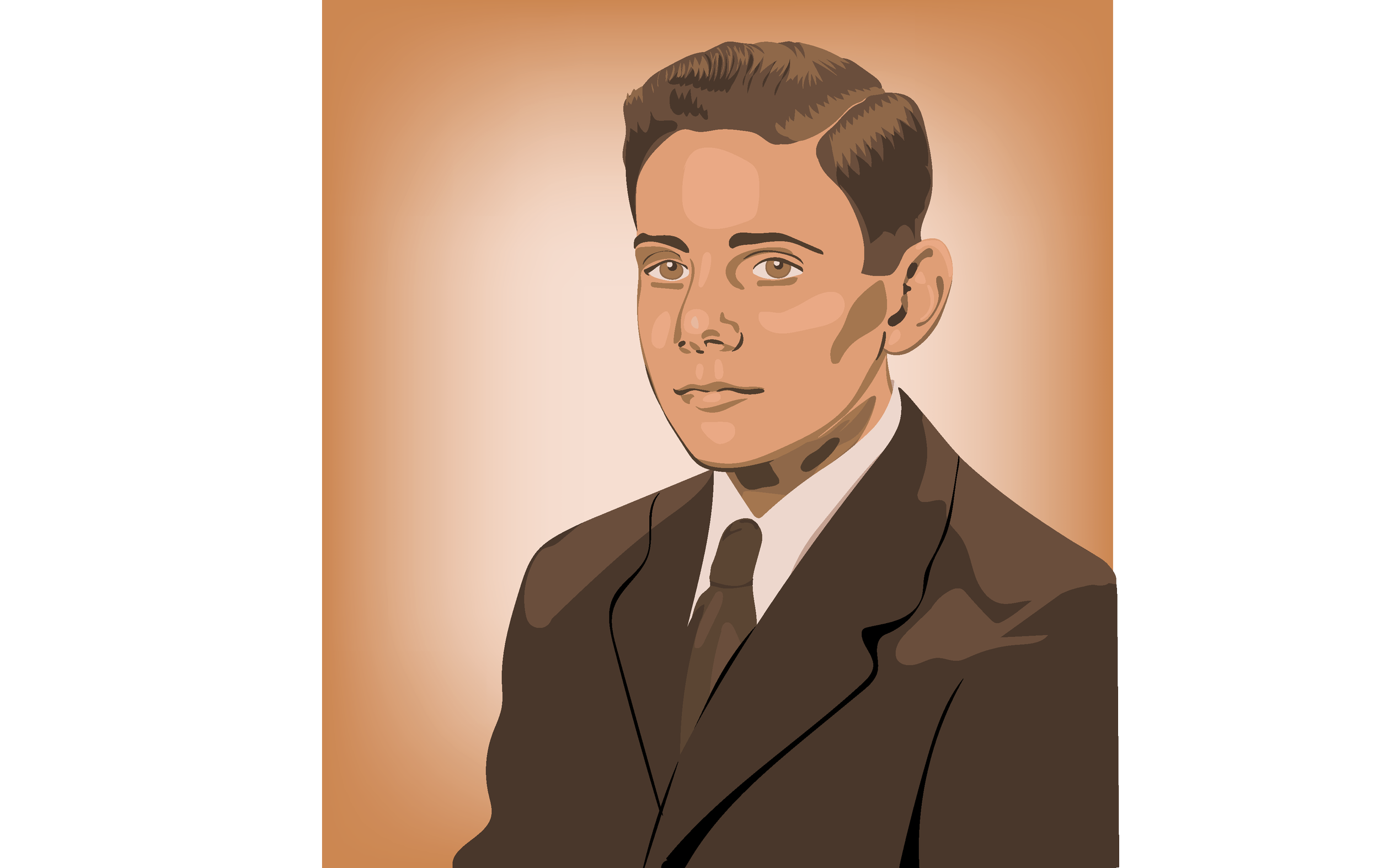
The Smuggler
A boy in a Texas border town lands an unusual job. This post is a subscriber bonus.
Jimmy Ellington sat in a bar in Villa Acuna, waiting for his contact to arrive. He was wearing his suit and a hat, trying to look the part of a respectable adult. The suit didn’t fit him as well as it had last year when he got it. Mother had said she’d let it out a bit, but she hadn’t had a chance to do that yet. He took a drag on his cheap cigar and swigged a drink of his beer. He was trying his best to look hard and serious, trying to convince everyone that he wasn’t just 14 years old.
Subscribe to see the rest of this post and
other bonus content from The Relatives.
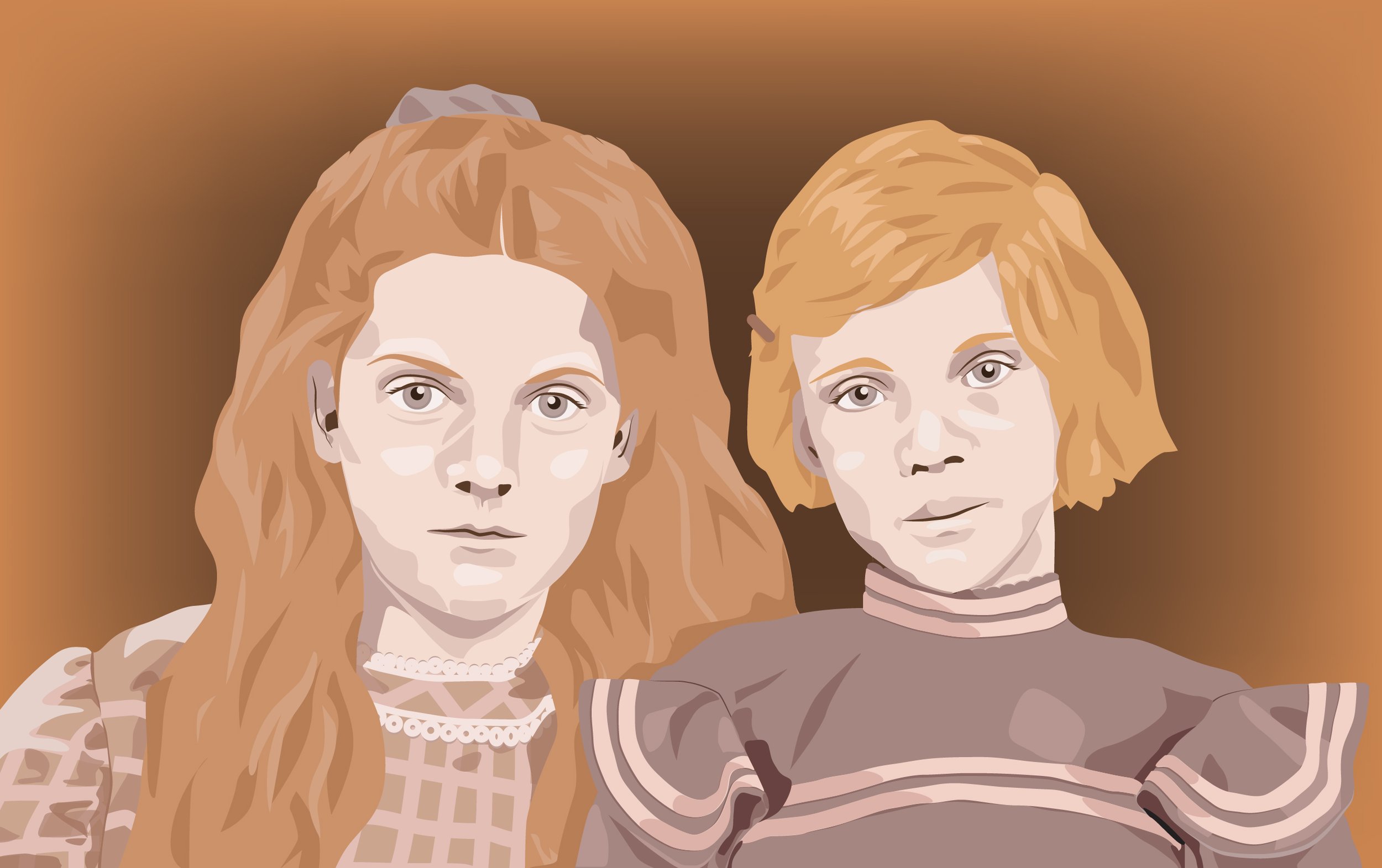
The Silent Sisters
In the small town of Palmyra, Illinois, lived a family with two sisters who never spoke. Discover their world with this story.
On the grounds of The Lincoln Correctional Center is a cemetery. This is normal for a prison. What is not normal is that several of the graves are for people who weren’t prisoners. One, in fact, is a shared grave for two sisters: Callie and Iona Sheppard. Who were they, and how did they come to be buried in a prison cemetery? The answer lies in this story.

Lincoln Correctional Center; photo: John Howard Association of Illinois
***
Cora was sniffling when she and her brother David walked in the door of their house in Palmyra, Illinois. As soon as Cora saw their mother, Eliza, she dropped her lunch pail and slate and ran to her, sobbing. Eliza was confused, but put an arm around her, and then turned a sharp eye and even sharper tongue on David.
“Young man, I told you to look after your sister! It was her first day of school, and here she is already upset!”
Hearing the commotion, their father, Cyrus, hurried in.
“Mama,” David said, “I don’t know why she’s crying. She didn’t say anything the whole walk home!”
Cyrus kneeled down in front of Cora and asked what was wrong. She wiped her eyes and with pauses for weepy choking, told him.
“Miss Clausen asked us all to tell something about ourselves, and I said I have a twin sister. At lunch, everyone teased me and said my sisters are stupid. I tried to tell them just because Callie and Iona don’t talk doesn’t mean they’re stupid. They just made fun of me even more!”
Eliza then scolded Cora (although not as sharply as David).
“You know you’re not supposed to talk about your sisters, young lady. Next time, you just ignore them.”
Cora started sobbing again, so Cyrus put his big hands around her upper arms and gave them a gentle squeeze.
“Cora, people don’t understand about Callie and Iona because they’re different. We protect them by not talking about them. Remember?”
Cora nodded, sniffling, and looked down at her feet.
“I know you love Callie, and you’re proud to be her twin. But if you hear anyone talking badly about your sisters, you need to pretend not to hear them. All right?”
Cora nodded again, and still sniffling, said, “Yessir.”
Cyrus gave her a brief hug and mussed her hair as he stood up. Eliza turned back to kneading her bread, and with an exasperated sigh, followed up.
“You don’t need to be telling people our business, girl. No one needs to know about your sisters.”
With all the noise and upset, no one had noticed Iona watching silently in the doorway. Callie had been with her initially but had run to hide as soon as she saw Cora crying. Iona followed Callie as soon as things seemed resolved, knowing she would need help calming down.
We don’t have any photos of the sisters. This illustration is an idea of what they may have looked like as children.
***
The Sheppard farm, where Cora, Callie, David, and Iona lived with their mother and father, was actually just outside of Palmyra. There had been just over 100 people living there in 1876 when Iona was born. When David was born two years later, the population had increased to half again as much. And two years after that, 1880, when Cora and Callie came along, there were 200 people living there. The growth continued to accelerate so much that every time Cora went into town with Papa, he’d lean over and tell her with a conspiratorial smile:
“Everyone must’ve heard about you and Callie and decided to move here.”
This made Cora giggle, but the trips into town were often upsetting too. Despite the family’s efforts to keep Callie and Iona hidden away, it seemed that everyone knew who they were. People would point and whisper. Cora tried to ignore them, but she heard bits and pieces like: “...so strange,” and “...such a shame,” and “...poor girls.” When she got mad, Papa would remind her to do her best to ignore it.
“People can be mean,” he said one time. “They probably don’t intend it that way, though.”
“So why do they say those things?” Cora asked.
“Well,” he said after a pause to think, “I do believe they get afraid of things they don’t understand.
It took some time for Cora to really understand this, but she eventually did. It even made a kind of unfair sense. Iona had lost her hearing when she’d gotten a bad infection in both ears when she was just two years old. Mama said she had started to talk when she got sick but had been mute since then. Instead, she communicated through pointing and gestures.
“Did Callie ever talk?” Cora had asked Mama once.
“No. She was always quiet, even when she was a baby.” Mama scowled a bit then. “People called her a changeling, said that she’d been swapped for a fairy child. So superstitious!” She turned to Cora and shook a finger. “I can tell you, though, I know my children, and Callie is still the same girl she always was.”
From an early age, Cora saw how Callie would withdraw when things got too loud or busy. Later, when she and David and Archie (who was two years younger than Cora and Callie) would play and tell each other stories, Callie would slip away to one of her hiding places, and Iona would follow her. Cora couldn’t remember a time when there wasn’t this close bond between the two girls.
Callie and Iona communicated with the improvised sign language Iona created, and all their siblings learned it too. (Eliza and Cyrus picked it up as well, though not as fluently.) Cora, however, worked at it harder than the others. She wanted to do more than just fetch them for chores and meals and baths. She desperately wanted to be part of Callie and Iona’s little circle.
***
Later, when Cora was 12, Cyrus had found her sitting on the porch, crying.
“I know what they’re saying, but I don’t understand so much of it!”
Her tears were partly from feeling left out, but more from frustration–she couldn’t really explain it, but it seemed to get harder all the time to talk with Callie and Iona. They seemed to be drifting further away from the rest of the family and closer to each other.
Papa sat down next to her and said, “I know, young ‘un. I wonder every day what goes on behind those blue eyes of theirs.”
He put an arm around Cora’s shoulders and gave her a quick squeeze.
“Their world isn’t quite connected to ours, I think. We just get to see a part of it.”
She nodded and felt a little better. It helped to know that Papa didn’t understand either.
***
A year later, 1893, started with great excitement. The World’s Fair was going to be in Chicago, and some of the families the Sheppards knew were going to make the trip. One of David’s friends had invited him to go with them and had generously extended the invitation to his brothers and sisters. Allen and Herb, the youngest brothers, weren’t old enough to go, but the rest of them were beside themselves with excitement that was destined to be short-lived.
“Absolutely not,” Mama said, leaving no room for discussion.
“But Mama…” David began.
“No!” she repeated, this time using her more steely tone. “Your father needs you boys helping him on the farm, and I need Cora’s help around the house.”
Cora knew Mama was expecting again and needed her help, especially since Callie and Iona couldn’t do much other than simple tasks. And it was true that Papa couldn’t manage without the boys, so there was no way any of them could go to the fair. It still hurt, however, and her eyes started to fill with tears.
David, knowing he’d get in worse trouble if he protested any further, meekly said, “Yes, Mama.”
Cora forced herself not to cry, knowing that Mama would yell at her if she did, maybe even give her a whooping. She also had to make sure she didn’t do anything that could be interpreted as pouting, so she saved it all for after she’d finished her chores and retreated to the room she shared with Callie and Iona. she sat on the bed with Iona next to her. Surprisingly, Callie sat on her other side. Usually she hid for at least a little while before coming out.
Cora patted herself on the chest–the way they expressed affection for each other–and Iona did the same. Callie watched them both, rubbing a frayed ribbon she wore on her dress to calm herself, and then she patted herself on the chest too.
***
As it turned out, going to the fair wouldn’t have worked out even if Mama had allowed it. A financial panic, followed by a depression, hit that spring. Papa planned to sell off part of the farm to make ends meet, and he and all the boys who were old enough to help were working hard to make the most of the corn crop before he did.
Later that fall, Eliza gave birth to a girl she named Sophie. It was a long, difficult labor, so Cora had a lot of extra work helping her mother take care of the new baby and basically run the household. She and David had quit school to take up extra work at home, so while Mama recuperated, Cora cared for Sophie; and David, when he wasn’t working in the fields, looked after Herb.
Cora was bouncing Sophie on her hip one morning while she worked on cleaning up from breakfast. It was a juggling act she feared she was losing when she noticed Iona had appeared by her side. She pointed to Sophie, made a cradling motion with her arms, and pointed to herself. Cora was stunned–Iona had never seemed interested or able to care for any of the younger children. It was good to have the help, though, so she signed for Iona to sit down and then carefully settled the baby in her arms. Iona patted herself on the chest while Sophie stared up at her as only babies can do. It was heartwarming to see, but Cora still kept a watchful eye on her sisters.
And sure enough, Sophie soon began crying. She was hungry yet again. Cora prepared a bottle (something she’d gotten used to doing on a very regular basis). About that time, Iona started getting fidgety, so Cora scooped up the baby and went back to bouncing her so Iona could go find Callie.
When Sophie finished her bottle and was back in her crib, Cora went to look for Callie and Iona. They were, as was often the case, sitting on the floor of their room playing one of their invented, incomprehensible games.
***
Life went on much like this for the next two years. Eliza recuperated and relied less on Cora for help, but she and David didn’t go back to school. She’d never liked it and was sure she’d learned everything she needed already–she could read, write, and do her numbers. The rest of the important things she was learning from Mama.
But while Sophie was growing to be a healthy toddler, Herb started to become listless. He wasn’t eating much, and he cried multiple times every day about tummy aches. He had just turned four, but he was so small, thin, and pale that he looked younger. The doctor started coming more often, leaving behind medicines that Herb would throw fits over taking. During one of these visits, the doctor noticed how Callie would sign with Iona, then run and hide. Cora overheard him talking to Mama one time, telling her about a school in Lincoln where they could send Iona and Callie.
“They’re going to become more of a burden to you and Cyrus as you get older, you know,” the doctor told her. “The Lincoln School will take care of them, teach them a trade, and maybe even treat their problems.”
After he left, Cora asked, “You won’t send Callie and Iona away, will you Mama?”
Eliza didn’t say anything immediately but finally shook her head.
“No,” she said quietly. “We’d never do that, girl.”
This reassured Cora, but she was still worried about Herb. He kept getting sicker and sadly died in the fall of 1895. Cora stayed home with Callie and Iona when the rest of the family went to his funeral. She doubted if they understood what had happened and didn’t know how to explain it. She didn’t even know if they could understand the concept of death. She found them standing in the door to the boys’ bedroom and tried to indicate that Herb was gone. Callie seemed scared and confused, but Iona was simply blank. They went back to their room and stayed there until the rest of the family came home.
***
Over the next five years, which included the turn of the century, there were more big changes in the Sheppard household. David had planned on marrying his sweetheart, a girl named Tillie, in the summer of 1900, but months before, one of their horses kicked him in the head. He lingered for a few days, but never woke up. He died on February 1st.
Cora was shocked. Of all her siblings, she had been closest to David, and he was the one who best understood how difficult the relationship with Iona and Callie could be. At the funeral, Cora clung to her fiancee, Oliver Barlow, whose father ran the Palmyra grocery store.
They put off their own wedding for a month out of respect, but the time passed quickly, and soon Callie and Iona were watching Cora pack her trunk. Once again, Cora wondered if they could understand what was happening. After the wedding, she’d be living in Palmyra, which was close by. So she’d be coming around often to visit and help, but still and all, it would be a significant adjustment for her sisters.
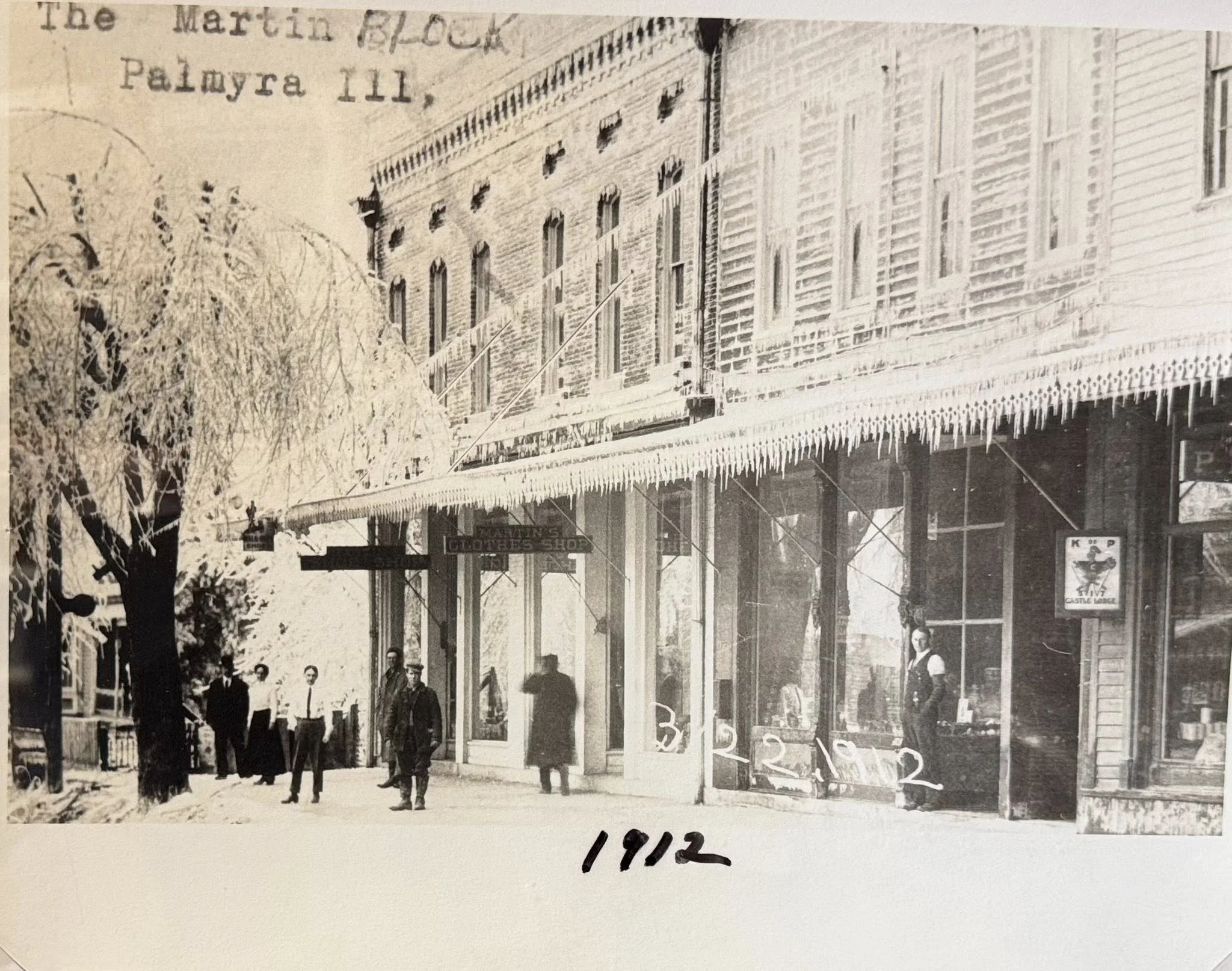
Palmyra in 1912; photo: History of Palmyra, IL Facebook group
***
The years following Cora and Oliver’s wedding brought first a son, Daniel, and then a daughter, Elsie.
“Aunt Sophie, I brought you a present!” exclaimed Daniel excitedly as he burst through the door.
As she’d intended when she got married, Cora went home weekly to visit and help out. Oliver and their children almost always came along. Their third child was due in just a month, so the amount she could help was limited. Despite that, it was good to just visit. And Daniel, who adored Sophie, wouldn’t miss a chance to come see her. He proudly handed Sophie an arrowhead he had found while digging around in the yard outside their house.
“Some Indians attacked us and I fought them off and kept one of their arrows!”
Oliver set Elsie down and said sternly, “Young man, don’t you fib to your aunt!”
Sophie took the arrowhead and gave her nephew a hug before he could start crying.
“Thank you, Daniel. Why don’t you go say hi to Grandma and Grandad.”
Cora gave her sister a grateful smile and went to find Iona and Callie. As she expected, they were in their room. Callie was in her usual hiding spot between the bed and the wall, trying to avoid the noise of two boisterous children and Oliver’s booming voice. Iona sat on the bed next to her. Cora joined them, and before long, Callie crept cautiously out of her hiding place and sat on the bed next to them. Callie had been fascinated by Cora’s belly with each of her pregnancies and loved to feel its roundness. Cora couldn’t spend as much time with her family as she would have liked, and it would soon be even less, so she appreciated moments like these.
After a few minutes, Elsie started crying, which sent Callie back to her hiding place. Iona looked confused, but stayed where she was. Cora worked her way off the bed so she could go see what the crisis was.
After soothing Elsie, she settled her and Daniel at the table with a snack and went to look for Sophie. In doing so, she overheard Oliver and her parents talking about a law that had just been passed in Illinois that allowed people to commit family members to asylums even if they weren’t insane. They were keeping their voices low, but Cora still caught parts of their discussion–enough to hear that they were considering sending Callie and Iona to the Lincoln School.
She waited until they were back home and the children were in bed before saying anything.
“How could you talk to my parents about committing my sisters without talking to me first?” she asked, not bothering to hide her anger. “And how could you even think of such a horrible thing?”
“We didn’t make any plans!” Oliver protested. “We were just talking about the future. You know as well as I do, Cora, they’re not going to be able to take care of Callie and Iona forever. Eventually they’ll need to go somewhere.”
“Then they’ll come here!”
Now it was Oliver’s turn to be angry. “We’ve never talked about that!”
Cora gestured to quiet down and pointed to the ceiling. “Don’t wake the children,” she said, keeping her voice low. “Anyway, now we’ve talked about it. I would rather take care of them here than send them to some asylum. I know how to take care of them–I’ve been doing it my entire life. When the time comes, we’ll make room for them.”
Oliver sighed. He knew it was pointless to argue, and besides, he didn’t want to burden Cora with his worries. He knew the US was going to end up joining the war in Europe and that he could be drafted. If he was, what would happen to his family? There was no way they could manage with two more people in their small house, especially two people who couldn’t help with chores much. Cora was staring at him, clearly holding back tears. He went to her and pulled her into a hug.
“All right. We’ll make room.”
***
Luckily, the question of what to do about Callie and Iona didn’t come up again until 1926 when things began to change dramatically. It started with a phone call from Archie early one morning. Mama had died.
“Papa said she had been having bad headaches, but she insisted that it was nothing to worry about,” Archie said. “Then he came in from chores last night and found her slumped over in her chair. The doctor thinks she had a stroke.”
Cora hurried home. When she got there, Papa was preparing the parlor for the wake. She noticed for the first time how old he looked. She remembered with a start that he was 83, and this was surely the worst of all the losses he’d endured. Cora went to help him move the furniture to make room for the casket Oliver and Daniel were hurriedly building. Cyrus stopped and squeezed her hand when he saw her.
“Sophie and Eula are getting your mother ready,” he said. He scowled a bit. He wasn’t fond of Archie’s wife.
Cora patted his hand. “Go sit down, Papa,” she said. “I can get the room ready.” She tried to be gentle but had to yell since he didn’t hear well anymore.
He nodded and eased himself into a chair in the quietest corner he could find, which actually was quiet only in comparison with the rest of the house. In a way, this made Cora glad because despite the commotion, Papa had the comfort of his children and grandchildren around him. What did worry her was that so much hustle and bustle would undoubtedly be upsetting for Callie and Iona. But she didn’t have time to worry about them at the moment. There were all kinds of preparations – the wake would happen tonight and the funeral would be tomorrow afternoon. Cora was extremely thankful for all the help from family.
She went about her business and finally looked at the clock when twilight started to fall. The wake would start soon, and she still needed to see if she could coax Callie and Iona to come down. She was sure it would be better for them to say goodbye to Mama tonight.
Cora found them in their room, as usual, and was able to entice Callie to join her and Iona on the bed. She waited a short time, then signed that they should go see Papa. She was relieved that they both stood up and followed her to the parlor. They hung back when they saw how the room had been changed, and Cora worried that Callie would run and hide again. She lingered in the doorway, rubbing the piece of ribbon on her dress. She looked ready to bolt but thankfully didn’t.
Cyrus took Iona’s hand and led her gently to the casket.
He signed “Mama goodbye” to her and waited. Iona studied his face, then looked at Mama. After just a minute or two, she looked at Papa again and hesitantly touched Mama’s cold face. She recoiled from this but didn’t run away. Callie watched this but wouldn’t come any closer than the parlor doorway. She stared at her mother in the coffin for a few moments, and then followed Iona as she left the room. Cyrus looked after them sadly.
“Sorry Papa,” Cora said.
He nodded and with tears streaming down his face, kissed his wife on the forehead. Cora went into the kitchen to allow him some privacy and give herself some time for her own weeping.
***
After the funeral the following afternoon, came the work of emptying the house so they could sell it and the farm. The plan was to move Cyrus, Callie, and Iona in with Cora and her family. Adding three people, instead of two, made the space problem even worse. Cora saw how crowded things were and worried about how her sisters would adjust, since they’d never lived anywhere other than the family farm.
The first few weeks made it seem like a mistake. Callie refused to leave the little room that was set up for them, and Iona spent most of her time by her side. Cora had to bring Callie food, clean her up, and try to soothe her terror at the unfamiliar sounds and smells in her new surroundings. And distressingly, Iona also seemed to regress. She and Callie stopped communicating with anyone but each other and often just sat silently together in their room.
Thankfully, Iona gradually began to come out of the room more often. And after about a month, Callie ventured out for the first time. Cora still had to feed her, and she would retreat to her hiding place at the slightest provocation, but it was still an improvement.
Cyrus, on the other hand, adapted well. He grieved for a month or two, as was expected and reasonable, but Oliver moved Cyrus’s favorite chair to the front porch, and most evenings he’d sit there and read out loud–occasionally from the bible but more often the newspaper or something written by his favorite author, Mark Twain. Eventually, even Iona and Callie would join them. Their neighbors would sometimes whisper and stare, hoping to catch a glimpse of those silent sisters (which was what people in Palmyra called Callie and Iona). Cora glared at them, but Cyrus just kept on reading, his voice steady and unperturbed.
***
As Callie and Iona continued to adjust to their new life, Cora could occasionally get them to take interest in some of the simpler chores–Callie would snap green beans, and Iona would sweep floors and hang out laundry. But despite these improvements, it was clear to Cora that they were spending more time in their room than they ever had when they lived on the farm. And Cyrus noticed it too.
“They’ve always had their own little world,” he said to Cora one time. “But it seems like it’s gotten a little farther away than it used to be.”
And he was right. With each new change in the household, Callie and Iona drifted even farther. The situation was driven home when Cora’s oldest son, Daniel (to whom the sisters had become accustomed) left home to take a job in Alton. Upon finding that he was gone, Callie and Iona retreated into their room and refused, for more than a week, to come out. They wouldn’t even join the family to listen to Cyrus read in the evenings
This understandably came to try everyone’s patience, Oliver most of all. He was especially annoyed when Cora had to do more and more to feed and clean up after the sisters. And to make matters worse, Cyrus’s health was beginning to decline, so she had to take care of him as well.
“You don’t have to put yourself through this, you know,” Oliver said to her after an especially difficult day.
She turned to him and managed, barely, to keep her response no more than emphatic. “I know exactly what you mean, but I still can’t abide the thought of putting my sisters in a place like that Lincoln School!
Then, that October, the stock market crashed. Cora fretted, remembering how her parents had been forced to sell off part of their farm during the financial panic of 1893.
“Carpentry is one thing that people will always need,” Oliver said, doing his best to reassure her. “I may need to travel a little farther to get enough work until things bounce back. We’ll make do.”
***
Things didn’t bounce back, however. In fact, they got worse. By 1932, more than two years into the Great Depression, there were far fewer opportunities for Oliver. He knew it could’ve been worse, but as he’d predicted, he had to travel (more than a little) farther to do enough to make ends meet. So at home, Cora had to shoulder more of the burden of keeping up with everything. She was grateful for help from her daughter Elsie, but she knew it wouldn’t last long. Elsie had a young man courting her, and Cora suspected there would be an engagement to celebrate before long.
And it didn’t take long for those suspicions to be confirmed. Elsie was planning her wedding for that March but had to delay when Cyrus died in his sleep at the ripe old age of 89 in late February. Cora consoled herself with the certainty that he’d had a good, long life and a peaceful end. Just as they had for Mama, she decided, they would hold his wake and funeral at home. It was what he’d have wanted.
***
With Cyrus gone, Callie and Iona withdrew almost completely. They spent most of their time in their tiny bedroom, sitting on their beds close together, signing to each other every now and then. On rare occasions, they would play one of their invented games, but when Cora signed to them to come out to eat or sit on the porch, one or both would return their sign that meant they were staying put. This left Cora with no choice but to nudge them, gently but insistently, as only she knew how. It worked, but Callie and Iona were grudging at best.
This soon led to them stopping caring for themselves almost entirely, Callie more so than Iona, which was a bit strange because Callie, like Cora, was 50, whereas Iona was 55. In any case, to a greater or lesser degree Cora had to feed and bathe them and help them in the bathroom. She tried to be hopeful initially, but quickly realized she had to resign herself to these new circumstances. She was exhausted and discouraged but made a point of remembering that Callie and Iona were family, and that she loved them.
***
By the beginning of 1934, only Cora and Oliver’s youngest son, Freddie, was still living at home. He was 13 and eager to quit school and learn carpentry from his father. Cora kept insisting that he finish his education, but deep down she knew it wasn’t going to happen.
Freddie’s zeal to go out and start earning money was largely due to how hard the Depression had hit central Illinois. The winter had been harsh, and many of the small farms had been sold off or just abandoned. This meant the number of people in the area was dwindling rapidly, so even if Cora could convince Freddie to finish his schooling, it was increasingly unlikely there would be a school where he could do so.
The harsh winter was followed by a dry spring and a brutally hot summer, so the cycle repeated the next year, as did the exodus of the population. This brought with it a new level of desperation for Oliver, so one night, after dinner, he sat Cora down and confided in her.
“I don’t know how long I can keep this going,” he said, looking and sounding as if he’d been beaten down. When he could find work, he often had to drive as much as an hour to get there, and more often than not, the jobs didn’t pay enough.
Oliver went on, almost pleading now. “Darlin’, I think we gotta move to Alton.”
Daniel, in his last letter, had told them that the Shell refinery there was looking for workers. And even if that didn’t work out, in a city the size of Alton, there would surely be more and better opportunities than in Palmyra.
Cora just nodded. There was no speaking around the lump in her throat. Oliver took her hands in his, rough and callused as they were. Then the tears she’d been holding back flooded out. She knew what was coming next.
“Daniel doesn’t have room for three extra people, much less five,” Oliver said. “And what with Callie and Iona’s needs…” he trailed off.
Cora wiped her eyes, and when she could speak again said, “It’s the Lincoln School, I suppose.” It was Oliver’s turn to nod, and Cora saw that his eyes glistened when he did so.
***
Things happened quickly after the decision was made, and just over a week later, they were started on the three-hour drive to the Lincoln School. When they arrived, Cora was filled with a mixture of dread and doubt. The administrative building looked cold and imposing, like the castle in that movie “Dracula” (which she’d hated).
A nurse came to greet Cora while Oliver got the two small, battered suitcases out of the trunk. To Cora, Callie and Iona’s fear and confusion during the trip had been palpable, which had broken her heart and worsened her guilt. She thought she couldn’t feel any worse, but then the orderlies came to take her sisters inside that awful building. Iona had been trepidatious, but after some coaxing, allowed herself to reluctantly be led away. Callie, on the other hand, had to be pulled up from the floor of the car behind Cora’s seat and carried off, struggling every inch of the way.
Iona watched all of this unhappily, and the last thing she did before going in the main door was to look back at Cora and make the signs for “what” and “why.” Her look of confusion and hurt would remain burned into Cora’s memory for the rest of her life. She signed back, trying to say that she would visit, but even as she did so, she doubted whether it would be possible. Then the main door closed and Callie and Iona were gone.
Cora couldn’t move–she just stared at the door. Oliver came and put an arm around her shoulders, and they stayed that way until she could stop crying. At last, he said, “Come on, darlin’,” and led her back to the car. She got in, and as they drove away, she looked back and wondered if she would ever see her sisters again. She didn’t.
***
Note: The Lincoln School and Colony (its full, official name) opened just outside Lincoln, Illinois in 1877, the year after Iona was born. At that time, it housed about two hundred inmates. And yes, they were inmates, because despite the name, it was an asylum, not a school. It grew quickly, especially with the 1915 law that made it possible to institutionalize anyone who was deemed “feeble minded,” as the term was in those days. The inmate population was used as slave labor and reached its peak of more than 5000 workers by the time Iona and Callie were admitted. It was an overcrowded, unsanitary environment that often resulted in illness and death. And although inmates occasionally received medical treatment, it was rarely sufficient and frequently was cruel.
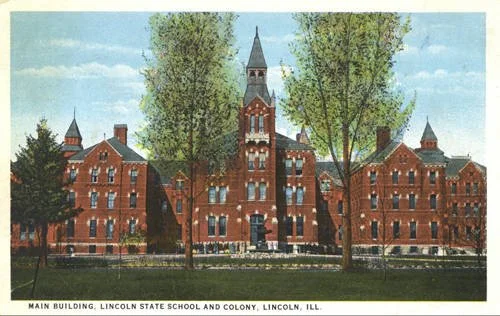
Lincoln School & Colony Main Building; photo: Booth Library Postcard Collection, Eastern Illinois University
***
If Cora had known the true nature of the Lincoln School, it seems unlikely that she would’ve sent her sisters there, but the sad truth was that she didn’t know. So Callie and Iona were left in a strange, hostile place that terrified them.
Iona watched in alarm as Callie, still struggling, was carried off down a hall. She tried to follow, but an orderly’s strong hands gripped her arms and led her in the opposite direction.
“Come on, now,” he instructed her sternly, not knowing Iona couldn’t hear him.
He led her to a room, and then a woman came in and moved her mouth and pointed to her. When she didn’t move, the woman began undressing her. Iona realized it was time for a bath and moved obediently where the woman guided her. This wasn’t a nice bath like the ones Cora gave, though. The water wasn’t warm, the soap was smelly, and the woman was rough with her. Afterwards, the clothes the woman gave her were clean but stiff and scratchy.
The woman poked her in the back to make her walk. She moved her mouth and pointed at things as they went along. Iona saw other people wearing clothes like hers. Some of them were working, some were just sitting, and others acted like Callie–curled into a ball or hiding in a corner, their faces covered. She saw a boy about David’s age. His hair was the same orange color she remembered. Is this where their brother had gone? She waved to him, but he moved his mouth at her and hurried away.
They walked into a room full of beds. They were all close together like when they were all children at home, but this room was much bigger. Some of the beds had people lying or sitting on them, but most were empty, and they all smelled bad.
The woman moved her mouth and pointed at a bed, so Iona sat. She moved her mouth some more and then walked away.
Iona sat patiently, waiting for Callie to come and sit next to her on the bed. She would hide for a while, but that wouldn’t be too much of a problem–Iona would be able to comfort her.
To Iona’s great distress, however, it was more than a month before she saw Callie again, and then her sister was almost unrecognizable. She was much thinner, and it seemed like her senses were dulled. Iona would sign to her and would get a feeble response at best. But they were allowed to be in the same dormitory and even have beds next to each other. Sometimes Callie would curl up next to Iona or they would push their beds together… until the orderlies noticed and made them move the beds back to where they were before. In the morning, they would be woken up when it got light, just as it had been when they lived on the family farm. It was one thing that was familiar, but it was only a small comfort.
***
Iona ended up working in the Lincoln School textile factory, which produced all the clothing and linens for the institution and also made items to sell to the community. Iona’s job was to sweep the floor or carry bolts of fabric or bundles of clothing from place to place. It was hard work, and she tired quickly, but she soon learned that if she stopped or wandered off, she would be punished. So she did her work until someone motioned for her to stop. Then it was time to eat and after that, it was bedtime. It seemed like an endless cycle, and it’s a foregone conclusion that Iona, like all of the other inmates, never saw a penny of any profits the textile factory brought in.
Callie’s experience, however, was completely different. The doctors diagnosed her with schizophrenia. Subsequently, their reckless prescription was to subject her to electroshock therapy and severely restrict her diet, all of which served to drive Callie deeper inside her own mind and reduce her body to a withered shadow of her already lean self.
The separation and their living conditions took a great toll on both sisters. Iona became despondent and stopped working or caring for herself. Even the threat of punishment ceased to motivate her. Worse, Callie shut down entirely, responding with shrieks when anyone tried to touch her. Eventually, the staff gave in to what was clearly evident: the sisters had to be together if they were going to be the least bit manageable. So they were moved to beds next to each other and allowed to spend their free time together. After bedtime, they would often sit on their beds across from each other, signing or simply looking at one another. In the morning, it wasn’t unusual to find them together, pressed into one small bed, holding each other for comfort.
In 1941, even this small consolation was taken away when Callie died of pneumonia at the age of 61. Iona stayed with her throughout her brief decline, and then refused to move, despite being prodded by staff when it was clear that Callie was gone. She just sat and watched silently as they took her sister away.
After this, Iona listlessly continued working in the textile factory. Sometimes she would help tend to other inmates, but most of the time, she insisted on being alone. At night, she would sit on her bed in the same position she had with Callie. When she got too tired to sit up, she’d just curl up, despondent and utterly alone.
***
Iona lived six more sad, lonely years. During that time, the Lincoln School and Colony went through several changes, but she never noticed. She died in her sleep in 1947 when she was 70 years old.
The sisters were buried side by side in the school cemetery with a single marker that bears both of their names. And Cora not only didn’t get to see her sisters again but also was never able to visit their grave.
*
The colony closed in 2002 following decades of investigation and lawsuits. At that time, it was sold and became the Lincoln Correctional Center. This is how Callie and Iona Sheppard came to be buried in a prison cemetery. Together in death, just as they were in life.
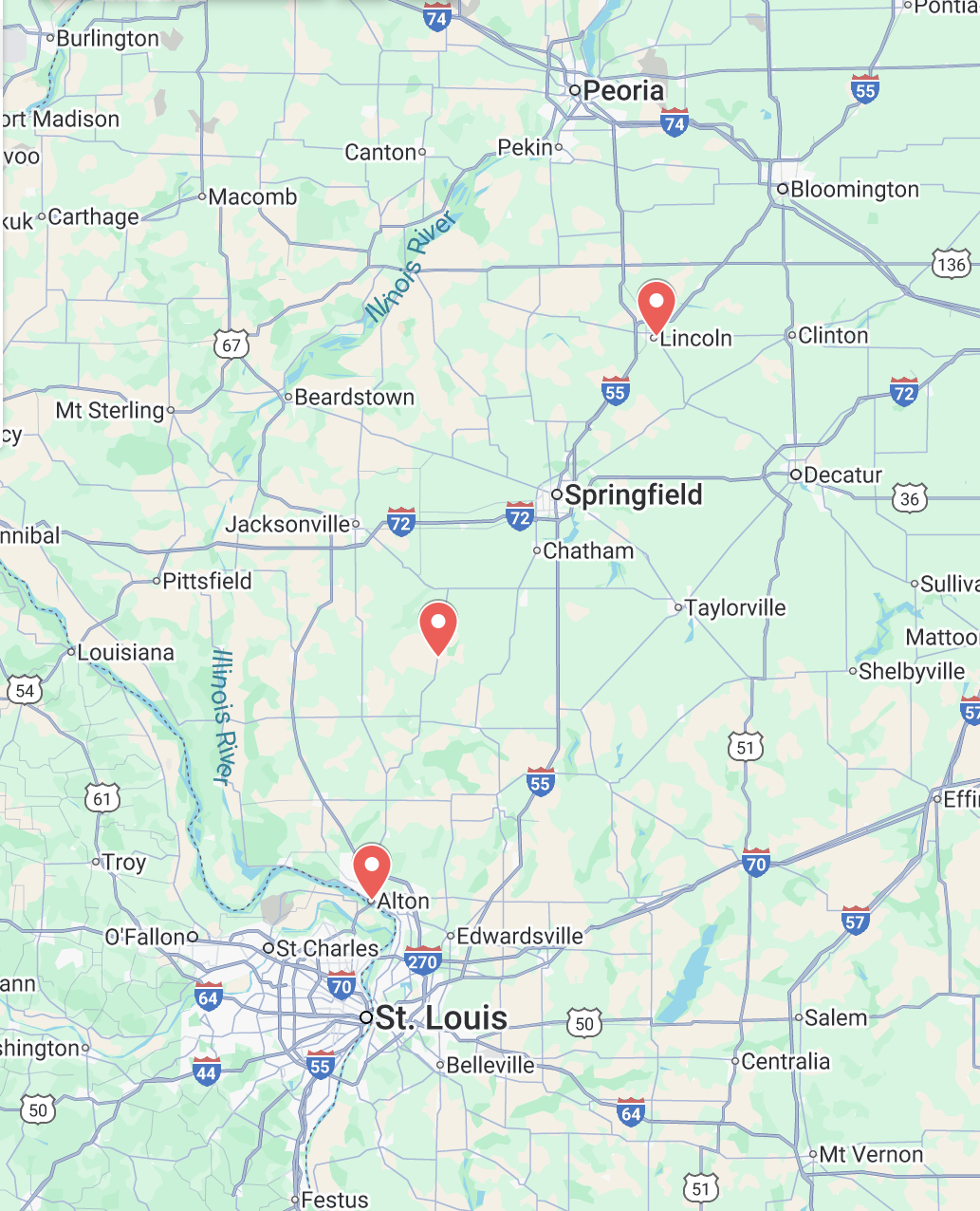

Map showing the location of the Lincoln School (top), Palmyra (middle), and Alton (bottom) in Illinois